Key takeaways
- Members judge robot mowing by what they see and hear, so lead with timing and quiet running.
- Quiet claims so far come from makers and operators, so present them as experience, not measured fact.
- Publish your mowing window before the first pass, and keep it inside posted play hours.
- Post a plain sign at the affected holes that names the window and a contact.
- Give the clubhouse one trained contact, one written answer and a log of every question.
How do you explain robot mowing to members who watch every pass?
Start with what members care about most: when the machines run, how quietly they run, and who to call if a pass bothers them. Most complaints about a new mower are really complaints about surprise. Tell members before the first pass, not after the first complaint.
Robot fairway mowing has moved from test to tournament. The inaugural Black Desert Championship, held October 9 to 13, 2024, was the first PGA Tour event played on a course using autonomous fairway mowers, according to Golfdom. Members at your club may have read about it, and they will ask whether it applies to them.
The sections below cover what members actually notice, how timing protects pace of play, what course signage should say, a member note template, and a plan for answering questions at the clubhouse.
What do members actually notice on a quiet pass?
The most common claim is that these units run quietly. FireFly's CEO told trade coverage that early rollout feedback at Concert Golf Partners in Florida centered on consistent cut quality and quiet running that lets crews work without interrupting play. That is a vendor quote, not a member survey.
Husqvarna describes its robotic fairway mowers as operating autonomously and quietly, and UK operator Exclusive Collection describes its Kress fleet as quiet and fully electric, with benefits during peak periods. As of November 2026, we found no independent member noise survey and no decibel measurement. Do not quote a decibel figure to members, because none has been verified.
The honest message is narrower: the units are electric, and the schedule you publish is what members will test. Invite them to hear one at a set time and judge for themselves.

How does overnight timing protect pace of play?
Timing is the strongest answer to a pace question. At Black Desert, coverage reported that four FireFly AMP mowers could mow all 18 fairways, about 51 acres, in roughly four hours, running from 2 a.m. to 6 a.m. Those figures come from press coverage and were not independently verified, so present them as reported.
Husqvarna's press release says its CEORA units ran overnight during preparations for the 2026 Husqvarna British Masters at The Belfry, with 16 units on the Brabazon course. Overnight running shows up across these accounts, but it is a pattern in the coverage, not a standard you must follow.
We found no published pace of play data tied to robot mowing, so no one can promise a faster round. Promise what you can measure instead: no mowing during posted play hours, and a log of start and finish times. Compare your tee sheet for several weeks before and after rollout, and report the result even if the change is modest.
What should course signage say about mowing windows?
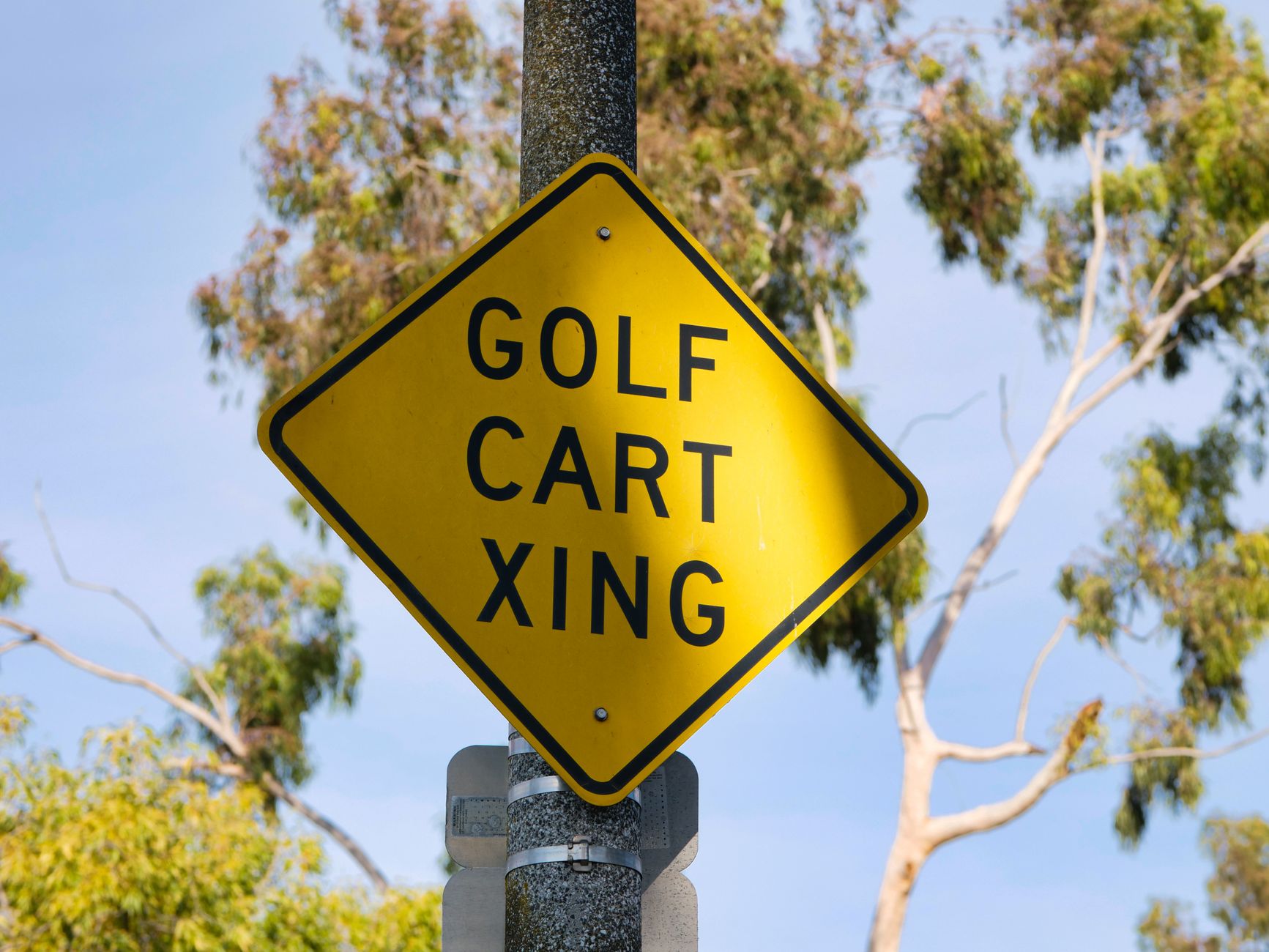
We found no published standard for mowing window signage, so treat what follows as practice rather than rule. A sign only works if a member can read it from a cart at walking pace, so keep the wording short and the layout plain. Each sign should carry the five items listed below.
Match the sign to where the machines actually go. Black Desert coverage conflicted on whether greens were mowed, and the accounts that mention fairways only are better supported. Write the sign for your setup, not someone else's, and place it at tee and cart path entrances where members will see it.
- The make or model of the unit and the fact that it runs autonomously
- The posted window in clock times, such as overnight or before the first tee time
- The date the sign was last updated
- The clubhouse desk or phone number for questions
- A line naming who monitors the unit and how to reach them, only if your crew does that
What belongs in a member note before the first pass?
Send one short note before the first pass, and another whenever the schedule changes. A good note gives the reason, the window, what stays the same for members, and the contact. Use this template and fill in the brackets.
Dear members, starting [date], the club will begin mowing fairways with autonomous units. The machines will run [window], [outside posted tee times], and no rider will be on them. Greens, tees and bunkers will continue to receive hands on care from our crew. If a pass bothers you or you have a question, please contact [name] at [phone or clubhouse desk]. We will share how the schedule is working in [month]. Edit any line that does not match your plan.
Do not send a note that promises quiet, speed or savings you have not measured. A promise that proves wrong costs more trust than a plain schedule ever will.
How should the clubhouse answer questions about the mowers?
Members ask the front desk before they ask the superintendent. Name one trained person for each shift, give that person the sign text and the member note, and keep a short log of every question. Review the log weekly, because repeated questions show where the sign or note fell short.
A good answer does three things: it states the window, presents the quiet and timing claims as operator experience, and offers a way to see the unit. Do not argue with an unhappy member. Record the complaint, promise a callback, and make the call.
Skepticism is fair, and saying so helps your credibility. Ken Yates, the Black Desert superintendent, was initially skeptical about replacing his fairway team, then said the machines had proven they could do the job, as reported in coverage. Keweenaw Mountain Lodge tested a Yarbo unit on fairways in July 2026, then uninstalled it and stopped the install, saying autonomous mowing isn't working yet. Its source did not cite noise as the reason. Share both stories if members ask.
Where does a robot integrator fit into this plan?
Service Robot Co. is a full service commercial robot integrator for US businesses. We are OEM neutral, so we select the right robots across manufacturers, then finance, deploy, integrate, train and service each unit through a nationwide US engineer network. One vendor covers the whole lifecycle, which helps when a member question needs a fast answer from someone who knows the machine.
We lease robots only, on a three year lease, with one fixed lease quote given after a site assessment. If your club is weighing a robot mower, the first step with us is that site review, which maps the ground before anyone talks about a machine. We would rather earn your trust over several seasons than close a quick deal.
Frequently asked questions
Want a robot working for you?
Tell us the job and the site. We will recommend the robot, quote the lease, and keep it serviced.
Sources
- The Golf Wire: Concert Golf Partners and FireFly Automatix robotic fairway mowers
- Golf Business News: Exclusive Collection rolls out Kress robotic mower fleet
- Husqvarna: fairway mowers for golf courses
- Husqvarna press room: robotic technology at The Belfry for the 2026 British Masters
- Golfdom: an industry first Black Desert Championship to use autonomous fairway mowers
- Golf Course Industry: FireFly Automatix night fairway mowing at the Black Desert Championship
- Golf Course Industry: PGA Tour robotic mowing of fairways
- Keweenaw Mountain Lodge: autonomous mowing trial update