Key takeaways
- Point cameras at the places people and vehicles must cross: the gate, the vehicle lane, and the fuel tank and shed doors.
- Documented risks at golf yards include fuel theft and spills, and a camera creates a record of a visit. It does not guarantee prevention.
- Draw alert zones over entry points and leave out roads and swaying trees, then tune sensitivity one change at a time.
- Verify battery and night performance on the manufacturer's specifications for your own latitude and shade before relying on a unit.
- Pair cameras with yard lighting. They do different jobs and work best together.
Where do solar cameras belong at a golf maintenance yard?
Solar cameras belong on the yard perimeter, at the fuel tank pad and chemical shed doors, and over the spots where equipment charges after dark. Aim each one at a point people must cross, such as the gate, the vehicle lane or a door, rather than at open turf. That gives the crew a dated record of who came in and when.
Maintenance yards sit behind the clubhouse and out of members' sight, which is exactly why they draw unwanted visits. Fuel and chemicals turn a quiet night into a costly one. A camera will not stop a determined thief alone, but it makes a visit visible and documented.
Why do fuel and chemical storage attract unwanted visits?
Deputies sought help identifying the person who took about 354 gallons of diesel from a maintenance yard at Westlake Golf Course in Westlake Village, California, according to a Patch report. KTLA reported that the Sheriff's Department released photos from the course's security cameras. The reports I reviewed do not give a year for that incident, so treat it as an example of the pattern, not a current statistic.
Fuel loss is not the only risk. In 2019, thieves at Fairwinds Golf Course in Nanoose Bay, British Columbia, broke locks off a fuel container inside the maintenance compound and siphoned gasoline. According to CHEK News, fuel seeped into nearby areas, including ponds on the course, so a theft became a spill to clean up.
How should cameras sit along fence lines and compounds?
Place one camera at each long run of fence where the yard meets public access, and one covering the compound gate. Inside the compound, put a unit where it sees the fuel tank pad and the chemical shed door together, so one image answers two questions. A camera aimed only at a fence can record a climb but miss the vehicle that pulled up beside it.
A security vendor's golf course guidance recommends cameras and perimeter sensors for equipment, fuel and chemical storage, with access control that limits the yard to staff, according to Guardian Alarm. That is vendor advice and I did not test it, but it matches the layered approach most yards need.
Light works alongside the camera. An older trade article from 2003 advises lighting a building well all the way around, with motion-detector lights where possible. Lights help the image, but they can also throw glare, so position them with the lens in mind.
The sources I could find give no verified figures for solar battery runtime, night-vision range or winter charging. Check those on the manufacturer's specification sheet against your site's sun exposure before deciding where a unit goes.
How do you aim views at entry points without losing the tank?
Aim each lens at the route people actually use, then check the frame at night, not in daylight. Headlights crossing the lens can trigger alerts, and angling the camera slightly downward or adding a wedge kit can help with glare, according to CCTV Security Pros.
Expect trade-offs. A view wide enough to take in the whole yard shows less detail on any face or plate. A tight view on the gate can miss a second door. Choose the view that answers the first question your superintendent or insurer will ask after an incident.
How do you set alerts so animals do not wake the crew?
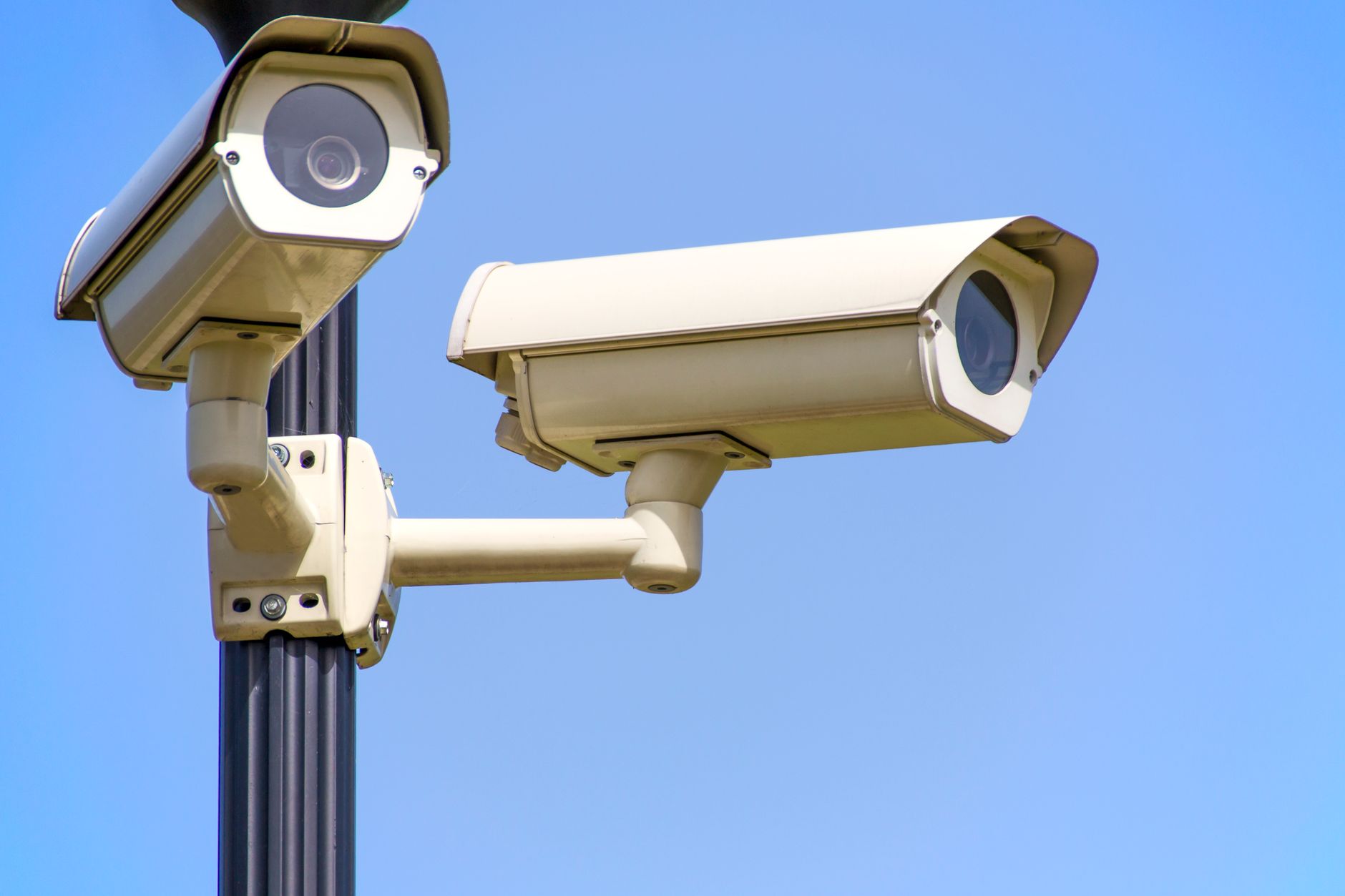
Many camera systems first detect motion anywhere in the image, then alert only when that motion falls inside a drawn zone, according to SCOS. Draw zones over the gate, the tank pad and the shed door, and leave out busy roads and swaying trees. That filter removes much of the noise from a yard edge that faces open turf.
Sensitivity is the lever with a cost. Lowering it cuts false alarms, and raising it recovers missed events, according to CCTV Security Pros. Start in the middle, note which alerts were animals, and retune. Some models offer person, vehicle and animal filtering, according to SafeWise, so check each zone's options on your model rather than assuming one setting applies everywhere.
How should the crew test and log alerts?
Walk each zone with the crew after setup and record what triggers it. Repeat the check at night, when headlights and wildlife are the usual causes. Keep a short log of false alerts and their causes, then change one setting at a time so you know what worked.
Log the real events too. An alert on an actual visit is the reason the unit exists, so record the time, the zone and what the image showed. That log is the record you will want if a loss occurs.
Where does a site assessment fit into a yard security plan?
Service Robot Co. (servicerobotco.com) is a commercial robot integrator for US businesses. We lease robots through financing, then deploy, integrate and service them under our RoboCare service plan. Our site assessment walks the same ground this article covers: entries, fuel and charging spots, and where people and vehicles cross.
If a golf property is weighing robots for overnight patrol alongside fixed cameras, that assessment is where we measure the fit before any quote. The lease quote is fixed and built after the assessment. Camera hardware is a separate decision that depends on the site, the vendor and the crew's rules.
Frequently asked questions
Want a robot working for you?
Tell us the job and the site. We will recommend the robot, quote the lease, and keep it serviced.