Key takeaways
- Glass often shows up in a lidar map as open floor, or as the wall behind it.
- When teaching a route, plan a standoff of about 30 to 60 cm (1 to 2 feet) from glass, per Tennant's office guide as of November 2026.
- Software can help detect glass, but low-cost lidar has limits, so test on site before you trust the map.
- Objects under about 10 cm (4 inches) high can be missed in autonomous mode, so check the lowest edge of your route.
- Run the map, standoff, light, and marker checks before go-live, and repeat them after layout or glazing changes.
Why does a glass lobby confuse a floor robot?
A floor robot finds its way with lidar, a laser that times returning light. Glass breaks that method. A US patent application on glass detection notes that most light striking glass reflects away and never returns to the sensor, so the map can leave the glass out entirely. The robot then sees a clear path where a wall stands.
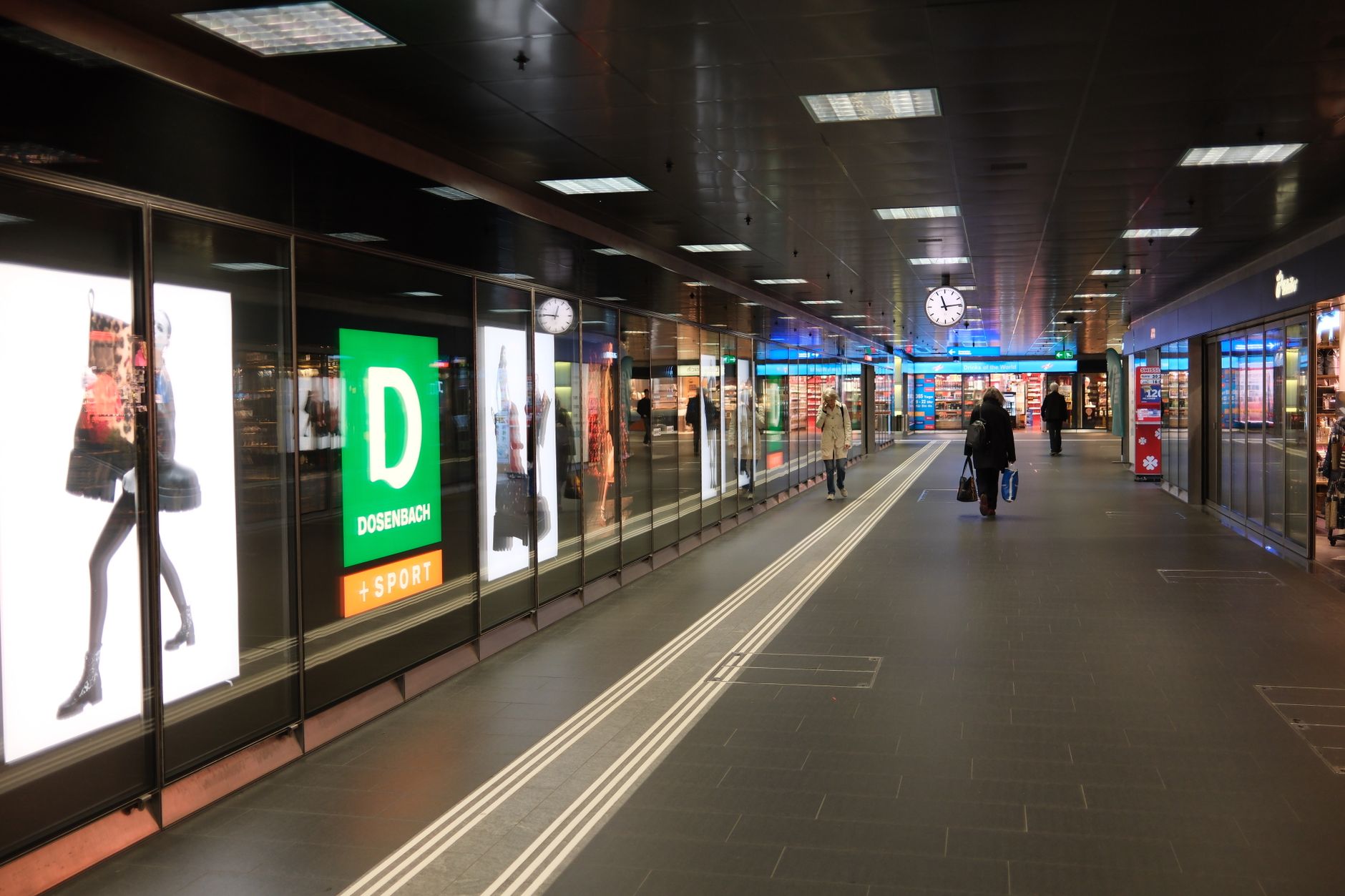
The opposite error happens too. Foster and colleagues, in an ICRA 2013 paper, describe glass as transparent to lidar at most angles, and say mapping methods may omit most glass walls. Either way the result is a false impression of open floor. The fix is a set of deliberate checks run before the robot works near glass, not a single sensor setting.
How do sensor errors show up on the floor?
Missed glass is the obvious failure. The robot may route toward a glass partition at speed, or track a line that runs through the wall because the map has no wall there. A map can also place a barrier behind the glass in the wrong spot, so the robot slows or detours for nothing.
Tennant's retail guide, checked as of November 2026, describes the opposite problem. Reflections from floor-to-ceiling windows or glass partitions can cause a false obstacle, and the robot stops to call for help. A stop like that is safer than a collision, but repeated stops eat into the cleaning window and erode staff trust in the route.
What about reflective floors and low objects?
Reflective floors are a separate concern from glass, and the research I reviewed offers little direct evidence on how they affect lidar. Treat a polished or wet-look lobby floor as a test item, not an assumption, and check it in the same runs you use for glass.
Low objects are a clearer problem. Tennant says its robot cannot detect objects less than 4 inches (about 10 cm) from the floor in autonomous mode, so it will run over them. The same guide says a depression may be read as a cliff and a raised area as a wall. Eufy's support page for its E25 and E28 consumer robots says small objects under about 2.5 cm may be missed. That is home equipment, not commercial evidence, but it points at the same weak zone near the floor.
How do you map a glass lobby so the robot stays clear?
Start by making the map show the glass. Walk the mapping run with full sensing enabled, then inspect the result at every glass edge. Each glass wall should appear as a boundary at the height where it actually stands, not as open floor and not as a wall placed behind the glass.
Then teach the route with a standoff. Tennant's office buildings guide, as of November 2026, tells operators to stay 1 to 2 feet (30 to 60 cm) from glass when teaching an autonomous route. OpenELab's sensor fusion guide recommends glass maps, conservative navigation zones, and camera edge detection, and notes that ultrasonic sensing is more direct at short range. That guide is vendor style and not independent testing, but its advice to layer methods is a sound starting point for a lobby.
Can software or extra sensors find the glass?
Researchers are working on software that reads glass from lidar data alone. A 2025 IEEE Transactions on Instrumentation and Measurement paper, PINMAP, proposes glass detection and mapping using only low-cost 2D lidar and no extra hardware. A 2024 IEEE paper proposes detecting glass from reflection intensity and local point-cloud structure, again with lidar alone.
Those gains come with a limit. A 2023 Chinese Journal of Mechanical Engineering article says low-cost lidars cannot meet the requirements of multi-echo methods for separating glass from mirror reflections. In plain terms, a cheap sensor may struggle to tell a window from a mirror. I found no independent test of commercial scrubber performance near glass, so treat these methods as questions for a vendor, not settled capability.
What should you test before a glass lobby goes live?
Run these checks in the actual lobby, at the hours people use it, and log each result so later runs can be compared with the first.
- Map check: every glass wall appears as a boundary at full height, with no gaps at doors or corners.
- Standoff check: the taught route holds the planned distance from glass through turns and door thresholds.
- Light check: run the route in morning and afternoon light, since light on the glazing can change what the sensor returns.
- Low-object check: place a short object near the floor on the route and confirm the robot's response, since it may not detect anything under about 10 cm.
- Floor-edge check: confirm how the robot handles any depression or raised threshold on its path.
- Lens check: clean sensor windows before the run, since Eufy says dirty lenses reduce obstacle avoidance.
- Marker check: place cones or wet-floor signs where the robot must not go, and confirm it respects them. Eufy and Tennant both suggest physical markers.
- Alert check: confirm that a false stop sends an alert to a named person rather than into silence.
- Manual zone check: name the aisles where a person scrubs by hand. Tennant's retail guide recommends manual scrubbing where many reflective surfaces stand.
Where does a vendor-neutral integrator fit in?
Service Robot Co. is an OEM-neutral integrator. For a glass lobby, that means we match the robot to the floor rather than to one brand's catalog, then run the mapping, standoff, and marker checks as part of our site assessment mapping. We deploy, integrate, train staff, and service each unit through our nationwide US engineer network, so one partner answers for the whole lifecycle.
Robots reach a client on a lease. Our offer is a 3-year lease with one fixed payment quoted after a site assessment, so the glass work is priced into the quote rather than discovered on the first night. Ask any integrator, including us, to show the glass test log before go-live, and repeat the map check after the first week of real traffic.
Frequently asked questions
Want a robot working for you?
Tell us the job and the site. We will recommend the robot, quote the lease, and keep it serviced.
Sources
- Tennant office buildings best practices guide
- Tennant retail best practices guide
- Foster et al., ICRA 2013
- OpenELab sensor fusion guide
- Chinese Journal of Mechanical Engineering, 2023 (DOI 10.1186/s10033-023-00902-9)
- PINMAP, IEEE Transactions on Instrumentation and Measurement
- US patent application 12449514, Glass detection using lidar
- Eufy support: robot fails to avoid reflective objects