Key takeaways
- Delivery robot routes fail most at elevator lobbies, shared corridors and visitor peaks, not on open hallways.
- A 2026 Korean hospital study tied higher elevator operating rates to more robot delivery failures.
- Find pinch points by walking the route at peak hours, not during quiet ones.
- Set pause and detour rules from your own congestion thresholds, and log every stall.
- Test at your worst hour with real traffic before go-live.
Which hallway spots fail first?
Delivery robot routes rarely break on open corridors. They break where traffic converges: elevator lobbies, shared hallways near pharmacies and emergency entrances, and any passage that fills when visitors arrive or a shift changes. Elevator congestion is the failure the evidence documents best. A 2026 prospective feasibility study at a Korean tertiary hospital found that robot medication delivery performance was sensitive to elevator congestion, and a higher elevator operating rate was strongly associated with more delivery failures.
The authors concluded that robotic deliveries should be scheduled when congestion is below critical thresholds. That principle drives the rest of this playbook: walk the route at peak to find the pinch points, set pause and detour rules that respond to them, and test the route under real traffic before go-live.
Be clear about the evidence limits. The Korean work covered 122 non-urgent missions between June 18 and 29, 2025, on one pharmacy-to-emergency route at one site. No peer-reviewed data we reviewed covers hallway congestion specifically, so the corridor rules below rest on operating logic. Verify them on your own floors.
Why do elevator banks create the worst jams?
An elevator bank funnels everyone who needs to change floors into one queue. A robot waiting for a car competes with staff, visitors, wheelchairs and carts, and its wait grows as the car gets busier. The Korean study measured that sensitivity directly, which is why it matters more than any single corridor.
Older modeling points the same direction. A computer simulation of HelpMate robots identified the elevator as a potential bottleneck in the fleet. The summary available to us gave no wait-time figures, so treat it as a warning about where to look, not as a measurement.
Hotels face the same physics, and some now let robots operate the lift themselves. As of November 2026, a vendor-linked news report says Otis integrated a Pudu robot with a Gen2 elevator at the Sudima Hotel in Auckland, where the robot places calls and enters and exits without staff help. Henna Hotel in Seoul uses a Robotis robot that presses elevator buttons with its arm, according to a Hospitality Net explainer checked in November 2026. Either way, the lift becomes part of the route and needs separate rules.

How do you find the pinch points on a site walk?
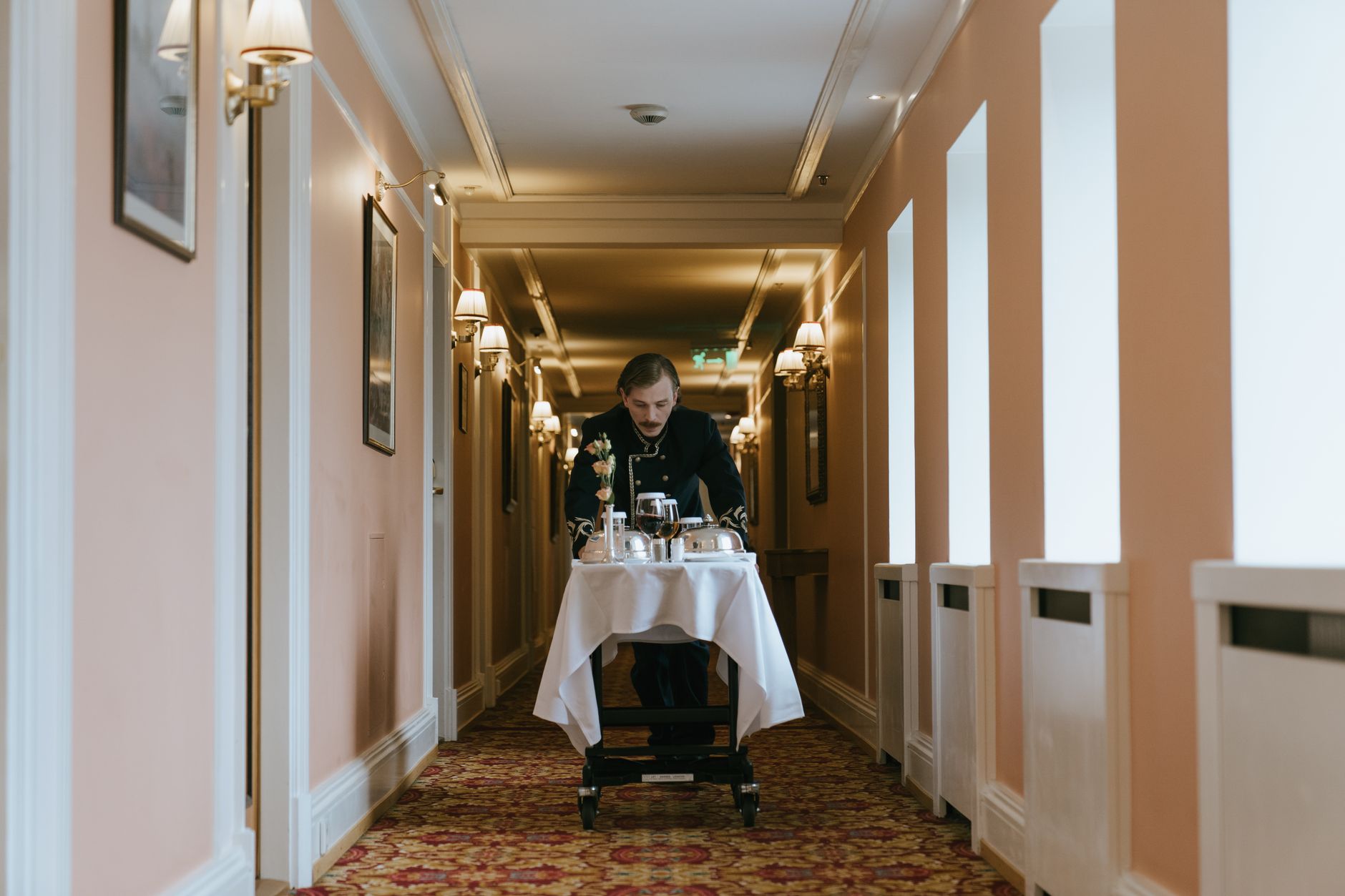
Walk the route at the hour it will actually run, and at the hour it will be busiest. A quiet mid-morning walk misses the afternoon surge that stalls a robot. Use these checks at every junction.
- Stand at each elevator bank through a full visitor surge and note how long a car takes to arrive when it is already loaded.
- Mark every door that swings into the path, and every ramp or threshold where a loaded cart stops traffic.
- Find merge points, such as a pharmacy exit feeding an emergency department corridor, and count how many routes meet there.
- Locate queues: check-in desks, visitor entrances, cafeteria lines and waiting rooms that spill into hallways.
- Ask day and night staff which corridor they avoid at shift change. Their answer often beats the floor plan.
What pause rules and detours should you set?
Pause rules should trigger on conditions staff can observe or the robot can measure: an elevator wait that exceeds your limit, a crowd at a junction, or a shift handoff. The Korean authors framed the principle as scheduling deliveries below critical congestion thresholds. They did not publish a universal trigger value, so set yours from your walk data and tighten it after the first month of logs.
Detours beat waiting in long buildings. Where the layout allows, route the robot through a secondary corridor or a service lift, and keep the detour short enough that it does not add more delay than the stop it avoids. Confirm that any elevator integration exposes the controls you need before you depend on it.
Staff need a plan for a stalled robot too. Frequent robot users in the Korean study reported more time pressure, and the authors linked that pressure to delays during congestion. Give each pause a clear handoff: who takes the tray, who is told, and when the job is logged as missed.
How do you test congestion before go-live?
Test at the worst hour, not the average hour. Run the route through the peak windows you found on the walk, with real visitor traffic and real elevator load. Record every delayed, paused or failed mission along with its location and time.
Match the pilot scope to your volume and cover several windows. The Korean study used 122 non-urgent missions over June 18 to 29, 2025, at one site. That is a useful reference point for a small single-route trial, not a standard to copy. Include at least one shift change, when staff and visitor flow both shift.
Sort every failure by type: waiting for a lift, blocked path, failed elevator call, or missed handoff. The type tells you what to fix. A waiting problem calls for a schedule change, a blocked path calls for a map or detour change, and a missed handoff calls for staffing.
Where does Service Robot Co. fit into the site assessment?
This is where we come in. Service Robot Co. starts with a site assessment that maps the route, times the pinch points and records the peak windows described above. After that assessment, we quote one fixed lease payment on a 3-year lease, and the quote reflects the layout we measured.
We are OEM-neutral, so we pick the robot for your hallways rather than for a single brand catalog. Our nationwide US engineer network handles deployment, integration, staff training and service after go-live, so the team that mapped your pinch points can also answer for them.
Frequently asked questions
Want a robot working for you?
Tell us the job and the site. We will recommend the robot, quote the lease, and keep it serviced.
Sources
- Prospective feasibility study on robot medication delivery and elevator congestion (2026)
- Hospital delivery system comparison via computer simulation
- Pulse.bot: Hotel Monville room service robot upgrade with Pudu Flashbot system
- Hospitality Net explainer: hotel robots integrating automation in hospitality