Key takeaways
- A slope rating is the maker's number, so measure your own ramp before trusting it.
- Test traction dry and wet, with empty and full tanks, and log every attempt.
- Thresholds can stop a robot even when the grade is well within its rating.
- Route the robot along flat runs and keep staff on any spot that fails.
- Ask for the ramp and threshold test during the site assessment, not after delivery.
Can a floor robot handle a clubhouse entry ramp?
Sometimes, but not on every ramp, and you should not assume it. Most floor robots built for commercial cleaning carry a shallow climb rating, and that rating depends on how full the tanks are. A clubhouse entry that rises steeply from a patio or lot can sit past what the machine was built to climb.
The safe path is short. Measure the ramp, read the maker's rating in matching units, test the robot on that exact grade both dry and wet, and route it around any spot that fails. Staff then cover the few entry points the robot cannot reach, usually far fewer spots than the whole lobby.
What slope ratings on floor robots actually say
Ratings come in two units, percent grade and degrees, and a bare number tells you little until you convert it. We found no common industry test standard for these figures, so each maker sets its own test conditions and they are not directly comparable.
Windsor's SCC172 walk-behind and ride-on scrubber manual lists a maximum rated climb and descent of 2 percent with empty tanks and 2 percent with full tanks, checked as of November 2026. A HAKO X-AC ride-on scrubber spec sheet rates inclines up to 15 percent in cleaning mode, a vendor-reported figure. Two percent is about 1.1 degrees and 15 percent is about 8.5 degrees, so the gap is wide even before you account for machine type and mode.
A dry-cleaning floor robot listing in our search gave a maximum slope of 35 degrees, which is roughly 70 percent grade. That is far steeper than the percent-rated scrubbers, so it probably reflects a separate mode or test condition. It is a vendor listing we did not check against a current datasheet, and we would not plan a clubhouse ramp around it without a written answer from the vendor.
Logistics robots report slopes too. An Omron mobile robot manual lists 5 degrees, or 8.75 percent, but that machine moves goods rather than scrubbing floors, so its number does not carry over to a clubhouse floor.
How do you test traction on a ramp and threshold?
Run the test before the first guest arrives, with a staff member nearby and both tank states covered. The steps below need no special equipment, and they answer more than a brochure does.
- Measure the ramp's rise over its run with a digital level or a long straightedge, then convert the result to percent or degrees so it matches the maker's unit.
- Compare that figure with the rating for the tank state you will run, and keep a margin rather than running at the limit.
- Run the robot up and down the ramp dry, then again on a damp morning or after a rinse, since wet tile and wet mats change grip.
- Cross each threshold strip, door track and tile-to-carpet edge at the speed the robot will use, and watch for wheel slip, a pause or a stall.
- Log every attempt with the date, weather, tank state and result, then repeat the ramp run after the first full week of service.
Which thresholds and transitions trip floor robots?
Thresholds catch robots for a reason that has nothing to do with grade. The wheels meet a raised lip, and the machine either climbs it or stops. Clubhouses have plenty of these: entry mats, metal transition strips, door tracks at the foyer, and the step from a patio or runner onto hard flooring.
Treat slope and lip problems separately. A slope failure means routing the robot elsewhere. A lip failure may mean the path skips that strip entirely, or a staff member lays a threshold ramp or clears the edge before the robot arrives. Either way, the map should not send the machine back across the same lip on every pass.
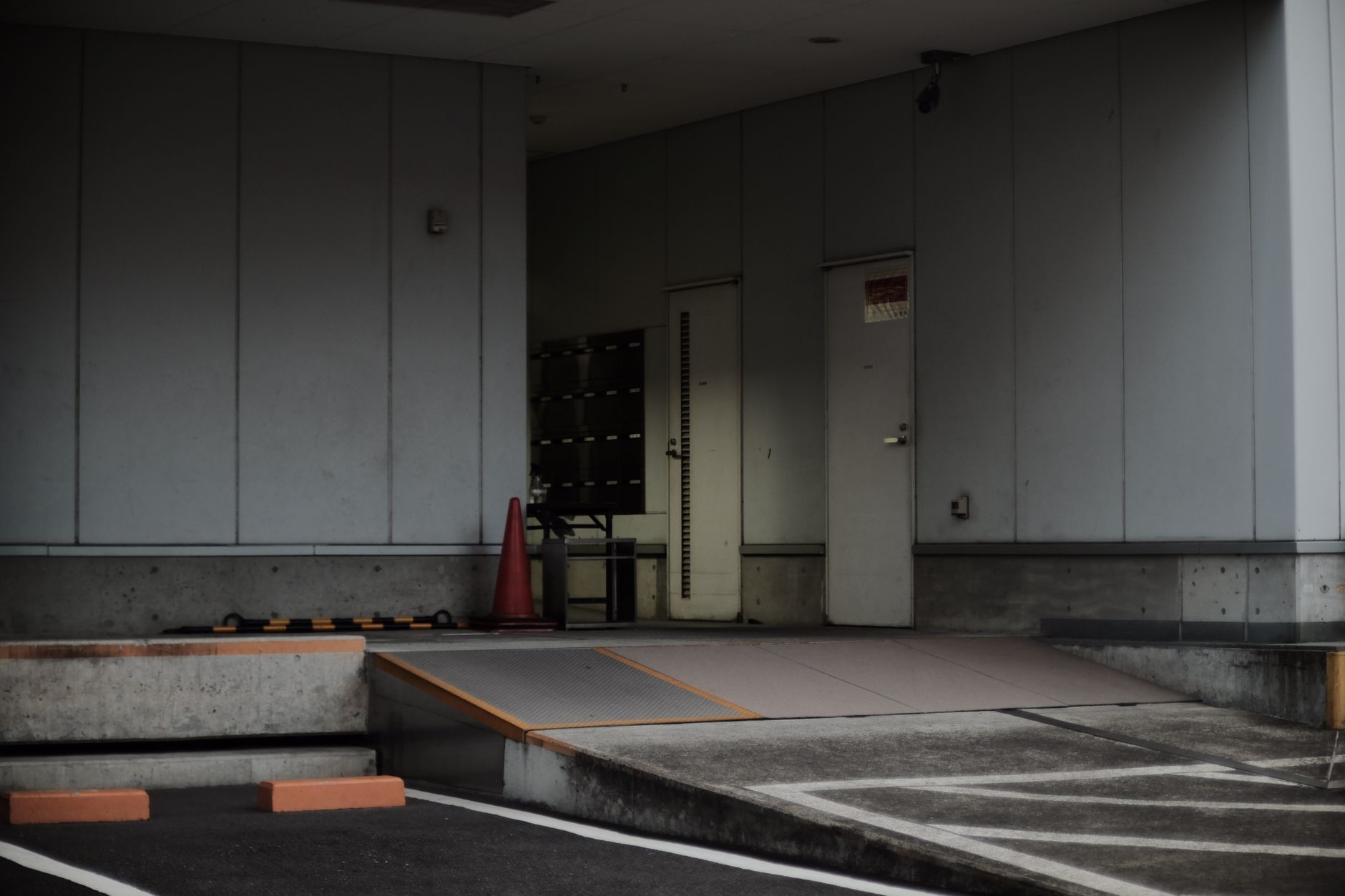
Where should the robot run instead?
Keep the robot on long, level runs such as the main lobby floor, the hallway to the pro shop and the dining room. Start and finish each pass on flat ground, and set the charging dock on level floor rather than at the foot of a ramp, so the robot does not climb just to recharge.
Ask the vendor how the map marks a zone to avoid, and how the machine recovers if it stops on an incline. Those answers tell you more than a rating does. Ask too whether a stopped robot raises an alert that reaches a phone or a front desk, so no one discovers it stuck at opening.
Which entry areas still need a staff member?
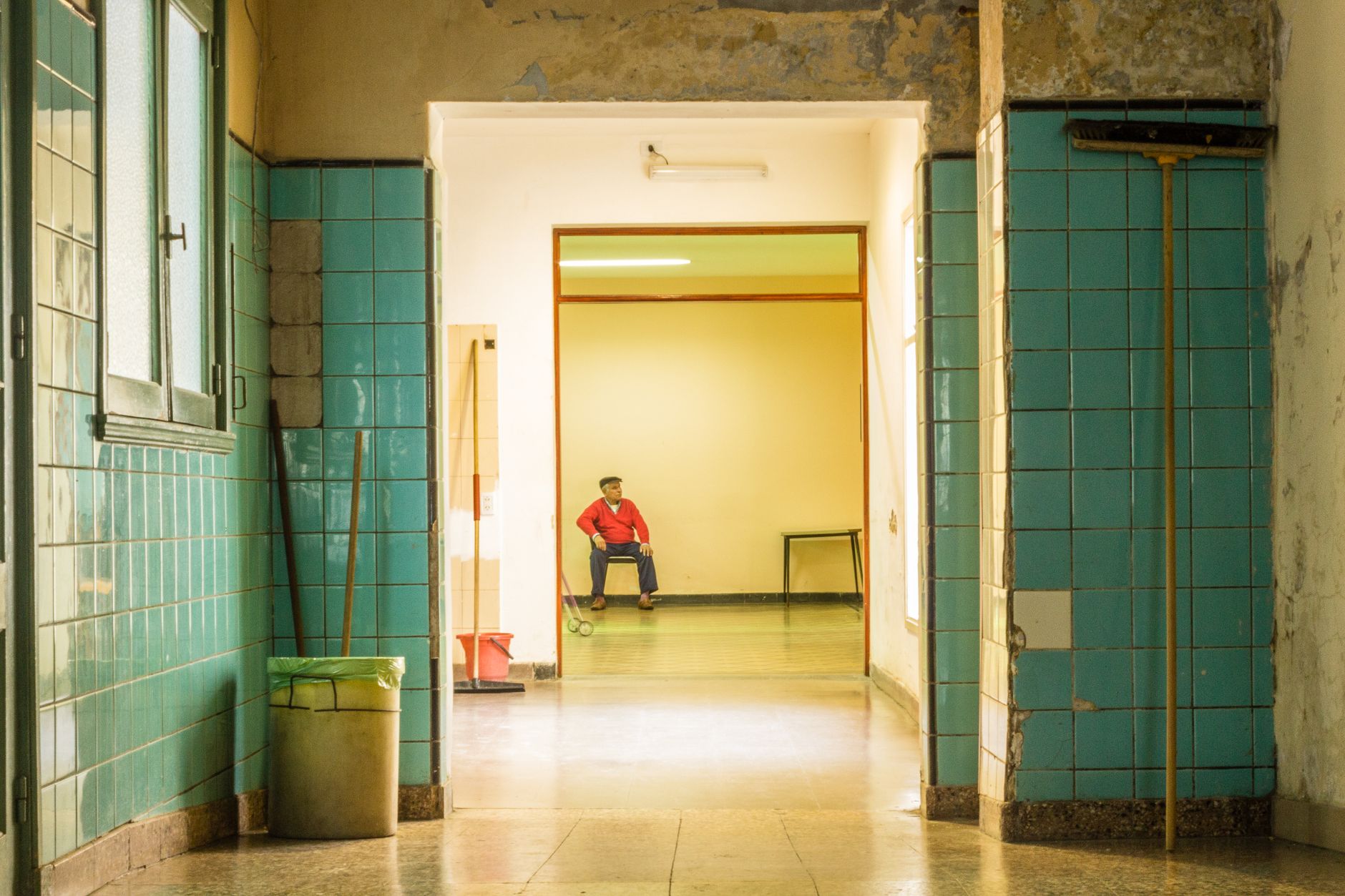
Any spot that failed the test stays on the staff list. Keep that list short, written down, and attached to the closing checklist, so the handoff never depends on memory.
The robot still covers the bulk of the floor. Staff handle the handful of places it cannot reach, which keeps a lean crew focused on guests instead of the whole lobby.
- The steep ramp itself, if the robot fails it dry or wet
- Threshold strips and door tracks the robot stalls on
- Entry mats and the first few meters inside after rain or snow
- Event nights, when guests track in more debris than a scheduled pass expects
How Service Robot Co. handles entries during a site assessment
During a site assessment, our integrators measure ramps and thresholds, map the flat routes and mark the entry points that need staff. We then quote one fixed lease payment on a 3-year lease, with financing through that lease, so the number reflects the entry as it really is.
RoboCare covers deployment, integration, training and service for each unit. Because we are OEM-neutral, we select the robot that fits the ramp and the floor across manufacturers rather than starting from one catalog. One partner covers selection, deployment and service, instead of several vendors.
Why more clubhouses are testing floor robots now
IFR counts professional cleaning robots as the third-largest professional service robot segment in its 2024 data, with sales up 34 percent to more than 25,000 units, most of them used for floor cleaning, as reported by Robotics Tomorrow.
IFR also reports that global professional service robot shipments rose 24 percent to almost 250,000 units in 2025. We did not find a cleaning-specific 2025 breakdown or a US-only cleaning unit count, so this article does not state either one.
Frequently asked questions
Want a robot working for you?
Tell us the job and the site. We will recommend the robot, quote the lease, and keep it serviced.