Key takeaways
- A hotel delivery robot talks to the elevator system, places a car call, boards, selects a floor, exits and alerts the guest. No one rides with it.
- The link is set up during installation. Relay Robotics, Pudu and Otis each describe cloud or on-site integration that the elevator contractor has to be part of.
- ADA guidance requires car doors to stay fully open for at least 3 seconds, so the robot has to board quickly or the door timing has to be adjusted.
- Fire recall and outages need a written plan. OSHA says not to use elevators when evacuating a burning building unless they are designed and designated for it.
- Before go-live, confirm who is responsible for the elevator link, how doors are timed, what the robot does in recall and how a stuck robot is reported.
How do hotel delivery robots use elevators for room service?
Hotel delivery robots use elevators by talking to the building. The robot connects wirelessly or through a cloud link to the elevator controller, places a car call, boards, selects the floor, exits, and then alerts the guest at the room. Service Robot Co. matches the robot and the elevator link to your property, because each building differs.
That matters because the people who would otherwise carry the tray are scarce. The American Hotel and Lodging Association's Front Desk Feedback survey of 246 hoteliers, run in late February 2026, found that more than half said their properties were somewhat or severely understaffed.
Relay Robotics' chief executive, Michael O'Donnell, told Hotel Dive that even a full-service hotel may have only one person behind the front desk at night. A robot that can leave the lobby and ride up to a room keeps that person at the desk. The rest of this guide covers the elevator side of the trip: how the call is made, what the timing demands, what happens in an emergency and what to confirm before go-live.
How does a robot call and ride an elevator?
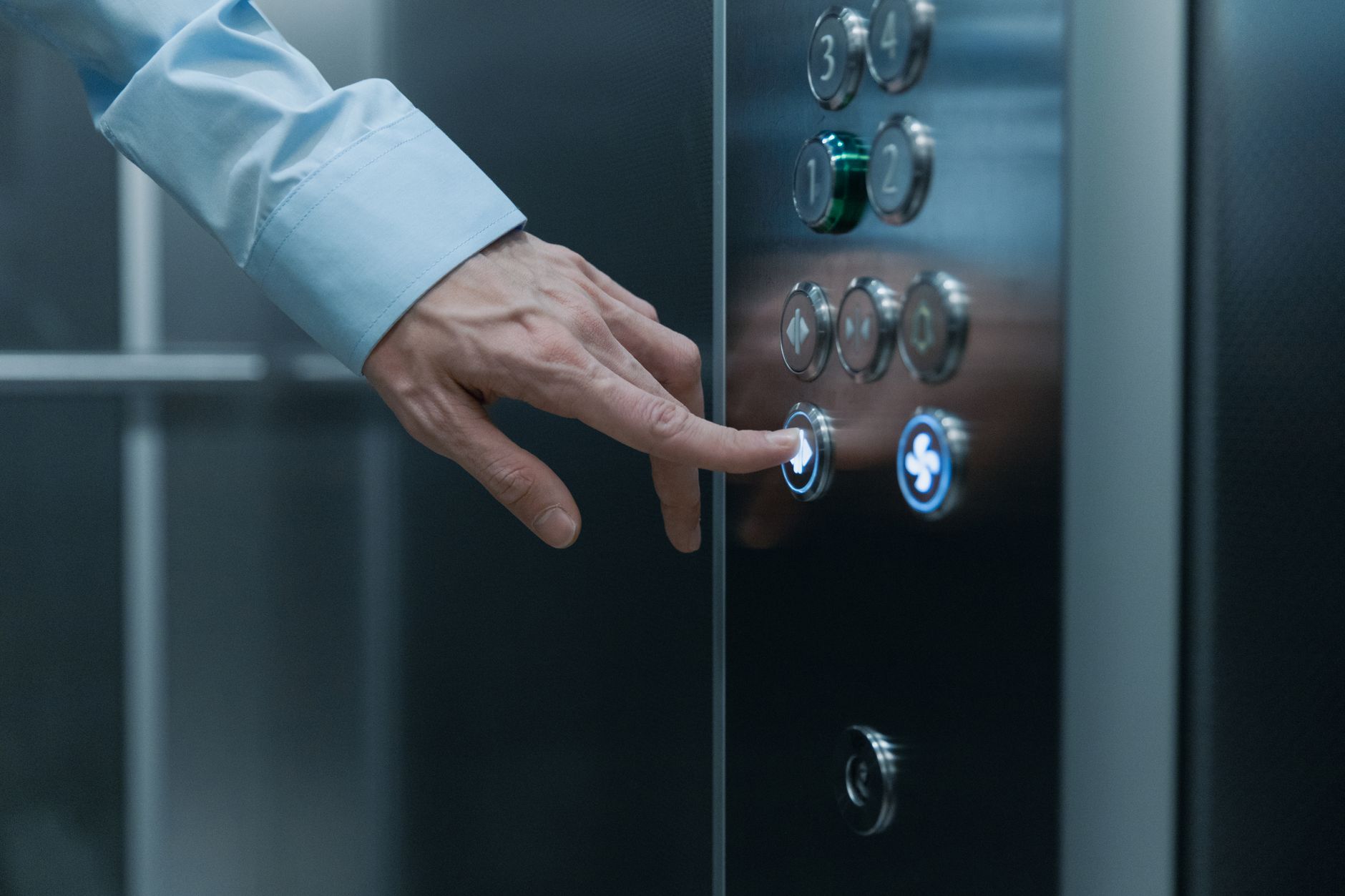
According to Relay Robotics' own site, elevators are configured during installation to communicate with its robots, after which the robots can call elevators, select their destination, and enter and exit without help from a person.
How the link is made varies by maker. A June 2023 trade report says Relay's newer Relay2 uses proprietary, cloud-based integration that the company says supports elevator makers including Otis, Schindler, TK, Mitsubishi and KONE. Pudu Robotics says its cloud elevator control needs no modification to the elevator and is compatible with KONE and Otis, and it also offers a hardware elevator control option for buildings where cloud control does not fit. Keenon lists IoT-enabled elevator riding in its hotel materials without describing the mechanics.
The elevator makers are in the loop too. Otis describes its Integrated Dispatch as a cloud-based or on-premise API that connects service robots to its elevators. It lets a robot reach every elevator in a bank so it can take the car with the fastest trip, encrypts the communication between the elevators and the robot, and lets door open and close times be adjusted to each robot's travel speed. Otis says it is compatible with most of its elevators manufactured since 2000, and that its field engineers install the hardware and coordinate with local safety inspectors.
What happens between the lobby and the guest's door?
A Tokyo hotel guide to a Relay robot walks through the run. Lobby staff place the item in the robot's compartment, which in that hotel's unit measured 26 by 22 centimeters, 37 centimeters deep, and held up to 4.5 kilograms. The robot heads to the room, calls the elevator wirelessly and boards it without help, moves around people and obstacles on the way, then rings the telephone in the guest room on arrival. When the guest opens the door, the lid opens, the guest takes the item, and the robot returns to the lobby to wait and charge.
Popular Science described the same pattern in the United States. Relay's co-founder said the robot knows how to take the elevator and make its way to the guest's room, and the robot calls the room phone on arrival and opens its compartment when the guest comes to the door. Hotel Dive says Relay robots have been in hotels since 2014 and open their own compartments so guests can take their orders.
Speed is part of the pitch. The trade report on Relay2 says the company claims an average of about four minutes to move between floors from the front desk or kitchen to a guest room. That is the company's own figure for its own robot, and a hotel with slow elevators or a long lobby walk should measure its own.
Other makers use different handoffs. Pudu lists compartment access by password verification, phone number verification or NFC sensing on its FlashBot, with 2 to 4 adjustable compartments and a load of 22.05 pounds (10 kilograms) per layer. The point of any handoff is the same: the guest should know the robot is at the door, and only the guest should be able to open the compartment.

How do door timing and car size affect a robot?
Elevator doors are built for people, not for a robot rolling in at a measured pace. The U.S. Access Board's ADA guidance says elevator doors must stay fully open for at least 3 seconds in response to a call. It also says the reopening device must remain effective for at least 20 seconds, which describes how long the device stays active, not how long the doors hold.
A robot that boards in two seconds in an empty test ride can still miss the car in live traffic. That is why Otis lists adjustable door open and close times matched to a robot's speed, aimed at first-attempt entry and exit. Ask if the hotel's elevator contractor can set door dwell for robot calls without changing it for guests.
Car size counts too. For existing altered cars, the Access Board lists a minimum clear depth of 54 inches and a minimum clear width of 36 inches, with a clear floor area of 16 square feet. Many hotel cars are larger than that minimum, but a service car that carries a housekeeping cart, a luggage cart and a robot at once may not be. Measure the actual cars the robot will use.

What happens when the elevator is in fire recall or out of service?
Life safety comes first, and a delivery robot is never more important than an evacuation. According to the U.S. Fire Administration, the US sees an estimated 3,900 hotel and motel fires a year, causing 15 deaths and 100 injuries, from a 2014 to 2016 study. OSHA's emergency preparedness guidance says workers should not use elevators when evacuating a burning building unless the elevators are properly designed and designated for it.
A robot should follow the same rule. When recall starts, the robot should stop taking calls on that bank, hold in a safe place and hand the order to staff. Ask the vendor to show that behavior, not describe it. Otis notes that its integration can give a robot access to every elevator in a bank, which helps with ordinary outages. It does not change what a robot should do during recall.
Ordinary outages are duller but more common: one car down for service, a door fault, a loss of network. A plan needs a hold point, a named staff member who gets the alert, a guest message that stops promising an arrival time and a clean way to restart. Pudu's hardware elevator option exists for buildings where a cloud link does not fit, which is another reason to ask what the fallback is when the link drops.

What should a hotel confirm before a robot goes live on the elevators?
Most elevator trouble is an ownership problem. The hotel, the elevator contractor and the robot maker each hold a piece of the link, and nobody holds the whole. Write the answers down before the first delivery.
- Who holds the elevator link: the hotel, the elevator contractor or the robot maker.
- Sign-off from the elevator contractor and any local safety inspector on robot calls.
- How door timing was tested, including at check-in and checkout peaks.
- What the robot does in fire recall and outage, where it holds and who gets the alert.
- Use of more than one car in a bank when one is busy.
- How the guest is alerted at the room, and how the compartment is verified.
- Where a stuck robot is reported and who answers, at what hour.
Want help picking the right robot? Talk to us
Book a free site assessment with Service Robot Co. We look at your elevators, your lobby route, your doors and your overnight staffing, then pick a robot across manufacturers that fits the building. If it suits, we lease on a 3-year lease with a $1 buyout at the end, deploy it, work with your elevator contractor, train your team and service it. Support is 24/7 with 10-minute specialist triage, regional service engineers in every serviced state, three check visits a year and a 12-month warranty.
Frequently asked questions
Want a robot working for you?
Tell us the job and the site. We will recommend the robot, quote the lease, and keep it serviced.
Sources
- Relay Robotics
- Hotel Dive, hotel delivery robots
- Facilities Dive, hotel robot deliveries and elevators
- Fun-Japan, a hotel delivery robot in Tokyo
- Popular Science, delivery robots in hotels
- Automated Warehouse, Relay2 elevator integration
- Otis, Integrated Dispatch
- Pudu Robotics, FlashBot
- Keenon Robotics, smart hotel
- U.S. Access Board, elevators and platform lifts
- OSHA, emergency preparedness
- U.S. Fire Administration, hotel fires
- Hospitality Net, AHLA staffing survey