Key takeaways
- Start with repetitive horizontal moves, not the most chaotic forklift crossings.
- Design AMR routes around shrink-wrap, dock, and route-loading choke points before go-live.
- Pilot through a real seasonal surge window, because beverage volume swings expose weak handoffs fast.
- Safety validation has to cover pedestrians, forklifts, wrappers, docks, and maintenance work, not just normal robot travel.
- A neutral integrator matters when you need financing, integration, training, and field service under one operating plan.
What does a good AMR deployment look like in a beverage hub?
In a live beverage distribution center, the right AMR rollout is phased, narrow at first, and built around traffic discipline. You do not begin by sending robots into the most tangled aisle crossings at peak route-load hour. You begin with repeatable pallet, cart, or case-adjacent transport between well-defined points, then expand only after the site proves it can protect throughput and safety at the same time.
That matters more in beverage than in many other warehouse environments. Forklifts are constant, shrink-wrap lanes create stop-and-go congestion, route loading compresses the shipping window, and summer demand can rearrange the building’s stress points in a matter of weeks. According to the U.S. Bureau of Labor Statistics, warehousing and storage recorded a 2024 total recordable injury and illness rate of 4.8 cases per 100 full-time workers. OSHA also notes that inspections under its National Emphasis Program for warehouses and distribution centers began on October 13, 2023. In other words, this is not a forgiving place to improvise automation.
A strong playbook has five moves. Pick the first workflow with surgical care. Separate AMR travel from forklift conflict zones wherever possible. Tie the robot workflow to warehouse and route-loading rules, not just a map. Train leads, operators, and maintenance together. Then expand one operational loop at a time.
Which beverage workflows should go first?
The first AMR use case should be dull, repetitive, and physically expensive for people. That usually means horizontal transport between receiving, buffer storage, value-add stations, wrap lanes, staging, or replenishment zones. It does not usually mean mixed-SKU route selection in the messiest part of the building on day one.
OSHA’s warehousing guidance repeatedly comes back to the same pressure points: powered industrial trucks, material handling, walking-working surfaces, and ergonomics. It also flags whole-body vibration, dock shock, long reverse travel, and pushing and pulling heavy loads as recurring risk factors in warehouse work. That is the opening for autonomous mobile robot rental or a purchase deployment. If people are burning time on long non-value-add walks or repetitive pallet moves, the workflow is a candidate.
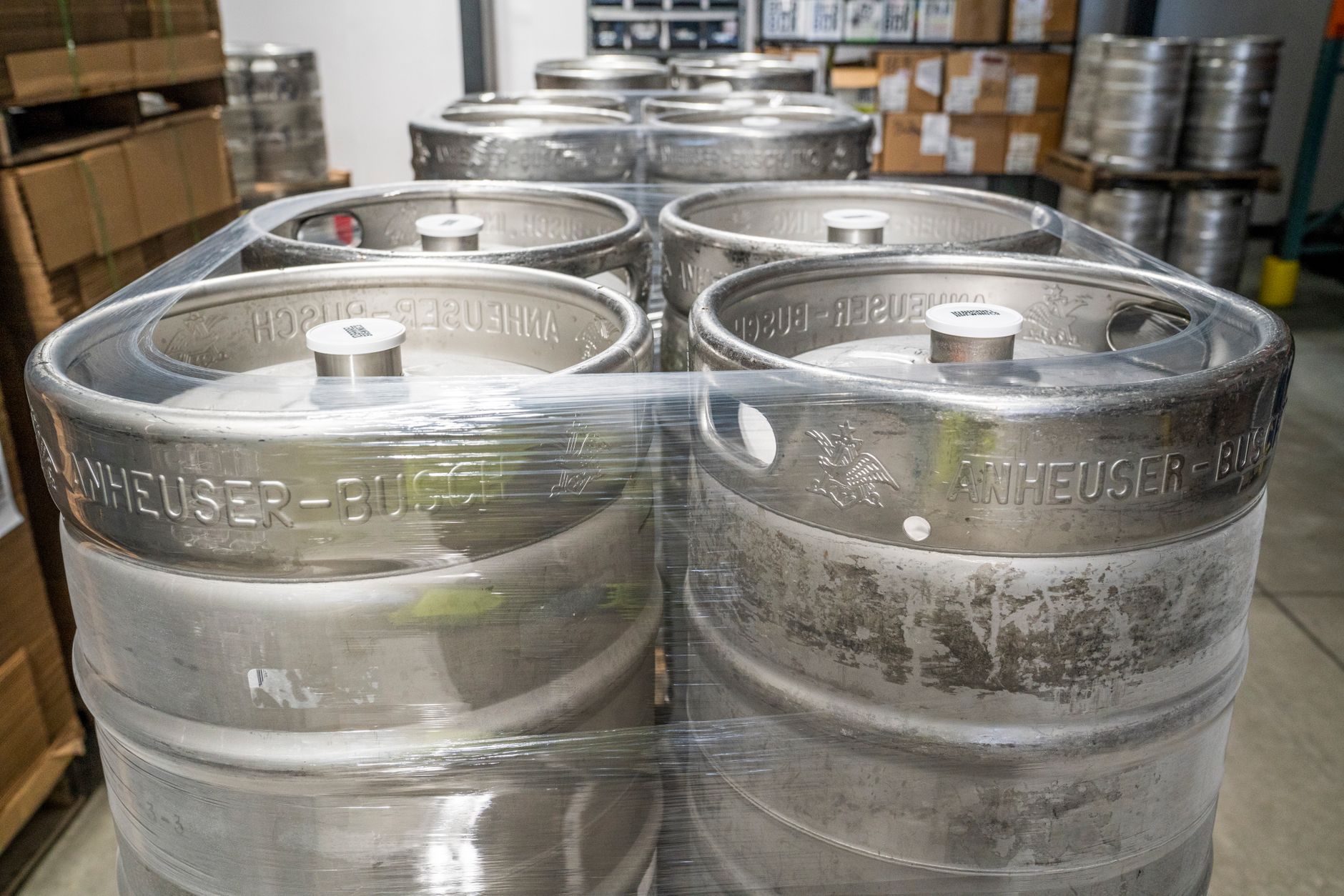
In beverage, the best first lanes often sit just upstream or downstream of the wrap area. Finished loads need to move. Empty pallets and dunnage need to move. Short-haul replenishment between reserve and forward positions needs to move. These loops are measurable, routeable, and easy to compare against baseline labor, travel time, and damage rates.
The bad first candidates tend to share one trait: too many exceptions. If a task depends on frequent judgment calls about unstable pallets, ad hoc parking, trailer changes, or last-minute route resequencing, keep humans on it until the surrounding process is cleaner.
- Good first phase: pallet or cart transport on fixed point-to-point loops
- Good first phase: movement between wrap lanes and staging buffers
- Good first phase: replenishment on predictable lanes outside heavy pick clusters
- Poor first phase: route loading inside peak dock congestion
- Poor first phase: exception-heavy moves involving unstable mixed loads
How do you map around forklifts, wrappers, and route loading?
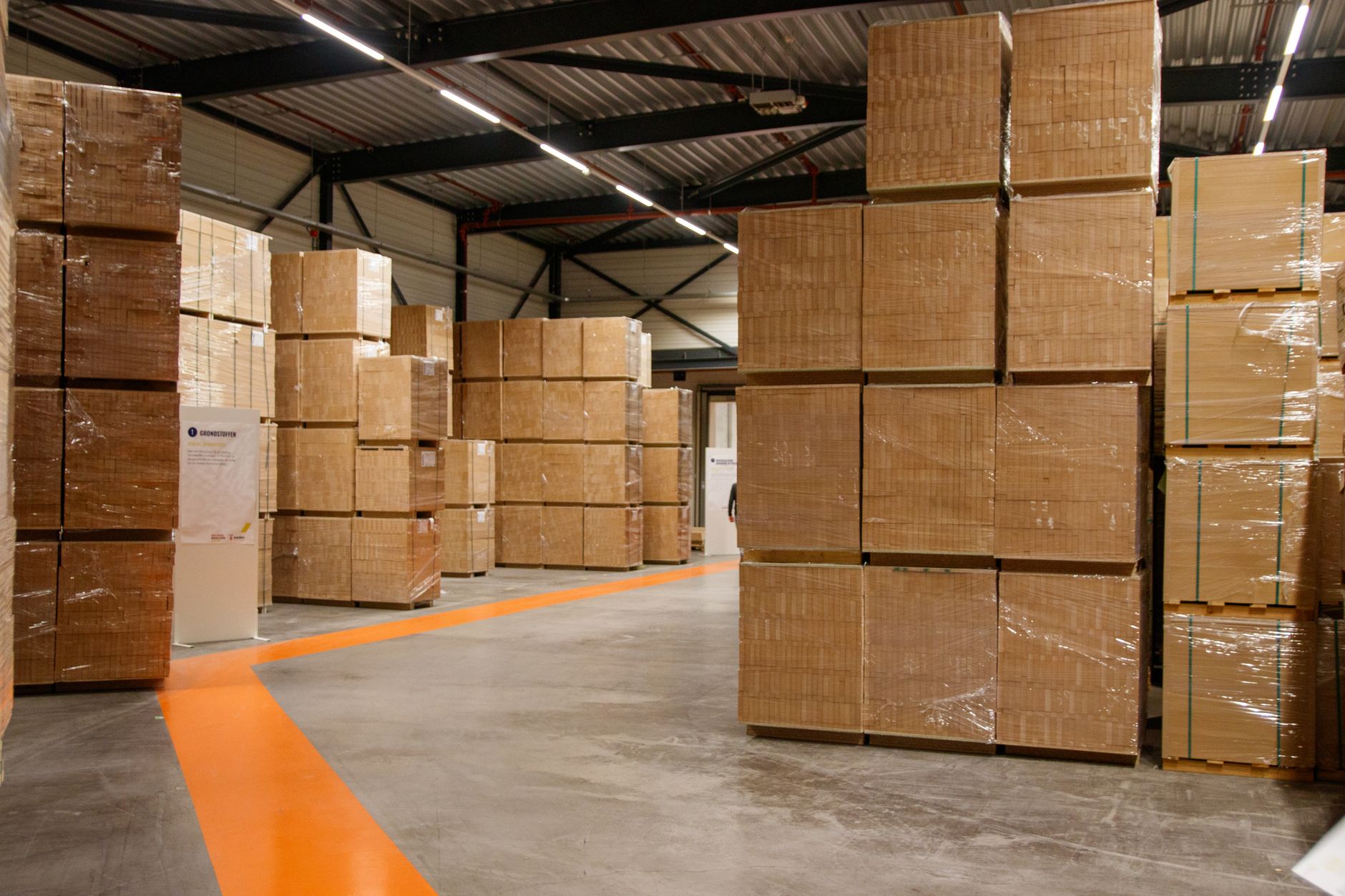
This is where many projects go sideways. Teams map the robot’s shortest path instead of the building’s safest operating path. In beverage hubs, those are rarely the same thing. A usable AMR lane may be longer on paper and much better in practice because it avoids wrapper discharge, dock plate approaches, battery-change corners, and forklift blind turns.
OSHA describes warehouses as a constant moving mix of people, vehicles, and equipment, and its pedestrian-traffic guidance for powered industrial trucks warns that many bystanders are injured when forklifts strike pedestrians or when loads fall. The site survey therefore has to classify crossings, not just distances. Count every shared doorway, every rack-end turn, every shrink-wrap ejection point, every trailer door approach, and every spot where route loaders build pressure late in the shift.
A good deployment team will create traffic tiers. Tier one lanes are AMR-dominant and lightly crossed. Tier two lanes are shared but governed by signage, right-of-way rules, speed limits, and physical separation where possible. Tier three zones remain human-and-forklift territory, with robots entering only under strict conditions or not at all.
This is also where a vendor neutral robot integrator earns its keep. Service Robot Co. is OEM-neutral, so the route design can start with the operation instead of a preselected machine. That is the better way to choose between autonomous mobile robot rental, lease rental or sale, or a larger phased fleet deployment. The building should select the robot, not the other way around.
Why do seasonal surges need to be part of the pilot?
A beverage hub that works in February can still break in June. Memorial Day through Labor Day is not just more volume. It is a different congestion pattern, a different reorder rhythm, and often a different labor mix. If the pilot never sees that pressure, the rollout has not been tested where it matters.
Current demand data makes that point concrete. Circana reported that during the week of Memorial Day-related shopping in 2025, premade cocktail units surged 22 percent, volume rose 24 percent, and dollar sales climbed 26 percent versus the 2024 holiday run-up. Circana also found lagers delivered a 52 million dollar week-over-week lift in the week preceding Memorial Day in 2025. On the distributor side, the National Beer Wholesalers Association said its June 2026 Beer Purchasers’ Index reached 52, the fourth straight month at or above 50, signaling expansion entering the core summer season.
Those are not abstract category numbers. They tell you when fast-moving SKUs, replenishment cadence, and dock pressure can all change at once. A credible beverage AMR pilot should therefore include at least one surge window, one promotional reset, and one route-loading period where dispatch is under real clock pressure.
If you cannot pilot during a live surge, simulate it with temporary pallet staging, added forklift traffic, and compressed release timing. Calm-day testing tends to flatter weak designs.
What safety and operating rules have to be nailed before go-live?
Normal robot travel is only half the safety story. OSHA’s robotics overview says many robot accidents occur during non-routine conditions such as programming, maintenance, testing, setup, or adjustment. Beverage sites feel that risk sharply because maintenance often happens in the same constrained spaces where forklifts, wrappers, conveyors, and outbound teams are still working around the clock.
Go-live readiness should therefore cover three layers. First, travel governance: speed, yielding, crossing priority, stop zones, horn or light signaling, and blocked-path escalation. Second, equipment interaction: wrapper interfaces, conveyor handoffs, dock approaches, charger locations, and battery-swap or service access. Third, exception handling: fallen product, wet floors, damaged pallets, route changes, and manual takeover.
OSHA’s warehouse guidance also stresses aisle clearances, well-maintained floors, and unobstructed passageways. In beverage, floor condition is not cosmetic. Broken stretch film, slipped trays, condensation, and pallet fragments can degrade navigation and create trip exposure. The building has to keep the robot lane clean enough to stay predictable.
Before site acceptance, run drills for blocked aisles, dead batteries, network loss, trailer-door changes, and emergency stops during active shift traffic. If the team has only seen success cases, it is not ready.
- Certify who can restart, recover, and manually move a disabled robot
- Mark permanent AMR lanes and forklift crossings with plain floor rules
- Test wrapper, conveyor, and staging handoffs under load
- Train supervisors on exception triage, not just operators on normal use
- Write a maintenance lockout and service-access procedure before launch
How should the rollout be phased across the building?
Think in loops, not units. Phase one should automate one loop and prove four things: stable uptime, safe coexistence with forklifts, no hit to route departure performance, and measurable labor or travel savings. Only then should phase two add another loop, another department, or another shift.
A practical sequence in beverage often runs like this: start with a daytime or off-peak transport loop, then extend to a second loop tied to staging, then add tighter interactions near outbound. Route loading should usually be a later phase because it magnifies every weakness in dispatch logic, crossing control, and operator discipline.
This is where Service Robot Co. can fit the buying structure to the rollout plan. Some operators want a robot pilot program or try before you buy path. Others need robot leasing for business, monthly payment programs, or a broader lease purchase program to spread adoption over several phases. Because Service Robot Co. finances, deploys, integrates, trains, and services every unit through a nationwide U.S. engineer network, the operating model can stay with one partner and one number as the fleet grows.
The sequencing rule is simple. Do not scale because the first robot looked good on a tour. Scale because a measured loop held up under live warehouse pressure.
What metrics decide if the program should expand?
The wrong metric is raw robot utilization by itself. A beverage hub should judge AMRs on system effect. Did travel time drop on the targeted loop. Did forklift congestion improve or worsen. Did route loads leave on time. Did product damage or rehandling fall. Did the site reduce the least productive labor movement without pushing more stress elsewhere.
Track baseline and post-launch numbers for at least six weeks, and longer if the pilot crosses a seasonal change. Use shift-level views, not monthly averages alone. One robot that performs well during low-volume hours but causes backup at release time is not a success.
At minimum, watch moves per hour, task completion time, blocked-path events, manual interventions, downtime by cause, route departure adherence, near-miss reports, and damage incidents around handoff points. If possible, separate normal-week performance from surge-week performance. Beverage operations do not live on averages. They live on peaks.
The best expansion decisions are dull. They come from evidence, not enthusiasm.