Key takeaways
- Start in staff-controlled corridors, intake support space, and booking-adjacent back hallways, not housing units.
- Write escort, stop-call, and contraband inspection rules before the first live shift, because the operational controls matter more than the map.
- Docking should stay in secured staff space with power, drainage, camera coverage, and a daily inspection routine.
- Run the pilot on a narrow schedule for 30 to 60 days, measure missed cleans and staff touches, then expand only after post orders hold up.
What does a good county jail robot pilot actually look like?
A good county jail cleaning robot pilot is not a whole-facility launch. It is a tightly bounded test in corridors, intake-adjacent circulation, and other support spaces that staff already control well. The first goal is operational fit, not headline ROI. You are proving that the machine can clean without creating a supervision problem, a contraband hiding point, or a movement conflict.
That means a short route list, a fixed escort and recovery procedure, a locked-down docking location, and a written rule for when the robot does and does not run. In most jails, the right opening scope is staff-side hallways, sally-port-adjacent interior corridors after traffic drops, program support space, and similar predictable hard-floor areas. Housing units, medical treatment rooms, and any zone with frequent line disturbances should wait.
The scale of the environment is real. According to the Bureau of Justice Statistics, local jails held 664,200 people at midyear 2023, processed 7.6 million admissions from July 2022 through June 2023, and averaged 32 days in custody before release. That churn is exactly why a jail pilot has to be built around movement control and repeatable post orders, not generic commercial cleaning talking points.
- Pilot the route, not the whole building.
- Choose spaces with predictable traffic and clear staff ownership.
- Treat every robot touchpoint as a custody and safety procedure, not just a janitorial task.
Where should the first routes be and where should they not be?
For a first deployment, the safest floor to automate is usually the one with the least ambiguity. Booking support corridors, staff circulation paths, administrative back hallways, warehouse-style supply corridors, visitation support space after hours, and intake overflow corridors are often better candidates than inmate dayrooms or shower-adjacent housing areas.
Avoid any route that forces the robot through live inmate movement unless the site has already proved it can stop, clear, and resume without staff distraction. The Bureau of Justice Statistics reports that 70 percent of the jail population at midyear 2023 was unconvicted. Intake, court turnover, classification movement, and release traffic therefore stay volatile. That volatility makes route predictability more valuable than raw square footage.
Also pay attention to floor condition. OSHA requires walking-working surfaces to be kept clean, orderly, and sanitary, and floors kept clean and, to the extent feasible, dry. If a route routinely includes standing water, leaking fixtures, or cluttered chokepoints, fix the floor and the process before you add autonomy.
- Best first zones: staff corridors, intake support halls, records corridors, receiving areas, and other hard-floor support space.
- Wait on: housing pods, segregation dayroom thresholds, shower surrounds, clinic exam space, and any corridor used for frequent emergency response.
- Do not count temporary holding cells or their immediate thresholds as early pilot space unless the sheriff explicitly wants that risk profile.
What supervision rules matter before go-live?
A county jail pilot works when custody, facilities, and janitorial leadership agree on one plain rule: the robot never creates an unowned moment. Someone owns dispatch, someone owns recovery, and the post order says who can pause, move, inspect, or power it down.
PREA also matters here. The Bureau of Justice Assistance notes that PREA standards apply to state and local prisons, jails, and lockups. Even when a cleaning robot does not capture or store sensitive information in the way a camera system would, the route, timing, and staff interaction around that robot still need to respect the facility's supervision model and audit posture.
Write the operating rule at the same level of clarity you would use for a key ring or a restraint cart. Who escorts it through a secure door. Who verifies it is clear of hidden items before it leaves a controlled area. Who responds if it stalls outside the planned window. If those answers stay verbal, the pilot will drift.
- Assign one operational owner per shift.
- Define who can start, stop, reroute, recover, and inspect the machine.
- Require radio language for a stopped robot in a secure corridor.
- Build a written no-run list for med pass, count, intake surges, emergency response, and legal movement windows.
How should a jail handle contraband and tamper risk?
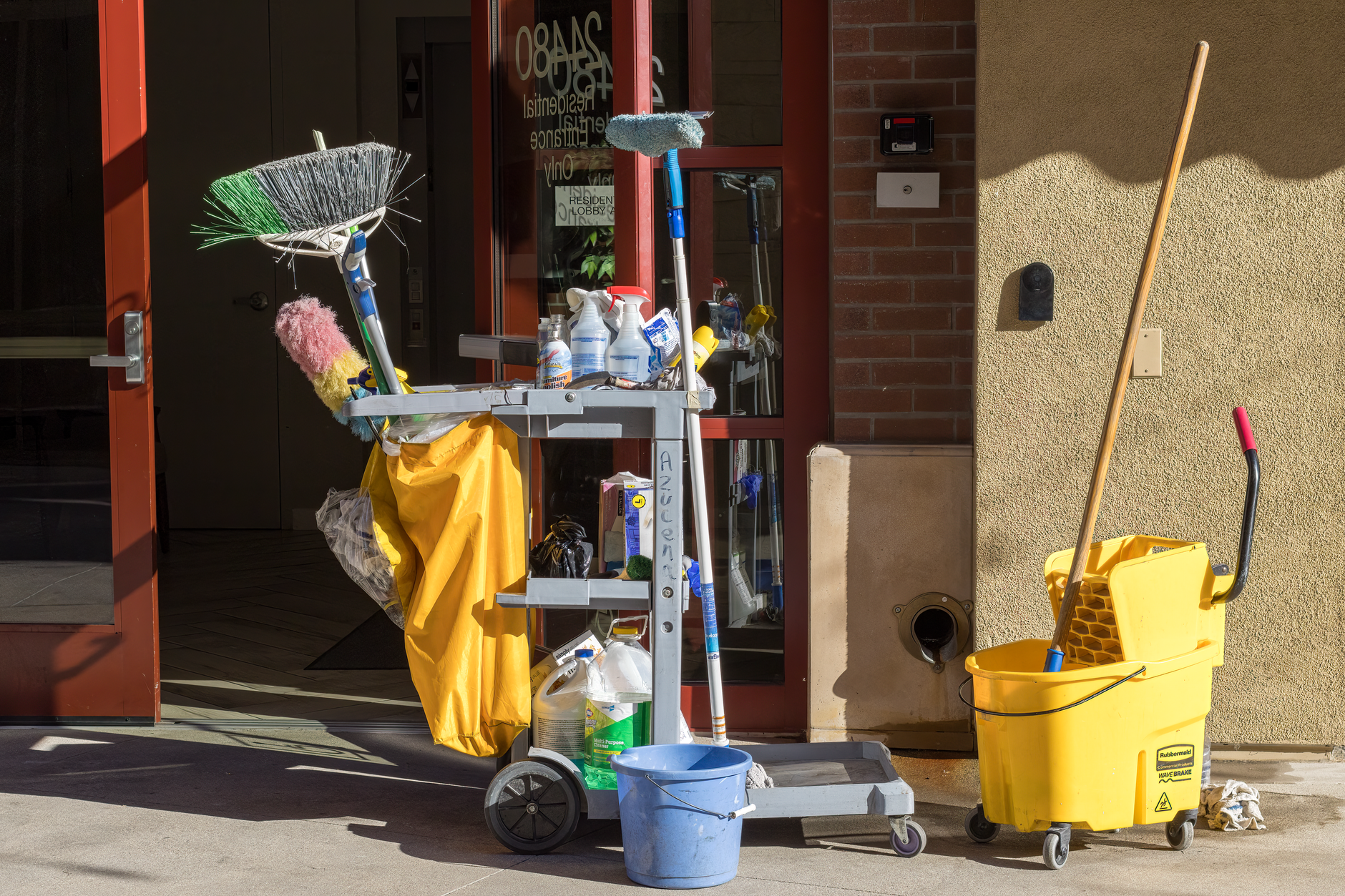
This is the question that separates a real correctional pilot from a generic facility demo. The National Institute of Justice says contraband in correctional facilities includes illegal items such as drugs and weapons, along with prohibited items such as cell phones, and that staff need to detect and confiscate contraband quickly to prevent violence and further crimes. A cleaning robot introduces cavities, panels, bins, bumpers, and dock hardware that all have to be evaluated through that lens.
The Department of Justice Office of the Inspector General found that cell phones were the most common type of contraband recovered in federal prisons from fiscal years 2012 through 2014, with at least 8,700 recovered. That statistic is from the federal system, not county jails, but the lesson carries over cleanly. If a device brings enclosed space into a secure environment, you need a search protocol and accountability log.
In practice, that means no personal-item co-storage near the dock, tamper-evident inspection points, a pre-run and post-run visual check, and a rule that the unit is not parked unattended in inmate-accessible space. If your team cannot explain where a hidden item could be placed and when it would be discovered, the pilot is not ready.
- Inspect underside, recovery tank area, access panels, and charging interface every shift.
- Keep the dock in staff-only space, not in a mixed-access alcove.
- Log exceptions: unusual debris, unexplained stop events, broken trim, missing fasteners, or unplanned route deviation.
- Treat firmware ports, USB access, removable covers, and loose accessories as security items under chain-of-custody discipline.
Where should the dock and support gear go?
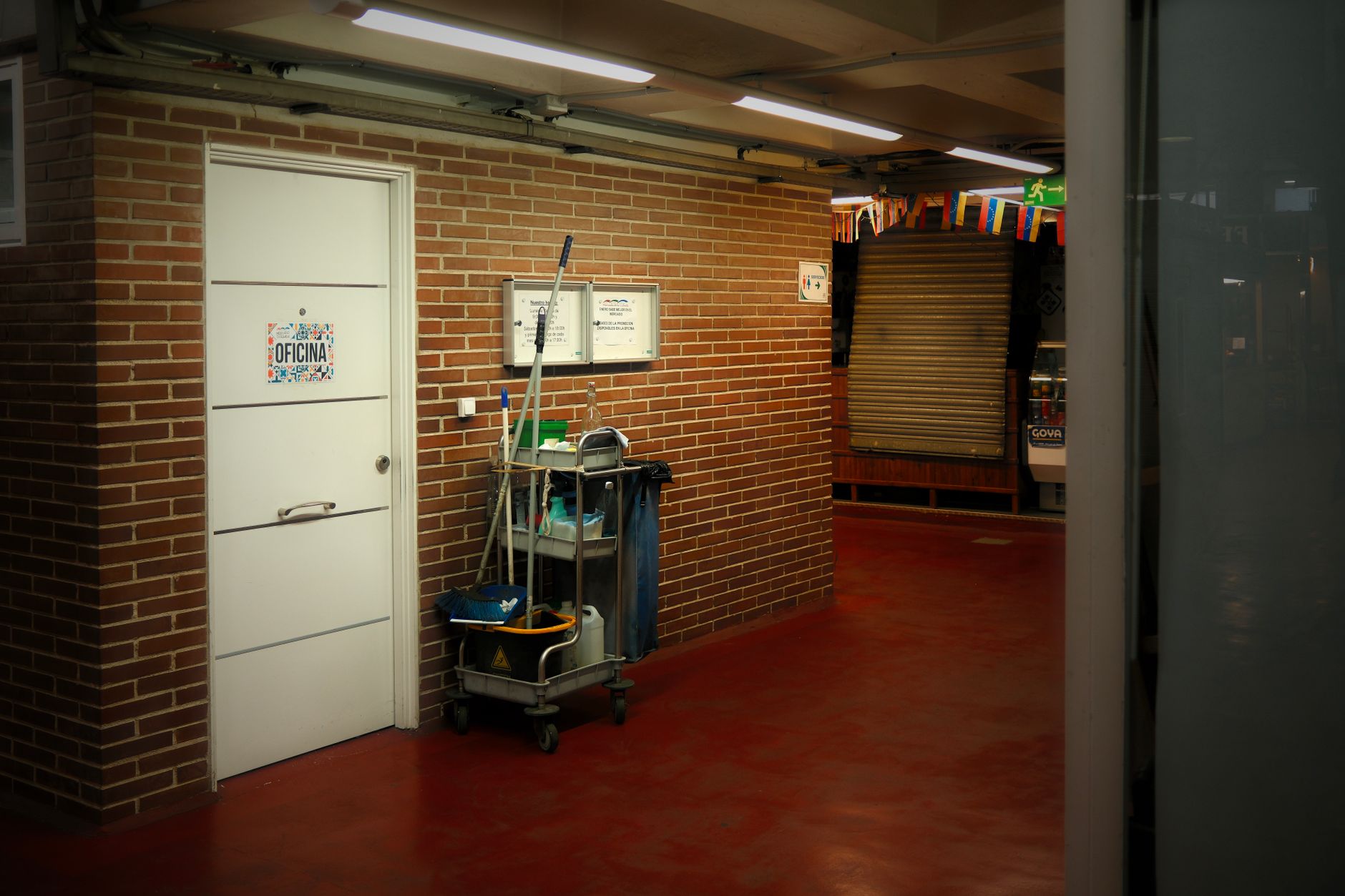
Dock placement in a jail is part electrical design, part custody design. The right location is usually a secured staff area near the route but outside regular inmate circulation, with camera coverage, reliable power, drainage access for fill and dump tasks, and enough room for a clean inspection approach. A cramped closet with poor visibility is a bad answer even if it is convenient.
Use the floor-safety rule as a design check. OSHA requires passageways and walking-working surfaces to stay orderly and free of hazards, and its slips-and-trips guidance recommends keeping aisles clear and cleaning only one side of a passageway at a time. A dock that narrows egress or leaves hoses, cords, or wet service residue in the path defeats the point of automation.
The dock also needs operational geography. Put it where an officer or facilities lead can recover the unit quickly without opening extra barriers or crossing an active inmate move. If the shortest recovery path cuts through a control problem, choose a different dock.
- Secure staff-only room or caged service bay.
- Dedicated power and enough clearance for manual recovery.
- No storage of chemicals, tools, or loose consumables in a way that creates concealment points.
- Camera view of the dock, the approach path, and the service area.
How do escort procedures and schedules keep the pilot boring?
Boring is the goal. The robot should run in a quiet window, on a narrow map, with the least possible custody drama. According to the Bureau of Justice Statistics, local jails employed 164,800 correctional officers in 2023 and had about four inmates for every correctional officer. That is not slack staffing. Your pilot has to reduce nuisance work, not add one more moving object that staff must babysit.
The cleanest operating model is usually a start window after the last predictable traffic wave in the target zone, with an officer or designated facilities lead walking the first several launches until the routine settles. Once the route is stable, the escort may shrink to a door-open and area-clear procedure rather than a full walkalong, but only if the local command staff is satisfied that recovery is fast and exceptions are rare.
Keep the schedule narrow at first. A two-hour overnight window on three to five routes tells you more than an all-night free-for-all. If a robot cannot complete those routes cleanly for a month, it has no business going deeper into the jail.
- Start with one shift, one route family, one owner.
- Pause runs during count, emergency medical response, meal movement, and unscheduled booking surges.
- Require a documented area-clear check before launch and a documented docked-and-inspected check after return.
What should the pilot scorecard measure?
Skip vanity metrics. In a county jail, the first scorecard should measure control, consistency, and labor quality. Did the robot finish the route. How many staff touches were needed. How many stop events happened in active circulation. How often did wet-floor controls, barricades, or reroutes have to be added.
You should also measure the baseline your team is replacing. The Bureau of Justice Statistics reports 915,800 jail beds nationwide in 2023, with 73 percent occupied and 12 percent of jail jurisdictions operating above rated capacity. In crowded systems, corridor cleaning windows compress quickly. A useful pilot therefore tracks whether the robot preserves cleaning frequency in time slots that were previously skipped or rushed.
A practical 30 to 60 day scorecard often includes route completion rate, average intervention minutes per run, number of security exceptions, number of wet-floor complaints, and whether supervisors would keep the route automated without adding post labor. If you cannot answer that last question, the pilot is still a trial, not a program.
- Route completion rate.
- Average human intervention minutes per run.
- Security exceptions or contraband-related findings.
- Slip, trip, or blocked-egress complaints tied to the run window.
- Cleaning frequency preserved in hard-to-staff overnight periods.
How should a sheriff phase the rollout after the pilot?
Phase two should look like a copy, not a leap. Expand from one route family to the next most similar route family. If the first win is administrative and intake support corridors, the next move might be adjacent booking circulation or another staff-controlled hard-floor loop in the same building. Do not jump straight from a quiet corridor to a volatile housing environment because the map already exists.
This is also where an OEM-neutral integrator earns its keep. Service Robot Co. works as one vendor for the whole lifecycle. We assess the floor and the post order, choose the right machine across manufacturers, then finance, deploy, integrate, train, and service it through a nationwide U.S. engineer network. In a jail setting, that matters because the real work is not just getting a robot on site. It is keeping uptime, training each shift, and adjusting routes without turning the sheriff's office into a robot service department.
If the pilot proves out, the long-term program should still stay disciplined. Keep a no-go map, keep dock security tight, and revisit routes whenever the jail repurposes space. County jails change faster than office buildings. The robot program has to respect that reality or it will age badly.
Why a neutral deployment partner matters more in corrections
County jails do not need another vendor that ships hardware and disappears. They need one accountable operator across assessment, monthly payment programs, deployment, training, maintenance included support, and on-site dispatch when something goes wrong. That is especially true if the sheriff wants a commercial robot rental or robot leasing for business rather than a one-time purchase.
Service Robot Co. is built for that operating model. We are a vendor neutral robot integrator, which means we select the robot that fits the floor, the security posture, and the staffing reality, then stay on the hook for the rollout. For corrections teams that want a robot pilot program, try before you buy path, or robot as a service structure with one partner and one number, that single point of accountability usually matters more than any one spec sheet.