Key takeaways
- Start with one predictable zone and one narrow use case, not a whole-clinic rollout.
- Protect treatment flow first. Build cleaning windows around eval blocks, gait work, and peak arrival times.
- Treat wet zones, rubber flooring, and mobility-device traffic as the core pilot risks to test and document.
- Use access-width and turning-clearance rules to decide where autonomous cleaning should and should not run during open hours.
- A good pilot ends with a site-specific SOP, measurable labor and quality data, and a clear go or no-go decision.
What does a low-risk robot pilot look like in an outpatient PT clinic?
A low-risk pilot in a physical therapy clinic is not about seeing how much square footage a robot can cover. It is about proving that autonomous cleaning can happen without interrupting therapists, startling patients, blocking walkers or wheelchairs, or creating new slip hazards around treatment spaces. In practice, that means a short pilot, a tightly defined route, and operating windows chosen around the clinic's real cadence rather than the robot's theoretical capacity.
The safest starting point is one controlled loop: lobby, wide corridor, open gym perimeter, and perhaps a low-acuity back hall. Keep the robot out of parallel bars, transfer practice areas, mat zones, and any space where patients are actively stepping, turning, or recovering balance. If the pilot works there first, you expand. If it does not, you fail small and cheaply in operational terms.
This matters because outpatient care is still healthcare. The CDC's outpatient infection-prevention guidance treats ambulatory settings as care environments that need defined cleaning responsibilities, schedules, and procedures. Your pilot should be built the same way, with named owners, documented cleaning windows, spill escalation rules, and a daily signoff process.
Which clinic areas should be in scope on day one?
Choose areas with stable traffic, simple geometry, and low clinical sensitivity. That usually means the waiting area after the morning rush, perimeter paths in the therapy gym during low census windows, and corridors that do not serve as active gait-training lanes. A pilot becomes fragile when the first route includes tight turns, movable stools, resistance bands on the floor, and constant therapist repositioning.
The key is to map by operational friction, not by departmental labels. Two rooms of equal size can be completely different from a robot standpoint if one is used for theraband work and assisted ambulation while the other is a predictable check-in zone with fixed furniture.
A practical day-one scope usually excludes any zone where staff intentionally place patients near floor level, where water is routinely present, or where sudden starts and stops are part of treatment. You can still study those spaces during the pilot. Just do not automate them first.
- Best starter zones: reception perimeter, wide hallways, open gym edges, staff-only back corridors
- Usually defer: hydrotherapy entries, locker-room thresholds, transfer-training bays, mat tables, parallel bars, pediatric play therapy spaces
- Treat as manual-clean only during phase one: any area with active body-fluid cleanup potential or frequent spot spills
How should you schedule cleaning around treatment blocks?
Schedule from the patient calendar backward. In most PT clinics, the problem is not total operating hours. It is the repeated pulse of arrivals, gait sessions, group overlap, and therapist transitions. The pilot should target the quiet troughs between those pulses, even if that means several short runs instead of one long cycle.
Start by marking three types of time on a simple weekly heat map: high patient ingress, active mobility training, and low-motion administrative periods. Then place robot runs only in the low-conflict windows. Many clinics find that a 20 to 40 minute late-morning pass and a second early-afternoon pass are safer than trying to clean through the lunch crossover or the first hour after opening.
Keep a manual override rule that gives therapists priority every time. If a therapist needs a route cleared for walker work, wheelchair turning practice, or a post-op transfer, the robot pauses and yields. That sounds obvious, but it should be written into the SOP and tested in live conditions before the pilot is considered successful.
What are the real hazards in wet zones and transition points?

Wet-zone risk is where many healthcare cleaning pilots become needlessly risky. OSHA says floors should be kept clean and, so far as possible, dry, and its healthcare hazard guidance explicitly calls out wet floors, spills, and clutter as slip and trip hazards. In a PT clinic, that risk is magnified because many patients are already balance-compromised, fatigued, or using assistive devices.
The CDC's environmental cleaning guidance is equally direct. Spills in care areas should be addressed promptly, and blood or body-fluid spills require immediate cleaning and disinfection. That means your robot pilot cannot be the only floor-care process in scope. You still need a fast human spill-response path, visible caution signage, and a clear rule that the robot is not the first responder for unexpected clinical spills.
Pay close attention to transition points: exterior entries on rainy days, restroom approaches, bottle-fill stations, and any doorway where a damp hard surface meets rubber flooring. These are the places where wheel treads, cane tips, and patient footwear carry moisture into a route that may otherwise look safe on paper.
One practical rule works well: if staff cannot confidently describe how a spill is detected, contained, and handed off within minutes, that zone should stay out of daytime autonomous cleaning until the process exists.
How do rubber floors change the pilot plan?
Rubber flooring is common in rehab settings because it is forgiving underfoot and better suited to impact and mobility work than many hard surfaces. It also changes the pilot. Traction can be excellent when the floor is clean and dry, then change quickly with residue, dampness, or the wrong cleaning chemistry.
Do not assume a route that works on polished hard flooring will behave the same way on rubber. Validate three things in the actual clinic: stopping distance on straight runs, turning behavior near thresholds, and surface appearance after repeated passes. If the machine leaves visible moisture, haze, or wheel marks, that is an operational failure even if navigation is technically successful.
Use the flooring maker's care guidance and the cleaning chemical label, and test in a small section before expanding. The American Cleaning Institute advises operators to follow both product labels and surface-care instructions. In a PT clinic, that is not a housekeeping nicety. It is how you avoid degrading a high-value rehab floor while trying to automate labor.
How much clearance do walkers, wheelchairs, and therapists actually need?
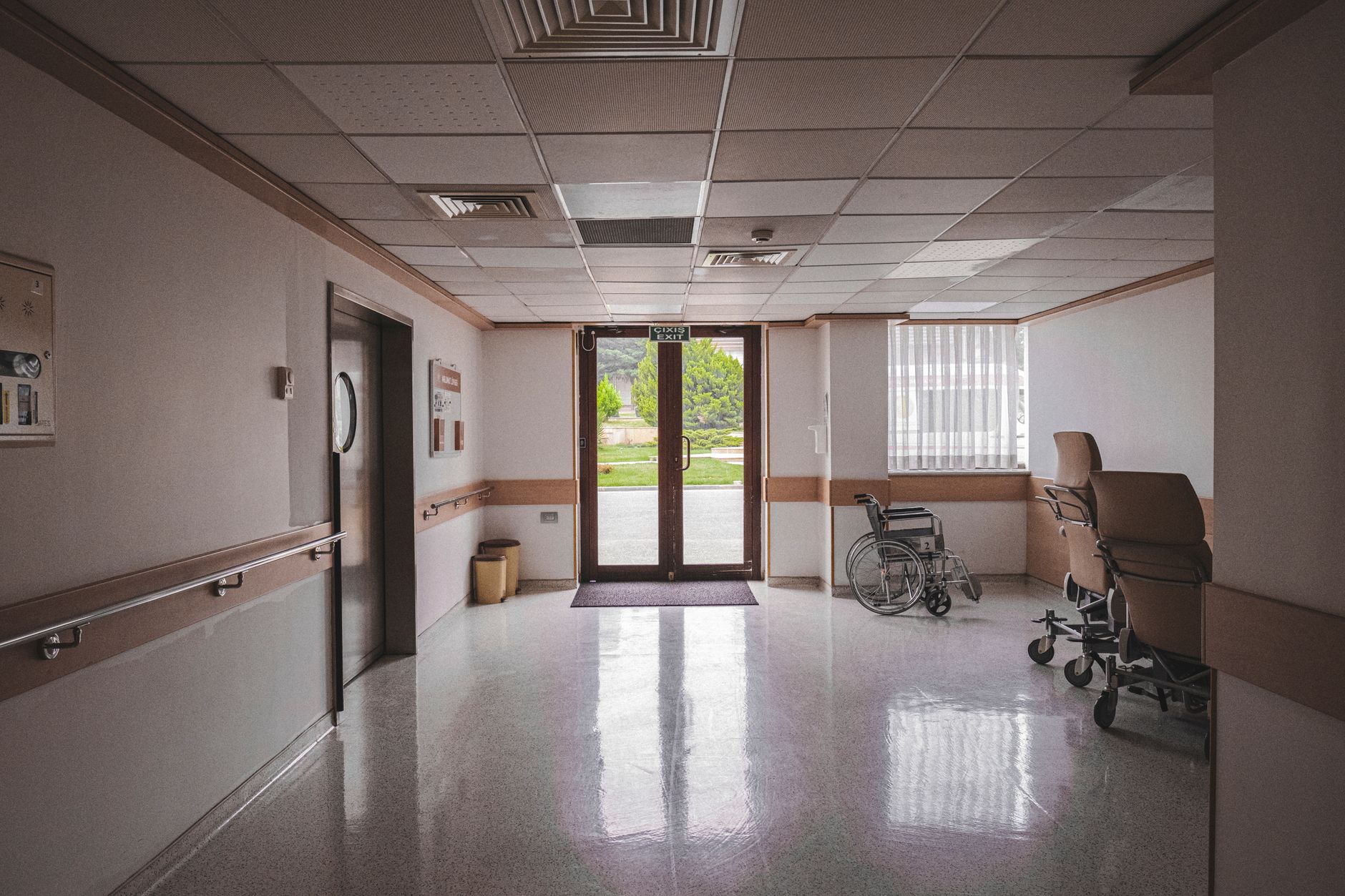
This is where many pilots get more aggressive than the site can support. Under ADA accessibility standards, an accessible route generally needs 36 inches of clear width, two wheelchairs passing need 60 inches, and a wheelchair turning space is typically 60 inches in diameter. Those numbers are a useful operational screen for robot routing, even before you get into day-to-day workflow.
If a corridor barely meets minimum access width, do not run a daytime cleaning cycle there unless the route can be fully yielded or paused without trapping traffic. A robot that technically fits the aisle can still create a bad clinical experience when a therapist is cueing a patient with a walker or when a wheelchair user needs a smooth turning movement near a doorway.
Apply a simple routing standard. If the path cannot maintain clear pedestrian priority and predictable passing behavior, move that route to after-hours or take it out of scope. PT clinics are mobility environments first and cleaning environments second.
This is also why a narrow but busy route can be a worse pilot choice than a larger open gym perimeter. In rehab, traffic complexity matters more than total area.
What should staff be trained to do during the pilot?
Training should be short, role-based, and repetitive. Front desk staff need to know how to delay or redirect a run during a patient surge. Therapists need to know the pause method, restart method, and the exact conditions that require manual cleaning instead of autonomous cleaning. Environmental services or clinic ops leads need daily checks for pads, tanks, route status, and incident logging.
Keep the first SOP tight. Pre-run floor check, live run supervision standard, spill escalation, stop-and-yield behavior, and end-of-run review. That is enough for a real pilot. Do not bury the team in a binder before you know which edge cases actually occur in your clinic.
NIOSH encourages buyers to compare equipment noise data before purchase or rental, and that is good discipline here. Quiet daytime cleaning is not a luxury in rehab. Therapists are cueing movement, patients are listening for instruction, and many clinics live in a moderate-noise environment already. If the machine's sound profile becomes a distraction, the pilot is telling you something important.
What data proves the pilot worked?
Use a scorecard that reflects clinic reality, not generic automation metrics. Coverage matters, but so do therapist interruptions, patient complaints, pause frequency, missed sessions, visible moisture events, and how often staff had to rescue the run. If the robot cleaned the floor but created friction around care delivery, the pilot did not succeed.
Track route completion rate, average pause count per run, spill handoff time, and the number of times a session had to reroute around the machine. Add a simple cleanliness audit with the same observer and the same zones every week. Four weeks of disciplined notes will usually tell you more than a glossy utilization dashboard.
Also compare before and after manual labor placement. The real win in many PT clinics is not replacing all floor care. It is moving staff time away from repetitive daytime passes and toward touchpoint cleaning, quick resets, and patient-facing support.
- Operational: completed runs, paused runs, aborted runs, average run duration
- Safety: slip complaints, near-miss reports, visible wet-floor events, blocked-path incidents
- Workflow: therapist interruptions, front-desk interventions, patient detours, manual cleanup callouts
- Quality: visual floor score by zone, edge coverage notes, residue or streak observations
Where Service Robot Co. fits in a clinic pilot
A PT clinic pilot usually fails for operational reasons, not because autonomy is impossible. The wrong route, the wrong cleaning window, the wrong chemistry for the floor, or the wrong service model can sink a good concept quickly. That is why many operators prefer a full-service integrator instead of trying to coordinate hardware, financing, deployment, training, and support across separate parties.
Service Robot Co. approaches this as an OEM-neutral commercial robot integrator for U.S. businesses. The practical advantage for an outpatient clinic is that the robot choice can be driven by floor type, traffic pattern, daytime noise tolerance, service coverage, and pilot goals rather than by a single manufacturer's catalog. The same partner can handle site assessment mapping, deployment, staff training, integration, and field service through a nationwide U.S. engineer network.
That matters most when a clinic wants a low-risk pilot instead of a one-off equipment trial. One vendor for the lifecycle makes it easier to adjust routes, swap hardware if the floor or workflow fit is wrong, and keep accountability clear when the question is not just Does the machine run, but Does it fit the clinic.
How should a PT clinic decide go, expand, or stop?
At the end of the pilot, make a three-part decision. First, was it safe in live clinic conditions. Second, did it protect therapist workflow. Third, did it produce a cleaning result the team would actually accept every day. If any one of those is no, expand nothing until the cause is fixed.
A go decision should come with route boundaries, approved cleaning windows, a written spill exception process, and named owners. An expand decision should add only one variable at a time, such as a second hallway or a second daytime window. A stop decision is also valuable because it prevents the clinic from forcing autonomy into areas where manual cleaning is still the better operational choice.
The best pilot is not the one that covers the most floor in week one. It is the one that leaves the clinic with a clear operating model, honest evidence, and no drama around patient care.
Frequently asked questions
Sources
- CDC outpatient infection prevention guidance
- CDC environmental cleaning procedures
- CDC environmental infection control recommendations
- OSHA slips, trips, and falls in hospitals
- ADA medical care access for mobility disabilities
- U.S. Access Board ADA accessibility standards
- CMS outpatient rehabilitation providers
- CDC NIOSH Buy Quiet guidance