Key takeaways
- Start with one repeatable overnight route, not the whole park.
- Rubber flooring and arcade residue make pad choice, water use, and detergent control non-negotiable.
- Party rooms, cafe edges, and sock check-in lanes should be treated as separate cleaning zones.
- A good robot pilot lives or dies on late-night access, recharge time, and a human reset routine.
- Use the pilot to prove consistency, not to chase impossible full-building autonomy on night one.
What does a successful first pilot actually look like?
A successful first pilot in a trampoline park is not a robot wandering every square foot after closing. It is a tightly defined overnight floor care program that covers the hard-surface lanes, arcade perimeters, party-room spill zones, and lobby approaches that staff already struggle to clean the same way every night. In this environment, consistency beats theoretical coverage.
That matters because trampoline parks are awkward buildings. The soft attractions break up traffic flow, rubber and resilient floors react differently than polished retail surfaces, and food, soda, cake icing, and grip-sock debris create patchy soil loads. According to the U.S. Bureau of Labor Statistics, janitors and building cleaners had a median wage of $17.27 per hour in May 2024, with about 351,300 openings projected each year on average over the 2024 to 2034 decade. A robot pilot only makes sense if it protects those labor hours for detail work that machines still do badly.
The first pilot should therefore aim to answer four operator questions. Can the robot map the site cleanly. Can it run inside the real late-night window. Can it leave rubber-floor traffic lanes acceptably clean by morning. Can staff reset and relaunch it without calling a manager. If you can answer yes to those four, the pilot is working.
Why are trampoline parks harder than a typical retail floor?
The floor plan is fragmented. A trampoline park or family entertainment center usually mixes check-in, queuing, cafe seating, party rooms, arcade bays, spectator edges, and transition corridors around non-cleanable attraction zones. The robot may see a single venue, but operations should see five or six separate cleaning environments inside one lease line.
The residue profile is also messy in a specific way. IAAPA noted in a 2025 revenue feature that adding an arcade can lift restaurant sales by 10 percent. More food and drink revenue is good business, but it also means more syrup, grease, crumbs, and sticky traffic moving between arcade, cafe, and party spaces. That residue behaves differently on rubber and textured resilient surfaces than dry dust on a warehouse aisle.
Then there is the clock. Public schedules at major indoor adventure parks commonly run into the evening, and some after-dark programs push activity later still. One current location page lists Saturday hours until 11 p.m., and another after-dark jump program advertises 9 to 11 p.m. sessions on Fridays and Saturdays. In practice, that leaves a narrow maintenance window for a night shift autonomous scrubber or commercial cleaning robot rental before opening prep starts again.
Which zones should you include in the first mapping pass?
Map only the floors you can defend operationally. The best first pass is usually the front lobby, ticketing queue, main circulation spine, cafe frontage, arcade perimeter, restroom approaches, and one or two party-room clusters with predictable geometry. Leave the most chaotic corners for phase two.
Do not begin with every room. ASTM published F2970-25 in 2025 as the current standard practice for commercial and institutional trampoline courts, and its scope makes clear how many activity types and complementary equipment types can sit inside these facilities. That is a reminder that your robot pilot program is entering a building built for active play, not for straight-line cleaning. Respect that complexity.
Treat party rooms as optional zones at first. If rooms turn over with moved chairs, gift bags, cake boxes, and carts, they need a reset ritual before autonomy works. If your staff cannot return the room to a known floor state every night, the robot will fail there for operational reasons, not technical ones.
- Start zone set: lobby, queue, central corridor, cafe edge, arcade edge, restroom approaches
- Second-wave zone set: party rooms with fixed furniture layouts, spectator seating aprons, hallway dead ends
- Exclude on day one: attraction decks, foam areas, moving game clusters, temporary merch islands, staging closets
How should you handle rubber flooring and mixed residues?
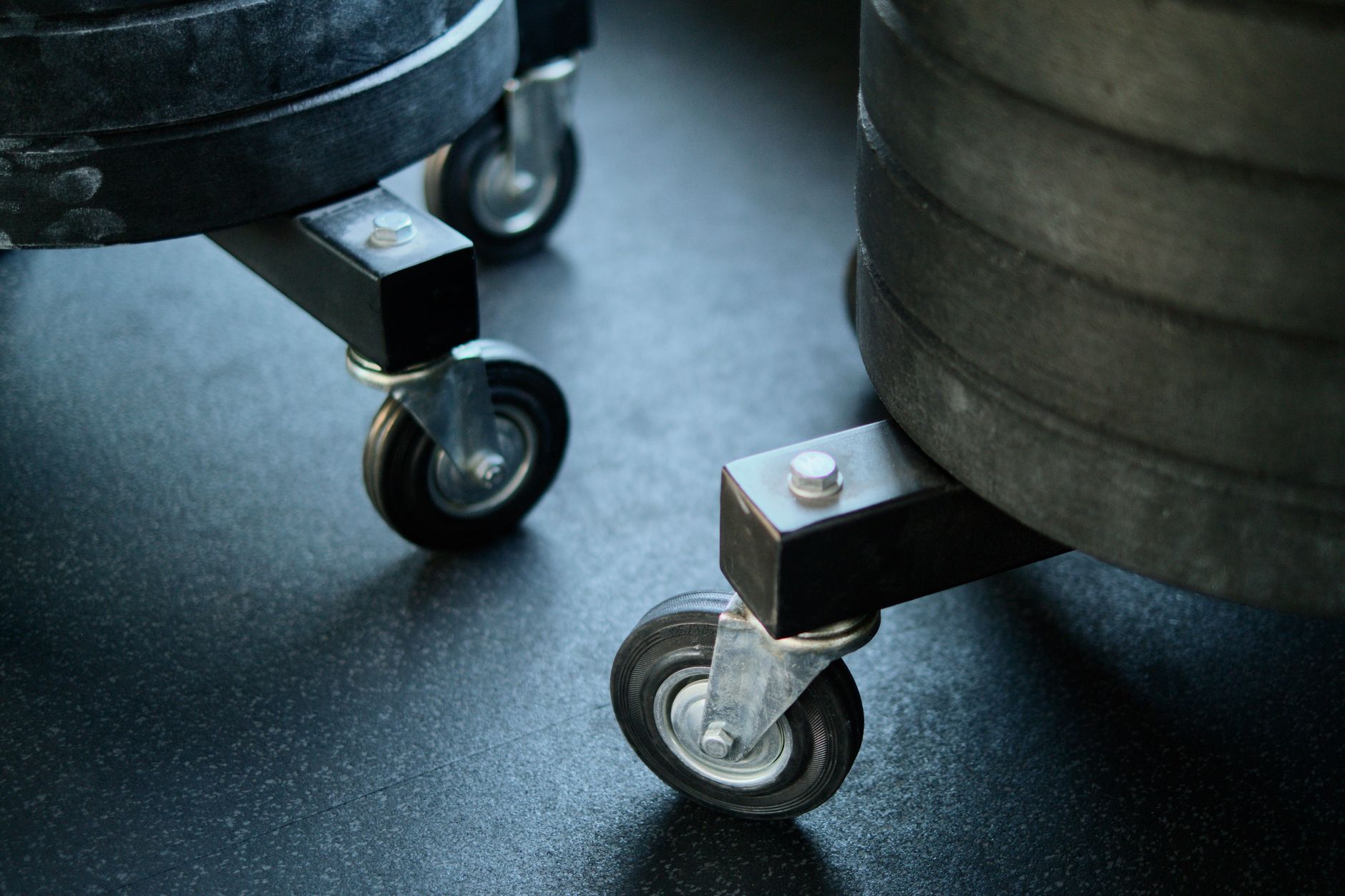
This is where many pilots quietly go wrong. Rubber flooring can clean well, but it punishes lazy chemistry and overwatering. Use the flooring maker's maintenance guidance and test on the exact surface before go-live. For routine hard-surface care, neutral chemistry is the usual starting point. SC Johnson Professional states its heavy-duty neutral pH floor and surface cleaner is suitable for rubber floors, and Forbo lists its neutral pH cleaner for use with a mop or auto scrubber at one half to one ounce per gallon of water.
That does not mean every rubber floor wants the same setup. Some need lighter water flow, some hold detergent film if you overdose, and some show wheel residue fast in high-turn areas. The point of the pilot is to tune pad pressure, solution rate, recovery quality, and route speed on your actual floor, not on a vendor demo slab.
Arcade and cafe spill edges need their own SOP. Sugary residue often needs a pre-wipe or spot treatment before the robot run, especially if it has dried. A robotic industrial floor cleaner is excellent at repeatable maintenance passes. It is not a magic eraser for syrup puddles, frosting smears, or popcorn mashed into floor texture.
How long of a cleaning window do you really need?
Assume less time than the calendar suggests. A venue that closes to guests at 10 or 11 p.m. is not instantly ready for autonomous floor scrubbing. Staff still clear trash, restock, move party-room leftovers, and shut down tills. Your true robot window starts only after the floor is safe and stable enough to run.
Build the pilot backward from open time. Include last guest exit, floor reset, fill and charge check, the robot run itself, post-run emptying, and a buffer for one manual touch-up circuit. If the robot only fits on paper and collapses when one birthday party overruns by 20 minutes, the deployment is too brittle.
For most pilots, one reliable overnight route is better than two shaky routes. Prove that the machine can finish, recharge, and be ready for the next night. Large facility coverage sounds attractive in a sales deck, but a pilot earns trust by surviving real Saturday nights.
- Subtract 15 to 30 minutes for guest drift after posted close
- Subtract 20 to 40 minutes for staff floor reset in party-heavy venues
- Keep a buffer for one relaunch or manual spill pickup
- Measure success by on-time finish and morning readiness, not max square footage
What should the night crew do before each run?

Give the crew a short, repeatable preflight. OSHA's walking-working surfaces rule requires floors to be kept clean and dry and aisles kept clear. That is not just a safety rule for people. It is also the operating condition your robot needs in order to run predictably.
The preflight should be simple enough for a closing supervisor or lead janitor to do in minutes. Remove cords, balloons, prize buckets, loose queue stanchions, and floor mats that wrinkle under drive wheels. Spot-clean fresh spills. Return movable furniture to taped positions in any room the robot will enter. Confirm the dock area is accessible and powered.
This is where a full-service partner matters. Service Robot Co. does not just drop off a unit and leave. As a vendor neutral robot integrator, the company handles site assessment mapping, deployment, training, and service support for U.S. operators that want one partner across lease rental or sale, monthly payment programs, and ongoing maintenance included. In a venue with complicated nightly resets, that operating layer matters as much as the machine.
- Clear floor obstructions from mapped lanes
- Pre-treat syrup, grease, and heavy party-room spots
- Return chairs, tables, and trash cans to standard positions
- Check battery, water, recovery tank, and dock access
- Launch the same route in the same order each night during the pilot
How do you measure pilot success without fooling yourself?
Do not score the pilot on vibes. Score it on repeatability. Track completion rate, relaunch rate, manual touch-up minutes saved, morning manager complaints, and how often the crew needed help. If you can, photograph the same three test zones every morning for two weeks: arcade edge, lobby lane, and one party-room threshold.
Also track the failure modes. Was the stop caused by layout drift, spill load, battery timing, weak suction recovery, or a route that was simply too ambitious. Those are different problems and they lead to different decisions. A commercial robot demo that looked fine in an empty midday building can still fail at night because the building is never truly empty after a busy Saturday.
A practical pilot target is boring in the best way. You want the robot to finish the agreed route most nights, leave a visibly cleaner floor, and free staff for detail cleaning, restroom resets, and next-day prep. That is what a credible robot pilot program or gym cleaning robot rental should prove first.
When should you expand, and when should you stop?
Expand only after the first route is stable. If completion is high, the crew can relaunch it confidently, and the morning floor meets your standard, add one more zone family at a time. Usually that means a second corridor loop or a set of party rooms with fixed furniture rules.
Stop or redesign the pilot if three things keep happening. The floor is too obstructed to standardize. The residue load requires too much manual pre-work to justify the run. The cleaning window is so short that a single delay breaks the whole plan. Those are operational disqualifiers, not moral failures.
This is also where Service Robot Co. can earn its keep as a robot deployment and integration partner. Because the company is OEM-neutral and set up for robot leasing for business, commercial cleaning robot rental, or a wider robot as a service program, it can adjust the hardware, route design, support model, and service plan instead of forcing the venue into one brand's template. That is the difference between a real deployment and a stranded demo.