Key takeaways
- Start with one gatehouse and one perimeter route, not the whole campus.
- Measure gate cycle time, exception response time, and verified incidents before you talk about ROI.
- Design the pilot around four jobs: trailer gates, visitor check-ins, perimeter loops, and after-hours exceptions.
- Use a human-led exception path from day one so the robot handles routine work and people handle judgment calls.
What does a good gatehouse robot pilot actually look like?
A good pilot is narrow, operational, and measurable. At a distribution site, that usually means one gatehouse, one trailer entrance pattern, one visitor process, one perimeter loop, and one after-hours escalation path. You are not trying to automate the whole property. You are trying to prove that a security patrol robot rental or autonomous patrol robot can take repetitive checkpoint work off the guard desk without slowing the yard down.
The opening win is simple. The robot should handle repeatable observation and documentation while the guard handles judgment, disputes, and exceptions. That split matters at logistics sites, where every extra minute at the gate ripples into detention, dock scheduling, and carrier frustration. According to FMCSA, an earlier detention study found drivers experienced detention at about 1 in 10 stops, with an average of 1.4 hours beyond the two-hour standard. A gate pilot should be built to remove avoidable waiting, not add a new gadget to it.
- Primary pilot zone: inbound and outbound trailer gatehouse lane
- Secondary pilot zone: visitor parking and walk-up entrance
- Scheduled route: one perimeter loop tied to shift changes and quiet hours
- Escalation rule: robot observes and records, human approves access or dispatches response
Why start at the gate instead of the whole facility?
Because the gate is where security, operations, and carrier experience collide. It is the one place where identity checks, trailer verification, seal status, visitor screening, and yard awareness meet in a single workflow. If a robot helps there, the value is visible fast. If it fails there, you learn fast too, with limited blast radius.
The scale of the freight environment makes that focus sensible. American Trucking Associations says trucks moved 11.27 billion tons of freight in 2024 and carried roughly 72.7 percent of the nation’s freight by weight. At sites that live on trailer turns, the gatehouse is not a side process. It is the front end of throughput. That is why many operators test a robot pilot program at the checkpoint first, before expanding to wider distribution center robot rental or broader facility automation.
Which gatehouse tasks belong in scope on day one?
Keep day-one scope boring on purpose. The best pilot covers repetitive checks that already have a clear pass or fail rule. For trailer traffic, that means arrival logging, plate or trailer ID capture if the platform supports it, seal presence confirmation when applicable, queue visibility, and standard operating prompts to direct drivers to the right lane or holding area. For visitors, it means presence detection, recording, and routing the person to a human approval path.
CBP’s CTPAT guidance and FAQ material consistently push companies toward documented risk assessment, access controls, and supply chain security profiles. Even if your site is not using that program, the lesson carries over. The robot should reinforce access discipline. It should not invent a new parallel process. Build the pilot around the checks you already require, then make them more consistent and easier to audit.
- Inbound trailer arrival confirmation
- Outbound trailer departure confirmation
- Seal present or seal exception notation where the site requires it
- Visitor arrival record and escort request trigger
- Unauthorized vehicle or pedestrian detection near closed access points
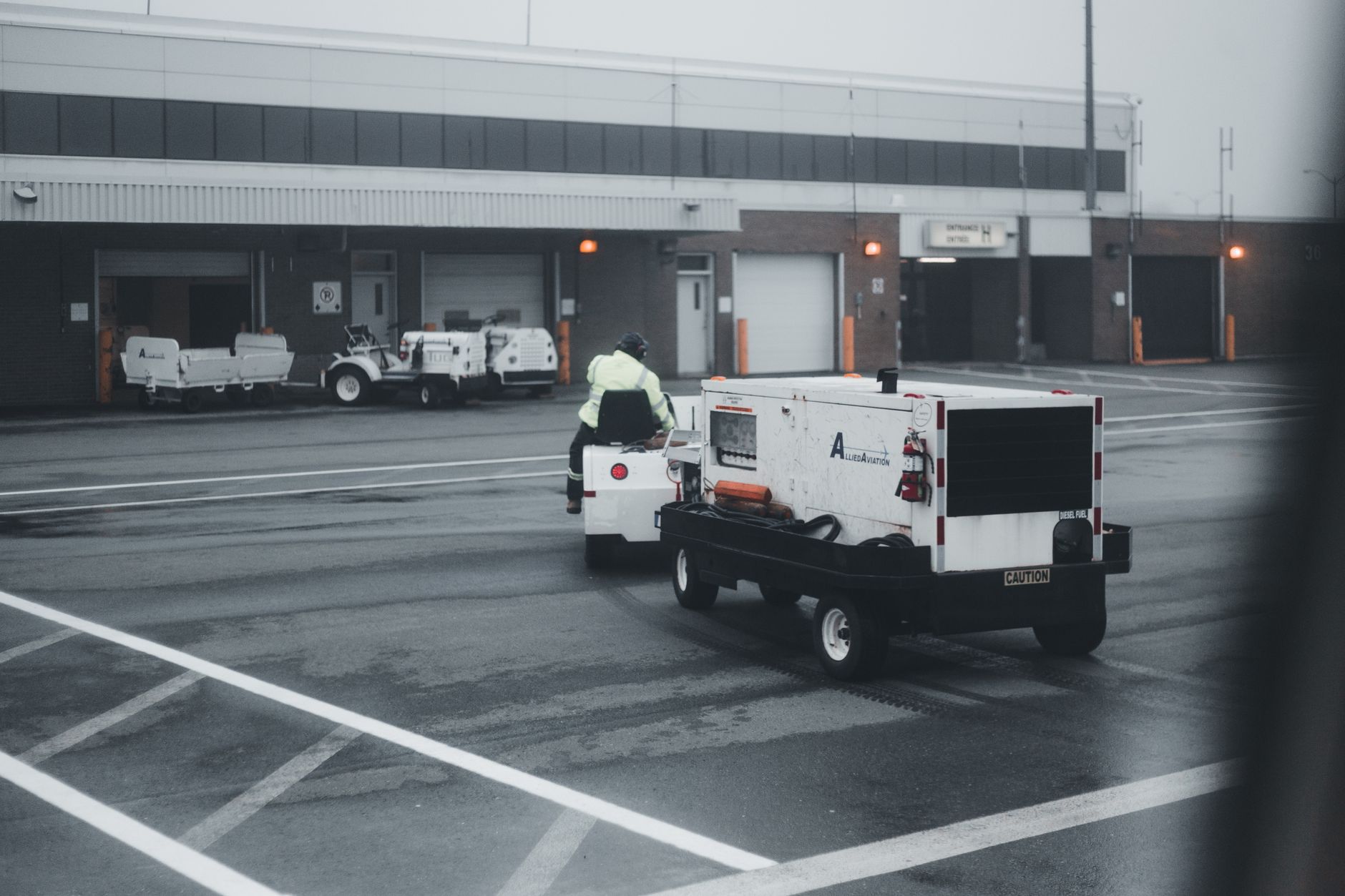
How should visitor check-ins work without creating friction?

Do not make the robot pretend to be a receptionist. At a logistics gatehouse, visitor management breaks when it becomes theatrical. The cleaner model is this: the robot acknowledges presence, records time and location, prompts the visitor to stop, and hands the decision to a remote or on-site human. The human verifies purpose, host, and access level. The robot’s value is consistency, timestamping, and coverage when the desk is busy or the visitor appears at a side entrance.
This is also where labor reality matters. The Bureau of Labor Statistics reports that security guards had median pay of 38,370 dollars in May 2024 and that the occupation is projected to average about 162,300 openings each year from 2024 through 2034. The point is not to replace every guard post. It is to let a smaller team cover more ground and spend less time on routine interruptions. In a service robot rental or robot as a service model, that usually means a commercial robot rental supports the guard staff rather than pretending to eliminate them.
What should the perimeter loop cover?
The perimeter loop should be short enough to repeat and specific enough to matter. A useful loop watches the fence line nearest trailer parking, employee parking after shift end, visitor lots, and dark corners between the gatehouse and dock approaches. It also checks for left-open access points, stalled vehicles, pedestrians where they should not be, and trailers parked outside the expected pattern.
This is where current cargo theft data gives the pilot urgency. Verisk CargoNet reported 3,594 supply chain crime events across the United States and Canada in 2025, with estimated losses near 725 million dollars. On August 6, 2026, Verisk CargoNet reported that Q2 2026 incidents fell to 677, yet estimated losses still reached 304.6 million dollars because thieves kept targeting higher-value freight. Fewer incidents does not mean lower exposure. At many sites, a short autonomous perimeter loop is less about drama and more about catching the small anomaly early.
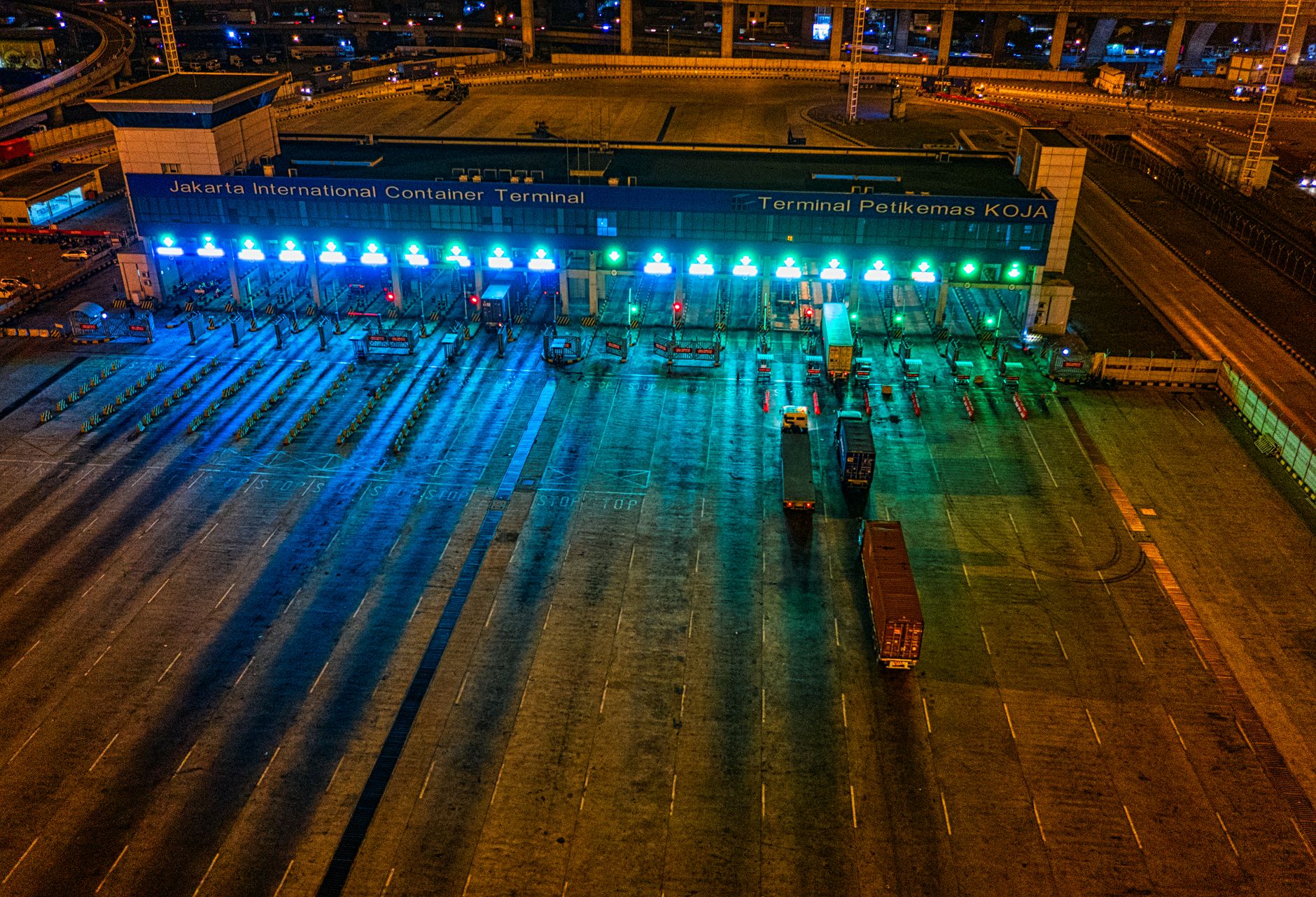
How do you handle after-hours exceptions without overpromising autonomy?
After-hours handling is where pilots usually either mature or unravel. The robot should never be the final decision-maker for a late trailer, an unannounced contractor, a damaged seal, or a driver who says dispatch changed the pickup. It should classify, notify, and preserve evidence. A human should accept, deny, reroute, or escalate.
A practical rule set uses three buckets. Green means routine and proceeds under the normal script. Yellow means unusual but not urgent, such as an early arrival or a visitor without a matching host response, and gets parked for human review. Red means security-sensitive, such as access at a closed gate, a perimeter breach cue, or a trailer mismatch, and triggers immediate human response. That structure is how a security patrol robot rental becomes operationally credible. It narrows the robot’s job to repeatable detection and disciplined handoff.
- Green: scheduled carrier, expected visitor, normal route activity
- Yellow: timing mismatch, incomplete visitor data, nonstandard parking behavior
- Red: attempted entry at closed hours, trailer mismatch, perimeter intrusion cue, tamper concern
What metrics make a checkpoint pilot worth expanding?
Use a scorecard that operations and security both trust. Start with gate cycle time, exception response time, number of visitor interruptions handled without pulling a guard off another task, number of perimeter anomalies logged, and percentage of events with usable time-stamped documentation. Add a simple false-alert count. If you cannot explain the robot’s misses and noise, the pilot is not ready for expansion.
Bring in safety and delay metrics too. OSHA’s warehousing guidance calls out dock shock, uneven transitions, and other hazards in receiving and shipping areas, while FMCSA has linked detention and dwell time to safety risk. A gatehouse pilot should therefore prove two things at once: it helps security coverage, and it does not degrade trailer flow or create new exposure at the dock edge. If cycle time worsens, stop flattering the technology and fix the workflow.
What does Service Robot Co. add that a site cannot get from a single vendor?
At this stage, the hard part is rarely just the machine. It is mapping the route, fitting the checkpoint workflow, setting the escalation logic, training the team, and keeping the unit working after the novelty wears off. Service Robot Co. approaches that as a full-service commercial robot integrator for U.S. operators. We are OEM-neutral, which matters at the gatehouse because the right robot depends on lane geometry, lighting, weather exposure, patrol distance, and how much human-in-the-loop control the site wants.
That also changes how buyers can structure the pilot. Some sites want a robot pilot program, commercial robot demo, or try before you buy path. Others want robot leasing for business, robot rental monthly, or robot as a service with maintenance included and no long term contract. Service Robot Co. handles the selection, financing, deployment, integration, training, and service through one partner and one number, backed by regional service engineers and depots in all 50 states. For a security checkpoint pilot, that lifecycle support matters more than a flashy demo.
When is a gatehouse pilot ready to scale beyond one checkpoint?
Scale only after the pilot proves a stable operating rhythm for at least one full business cycle, including weekdays, peak inbound windows, a weekend pattern if the site runs one, and after-hours exceptions. The test is not that the robot looked good on Tuesday afternoon. The test is that the process held up across ordinary disorder. Once that is true, expand in a sequence that preserves control: second gate, longer perimeter route, then adjoining trailer lot or employee entrance.
This is where a vendor neutral robot integrator earns its keep. Expansion should not lock a site into a one-size-fits-all fleet plan. Some facilities will stay at one autonomous patrol robot near the gatehouse. Others will add broader security patrol robot rental coverage, remote monitoring hooks, or cross-site standardization. The right next step is the one that keeps the checkpoint disciplined, keeps humans in command of exceptions, and keeps the yard moving.