Key takeaways
- Start with one painful, repeatable loop whose pickup and drop points can be controlled.
- Engineer the carrier for the real load envelope, center of gravity, containment, and worst-case stop.
- Dispatch from job readiness and due-time signals, not merely distance or a fixed route.
- Scale only after safety, reliability, intervention, damage, and press-wait metrics clear preset gates.
What should the pilot prove first?
A commercial print plant should pilot AMRs on one contained material loop, then prove that the robot can move actual loads through live traffic without starving a press, mixing jobs, damaging stock, or creating new pinch points. A strong first loop has repeatable endpoints, painful manual travel, clear staging ownership, and a manual fallback.
The pilot must validate more than navigation. Test the carrier, load restraint, pickup identity, schedule-driven dispatch, downstream acceptance, exception recovery, worker behavior, and service response under normal production.
Begin with site assessment mapping and a baseline of current moves. Record when each load becomes ready, collected, and delivered, plus why it waits. That gives the robot pilot program a fair comparison and shows if repetitive transport automation can keep pace with the schedule.
Which transport loop belongs in the first pilot?
Choose a loop that matters without putting the whole plant at risk. Palletized sheet stock to a press, printed work to a cutter, or completed cartons to shipping usually offer cleaner handoffs than loose plates, open ink containers, or very large rolls.
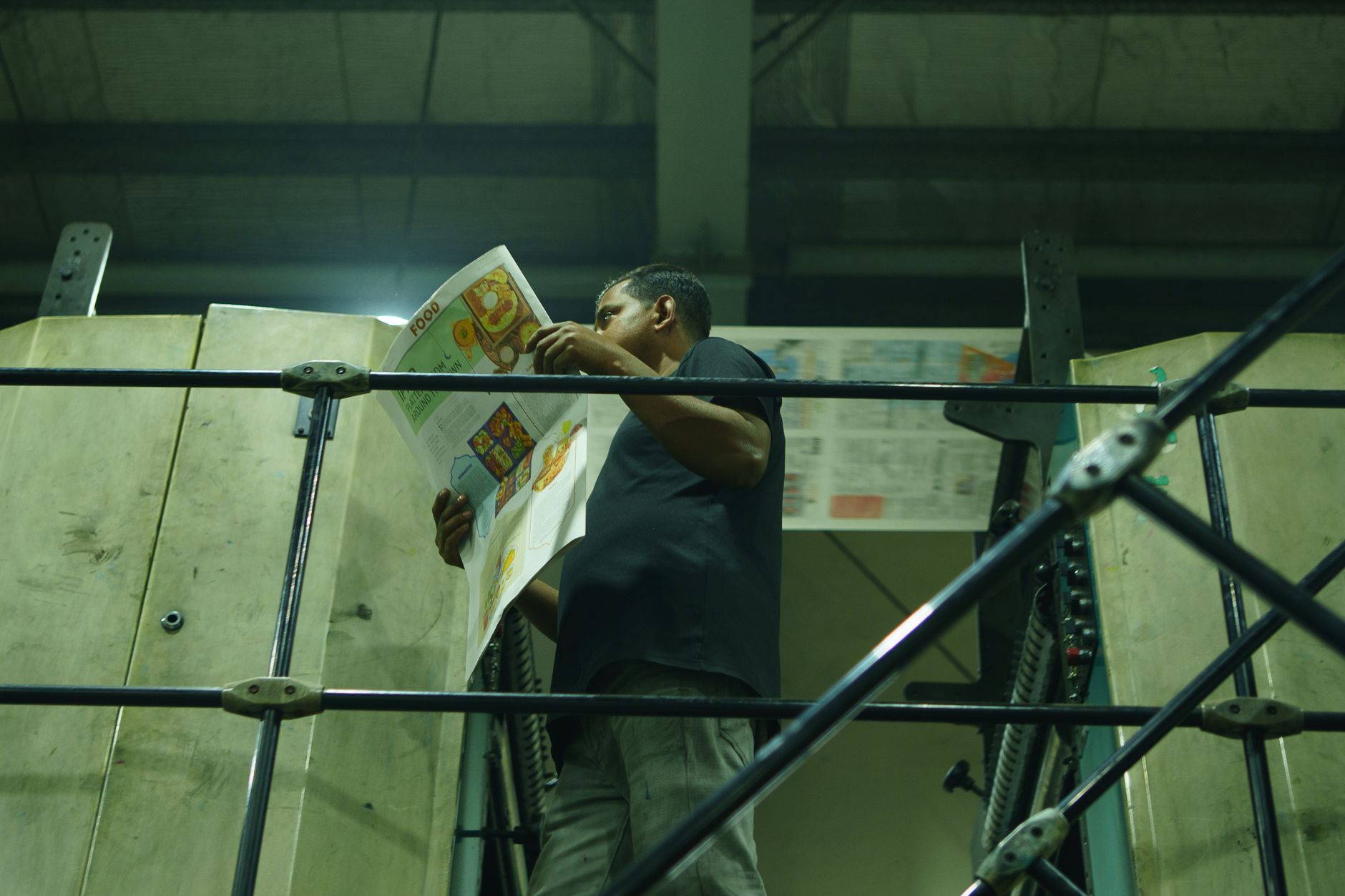
OSHA's lithography eTool maps the same chain: prepress creates the plate, presses consume substrate, and finishing prepares work for shipment. It notes that finished sheets or signatures commonly leave the press on pallets or carts, making the handoff device part of the process.
Score candidates using evidence from real shifts. Favor a stable carrier and a costly waiting problem, not simply the longest walk.
- Trip frequency, manual travel time, and consequence of late delivery
- Variation in weight, size, overhang, friction, and center of gravity
- Exposure to pedestrians, lift trucks, blind corners, and temporary pallets
- Reliability of the ready signal and ownership of the receiving bay
- Ease of reverting to the current cart or tug method
Design the carrier around the load
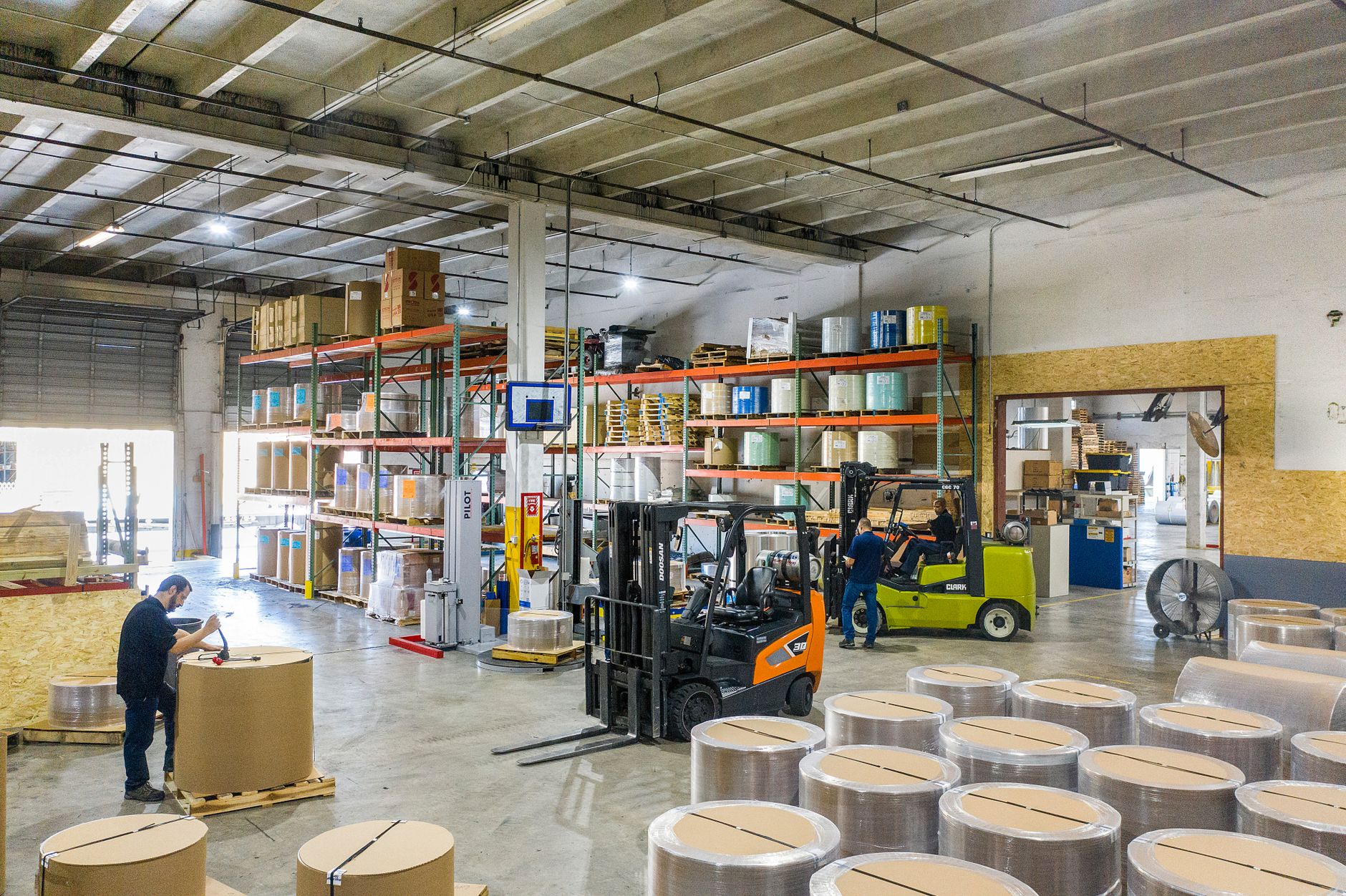
Payload rating is only a starting point. The robot must control the combined carrier and cargo while turning, braking, crossing joints, and docking. Measure the swept envelope, loaded center of gravity, caster behavior, coupling play, deck deflection, and starting force.
Paper can exceed the sensible scope of a small AMR. OSHA reports double-wide web rolls up to 1,800 pounds and warns about injuries while turning rolls or stopping runaways. Heavy rolls need dedicated, rated handling with positive restraint. A stable pallet transport robot or cart-pulling unit carrying sheet stock is a safer first test.
Use slotted cassettes or a restrained A-frame for plates, with edge protection and a visible job identifier. Restrain slick finished sheets with guides, bands, wrap, or a closed cart. Test the worst credible stack, not a carefully prepared sample.
Ink needs spill and chemical controls. OSHA says press ink may arrive in volumes from 5 gallons to 1,000 liters before kits move to presses on carts or pallets. Keep containers closed, add secondary containment, check safety data sheets, and define spill recovery. Flammable classifications require a specific review of the route, equipment, charging area, and ignition controls.
Can narrow production lanes support AMRs?
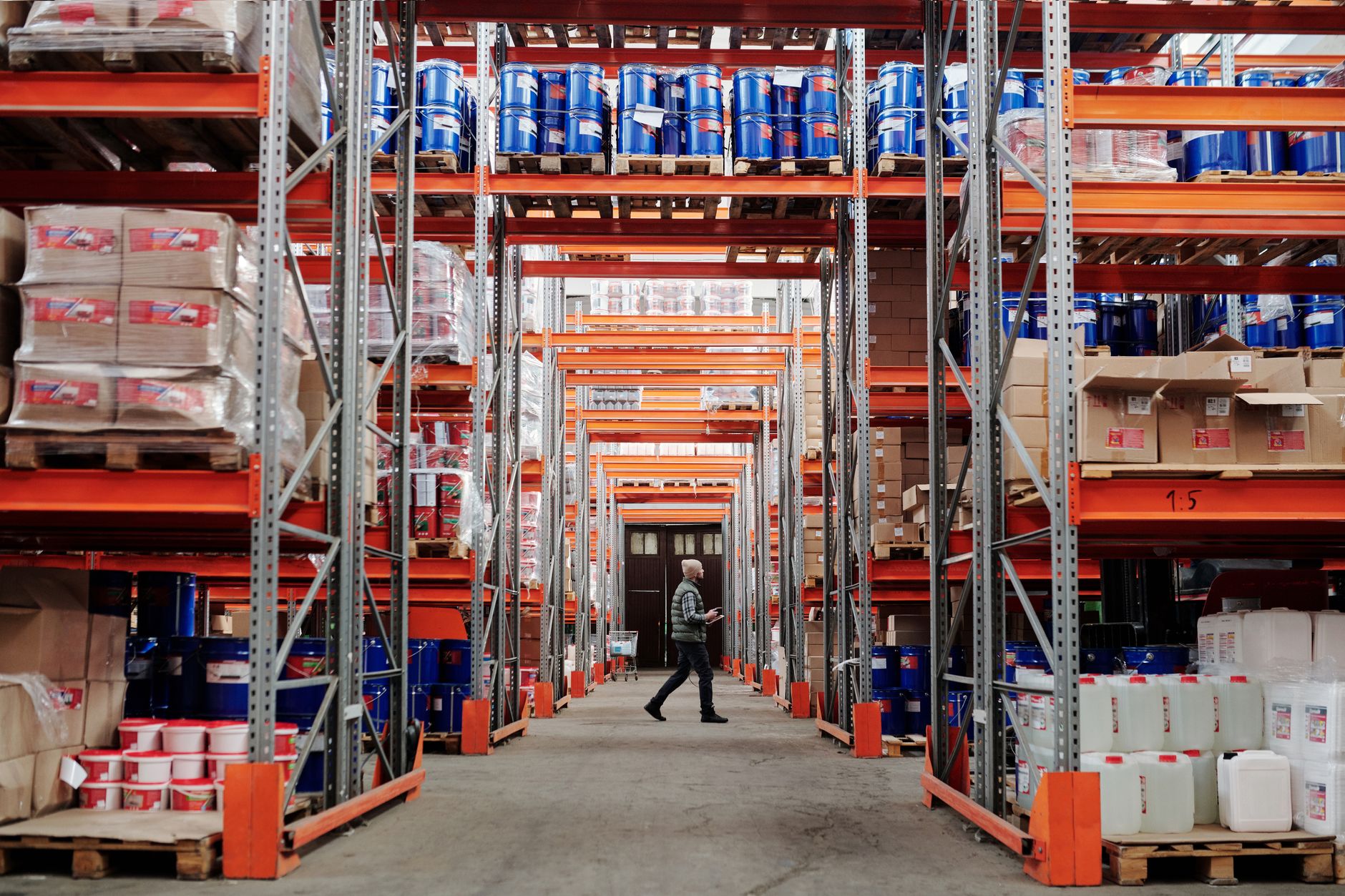
There is no universal aisle-width answer. Space depends on the robot and load envelope, braking behavior, turn geometry, localization margin, pedestrian traffic, fixed machinery, and the plant's risk assessment. Measure with the largest approved carrier and its most awkward load.
OSHA standard 1910.176 requires sufficient safe clearance in aisles, doors, docks, turns, and passages used by mechanical handling equipment. Permanent aisles must be marked and kept clear. Standard 1910.22 also requires surfaces to support their maximum intended load and remain free of hazards such as leaks and spills.
Map what a clean drawing hides: press-side tables, controls, waste, staged skids, open cabinets, floor drains, and manual-equipment tail swing. Plot the cargo's swept path at every turn. An empty robot fitting through a gap proves little.
Test blind-corner pedestrians, a partly blocked lane, cross-aisle lift trucks, and a press-area spill. ISO 3691-4:2023 treats operating-zone conditions as significant to safe driverless-truck operation. The AMR should slow, stop, or yield predictably while exits and emergency equipment stay accessible.
How should routing follow the job schedule?
Print routing follows readiness, sequence, and due time, not the shortest geometric path. A load should move only after the sending operation releases it and the receiver has space and permission to accept it. Otherwise the AMR merely relocates the queue.
CIP4's current specifications page lists XJDF 2.2 for print workflow exchange. XJDF represents jobs crossing multiple process steps, and XJMF can carry current production information. Keep the management information system or production controller as the source of truth, then translate eligible milestones into transport tasks.
The dispatcher must handle press downtime, plate remakes, ink approval, drying, quality holds, finishing resequences, and changing shipping priorities. Each event needs a defined action: release, hold, reroute, return, or cancel.
Set explicit priorities. Protect safety and quality holds first, prevent ready equipment from starving, then honor shipping commitments, replenishment, and empty-carrier returns. Distance may break a tie, but should not overrule the schedule.

Where should the pilot integrate?
Manual release is useful during early physical-feasibility runs. Before scale, robot deployment and integration should prevent duplicate typing and stale tasks. Every interface needs ownership, acknowledgments, timeouts, and an audit trail.
Keep the architecture shallow. The job system publishes readiness and destination, an integration service validates the request, and robot fleet management assigns a compatible unit. Completion returns as a status event. The AMR should never invent a destination or silently rewrite the master job record.
Verify the job and carrier at pickup, then confirm the receiving location at drop-off. That closed loop catches swapped pallets and obsolete destinations before a transport error becomes a press delay.
- MIS or job ticket: job ID, step, priority, due time, hold state, and next operation
- Staging record: material ID, quantity, carrier, location, and availability
- Equipment state: ready, occupied, faulted, and accept-load signals
- Fleet and plant systems: task status, battery, interventions, doors, traffic controls, network, and charging
Run the pilot as a controlled production experiment
Capture the manual baseline across ordinary work, rush jobs, rework, and congestion. Then progress through unloaded mapping, loaded dry runs, supervised production, and independent operation inside the approved zone. Advance by evidence, not a calendar promise.
Test every carrier at its maximum planned weight and dimensions. Include controlled and obstacle stops, turns, thresholds, docking errors, blocked destinations, lost network, low battery, and cancellation after pickup. Recovery must protect both the physical load and its job status.
The current ANSI/A3 R15.08 series includes Part 3, published in 2026, for user safety requirements. Train prepress, press, finishing, shipping, maintenance, and safety staff on right of way, loading rules, emergency stops, restart authority, spill response, and escalation. Give operators a fast channel for nuisance stops and near misses so workarounds do not hide design defects.
Keep the current cart process ready, with named pause criteria and a documented handback. That supports phased deployment with no shutdown and lets the plant try before it buys or expands.
What should measurable success look like?
Approve the scorecard before live moves begin. Apply the same definitions to manual and automated work, separate robot delay from upstream delay, and review results by payload, route, shift, and exception. A polished dashboard cannot compensate for a starving press.
Safety gates come first. Do not pass a pilot with an unmitigated collision, load shift, spill, blocked exit, damaged job, or bypassed procedure. Interventions should also decline as mapping and operating rules mature, rather than being absorbed by an unofficial robot babysitter.
Build the business case from observed travel, queue time, lost production time, damage, service calls, charging, and utilization. Include integration, training, maintenance, backup procedures, and financing so the scale decision does not depend on an unverified payback promise.
- On-time delivery to the next operation and to shipping
- Completed moves without human recovery or rerouting
- Press and finishing wait caused by missing material
- Request-to-delivery time, including pickup and destination dwell
- Interventions, emergency stops, blocked paths, and recovery time by cause
- Transport-related damage, spills, waste, and worker travel avoided
Choose support that survives the pilot
A production pilot needs more than a commercial robot demo. It needs carrier engineering, safety validation, software interfaces, go-live support, training, remote triage, on-site dispatch, and a service plan that remains effective after the project team leaves.
Service Robot Co. is a full-service commercial robot integrator for US businesses. As an OEM-neutral, vendor-neutral robot integrator, it selects across manufacturers, then finances, deploys, integrates, trains, and services every unit through a nationwide US engineer network. The plant gets one vendor for the whole lifecycle.
The same measured pilot can compare purchase, autonomous mobile robot leasing, AMR leasing, and monthly payment programs. The contract may change. The load, route, integration, and support duties should not.