Key takeaways
- Start with the walking network, not the robot. Width, slope, surface condition, and chokepoints decide whether a pilot survives week one.
- Outdoor robotics lives or dies on weather policy. Heat, rain, glare, and lightning need operating rules before the first run.
- Guests must understand what the robot is doing within seconds. Clear right-of-way rules and wayfinding matter as much as navigation software.
- A resort pilot needs service recovery from day one. If a delivery misses, stalls, or reroutes, staff must know exactly who steps in and how fast.
- The best pilots stay small at first. One route family, one service promise, and one measured expansion path beats a property-wide launch.
What should a resort get ready before testing outdoor delivery robots?
Prepare the property, not just the machine. Before a resort pilots an outdoor delivery robot, it should confirm that its main guest routes are wide enough, predictable enough, and sheltered enough to support repeatable runs between kitchens, retail points, front desk zones, and guest buildings. It also needs guest-facing wayfinding, staff playbooks for exceptions, and a service recovery plan for the first missed delivery.
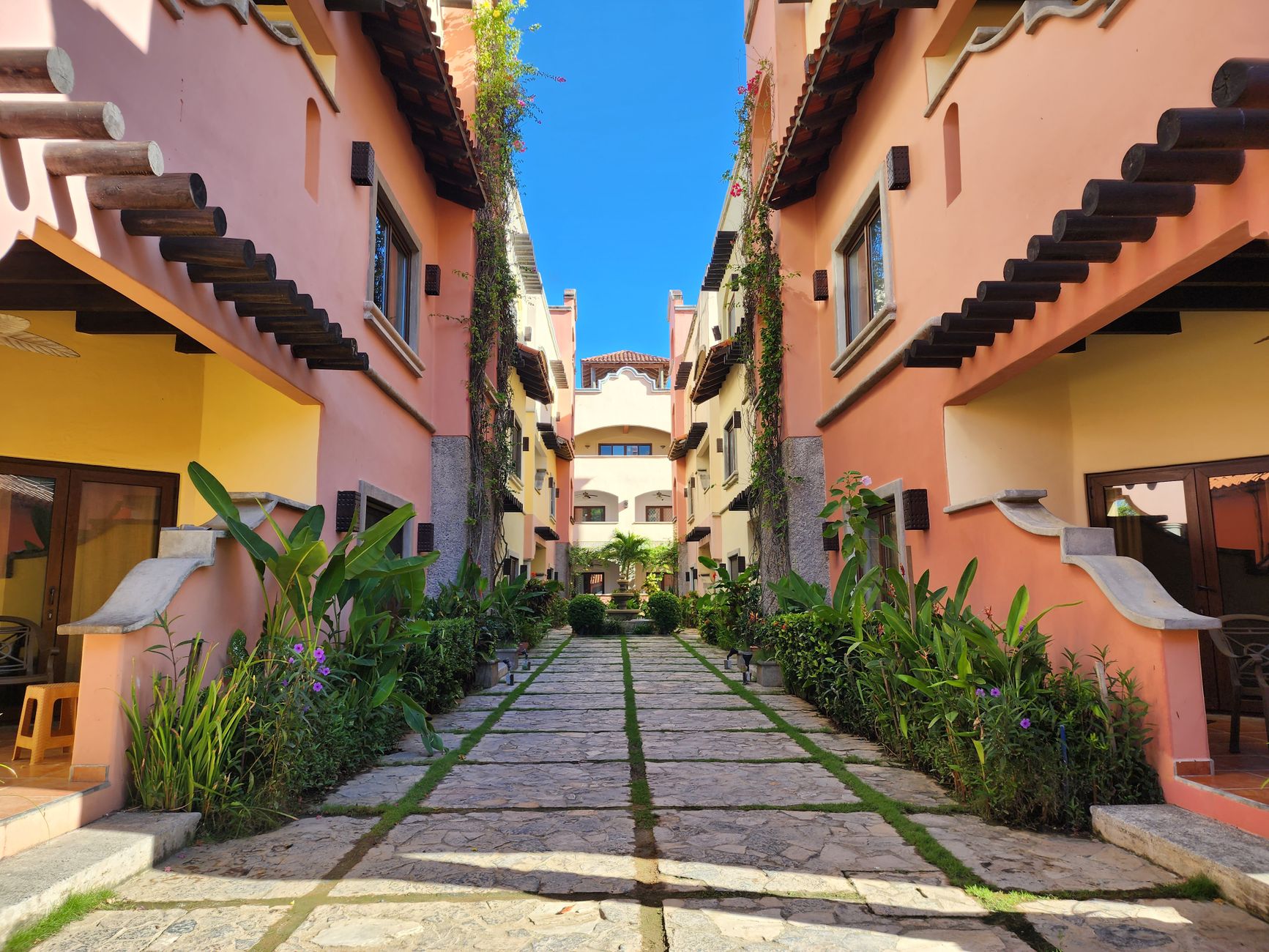
On paper, resorts look perfect for autonomous mobile robot rental or a hotel delivery robot rental program. Distances are repetitive, amenities are spread out, and labor is often stretched across a large campus. In practice, the same property can have wet pool decks, golf cart crossings, steep connector walks, luggage clusters, children weaving through paths, and sudden weather shifts that break a clean route model.
That is why readiness should be audited in five buckets before any robot pilot program begins: path geometry, weather exposure, guest interaction, wayfinding, and failure handling. If those five are in good shape, outdoor delivery becomes a serious operating test. If they are not, the robot turns into a rolling exception generator.
- Map the exact routes the robot will use, including delivery origin points, wait points, crossings, and charging locations.
- Measure clear widths, turns, slopes, and surface changes on every route segment, not just the average path.
- Write operating rules for rain, thunder, heat, low light, and special events.
- Train staff on guest explanation, handoff etiquette, and manual fallback steps.
- Set service recovery targets before launch, including who owns a stalled or late run.
Are your resort pathways actually wide and stable enough?
This is the first hard gate. According to the U.S. Access Board's ADA guidance, accessible routes need at least 36 inches of continuous clear width, can narrow to 32 inches only at short points such as doorways, and require passing space every 200 feet when the clear width is under 60 inches. The same guidance caps running slope at 1:20, cross slope at 1:48, and says route surfaces must be firm, stable, and slip resistant.
Those numbers are not a robot spec sheet. They are a useful minimum baseline for human-safe circulation. For a resort, they also expose where an amenity delivery robot or room service robot will struggle: decorative planters that pinch a walk, bag carts parked outside guest buildings, uneven pavers, abrupt beveled joints, and narrow bridge sections that work fine for pedestrians but leave no margin when a robot meets a stroller, wheelchair, or housekeeping cart.
Treat the property like a route network, not a postcard. Measure the busiest hours, not the emptiest hour. A path that is technically passable at 6 a.m. may be functionally unusable at 5 p.m. when beach towels, luggage, line queues, and families collapse the clear width.
Resorts should also flag every turnback point. Outdoor delivery robots do not just need forward motion. They need room to yield, reroute, and recover gracefully when the path ahead is blocked. A beautiful path with no safe passing pocket can become a dead end operationally.
- Record every segment under 60 inches wide and every stretch longer than 200 feet without a passing pocket.
- Mark all surface transitions: pavers to concrete, concrete to decking, drains, trench covers, and thresholds.
- Identify high-conflict nodes such as lobby aprons, pool gates, event lawns, valet edges, and golf cart crossings.
- Check for seasonal obstructions such as cabanas, holiday decor, banquet furniture, and queue stanchions.
How much does outdoor weather change the pilot?
More than most operators expect. According to OSHA, direct sunlight can push the effective heat index up by as much as 13.5 degrees Fahrenheit versus shade. That matters because a resort route can cross bright pool decks, reflective stone, asphalt service roads, and breezeways within one delivery. Battery behavior, sensor performance, and stopping distance are not the only concerns. Staff response time and guest comfort change too.
Weather policy should be route-specific. A shaded garden path, a windswept boardwalk, and an exposed arrival court are three different operating environments. If a property wants a service robot rental or robot as a service pilot outdoors, it needs an actual go or no-go matrix that covers heat, rainfall, standing water, wind, glare, and darkness. Otherwise the robot keeps running until conditions force an improvised shutdown.
Lightning needs a bright red rule. The National Weather Service says outdoor activity should not resume until at least 30 minutes after the last thunder. If your resort would pause recreation staff, bell activity, or pool operations under those conditions, the robot should also come off the route. Outdoor autonomy does not get a special exemption from common-sense weather safety.
This is where a full-service integrator earns its keep. Service Robot Co. can assess route exposure, align operating thresholds with property policy, and build robot deployment and integration around actual site conditions instead of a generic brochure promise.

What guest interactions should you design before launch day?

Guests do not read deployment plans. They see a machine arriving in a leisure environment and make a snap decision about whether to ignore it, help it, photograph it, race it, or stop it to ask a question. Resort operators should assume all five will happen.
The cleanest pilots give the robot one social role and keep it there. If it is an amenity delivery robot, guests should see that role in its route pattern, stop locations, and staff introduction. Confusion rises fast when the same unit alternates between back-of-house errands, guest-facing room service robot runs, and ad hoc lobby appearances.
Staff scripts matter. Front desk, housekeeping, food and beverage runners, and recreation teams need one sentence that explains the pilot in plain English, one sentence that explains what guests should do when they meet the robot on a path, and one sentence for what happens if the delivery is delayed. When people improvise, expectations drift.
Accessibility belongs in this section too. Outdoor robot traffic should never make a compliant pedestrian route feel less usable for wheelchair users, guests with low vision, or families managing strollers. If the pilot relies on people constantly stepping aside, the property is not ready.
- Define right-of-way rules. The robot yields first in any ambiguous encounter.
- Choose handoff zones that do not force guests to gather in the travel path.
- Ban novelty detours. Do not route the robot through high-photo or high-play areas just because it looks entertaining.
- Train staff to take over quickly when the robot becomes a guest magnet and blocks circulation.
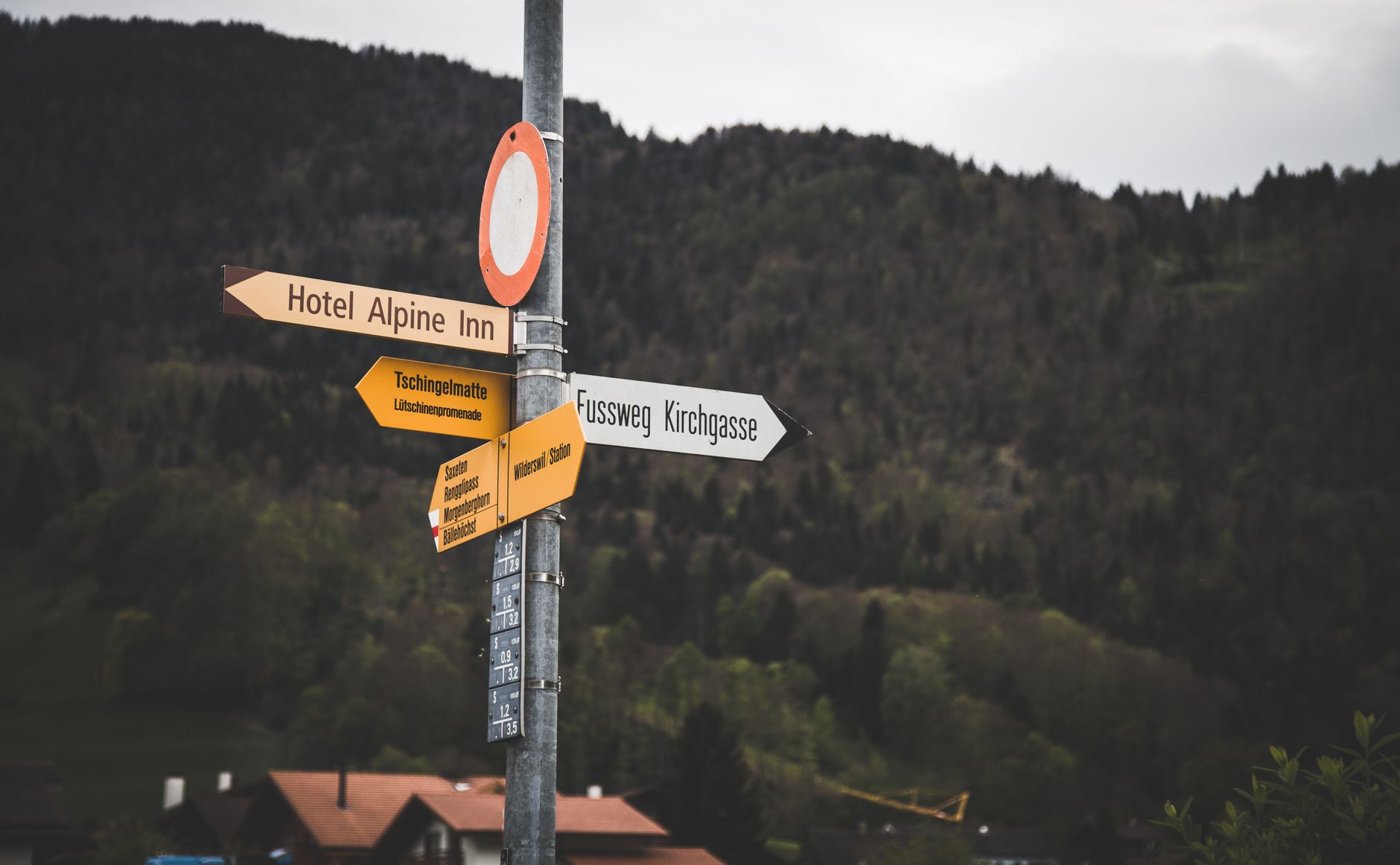
Does your wayfinding help the robot and the guest at the same time?
Bad wayfinding creates bad autonomy. According to the U.S. Access Board, directional and informational signs for site facilities must comply with visual character standards, and tactile signs are generally mounted with the lowest tactile character at least 48 inches above the finish floor or ground and the highest at no more than 60 inches. Those rules are written for people, but they remind operators of a larger truth: a resort route has to be legible to humans before it will stay legible operationally for a robot program.
Resorts often fail here in small ways. Building names differ from PMS labels. Guest villas use one numbering logic, back-of-house runners use another, and temporary event signs overwrite permanent circulation cues. That confusion hurts staff first, then the robot. If employees need local tribal knowledge to find Building 14 South after dark, the route system is not ready.
Before a pilot, standardize destination naming, pickup labels, delivery confirmation points, and elevator or gate exception notes if the route touches semi-interior spaces. A property does not need perfect signage everywhere. It does need consistent naming on the specific service loop being tested.
Service Robot Co. approaches this as a one partner one number problem. In a vendor neutral robot integrator model, the goal is not just to place a machine. It is to align site assessment mapping, route naming, staff training, and ongoing service under one operating playbook.
How should a resort plan service recovery when the robot misses?
Assume failure early and design the response before the pilot starts. Outdoor delivery breaks in ordinary ways: a path floods, a guest crowd forms around live music, a unit loses time behind a luggage cart, a battery window shrinks in afternoon heat, or a destination entry point is temporarily closed. The question is not whether that happens. The question is how the guest experience recovers when it does.
Write a ladder. First, define what counts as a late run, a blocked run, and a failed run. Second, assign ownership. Third, decide the fallback. Maybe a runner takes over at eight minutes, a supervisor calls the guest at ten, and the robot is pulled from service after two consecutive route failures. Without thresholds, teams wait too long and turn a small hiccup into a service lapse.
This is especially important in hospitality because staffing is still tight. In the Bureau of Labor Statistics JOLTS release for June 2026, accommodation and food services still showed 797,000 job openings. That means a resort cannot assume extra labor will magically absorb every robot exception. The backup process has to be light, specific, and realistic.
If you are evaluating lease rental or sale, robot leasing for business, or a monthly payment program instead of buying outright, press on support terms. Ask who monitors uptime, who handles remote triage, what on-site dispatch looks like, and how quickly a manual fallback is triggered. A hotel delivery robot rental is only as useful as the service plan behind it.
Where should the first outdoor pilot begin?
Start with one route family that has clear demand, modest guest complexity, and short exposure windows. Good candidates are packaged amenity drops between a central service point and a cluster of guest buildings, or low-friction room service items on paths that avoid pool deck chaos and event spillover.
Avoid proving too much at once. Do not begin with the longest route, the most photogenic route, or the route that crosses every operating condition on the property. A pilot should answer one operational question cleanly: can this path, this service promise, and this staffing model work day after day.
Success metrics should be operational, not theatrical. Track completed runs, late runs, manual interventions, guest complaints, route obstructions by category, and weather stoppages by cause. If the property cannot explain why a run failed, it is not learning fast enough.
The strongest pilots also define the next gate in advance. For example, you might expand only after two weeks of stable completion on the starter loop, or only after wayfinding fixes and passing-pocket changes are complete. Expansion should be earned by evidence.
What readiness looks like in practice
A resort is ready for outdoor delivery robots when its chosen routes are measured, its weather rules are written, its staff can explain the service in one breath, its destinations are named consistently, and its fallback plan is faster than guest frustration. That is the threshold. Not novelty. Not a polished demo.
For operators who want a commercial robot demo, service robot rental, or a phased robot pilot program with maintenance included, the key is resisting the urge to make the first test too broad. Outdoor hospitality looks orderly from the sales deck and disorderly in the field. The property that admits that early usually gets to a better result faster.
Service Robot Co. fits this work because the question is bigger than a unit. The company acts as an OEM-neutral commercial robot integrator for U.S. businesses, helping clients choose the right platform, finance it, deploy it, integrate it, train staff, and service the fleet through a nationwide engineer network. For a resort, that means one vendor for the whole lifecycle instead of a stack of disconnected promises.