Key takeaways
- Overhead pipe racks are a sanitation and maintenance blind spot in many food plants, even though condensate and leaks can become direct food-safety issues.
- More frequent robot inspections can reduce lift use, reduce ladder exposure, and catch small defects before they become downtime or compliance problems.
- FDA and FSIS rules already put real weight on condensate, drips, cleanliness, and repair in these spaces. The job is not optional.
- The best fit is usually a recurring inspection route with clear exception reporting, not a gadget looking for a mission.
- A full-service, OEM-neutral integrator matters when the plant wants financing, deployment, training, service, and support under one roof.
Why do pipe racks deserve a robot inspection program?
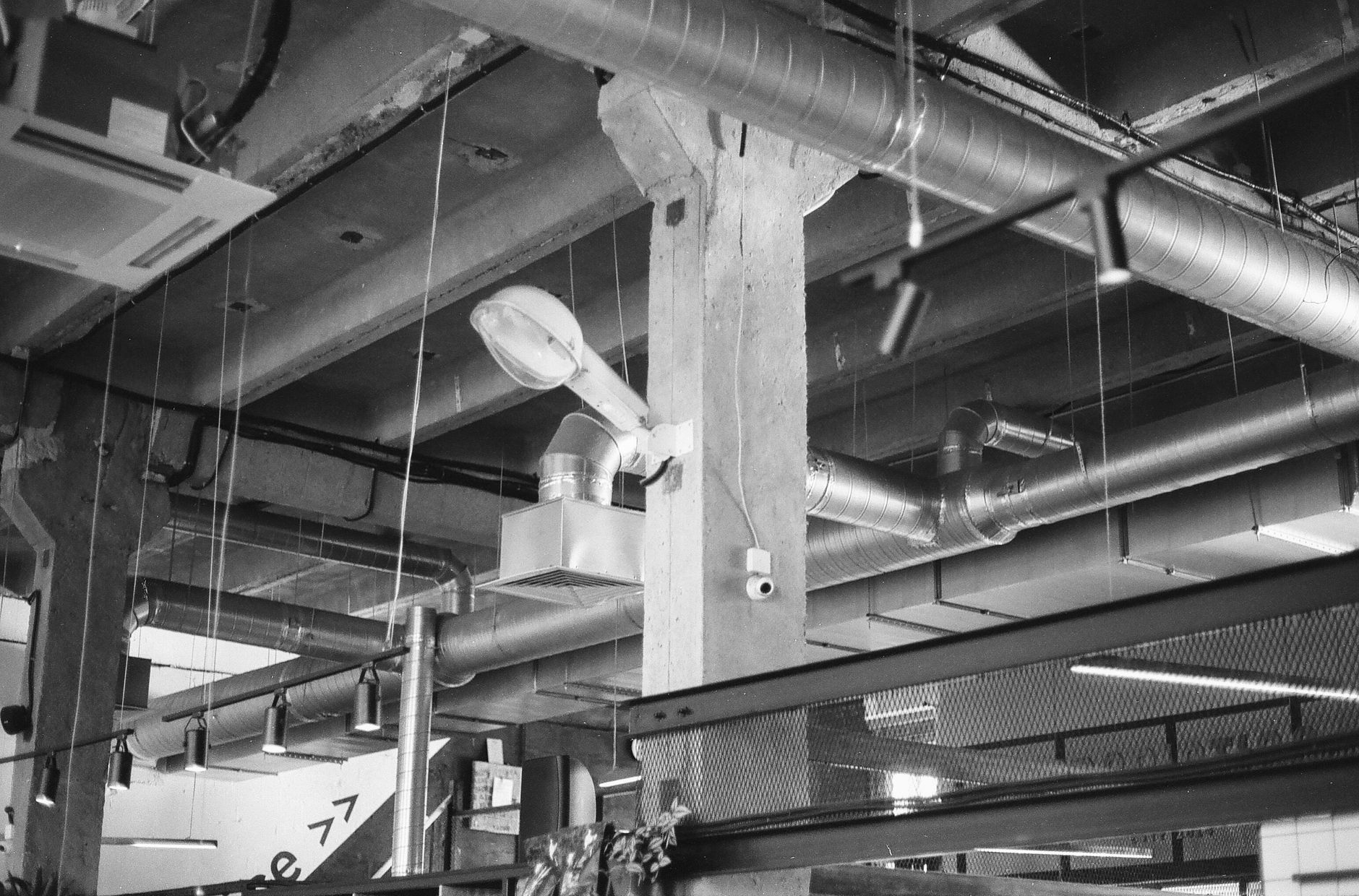
Yes. In many food plants, overhead pipe racks and utility corridors are exactly the kind of neglected inspection zone where robots earn their keep. These areas collect steam, condensate, dust, residue, and small maintenance failures, yet they are awkward to reach and expensive to inspect well with people. The result is predictable. Plants check them less often than they should, or they send skilled staff up in lifts for a quick look and hope nothing subtle gets missed.
That is a weak operating pattern in a regulated environment. FDA current good manufacturing practice rules require that drip or condensate from fixtures, ducts, and pipes not contaminate food, food-contact surfaces, or packaging materials, and they require buildings and fixtures to be kept clean, sanitary, and in good repair. FSIS guidance goes further on the practical point. Heavily beaded condensation that creates insanitary conditions or drips onto product is an issue that requires action, not a note for later.
An inspection robot changes the cadence of the job. Instead of waiting for a scheduled lift window or pulling a mechanic away from line support, the plant can inspect overhead runs more often, document what changed, and escalate only the exceptions that actually need a person. That is the real value case. Better coverage, safer access, and fewer blind spots in one of the hardest zones to monitor consistently.
What actually goes wrong above the line?
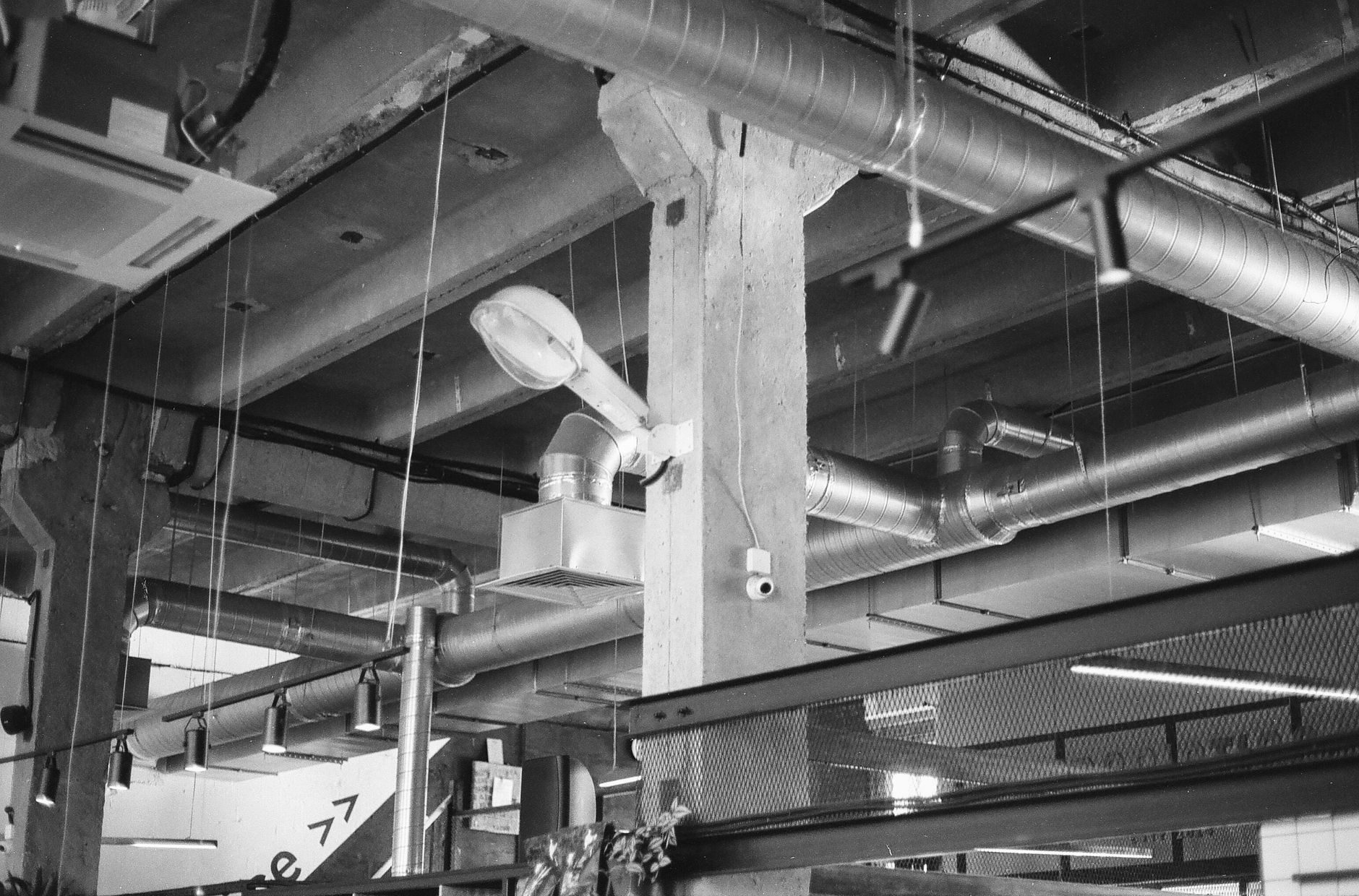
Pipe racks in food plants rarely fail in dramatic fashion first. They fail in small, easy-to-ignore ways. A sweating chilled-water line starts leaving droplets on steel. A valve packing begins weeping. Insulation gets torn, then stays wet. A dead leg or bracket accumulates dust, residue, or rust bloom. A utility corridor ceiling starts showing repeated moisture after sanitation or seasonal humidity swings.
Those are not cosmetic details. They sit above production, ingredients, packaging, or traffic lanes. FDA warning letters in recent years have repeatedly cited condensate dripping from overhead units, ceilings, pipes, and ducts onto ready-to-eat food zones or food-contact surfaces. In other words, regulators keep finding the same class of failure. The problem is real, current, and stubborn.
A good inspection route in these spaces looks for four families of exceptions. Moisture, hygiene, mechanical integrity, and access risk. The robot does not replace every maintenance judgment, but it can make the weak signals visible sooner and more consistently than an occasional manual round.
- Leaks and weeps at valves, unions, flanges, traps, and hose connections
- Condensation on pipes, ducts, evaporators, ceilings, and rack supports
- Hygiene issues such as residue buildup, dust, mold-prone damp areas, and pest harborage conditions
- Maintenance exceptions including damaged insulation, corrosion, loose hangers, missing labels, and blocked access
Why do plants still handle this badly?
Because the work sits in an operational gap. It is important, but it is not urgent until it becomes urgent. Production wants uptime. Maintenance wants to reserve lift work for repairs that clearly matter. Quality wants proof, not anecdotes. Sanitation wants the area checked without adding another labor-heavy round. So the overhead corridor becomes a place people inspect reactively, not rhythmically.
The labor math does not help. According to the U.S. Bureau of Labor Statistics, food manufacturing recorded a 2024 total recordable injury and illness rate of 3.3 cases per 100 full-time workers. Some food segments ran higher, including dairy product manufacturing at 4.2 and fluid milk manufacturing at 4.7. Any repetitive task that adds exposure, travel time, and interruption pressure deserves scrutiny, especially when it can be shifted into a safer workflow.
The access method is part of the problem too. CDC says there were 22,710 workplace ladder injuries and 161 workplace ladder fatalities in 2020. Not every pipe-rack inspection uses a ladder, and many plants rely on scissor lifts or fixed platforms instead. Still, the lesson is plain. Routine visual checks at height are not free. Every avoided climb matters when the task is repetitive and the findings are often minor.
What does a robot inspect better than a person on a rushed lift round?
Consistency first. A robot can run the same corridor, stop at the same assets, capture the same views, and flag change over time. That matters because overhead defects often begin as small visual deltas. A little more moisture than last week. A darker patch on insulation. A hanger that has shifted. A stain line that has lengthened.
Frequency is the second advantage. Once a route is mapped and accepted, the plant can inspect pipe racks far more often than it would justify with lifts and skilled labor alone. Daily, every shift, or after sanitation and temperature swings are suddenly plausible. More rounds do not mean more noise if the process is built around exception reporting. They mean a tighter feedback loop.
Documentation is the third advantage. Food plants live on evidence. Images, timestamps, route completion logs, and repeatable exception tags are more useful than a verbal report that someone saw a drip near the north utility bridge. When a maintenance planner or quality lead gets the alert, they should know exactly where it is, what changed, and whether it is getting worse.
Where is the practical boundary for this use case?
The practical boundary is simple. Use the robot for routine, repeatable detection in areas where visual condition tells you who needs to go next. Do not force it into jobs that clearly require hands-on repair, intrusive inspection, or immediate lockout work. The point is not to pretend a robot is a mechanic. The point is to stop using mechanics as expensive scouts.
In most plants, the best first phase is a narrow route set. Pick the utility corridors and overhead pipe racks that are hardest to see from the floor, most likely to accumulate condensate, or closest to exposed product and packaging transitions. Build a short defect taxonomy. Decide who gets alerts. Decide what triggers a same-shift response versus a scheduled work order.
That is also where inspection robot rental can make sense. If the plant wants a pilot without a capital purchase, a commercial robot demo, a try before you buy program, or a robot as a service structure with maintenance included, the overhead inspection use case is usually easy to measure. The plant can compare lift hours, route frequency, exception counts, and response time before deciding on lease rental or sale.
How should a food plant judge the payback?
Start with the manual baseline, not with abstract AI language. How many overhead rounds happen now. How often are they skipped. How many lift bookings, permits, or skilled labor hours do they consume. How long does it take to locate and document an issue once someone suspects one exists. If the plant cannot answer those questions, that is the first sign the current process is under-managed.
Then look at the avoided failure modes. One caught condensate problem above exposed product can matter more than a month of routine route savings. FDA has cited facilities for condensate dripping from overhead equipment and ceilings onto ready-to-eat areas. FSIS guidance explicitly treats uncontrolled condensation that creates insanitary conditions or drips onto product as an action item. In food plants, early detection protects more than labor. It protects schedule stability, sanitation confidence, and audit posture.
The cleanest business case usually combines three buckets. Fewer manual access events, more inspection frequency, and better defect evidence. Even when the robot does not reduce headcount at all, it can reallocate scarce maintenance and quality labor toward repairs and root-cause work instead of repetitive visual scouting.
What role should an integrator play here?
This use case punishes piecemeal buying. Food plants do not just need a machine that can move through a corridor. They need route design, site assessment mapping, integration into maintenance and quality workflows, operator training, and service that does not disappear after go-live. They also need someone willing to say when the facility is not ready yet and what must change first.
That is where Service Robot Co. fits. We are a full-service commercial robot integrator for U.S. businesses. We are OEM-neutral, which matters in inspection work because the right answer depends on the corridor geometry, hygiene environment, communications constraints, reporting needs, and service expectations at the site. We pick the right robots across manufacturers, then finance, deploy, integrate, train, and service every unit through a nationwide U.S. engineer network.
For operators weighing robot leasing for business, monthly payment programs, a month to month robot lease, or a lease purchase program, that one-partner model removes a lot of friction. One partner, one number. Robot deployment and integration, remote triage, commercial robot repair service, on-site dispatch, and emergency response nationwide under the same relationship.
What does a sensible rollout look like?
Begin with one corridor family, not the whole plant. Utility spines above packaging, chilled process lines with recurring sweating issues, or service corridors that require frequent lift access are usually stronger candidates than visually easy areas. Define the inspection targets before the first route run. Moisture, hygiene, corrosion, labeling, insulation damage, and clearance obstructions are a solid starting set.
Run the pilot long enough to catch normal variation. That means day versus night, sanitation days, weather swings, and production changes. A short pilot that never sees a humid week teaches very little. The best early programs also include a simple exception ladder so nobody argues over every image. Observe. Tag. Triage. Assign. Verify closeout.
If the pilot proves out, the next decision is operating model. Some plants will prefer inspection robot rental or an RaaS monthly subscription with no upfront capital. Others will want a finance path into ownership after the route library and workflow are proven. Either way, the deciding factor should be operational fit and support quality, not the novelty of the hardware.
The neglected zone is often the highest-value first step
Food plants do not win by making overhead inspections glamorous. They win by making them routine, documented, and safer. Pipe racks and utility corridors tend to be the exact opposite today. Hard to access, inconsistently checked, and easy to postpone until a leak, condensate event, or sanitation finding forces attention.
That is why this use case is stronger than it looks at first glance. It is not chasing an abstract future state. It is fixing a real inspection discipline problem in a real risk zone. When a robot helps the plant inspect overhead infrastructure more often without tying up lifts and skilled labor, the gain is immediate and tangible.
For food operators trying to decide where automation should start, this is a grounded answer. Put the robot where the plant struggles to see clearly, struggles to inspect often, and pays too much every time a person has to go looking overhead.