Key takeaways
- Roof drain failures are usually small at first, but they can push water under flashing, into insulation, and down through occupied space long before anyone sees a ceiling stain.
- EPA guidance says roofs should achieve positive drainage and drain within 48 hours after precipitation, which makes routine visual verification of drain paths more than a housekeeping task.
- Ground robots and compact crawlers fit the repetitive part of the job well: checking strainers, debris buildup, ponding, drain bowls, downspout entries, and accessible stormwater runs on a repeatable route.
- The real value is not just spotting a blockage once. It is building dated, comparable evidence that helps maintenance teams act early and helps owners show the condition was managed.
Where do inspection robots actually help on roof drainage routes?
They help in the quiet gap between a roof that looks fine from the hatch and a roof system that is already holding water in the wrong places. For property managers, contractors, and facility engineers, that means using a small ground robot or crawler to inspect the drainage path itself: drain bowls, strainers, low spots, scuppers, collector boxes, downspout entries, and accessible stormwater lines where debris and sediment tend to gather.
That matters because commercial roof leaks often start as drainage neglect, not dramatic membrane failure. The roof sheds water until one drain clogs, one strainer mats over, one low corner ponds, or one outlet line begins to back up. By the time moisture shows up inside, the evidence on the roof may already be gone or hard to reconstruct.
The better use case is routine, documented inspection before the claim conversation starts. A robot can follow the same route after storms, before hurricane season, during leaf-drop periods, and after nearby construction. The result is a time-stamped record of what the drainage path looked like when the problem was still manageable.
Why is roof drainage a stronger robot use case than it first appears?
Because the work is repetitive, awkward, and easy to defer. Large low-slope roofs may have dozens of drains spread across areas cluttered by RTUs, conduit, pipe supports, solar equipment, pavers, or vegetated sections. The inspection task is simple in theory but tedious in practice: reach the drain, see the approach path, check for standing water, confirm the strainer is clear, and capture enough evidence to compare conditions over time.
EPA's moisture-control guidance says positive roof drainage should be designed so drainage occurs within 48 hours after precipitation. The same guidance notes that internal roof drainage systems are the most practical option for large, low-slope roofs and that roof drains should have strainers or similar devices to keep leaves and debris from clogging the drain or downpipe. That is exactly the kind of condition a mobile inspection platform can check again and again without turning each round into a half-day walk.
The weather backdrop makes this more urgent. According to NOAA, the United States had 27 billion-dollar weather and climate disasters in 2024, with about $182.7 billion in losses. Not every event becomes a roof claim, of course, but heavy-rain exposure is not theoretical. Drainage paths that perform marginally in mild weather are often exposed by the first truly hard storm.
What should the robot inspect on each run?
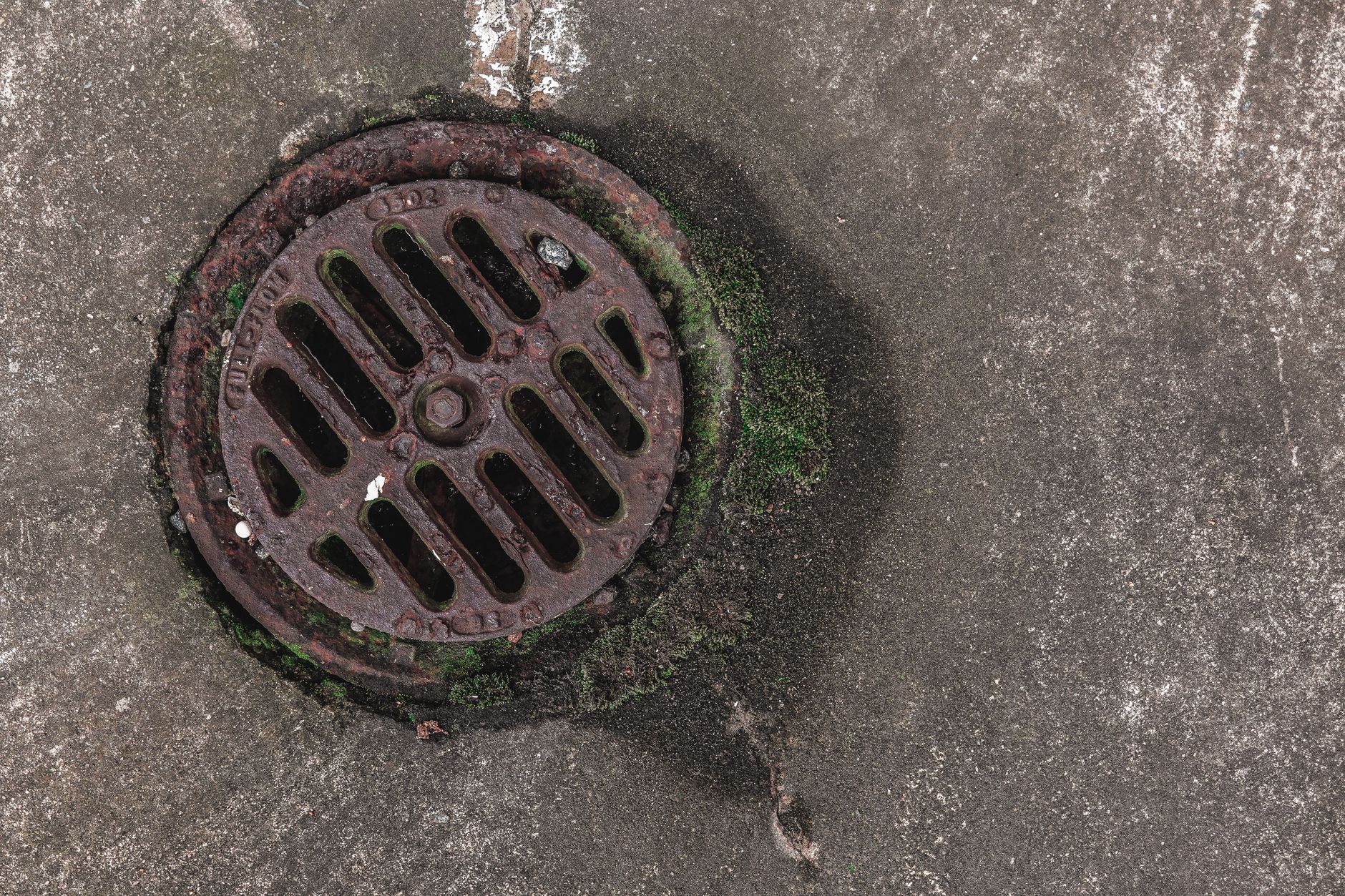
Start with the full path, not just the drain grate. A roof drain works only when water can reach it, enter it, and continue through the connected piping without backing up. Inspection routes should therefore follow the hydraulic story from the surrounding roof field into the drain and then through any accessible stormwater line sections, sumps, or discharge points.
On most commercial properties, a useful route balances visual confirmation with enough detail to support maintenance decisions. The robot is there to collect evidence that a human can act on, not just to produce attractive footage.
- Approach path condition, including gravel, leaves, packaging debris, roofing scraps, sealant tubes, and windblown trash that can migrate into the drain
- Ponding or slow-draining areas, especially repeat low spots around insulation deflection, patched areas, or corners near parapets and equipment curbs
- Drain bowl and strainer condition, including matted debris, biological growth, displaced strainers, cracked domes, and signs that water recently overtopped the assembly
- Scuppers, collector heads, gutters, and downspout inlets where nests, leaf packs, or construction sediment create partial blockages before a full clog appears
- Accessible stormwater runs, cleanouts, and discharge points where staining, backflow marks, sediment fans, or erosion suggest poor flow or repeated surcharge
Which properties benefit most from this kind of inspection?
The strongest fit is a commercial roof where drainage failure is expensive, access is broad, and the consequences of late discovery travel beyond the maintenance budget. Distribution buildings, hospitals, retail centers, schools, hotels, data-heavy office facilities, and mixed-use portfolios all fit that pattern. The common thread is not the industry. It is the cost of hidden water movement and the difficulty of proving when the problem started.
Properties with mature trees, nearby construction, recurring storms, rooftop amenity decks, vegetated sections, or cluttered mechanical roofs usually get value fastest. So do multi-site owners that need consistent documentation across locations. Once one building uses a robot route well, the inspection method is easy to standardize across the portfolio.
This is also a practical niche for an inspection robot rental or pilot. The drainage route is narrow enough to test quickly, but frequent enough to show whether the robot is earning its keep. For teams comparing robot leasing vs buying, roof-drain inspection is one of the cleaner ways to validate adoption before expanding into other building-system rounds.
How does robotic evidence help before a leak turns into a dispute?
Documentation changes the conversation. A dated image set showing that drain strainers were clear on August 3, that ponding appeared near one curb on August 17, and that a specific outlet was partially blocked after a storm on August 19 gives operations teams a factual timeline. Without that record, teams are often left arguing from memory after ceiling tiles fail or tenants complain.
That record can matter outside maintenance too. FEMA's public-assistance training materials note that when building damage is evaluated after an incident, reviewers may consider evidence of regular maintenance or pre-existing issues such as water damage from a leaky roof. The point is broader than FEMA paperwork. If a roof problem becomes a claim, reimbursement request, or contractor dispute, contemporaneous inspection records are far more useful than an after-the-fact walk.
Robots do not eliminate judgment. They make judgment easier to defend. A supervisor can see the same drain corner every week, compare conditions side by side, and decide whether the issue is debris, settlement, membrane distress, or a line obstruction that needs a plumber rather than a roofer.
What makes a good deployment plan for roof drains and stormwater lines?
Keep the first route tight and operational. Pick one building, one seasonally risky roof zone, and one inspection cadence. Define exactly what the robot must capture, who reviews the footage, how anomalies are tagged, and what triggers a work order. A short route with clean handoffs beats a sprawling pilot nobody reviews.
EPA's stormwater-maintenance guidance is useful here because it treats maintenance as a managed program, not a heroic response. The agency says operation and maintenance plans should identify responsible parties, maintenance schedules, inspection requirements, inspection frequency, and basic tasks such as sediment and debris removal and inlet or outlet cleaning. The robot should plug into that framework, not sit beside it.
For roofs with planted sections, the route needs even more discipline. GSA guidance says roof drains, gutters, and downspouts on planted roofs should be routinely inspected for clogging, and it recommends a visible no-plant zone around drains. That is a good example of why route design matters. The robot should be checking not only the drain itself but also whether surrounding vegetation or media is creeping into the drainage area.
Where does Service Robot Co. fit in this kind of program?
This is one of those inspection problems where the robot is only part of the purchase. The harder questions are platform fit, payload selection, reporting workflow, training, and service coverage. Service Robot Co. is built for that layer of the work. The company is an OEM-neutral robot integrator for U.S. businesses, which means the building does not have to be forced into one manufacturer's format.
For a roof drainage program, that matters. One site may need a compact ground unit for broad membrane routes. Another may need a crawler format for awkward access or more difficult transitions. Service Robot Co. can finance, deploy, integrate, train, and service the program through a nationwide U.S. engineer network, so the customer gets one partner across lease rental or sale, deployment, and maintenance instead of stitching the lifecycle together themselves.
That full-lifecycle support is especially useful for multi-site owners. Roof inspections fail when the robot is interesting for three weeks and unsupported after that. A vendor neutral robot integrator with on-site dispatch, remote triage, and a robot maintenance service plan is better aligned with the operational reality of a facility portfolio.
What changes once the program is working?
The biggest shift is that drainage inspection stops being reactive. Teams stop waiting for the first interior symptom and start watching the weak points that usually precede it: partial blockages, repeat ponding, sediment at outfalls, displaced strainers, and localized overflow marks. That changes maintenance from emergency response to route-based surveillance.
It also creates better repair scopes. Instead of sending a contractor to 'check the roof drain issue,' the team can send dated images showing which drain, which side of the bowl, which runoff path, and which connected line segment looked wrong. That shortens troubleshooting and improves the odds that the first visit fixes the actual cause.
Ready.gov advises owners to remove debris from gutters and drains as part of flood and hurricane preparation. Inspection robots add something those checklists usually lack: proof. On a risky commercial roof, proof is often what separates ordinary preventive maintenance from a water problem that becomes a claim file, a tenant dispute, or an ugly capital surprise.
Frequently asked questions
Sources
- EPA Moisture Control Guidance for Building Design, Construction and Maintenance
- EPA Stormwater Maintenance
- NOAA Climate.gov 2024 Billion-Dollar Disasters
- NOAA NCEI U.S. Climate Extremes Index
- FEMA Public Assistance Training Material on Building Damage and Maintenance Evidence
- Ready.gov Floods Guidance
- Ready.gov Low and No Cost Preparedness
- GSA Planted Roof Guidance