Key takeaways
- Integrating robots with a Building Management System (BMS) turns them into a reactive force that responds to real-time facility events.
- The connection is made via Application Programming Interfaces (APIs), allowing the BMS and robot fleet manager to exchange commands.
- Key benefits include faster response to spills and security alerts, improved operational efficiency, and smarter resource allocation.
- A vendor-neutral integrator is often essential to bridge the communication gap between different robot and BMS manufacturers.
- Successful integration hinges on a modern BMS with an open API and a robust facility-wide wireless network.
Connecting Your Robots to Your Building's Central Nervous System
Integrating a fleet of service robots with your facility's Building Management System (BMS) connects your autonomous workforce to the building's central nervous system. This creates a powerful ecosystem where robots are no longer just performing pre-programmed routes. They become an active, responsive part of your building's daily operations, dispatched automatically based on real-time data from the facility itself.
Imagine a spill in a public corridor. Instead of waiting for a person to notice it and call janitorial staff, a moisture sensor on the floor alerts the BMS. The BMS, in turn, sends a command to your robot fleet management platform, which immediately dispatches the nearest autonomous floor scrubber to the precise location. The spill is handled in minutes, not hours, reducing slip hazards and improving facility hygiene without human intervention.
This level of automation is achieved by creating a communication bridge between two powerful platforms. The BMS, which controls everything from HVAC and lighting to security and elevators, gains a physical, mobile extension. The robot fleet gains a new level of intelligence, reacting to the dynamic needs of the building and its occupants. The result is a truly automated facility that operates with greater speed and efficiency.
What is a Building Management System (BMS)?
A Building Management System, sometimes called a Building Automation System (BAS), is a comprehensive, computer-based system that monitors and controls a building's entire electromechanical infrastructure. It acts as a single point of control for disparate systems that would otherwise operate in silos.
Think of it as the brain of the building. Facility managers use the BMS to oversee and manage a wide array of critical functions from a central dashboard.
Core systems typically managed by a BMS include:
This centralized command is vital for optimizing energy consumption, ensuring occupant comfort, and maintaining a secure environment in large commercial, industrial, and residential buildings.
- Heating, Ventilation, and Air Conditioning (HVAC)
- Lighting control systems
- Security and access control systems
- Fire alarm and life safety systems
- Elevator and lift controls
- Power monitoring and electrical systems
How Does Robot-BMS Integration Technically Work?
The link between a BMS and a robot fleet is forged through an Application Programming Interface, or API. An API is a set of rules and protocols that allows different software applications to communicate and exchange data. In this scenario, the BMS and the robot's fleet management software each have an API that can be configured to talk to one another.
The process follows a simple but powerful 'trigger-and-action' logic. A sensor or device connected to the BMS detects a specific event, creating a 'trigger'. The BMS then sends a message through its API to the robot fleet manager, which interprets the message and initiates an 'action' by dispatching the appropriate robot.
Common communication protocols like BACnet, Modbus, and REST APIs are often used to facilitate this exchange. For example, a BMS might use the BACnet protocol to send an alert that a secure door has been breached. An integration layer translates this alert into a REST API call that tells a security patrol robot rental to proceed to that location and provide video verification.

What Are the Main Advantages of an Integrated System?
Connecting your robots to the BMS moves your facility from a scheduled, proactive operational model to a dynamic, reactive one. This shift unlocks significant gains in efficiency, safety, and performance.
The primary benefit is immediate, automated response. An integrated autonomous floor scrubber rental can address a spill the moment it is detected, minimizing safety risks. A security robot can be dispatched to an alarm location instantly, providing crucial situational awareness before human guards arrive.
Efficiency is another major advantage. Robots are dispatched based on actual need, not just a fixed schedule. An autonomous cleaning robot could be automatically sent to a conference room after the BMS registers that the lights have been turned off and the room is empty. A material handling robot rental can be called to an area by an employee with a press of a button that signals the BMS.
Finally, this integration creates a valuable data loop. The BMS provides robots with real-time context about the building's status. In return, data from the robots, such as patrol logs or cleaning completion reports, can be fed back into the BMS, giving facility managers a more complete picture of their operations.
Unlocking New Capabilities: Top Use Cases
The true potential of BMS integration is realized through the specific automated workflows it enables. These applications can fundamentally change how a facility is managed and maintained.
Here are some of the most impactful use cases:
This level of coordination allows a delivery robot for elevators to move between floors without human assistance, fundamentally enabling multi-floor delivery robot operations in hospitals, hotels, and corporate offices.
- Reactive Cleaning Operations: Moisture, waste bin fullness, or even air particle sensors can trigger the dispatch of an appropriate cleaning robot, such as an autonomous vacuum robot rental or industrial floor sweeper, to the precise area requiring service.
- Intelligent Security Patrols: Instead of just walking a set route, a security patrol robot can be automatically rerouted to investigate motion sensor alerts, door access alarms, or unusual thermal readings detected by the BMS.
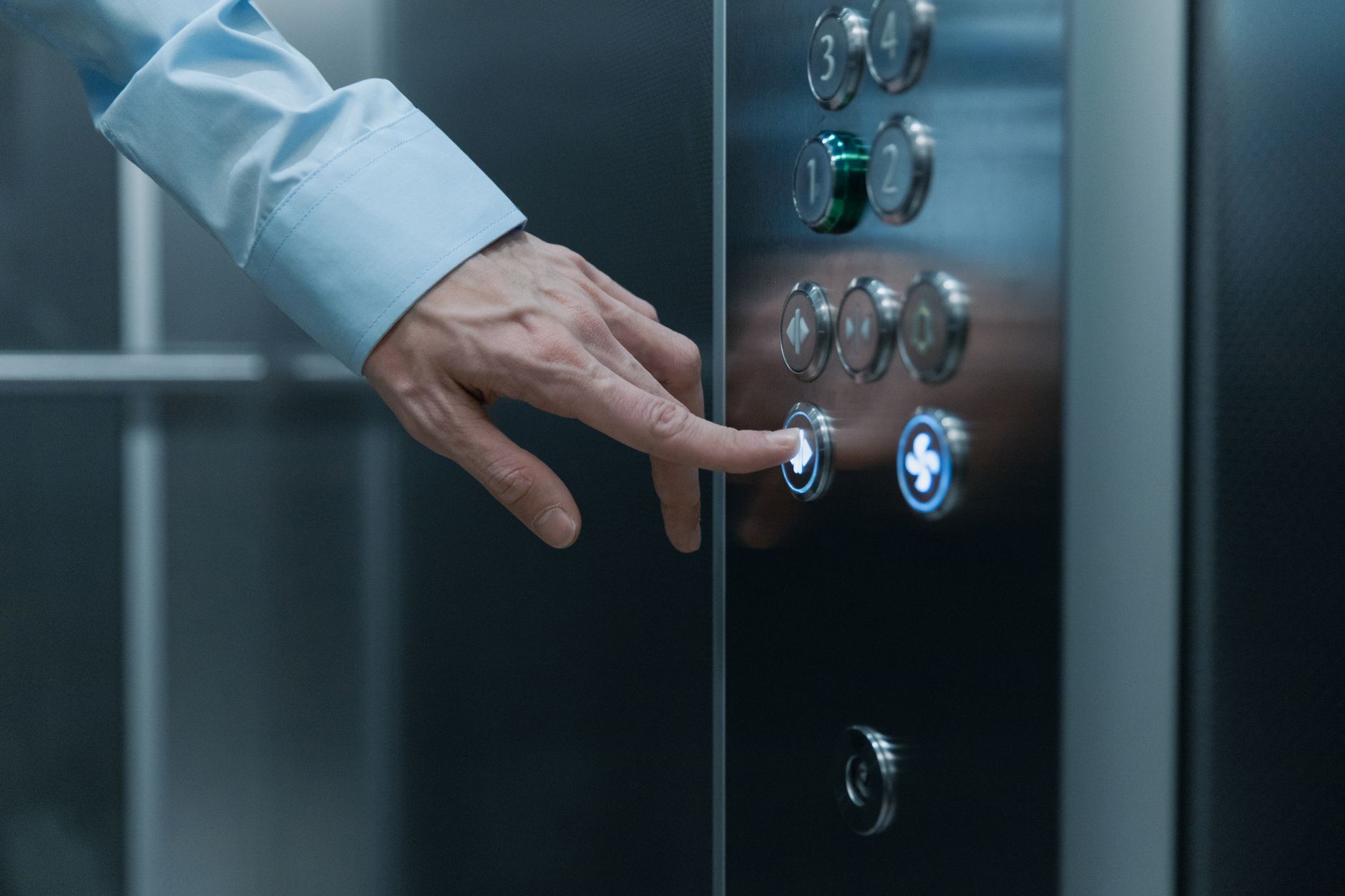
- Smart Elevator Integration: A delivery robot can communicate its need to use an elevator directly to the BMS. The system can then call an elevator car, select the correct floor, and manage its journey alongside human passengers, optimizing traffic flow.
- Energy and Resource Management: Once a cleaning or inspection robot reports its task as complete in a specific zone, it can signal the BMS to dim the lights, lower the temperature, or reduce ventilation in that unoccupied area, saving energy.
- Automated Fault Response: In industrial settings, a BMS monitoring manufacturing equipment can detect an overheating motor or a pressure anomaly. This can automatically dispatch an inspection robot rental to provide a close-up visual or thermal scan of the equipment in question.
Why a Vendor-Neutral Integrator is Your Most Critical Partner
The reality of commercial facilities is a mix of technologies from different manufacturers. Your BMS might be from one major provider, your access control system from another, and you may require cleaning, security, and delivery robots from various leading robotics companies. This is where a vendor-neutral integrator like Service Robot Co. becomes essential.
An integrator's role is to design, build, and support the entire automation system, ensuring that all pieces communicate effectively. Rather than being locked into one manufacturer's limited ecosystem, you need a partner who can select the best robot for each task and make it work with your existing infrastructure. We specialize in creating the custom API connections and software middleware that bridge the communication gap between platforms.
As a full-service commercial robot integrator, Service Robot Co. handles every phase of the project. It starts with a free site assessment to evaluate your current BMS and network readiness. From there, we handle the entire turnkey robot deployment, from financing and programming to go-live support and ongoing maintenance. With our nationwide network of engineers, you have one partner and one number to call for the entire lifecycle of your robot fleet, regardless of the brands involved.
Are You Ready? Technical Prerequisites for Integration
Embarking on a BMS integration project requires a few foundational elements to be in place. Before beginning, a thorough evaluation of your facility's existing technology is a necessary first step.
First and foremost is a modern BMS that offers an open and accessible API. Older or proprietary systems that are completely closed off may not be able to communicate with external platforms, posing a significant barrier to integration. A system that supports standard protocols like BACnet/IP, Modbus TCP, or has a documented REST API is ideal.
A robust, facility-wide wireless network is non-negotiable. Your robots, sensors, and BMS controllers all need reliable, low-latency connectivity to communicate in real time. Gaps in Wi-Fi coverage can disrupt commands and lead to operational failures.
Finally, your chosen robotic fleet must be managed by a centralized fleet management system that also features an open API. This software is what receives the commands from the BMS and translates them into specific instructions for individual robots. It is the crucial software link in the chain.
How to Get Started with Your Integration Project
Bringing your BMS and robot fleet together is a structured process. Following a clear roadmap ensures that the final system is reliable, effective, and aligned with your operational goals.
The initial step is a comprehensive site assessment and discovery phase. A qualified robot integrator will work with your facility managers to understand your existing BMS capabilities, your network infrastructure, and what you want to achieve with automation.
Next, you must clearly define the desired workflows. This involves mapping out every 'trigger-and-action' scenario. For example: IF a moisture sensor in aisle 4 is activated, THEN dispatch the nearest autonomous floor scrubber to that location's pre-defined cleaning zone.
With the logic defined, the technical development begins. The integrator builds and configures the API connections. This is followed by rigorous testing in a controlled environment to work out any issues before the system goes live.
The final stage is a phased deployment. Instead of activating the integration across the entire facility at once, it is rolled out in a single, limited area. This allows your team to observe the system in a real-world setting, make adjustments, and build confidence before a full-scale implementation.