Key takeaways
- Accessible routes need 36 inches of clear width on walking surfaces, with only narrow, short exceptions spelled out in the 2010 ADA Standards.
- Robot docks, queues, and stopped units count as obstructions, so they belong off the primary accessible path or in timed pull-outs.
- Routes under 60 inches wide need passing spaces at intervals, which mobile robots cannot occupy during peak visitor traffic.
- Fire and evacuation behavior must return corridors to full clear width quickly, not leave units mid-aisle during an alarm.
- A vendor-neutral integrator can map routes with your accessibility coordinator before pilots go live in lobbies and public corridors.
What does ADA compliance mean for a mobile robot route?
Public facilities that welcome guests, patients, students, or tenants must keep accessible routes open even when cleaning robots, delivery robots, or AMRs share the same corridors. Compliance is not a sticker on the robot. It is how the unit travels, where it stops, and what it leaves behind in the walking surface.
The practical test is simple for a facility manager. Can a person using a wheelchair or mobility device pass your robot, its dock, and its charging queue without leaving the accessible path or squeezing through a temporary pinch point?
If the honest answer is no during normal hours, your deployment plan needs rerouting, scheduling, or physical pull-outs before you scale beyond a pilot.
How wide must corridors stay under the ADA Standards?
The 2010 ADA Standards, published by the Department of Justice and the Access Board, require a minimum clear width of 36 inches on walking surfaces along accessible routes, except in tightly defined cases.
The standards allow a short reduction to 32 inches for no more than 24 inches of length, but only when that narrow segment is separated by another segment at least 48 inches long and 36 inches wide.
Robot planners should treat those exceptions as rare relief for fixed architecture, not as permission to park a 24 inch wide machine in a 32 inch gap all afternoon.
Measure clear width between real obstructions: wall protrusions, freestanding signs, bench legs, and the footprint of a dock or stopped AMR all count.

Where do passing areas belong on busy public floors?
When an accessible route is narrower than 60 inches, the standards call for passing spaces at reasonable intervals so two wheelchair users can pass without backing up long distances.
Mobile robots that pause for navigation, elevator calls, or handoffs cannot occupy those passing zones during open hours in public lobbies, clinics, or civic buildings.
Map passing spaces from your as-built drawings and field measurements, then forbid robot idle behavior inside them except during closed hours with barriers removed.
A timed schedule that keeps scrubbers on upper floors until after the last public program often beats trying to share a 54 inch corridor at noon.
How should docks and queues be placed?
Charging docks, water fill stations, and pickup queues are the most common ADA failures because they look like equipment zones, not pedestrian space.
Place docks in back-of-house corridors, alcoves, or marked equipment bays that are not part of the public accessible route. If a dock must sit near a lobby, recess it so the accessible path keeps full width when the robot is absent and when it is present.
Queue lines for delivery robots should never narrow the accessible route below 36 inches. Use offset staging so the robot waits beside the path, not across it.
Signage should tell staff where temporary robot stops are allowed during exceptions, and those stops still cannot block curb ramps, elevator landings, or door maneuvering clearances.
What happens during alarms and other emergencies?
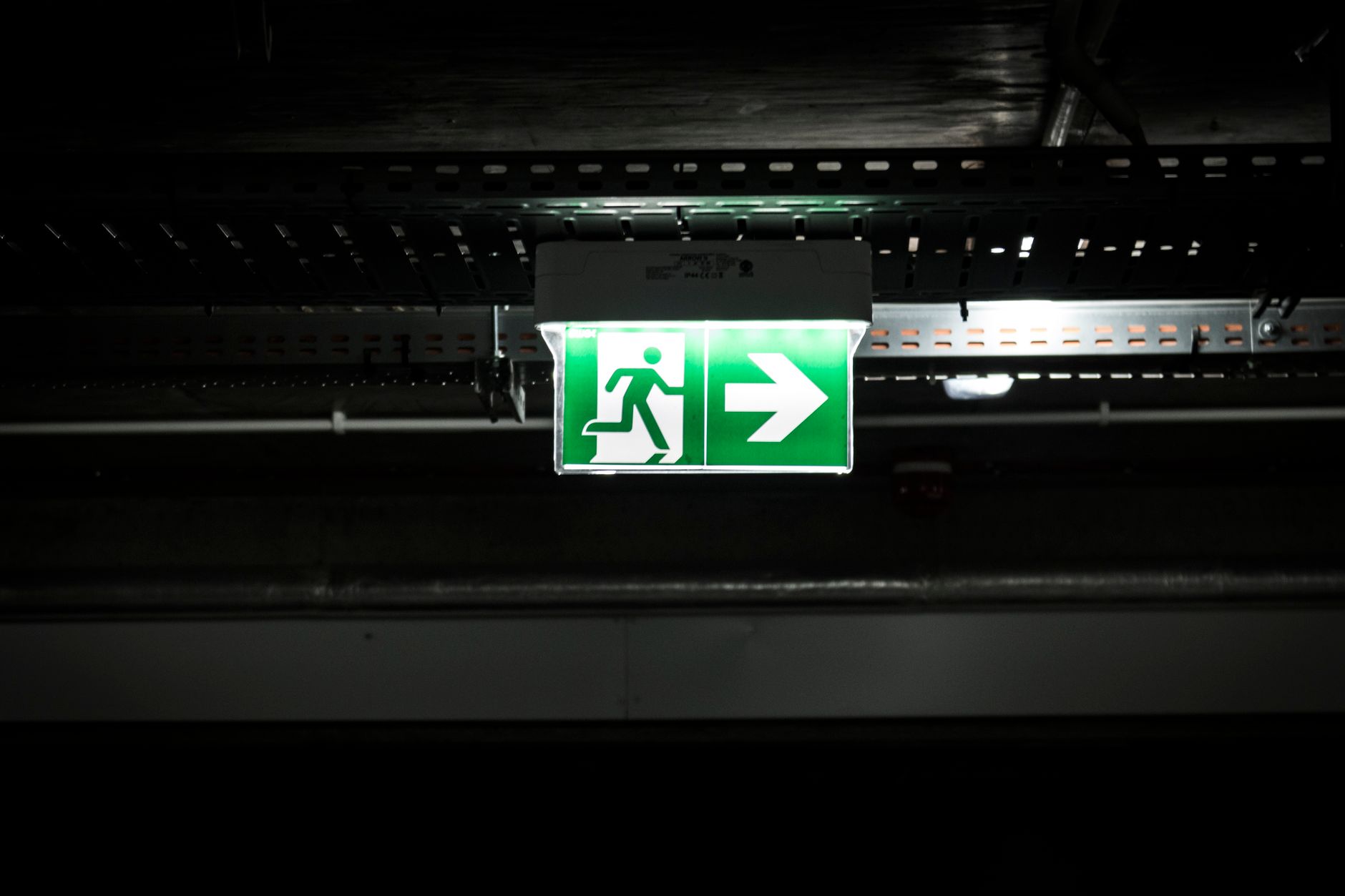
Emergency behavior belongs in the accessibility review, not only the fire marshal packet. When an alarm sounds, robots must clear accessible routes quickly or move to pre-approved pull-outs that stay outside exit paths.
A robot that stops mid-corridor because navigation paused can become a barrier exactly when people are moving to exits. Program explicit alarm responses: return to dock, enter a equipment zone, or power down in a pull-out that was validated with your accessibility coordinator.
Rehearse this with security and facilities during acceptance testing. A five minute drill reveals whether your fleet blocks a landing or narrows a ramp run.
What signage and communication should visitors see?
You do not need flashy marketing signs, but you do need honest communication when robots share public space. Simple floor decals at lobby entries can show the shared corridor and direct people to full-width paths when a unit is operating nearby.
Staff training matters as much as decals. Hosts, guards, and reception teams should know how to pause a route when a temporary obstruction appears, such as a wet floor setup or a movable exhibit.
Document who can call a pause and how fast the robot clears the accessible route. That chain should be as clear as your elevator entrapment procedure.
Who should validate routes before go-live?
Bring accessibility stakeholders into route design early, not after procurement. Facilities, ADA coordinators, tenant representatives, and sometimes transit or clinic patient advocates each see different pinch points.
Walk the proposed route with a measuring wheel and a checklist derived from the 2010 Standards clear width rules. Photograph dock placements, elevator approaches, and any segment that relies on the 32 inch exception.
Repeat the walk after installation when sensors, totes, or scrub decks change the robot footprint. A pilot that passed in summer can fail in winter when coat racks and holiday displays steal width.
How does Service Robot Co. fit public facility deployments?
Service Robot Co. is a full-service commercial robot integrator for U.S. businesses. We stay OEM-neutral across scrubbers, delivery platforms, and AMRs, then finance, deploy, train, and service units nationwide.
For public-facing sites we map routes with your team, stage pilots on closed schedules first, and align maintenance windows so docks and queues do not creep into accessible paths after go-live.
Commercial robot rental or monthly programs let you prove corridor behavior before capitalizing a fleet that must coexist with ADA obligations every day.