Key takeaways
- Pool decks are viable robot territory only after staff clear standing water, cones, loose equipment, and obvious chemical residue.
- Showers, tight toilet rooms, under-bench zones, and chemical spaces still belong on the manual cleaning list.
- Large aquatic centers create repeat wet chokepoints at rinse showers and entries, so routes need separate deck, locker, and lobby phases.
- Humidity, condensation, and textured drainage slopes make natatoriums harsher on floor-care equipment than a typical gym.
- A vendor neutral robot integrator matters here because aquatic centers often need mapping, training, service, and financing wrapped into one program.
Can a night cleaning robot work in a community aquatic center?
Yes, but only on the right surfaces, in the right sequence, and under tighter controls than most recreation buildings need. A municipal aquatic center is not just a big gym with a pool attached. It has persistent humidity, textured wet decks, rinse showers that keep feeding water into traffic lanes, and locker room transitions that can go from bare concrete to tile to rubber matting within a few steps.
That means a robot can usually take over substantial floor scrubbing on open hard-surface areas such as main pool decks, broad locker room aisles, spectator concourses, and front-lobby hard floors after close. It should not be asked to do everything. Shower stalls, cramped toilet rooms, under benches, corners around floor drains, and any area with uncontrolled standing water or chemical handling still need manual work.
For parks departments and Y operators, the real decision is not whether automation belongs in the building. It is where it belongs, what conditions must be true before it runs, and how the nightly cleaning plan hands work from people to machine without creating slip risk before opening.
Why is an aquatic center harder than a gym or school?
The building itself is harsher. The CDC's current Model Aquatic Health Code, or MAHC, says indoor aquatic facilities must be designed for high humidity and requires air handling that maintains constant airflow, relative humidity, and negative pressure while limiting condensation and mold. That is a very different operating envelope from a school corridor or a fitness room.
The floor conditions are harsher too. The 2024 MAHC requires decks to slope away from the water and gives minimum drainage slopes of 1/8 inch per foot for smooth finishes, 1/4 inch per foot for moderately textured finishes, and 3/8 inch per foot for heavily textured finishes. Those are not cosmetic details. They affect traction, water runoff, scrub head contact, and how reliably a robot can recover water at the edge of drains and slope breaks.
There is also more at stake operationally. According to CDC inspection data summarized in 2025, one out of eight routine public pool inspections and one out of seven public hot tub or spa inspections result in immediate closure because of a serious public health hazard. In the 2016 CDC surveillance report behind that summary, 18.1 percent of routine pool inspections that captured chemical-safety data found violations tied to labeling, storage, or security of pool chemicals. In other words, aquatic buildings are already regulated as high-consequence spaces. The floor-care plan has to respect that reality.
What can a robot clean safely, and what should stay manual?
The cleanest use case is open hard flooring with predictable boundaries. That usually includes the main natatorium deck after swim gear is removed, the wider circulation lanes in locker rooms, family changing area corridors, vestibules, front-desk approaches, and lobby transitions from wet tile to dry hard floor. These are the areas where overnight floor care benefits most from repeatable routes and consistent water recovery.
Manual cleaning is still the right tool for any zone where geometry or contamination changes too quickly. Shower stalls collect soap film, hair, and pooled water around drain baskets. Toilet partitions, bench legs, lifeguard stands, bleacher feet, and ADA fixtures create tight edge work. Floor drain surrounds often need detail work that a robot will miss or smear if the area is heavily loaded with residue. Chemical rooms, pump rooms, and service spaces should remain excluded from robotic routes entirely.
A useful rule is simple. If the area can be prepped into a clear, repeatable lane pattern and the floor can be brought back to damp rather than visibly wet, a robot is a candidate. If staff would still need a deck brush, squeegee, scraper, or hand detail pass to make the area safe and hygienic, keep that scope manual.
- Good robot zones: open pool decks, broad locker aisles, spectator concourses, vestibules, lobby hard floors, indoor splash-pad perimeters after full drain-down and prep
- Manual-only zones: shower stalls, toilet rooms, under benches, around floor drains, inside equipment closets, chemical storage and pump rooms, stair treads, heavily cluttered family changing rooms
How should routes be staged around decks, showers, and the front lobby?
The most reliable aquatic-center route plan is phased, not building-wide. Start with deck prep. Staff close the water, remove portable equipment, hose or squeegee obvious standing water toward drainage, and spot-neutralize any residue that should not be spread across the deck. Only then does the robot enter the natatorium.
Next, separate wet work from dry-finish work. The deck and immediate rinse-shower approaches should run first while air handling is still pulling moisture out of the space and before water migrates into cleaner transition zones. The MAHC requires at least one rinse shower on the deck near an aquatic-venue entry point, and facilities with more than 7,500 square feet of water surface need rinse showers adjacent to each entry point or arranged to encourage use. Those entry points become recurring wet chokepoints, so map them as short dedicated segments, not part of one giant loop.
After the deck cycle, move to locker-room circulation lanes, then finish with the front lobby and reception transition. That last phase matters because the lobby is where wet bare-foot traffic, street shoes, and mat edges meet. It is also the area most visible to morning patrons, so it benefits from a final dry-pass standard rather than a merely clean one.
- Phase 1: staff prep, equipment removal, squeegee standing water, isolate any chemical concern
- Phase 2: natatorium deck runs, including short segments at rinse-shower approaches and zero-depth entries
- Phase 3: locker-room main aisles and family changing circulation paths
- Phase 4: vestibules, front desk approaches, and lobby hard-floor transitions after wet work is complete
What safety checks matter before a robot starts?
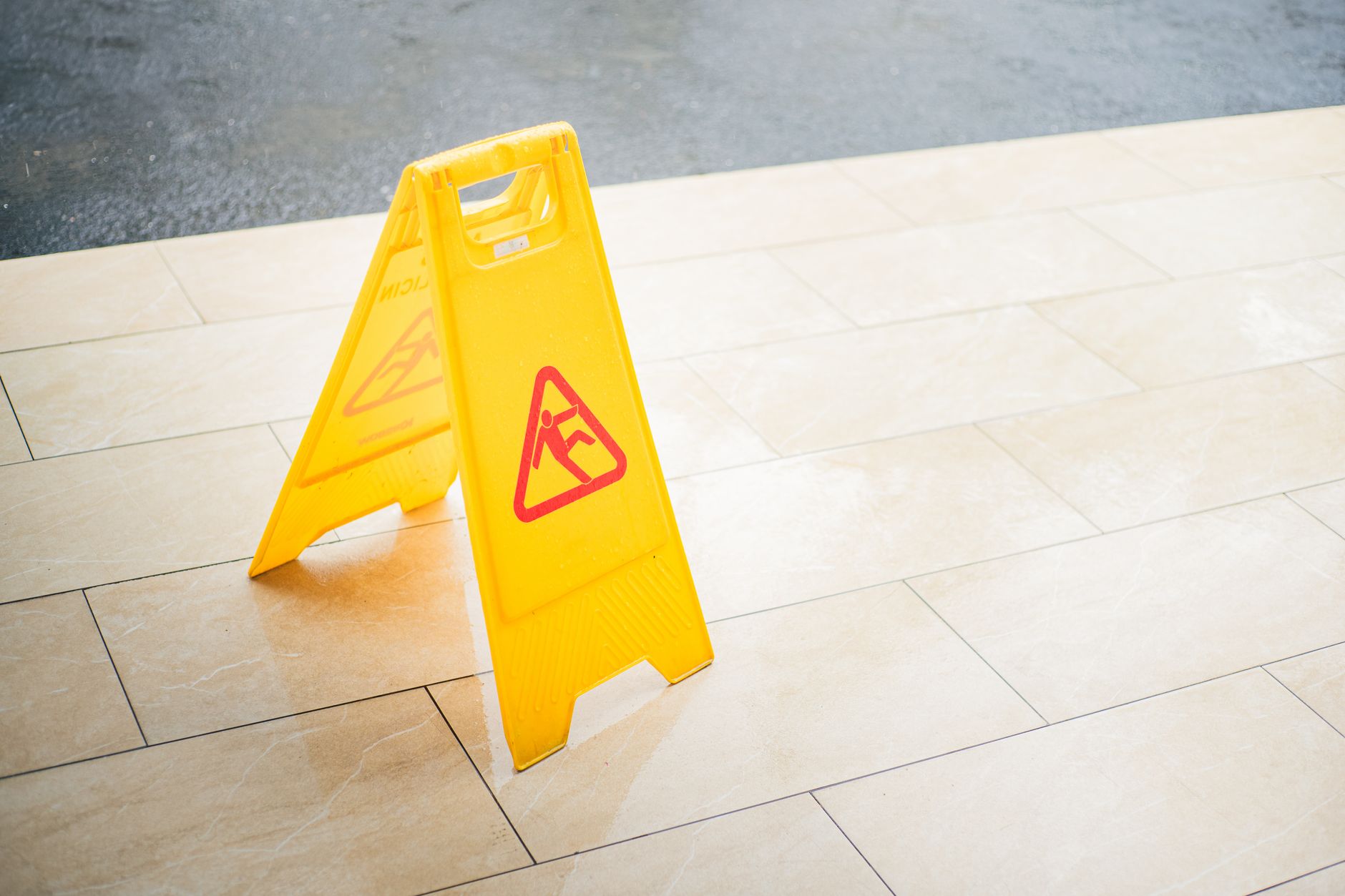
Slip prevention comes first. OSHA's walking-working-surfaces rule requires floors to be kept clean and, to the extent feasible, dry, and calls for drainage and dry standing places when wet processes are used. In an aquatic center, that means a robot should never be used as an excuse to leave ponding in place. It should be part of the drying strategy, not a substitute for one.
Chemical exposure is the next gate. CDC says pool chemical injuries account for about 4,500 emergency department visits each year, and at least one third of those patients are under 18. The MAHC also treats unauthorized access to chemical storage spaces as an immediate-closure hazard and requires storage doors to warn against unauthorized entry and use automatic locks. A floor-care route should therefore exclude chemical storage, pump-room thresholds, and any service area where fumes, spills, or washdown can change conditions without warning.
Finally, check visibility and obstruction control. Lane ropes, kickboards, movable benches, caution signs, trash liners, and lost-and-found bins drift into travel paths constantly in community aquatics. The safest programs use a written nightly release checklist so the robot only runs after a supervisor confirms the mapped path is truly open.
Where does Service Robot Co. fit in a facility like this?
Aquatic centers are a poor fit for a box-drop purchase. The hard part is not getting a machine to turn on. The hard part is matching the robot to wet textured flooring, programming routes that respect shower chokepoints and lobby transitions, training staff on prep discipline, and keeping the unit supported when a sensor, squeegee, or charger issue threatens the morning open.
That is where Service Robot Co. has a practical advantage. The company is a full-service commercial robot integrator for U.S. businesses, OEM-neutral, and built around the whole lifecycle. For a parks department or Y operator, that means one partner can evaluate the building, choose the right robot for the floor, finance it through robot leasing for business or robot as a service style monthly payment programs, deploy it, train the team, and service it through a nationwide U.S. engineer network.
In aquatic settings especially, vendor neutral robot integrator support matters because the right answer depends on floor texture, route width, humidity tolerance, recovery performance, and how much manual prep the night crew can reliably complete. One partner, one number, and a real robot deployment and integration service model reduce the odds that the project stalls after the demo.
How should parks departments and Y operators judge the business case?
Start with labor fit, not hype. If your night crew loses time on long, open deck passes and broad hard-floor corridors, those are the minutes automation can recapture. If most of the workload lives in shower stalls, restroom resets, trash pickup, towel handling, and edge detail, a robot will help less because the labor sits in manual micro-tasks.
The scale of the market suggests the opportunity is real for multi-site operators. YMCA of the USA says its network reaches 10,000 communities through 2,597 Ys across the country, and it teaches more than a million children water-safety and swim skills each year at more than 2,000 pools. That kind of footprint is why repeatable overnight floor care matters. Standardized route design, training, and service support are easier to justify when the same wet-floor problem shows up in building after building.
Run a pilot with a strict scorecard. Track square footage cleaned, percent of route completed without intervention, morning dryness at handoff, number of manual touchups still required, and whether opening staff trust the result. If the robot consistently takes the long straight passes and leaves the detail work to people, it is doing the job you actually bought it for.