
Key takeaways
- Charging strategy is a core design decision that dictates fleet size, floor space usage, and electrical requirements.
- Location is critical; charging stations must be placed in areas of natural robot dwell time or dedicated, non-disruptive zones.
- Accurate power calculation, considering peak usage and future growth, is essential to avoid overloaded circuits and robot downtime.
- Intelligent scheduling and fleet management software are key to maximizing robot uptime and operational efficiency.
- Partnering with a vendor-neutral integrator ensures the charging infrastructure is designed for your specific facility and robot fleet, not a one-size-fits-all solution.
Why Your Robot Fleet's Power Strategy Can't Be an Afterthought
A robot with a dead battery is just expensive scenery. While the focus of automation projects often centers on robot capabilities, speed, and software, the strategy for charging them is frequently overlooked. For a fleet of 10 or more robots, this oversight can cripple the entire operation, leading to missed targets and a frustratingly low return on investment.
Planning your charging infrastructure is not a minor detail; it is a foundational logistics decision that impacts facility layout, electrical load, workflow, and even the total number of robots you will need. Getting it right ensures your autonomous mobile robot (AMR) fleet can handle peak demand. Getting it wrong means your robots will fail precisely when you need them most.
This guide covers the core pillars of designing a robust charging infrastructure: choosing the right locations, calculating your true power requirements, and implementing an intelligent scheduling strategy to ensure maximum robot uptime without disrupting your facility's core operations.
What Are the Main Charging Strategies?
Before deciding where to place chargers, you must select a charging philosophy. This choice shapes the fleet's daily rhythm and has significant consequences for uptime and infrastructure cost. Three primary strategies dominate the industry.
Scheduled Charging: This is the most straightforward approach. Robots work until their battery level is low, then navigate to a dedicated charging area for a long session. It's simple to manage, but it removes robots from operation for extended periods, often requiring a larger fleet to maintain throughput.
Opportunity Charging: In this model, robots receive short, frequent power top-ups during natural pauses in their workflow, such as while waiting for a task or at a pickup/drop-off point. This strategy maximizes uptime by keeping robots in service, but it hinges on having predictable dwell times and placing chargers in precisely the right spots.
Battery Swapping: The fastest method for returning a robot to service involves physically swapping its depleted battery with a fully charged one. Automated stations can perform this in minutes, enabling near-continuous 24/7 operation. While this offers the highest robot utilization, it requires a significant investment in swapping stations, spare batteries, and the space to house them.
Where Should Charging Stations Be Located?
The placement of charging stations directly impacts robot travel time, workflow interference, and charging efficiency. The two main location strategies are centralized and decentralized.
Centralized charging creates a dedicated depot where all robots return for power. This approach simplifies electrical work and maintenance by consolidating infrastructure in one zone. It works well for operations with natural shift changes or downtime where the entire fleet can charge simultaneously without impacting productivity. However, it can create traffic congestion as many robots head to the same area and requires robots to travel farther, consuming energy just to get to a charger.
Decentralized charging places smaller numbers of charging docks throughout a facility, often at points where robots naturally pause. This is essential for opportunity charging strategies. Placing chargers near work areas minimizes non-productive travel time and reduces the risk of traffic jams. The primary challenge is the need for more complex electrical installation across a wider area and careful planning to ensure chargers are located in genuine dwell spots, not high-traffic corridors.
How Do You Calculate Power Requirements for a Fleet?
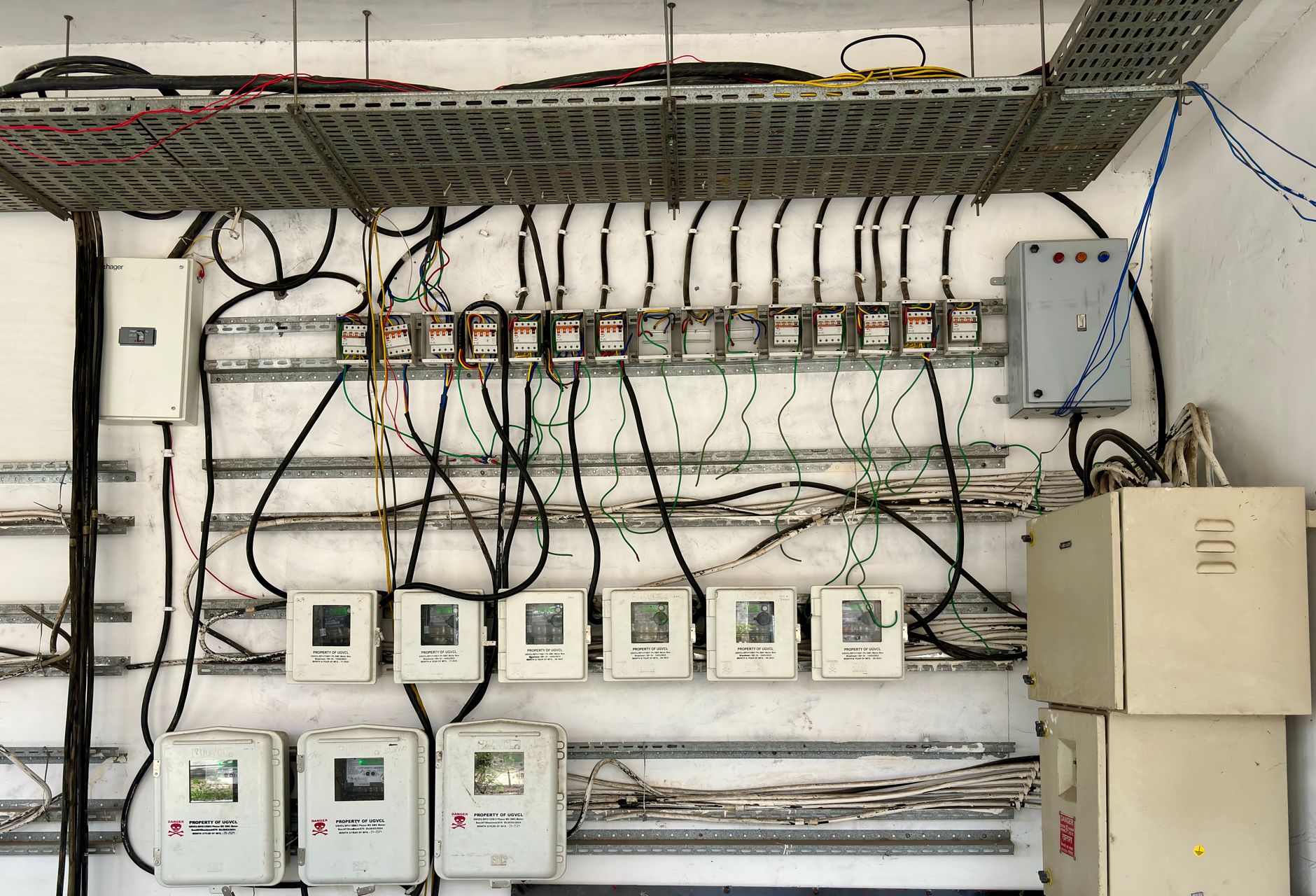
Underestimating your fleet's power needs is a recipe for tripped breakers and stalled robots. A proper calculation involves more than just counting the number of chargers. You need to assess total simultaneous demand.
First, determine the power rating of each robot's charger, which can range from 200 watts for small robots to over 3,000 watts for large, industrial AMRs. For example, a medium-duty AMR might use an 800W charger. A fleet of 20 such robots charging simultaneously would draw 16,000 watts (16 kW), a significant load that requires dedicated circuits.
The calculation must be based on your peak demand scenario, not the average. If your scheduling allows for staggered charging, the peak load will be lower. But if a workflow change requires all robots to charge at once, the electrical system must be able to handle it. Industrial electrical systems often use 240V or 480V AC power. You must consult with a qualified electrician to assess your panel's capacity, plan for dedicated circuits, and ensure all installations meet safety standards like UL 3100.
Planning for future growth is also critical. If you anticipate expanding your fleet from 15 to 30 robots, the initial electrical work should accommodate that future capacity to avoid costly rework.
What is the Role of Intelligent Scheduling?
Simply having enough chargers is not enough. An intelligent scheduling system, typically integrated into the fleet management software, is the brain that optimizes the entire charging process. Without it, you are left with a disorganized and inefficient operation.
Modern fleet management platforms use AI to monitor the battery level, current task, and location of every robot in real time. Instead of letting robots work until their batteries are critically low, the system proactively sends them to an available charger during moments of low demand or between tasks. This dynamic approach, a hallmark of opportunity charging, keeps the entire fleet in an optimal state of charge, typically between 20% and 80%, which also helps maximize battery longevity.
This software also prevents gridlock. By managing queues and assigning robots to the nearest available station, it avoids having multiple robots compete for the same charger. Advanced systems can even factor in utility rates, scheduling more charging during off-peak hours to reduce electricity costs.
How an Integrator Simplifies the Process
Designing and deploying a charging strategy for a large fleet involves complex variables in operational logistics, electrical engineering, and software integration. This is where a full-service, OEM-neutral commercial robot integrator like Service Robot Co. becomes an indispensable partner.
Because we are not tied to a single manufacturer, we design the charging infrastructure that is genuinely right for your facility and your chosen mix of robots. Our process begins with a thorough site assessment to model your fleet's true duty cycle and identify optimal charger locations that support your workflow, not disrupt it. We handle the detailed power calculations and coordinate with licensed electricians to ensure your infrastructure is safe, compliant, and scalable.
As a single partner for the entire lifecycle, Service Robot Co. ensures the charging system works in concert with the fleet management software and your building's existing systems. From initial mapping and deployment to ongoing on-site service through our nationwide engineer network, we manage every detail. This turnkey approach removes the burden from your team, guaranteeing that your robots have the power they need to deliver the uptime and productivity you expect.