Key takeaways
- Manual excerpts we reviewed call for warning signs where the public can reach a working robot mower.
- Consumer manuals also limit use to private settings, so the unit has to fit the site before any sign goes up.
- Residents react to tone: a calm sign that says what the machine is doing reads as routine, while alarm words do not.
- Children and pets are the central safety message in the manuals, so the supervision line belongs on every sign.
- Brief property staff before the first pass and give them one number to call.
What residents actually see when a robot mows a lawn
A robot mower on a client lawn looks like a low, quiet machine that keeps returning to the same stretches of grass. Residents tend to notice three things first: the unit moving with no person beside it, a sign or marker near the turf, and whether children or pets get close while it runs. Each of those is a communication problem as much as a mechanical one.
The sign is usually the only explanation a resident receives. If it reads like a warning about danger, people assume something has gone wrong. If it reads as a plain description of work in progress, most people file it under landscaping. The wording therefore matters as much as where the sign is posted.
What do manufacturer manuals ask for on signs?
Manual excerpts for two consumer robot mowers, the Stiga and the Husqvarna Automower 430Xh, reportedly require warning signs around the working area when the machine is used in public areas or areas open to the public. We reviewed those excerpts as search snippets as of November 2026, not as full manuals, so read the complete document for your exact model before printing anything.
The wording that recurs across these manuals is 'Warning! Automatic lawnmower!', paired with a keep-away message and a supervise-children message. Those three elements make a practical checklist for any sign you draft.
- A plain identifier: the machine is an automatic lawn mower.
- A keep-away instruction for people and pets.
- A supervision line asking adults to keep children away while the unit runs.
Why use limits come before any sign goes up
Signage is not the first filter. The Al-Ko manual for the Easymow 700 states the device is not suitable for commercial enterprises, public facilities, parks, sports facilities, or agriculture and forestry. A safety data sheet for a robotic mower sold through a German home improvement retailer says it is intended for private use only. Consumer labels draw boundaries that a commercial site can run straight into.
That is why a contractor or property manager should never assume a consumer unit fits a client lawn. Fit is a site question. Service Robot Co. is OEM neutral and picks units across manufacturers by task and site, so the work begins with the spec sheet and a site assessment, and a fixed robot lease payment is quoted only after that assessment.
How should a sign be worded so it reads as routine?
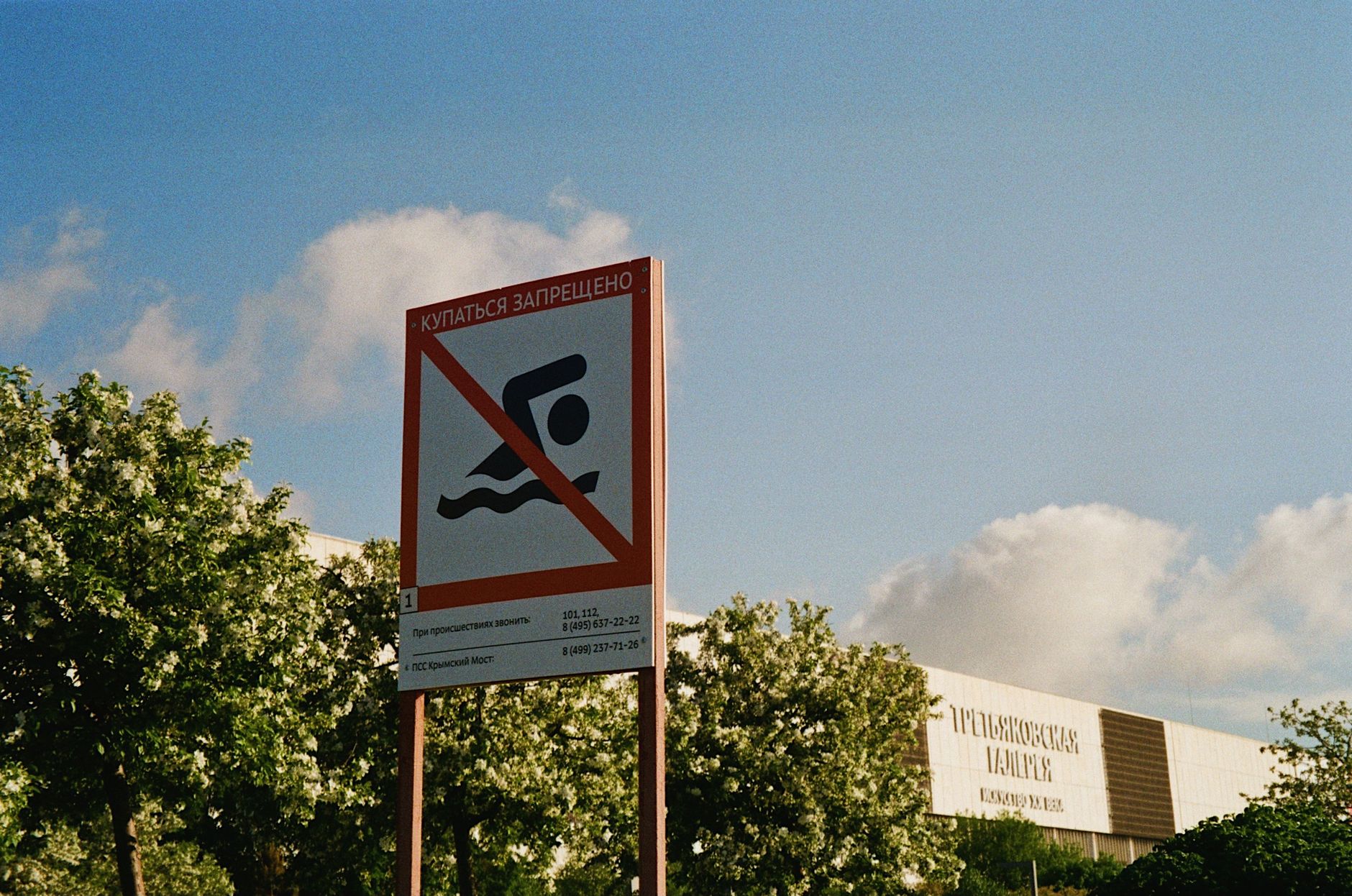
Keep the required content and drop the alarm. A manual's 'Warning!' heading can stay where a manufacturer expects it, but a client-facing sign can lead with what is happening and what the person should do. A passerby should understand at a glance that a machine is mowing on a schedule.
Three rules hold up well. Name the activity in ordinary words. Give one safe action, such as stepping back and keeping children and pets clear. Give one contact for questions. Leave out words that suggest the machine is dangerous, unpredictable or out of control, because those are the words people repeat.
Sample copy for a property sign: 'Automatic lawn mower working on this lawn. Please keep children and pets a safe distance away while it runs. For questions, call the number below.'
What do children, pets and local rules change?
Roborock advises that children should never be near the mower or play with it while it runs. Its help material also notes that minimum age requirements may apply under local rules. That makes the supervision line the sign element residents read most closely, so place it at eye level near any path or play area and keep the wording identical at every site.
The search pass turned up no ordinances and no property liability rules for robot mowers on client lawns. Confirm local requirements with the property owner and the municipality before the first pass. Sign text is a courtesy and a safety cue, not a legal review.

How should property staff be briefed before the first pass?
Property staff usually take the first resident question, so they need the same facts the account manager holds. A short briefing covers the schedule, the sign locations, the stop procedure and the contact path. Account managers can run it during the week before go live.
- Where each sign sits, and which paths or play areas it covers.
- The mowing window, so staff can tell residents when the machine is working and when it is parked.
- How to stop the unit safely and who on site is allowed to do it.
- One phone number for questions, with after-hours routing agreed in advance.

What the standards behind the labels cover
Product safety for battery robotic lawnmowers is set out in IEC 60335-2-107, a household appliance standard for which an ANSI/OPEI adoption is listed in the ANSI catalog. EN IEC 62841-4-12 covers particular requirements for robotic lawnmowers. These standards describe how the machine is built and tested.
Neither standard, as the research captured them, establishes on-site signage. Treat them as background for your briefing, not as a sign specification. Ask the manufacturer for the documents that apply to the exact model you intend to run.
What this research does not settle
The search pass surfaced no source on commercial property liability for robot mowers, no signage rules for business sites, no local ordinances, and no verified figures on resident complaints or signage effectiveness. We did not verify UL 99380, so it is not cited here.
Treat the wording in this article as a first draft. Test it with a few residents and the property manager, note which phrases draw questions, and adjust before the sign program scales across a portfolio of client lawns.
Frequently asked questions
Want a robot working for you?
Tell us the job and the site. We will recommend the robot, quote the lease, and keep it serviced.
Sources
- Stiga manual excerpt (search snippet, checked November 2026)
- Husqvarna Automower 430Xh manual excerpt (search snippet, checked November 2026)
- Al-Ko Easymow 700 manual excerpt (search snippet, checked November 2026)
- toom robotic mower safety data sheet
- Roborock help article on unsupervised operation near children or pets
- Roborock help article on minimum age requirements
- ANSI webstore listing for ANSI/OPEI adoption of IEC 60335-2-107
- BSI listing for EN IEC 62841-4-12, robotic lawnmower requirements