Key takeaways
- Furniture showrooms are good robot candidates when wide hard-floor aisles carry most of the nightly floor-care burden.
- The right program cleans the main traffic lanes and perimeter hard floors, then routes around rugs, vignettes, and fragile displays instead of disturbing them.
- Morning staff should not be re-staging rooms, untangling cords, or wiping splash marks. Good deployment is judged by what did not get touched.
- An OEM-neutral integrator matters in retail because navigation, service response, financing, training, and floor-fit are operational issues, not just hardware choices.
Can robots really clean a furniture showroom at night without making a mess of the store?
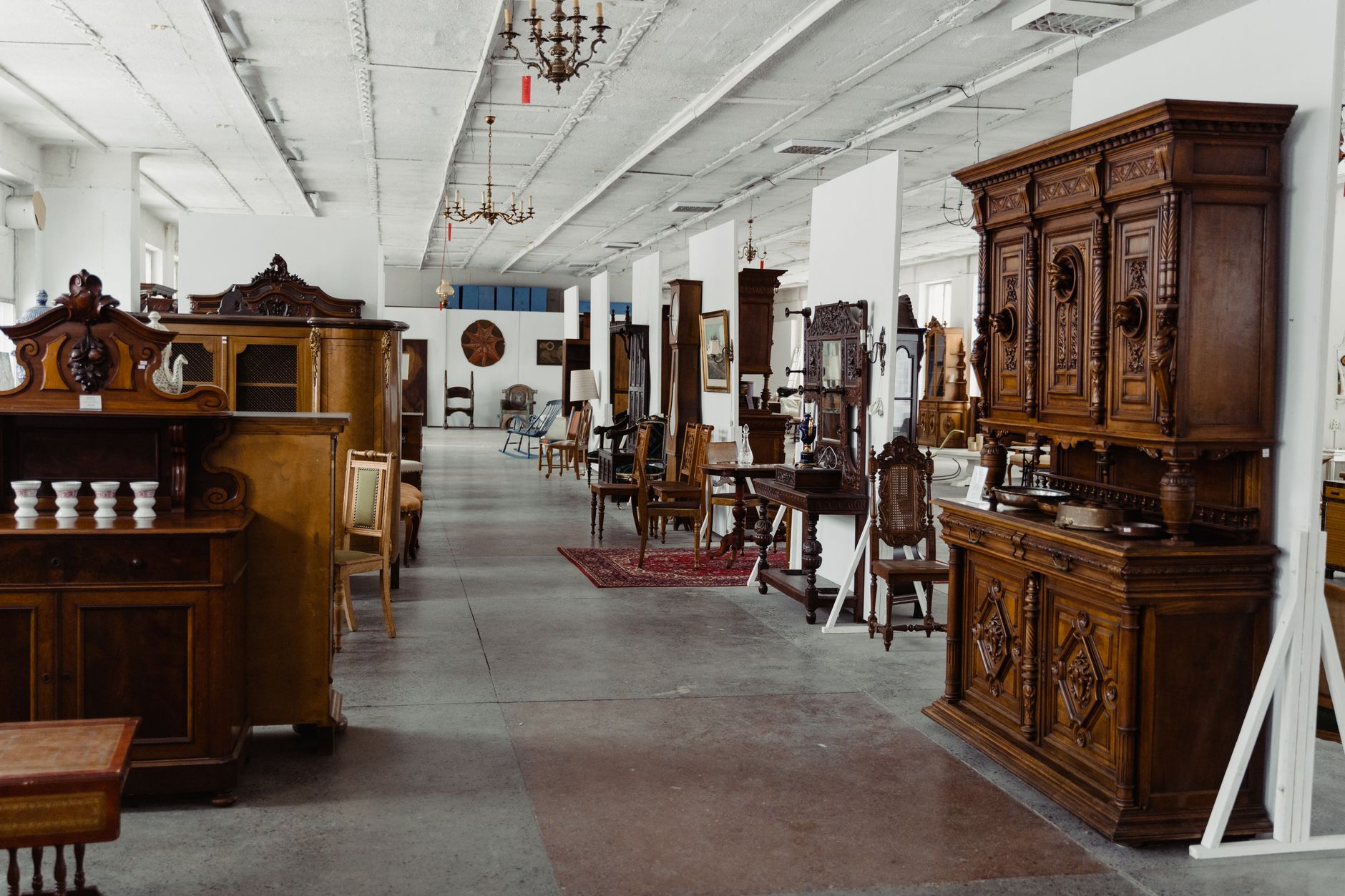
Yes, if the robot is assigned the right part of the job. In a furniture showroom, the practical role is overnight floor care on the long hard-floor runs, the main polished aisles, and the predictable perimeter paths between staged rooms. The robot should reduce the square footage that human staff must scrub by hand, not freelance its way through every decorative corner in the building.
That distinction matters. Furniture stores sell aspiration as much as inventory. Morning teams cannot walk in to shifted accent chairs, damp-looking gloss, clipped rug edges, or a trail of chairs pulled out to create clearance. The right retail floor cleaning robot is programmed around the visual standard of the store. It cleans what can be cleaned repeatably and leaves styled sets exactly as they were merchandised.
This is why showroom cleaning robot projects live or die on deployment discipline. The machine has to understand polished aisles, transitions into room sets, rug boundaries, glass-heavy displays, and the simple fact that a store opening at 10 a.m. starts judging the robot at 8 a.m. If the floor looks better and the showroom looks untouched, the program is working.
- Best fit: wide, repeatable hard-floor routes between vignettes and along front runs, racetracks, and perimeter paths
- Use caution: dense accessory islands, hanging décor, thin-legged glass tables, and mixed rugs inside staged rooms
- Bad target for autonomy: any zone that must be physically reset each night before the robot can pass
Why is furniture retail a distinct cleaning case, not just another big-box floor?
The square footage is real. According to the U.S. Census Bureau's 2023 Annual Integrated Economic Survey, U.S. furniture and home furnishings stores generated 129,800,771,000 dollars in revenue in 2023. Census County Business Patterns for 2023 also shows 44,942 employer establishments across that category, with 21,964 in furniture stores specifically. That is a large national footprint of stores that often pair long hard-floor corridors with high presentation standards.
The labor picture also pushes managers to look for overnight cleaning no operator. The U.S. Bureau of Labor Statistics says janitors and building cleaners had a median hourly wage of 17.27 dollars in May 2024, and the occupation is projected to produce about 351,300 openings each year from 2024 through 2034, mostly from replacement needs. BLS also notes that these workers commonly work evenings, nights, or weekends. In other words, the shift furniture stores rely on is exactly the shift that is hardest to keep stable.
A showroom adds another wrinkle that a warehouse does not. Customers inspect floors at eye level and at sofa level. Reflections matter. Smears matter. A dry but dull finish can cheapen a premium layout. That is why a night shift autonomous scrubber for retail has to be judged less like an industrial floor scrubbing robot and more like part of the store's visual operations.
What does a robot need to do well on wide polished aisles?
First, it needs a route structure that favors long, repeatable passes. Furniture showrooms usually have broad circulation lanes that connect departments, room vignettes, mattress areas, and checkout. Those lanes are where a commercial cleaning robot rental or lease program earns its keep. The machine can cover the hard-floor mileage that wears out overnight crews, while humans reserve time for edge work, spot treatment, glass, and detailed presentation tasks.
Second, the floor-care settings have to match the finish. A polished showroom floor punishes excess water, uneven recovery, and dirty-pad haze. OSHA's walking-working-surfaces rule, 29 CFR 1910.22, requires floors to be kept clean and, to the extent feasible, dry, and requires walking-working surfaces to be inspected and maintained in a safe condition. In practice, that means the robot's overnight run is not just about coverage. It is about consistent solution control, reliable pickup, and a finish that looks sale-ready by opening time.
Third, the map has to reflect the real morning standard. A useful map is not a rough sketch of the building. It is an operations document that defines where the robot scrubs, where it slows, where it turns, and where it does not go. If a route forces the machine into decorative bottlenecks just to chase theoretical coverage, the store will pay for that ambition in false stops, splash concerns, and reset work.
- Prioritize the main racetrack, front action alleys, and dependable hard-floor corridors
- Keep turn radii generous near glossy endcaps, mirrored pieces, and low-profile benches
- Treat edge detailing as a human task unless the site has already proven those edges are repeatable night after night
How do robots handle staged rooms, rugs, and fragile displays?
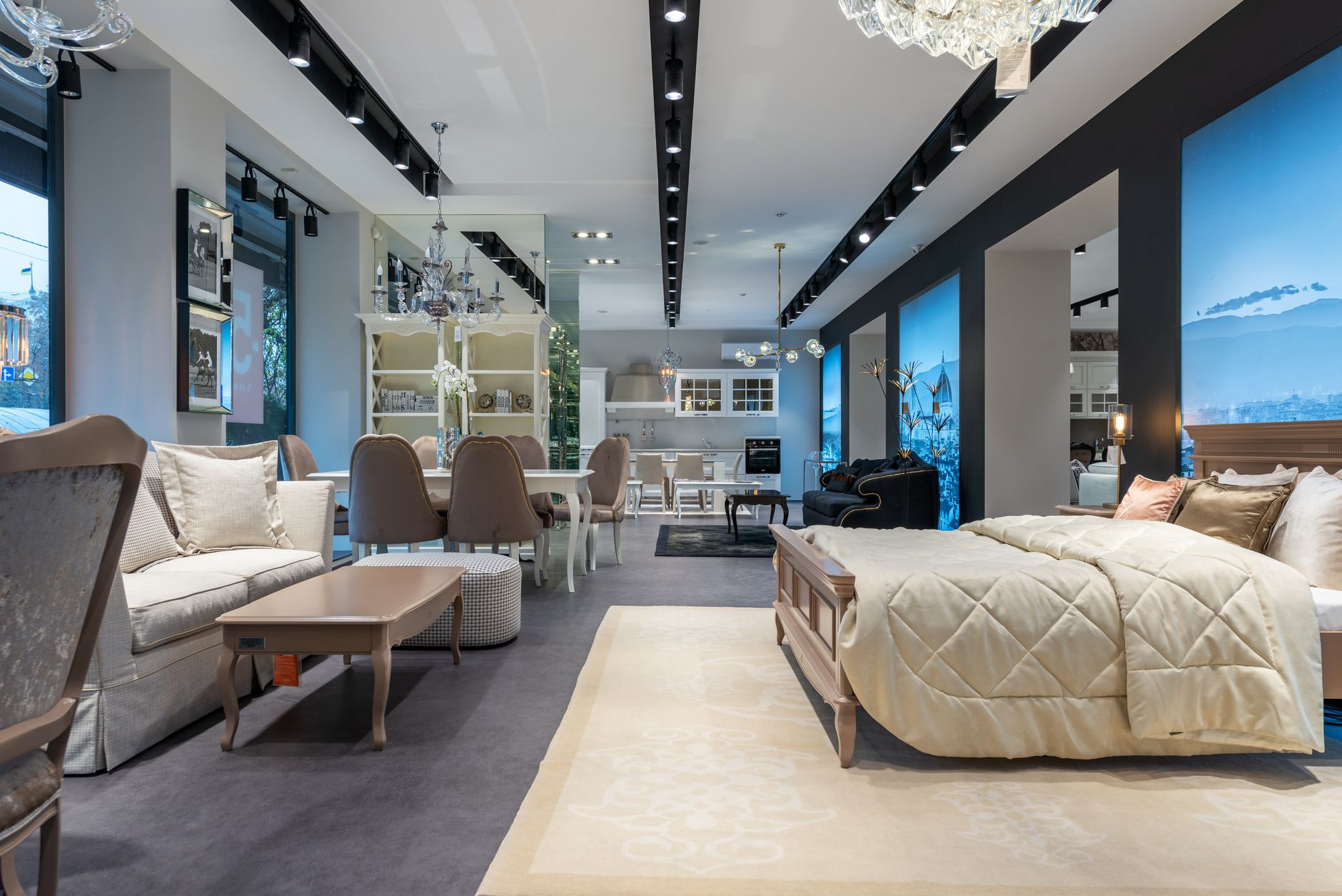
By respecting boundaries. A staged living room is not a warehouse pick aisle with prettier lighting. It has area rugs, coffee tables with fine legs, ottomans that move a little when nudged, and lamps, ceramics, or glass accessories placed to look effortless. Good automation in this setting means the robot knows that much of the vignette is out of scope. It should clean the hard-floor apron around the set and stop before the rug line unless the room has been deliberately designed for robot access.
That approach is not just about appearance. It is also about safety and consistency. In OSHA's discussion of slips, trips, and falls on walking-working surfaces, loose flooring or carpeting, clutter, and similar conditions are named as causal factors. A furniture showroom has more of those transition points than most retail formats. The sensible operating model is to make rugs, cable-prone displays, and delicate set pieces into mapped exclusions rather than nightly judgment calls.
This is where site assessment mapping matters. An experienced vendor neutral robot integrator does not promise that one machine will clean every surface in the building. The better question is simpler. Which parts of this showroom can be cleaned the same way every night, without touching styled sets or creating liability? Once that is answered honestly, the robot becomes useful instead of theatrical.
What prevents morning reset work?

The answer is not one feature. It is a workflow. Most failed retail robot programs create hidden labor around the machine: staff move chairs before close, rescue the robot from bad routes, re-seat rugs, wipe splash from base legs, or reopen blocked corridors before customers arrive. When that happens, the store has traded visible mopping for invisible babysitting.
The better operating model is narrow and strict. The robot runs after closing, in a defined window, on a locked map, with charging and refill routines that do not block fire lanes or receiving paths. The opening manager should see three things only: cleaner aisles, an untouched showroom, and a machine that is back where it belongs. If a route cannot meet that standard, the route is wrong.
Service Robot Co. fits well here because furniture retail usually needs one partner one number, not a patchwork of hardware sales, financing paperwork, and separate service contacts. The company works as an OEM-neutral commercial robot integrator for U.S. businesses. That means choosing the robot that fits your floor, financing it through monthly payment programs or a lease rental or sale structure, deploying it, integrating it, training staff, and servicing it through a nationwide U.S. engineer network. For a retailer, that reduces the operational sprawl that often sinks pilot programs.
- No nightly furniture moves to create clearance
- No morning re-staging of rugs, chairs, or accessory tables
- No charger placement in selling zones or exit paths
- No dependence on one highly trained associate to keep the robot usable
Is a furniture showroom a better rental case than a buy-it-and-figure-it-out case?
Often, yes. Furniture stores are rarely trying to build an internal robotics team. They are trying to keep floors presentable across large, premium spaces with fewer overnight labor headaches. That makes robot as a service, a commercial robot rental, or robot leasing for business attractive because the value is in uptime and support, not just ownership of the machine.
A monthly structure also matches how many retailers judge risk. They want to know if the machine can handle their polished aisles, their staged-room geometry, and their opening standard before they commit to a larger fleet. A floor scrubber monthly lease, autonomous floor scrubber rental, or robot rental monthly plan can make sense when it includes service, remote triage, operator training, and a clear path to swap, expand, or exit if the store layout changes.
The important part is honesty. A showroom is not a generic large facility coverage story. It is a premium-appearance environment with controlled traffic patterns and many small exceptions. The right partner says where the robot will work, where it will not, and what success looks like after 30 nights, not just after a polished demo.
What should a pilot prove in the first 60 days?
It should prove repeatability before scale. According to the CDC and NIOSH, 211,640 workers in private industry suffered severe fall injuries requiring days away from work in 2020, and building cleaning and maintenance is among the industries at high risk. That does not mean a showroom should automate carelessly. It means floor care should reduce manual strain and floor risk without introducing new trip points, wet spots, or after-hours confusion.
In practice, a strong pilot answers five concrete questions. Can the robot cover the primary hard-floor routes on schedule? Does the floor look sale-ready at opening? Do rugs and displays stay untouched? Does staff intervention trend down after the first few weeks? And when something goes wrong, does service respond fast enough that the store still opens clean the next day?
If those answers are yes, then a showroom cleaning robot can become part of standard overnight floor care. If not, the store should adjust scope, route design, or even robot class before it scales. The goal is not to prove that autonomy is clever. The goal is to remove repetitive night work from people while protecting the showroom standard customers actually buy against.
- Coverage on the intended hard-floor routes, not theoretical full-building coverage
- Opening-condition score from store leadership, especially on gloss, dryness, and visual neatness
- Number of human interventions per week after the go-live period
- Incidents of rug contact, display contact, blocked runs, or missed docks
- Service response time and how often the store needed a manual fallback
Frequently asked questions
Sources
- U.S. Census Bureau AIES 2023 furniture and home furnishings sales
- U.S. Census Bureau CBP 2023 furniture and home furnishings establishments
- U.S. Census Bureau profile for furniture stores
- BLS Occupational Outlook Handbook for janitors and building cleaners
- OSHA 29 CFR 1910.22 walking-working surfaces
- CDC NIOSH falls in the workplace overview
- OSHA proposed rule discussion of slips trips and loose carpeting