Key takeaways
- Indoor karting floors need more than generic arena cleaning because track rubber, hospitality zones, and late event schedules collide in one building.
- Night cleaning usually works best with a two-part plan: dry pickup for rubber-rich debris first, then controlled scrubbing on mapped hard-floor zones.
- Ventilation matters as much as floor coverage, especially in venues with combustion karts or heavy residue migration from track to lobby.
- Spectator decks, lounges, arcades, and queue lines often decide the robot plan because they carry guest-visible soil but tighter geometry than the track apron.
- A commercial cleaning robot rental or robot leasing for business can make sense when operators want overnight floor care with maintenance included and no long term contract.
Can robots handle night cleaning in an indoor karting venue?
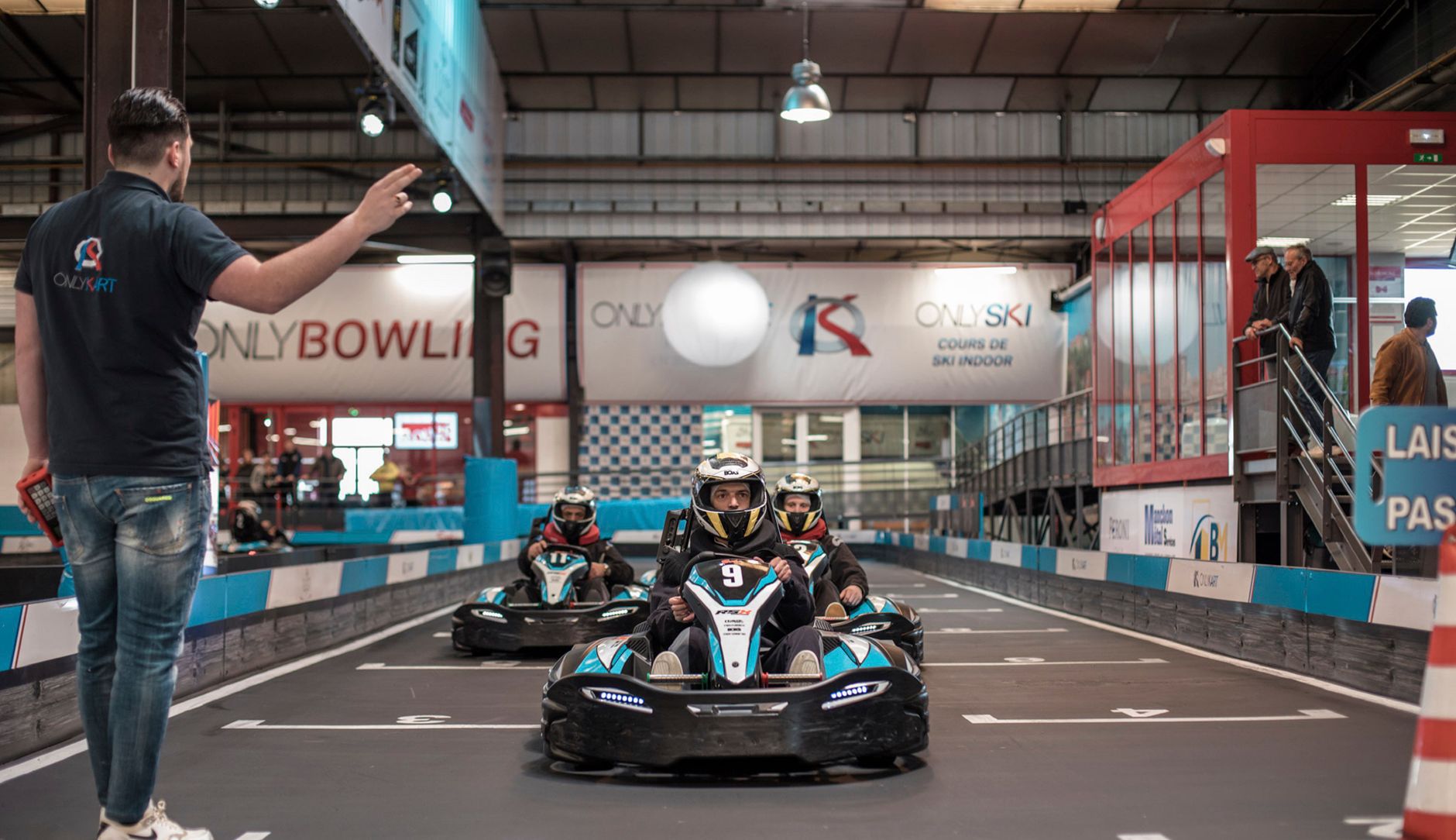
Yes, if the venue treats indoor karting as its own floor-care category instead of borrowing a generic playbook from arenas, arcades, or warehouses. The right program can automate a meaningful share of overnight floor care, especially on broad hard-floor runs, but it has to be built around rubber residue, corner density, spectator traffic, and a very short reset window after the last race.
That matters because karting venues carry two different standards at once. The track and pit edges collect warehouse-style soil, while lounges, party rooms, arcades, and viewing areas are judged like hospitality spaces. A robot that simply covers square footage is not enough. It has to leave guest-facing surfaces presentable by opening, avoid smearing tire film, and fit around islands, rails, benches, and queue barriers.
The practical answer for most sites is a night shift autonomous scrubber paired with a clear zone plan. Broad paths get scheduled autonomous scrubbing. Tight corners, transition edges, under-table areas, and race-control pinch points stay with detail work. The win is consistency and labor relief, not magical full replacement.
- Use autonomous floor scrubber coverage on long, repeatable hard-floor paths.
- Handle rubber clumps, corners, and obstacle-dense hospitality zones with targeted manual follow-up.
- Sequence cleaning after track dust settles and before morning food-and-beverage prep or guest arrival.
Why are indoor karting floors harder than they look?
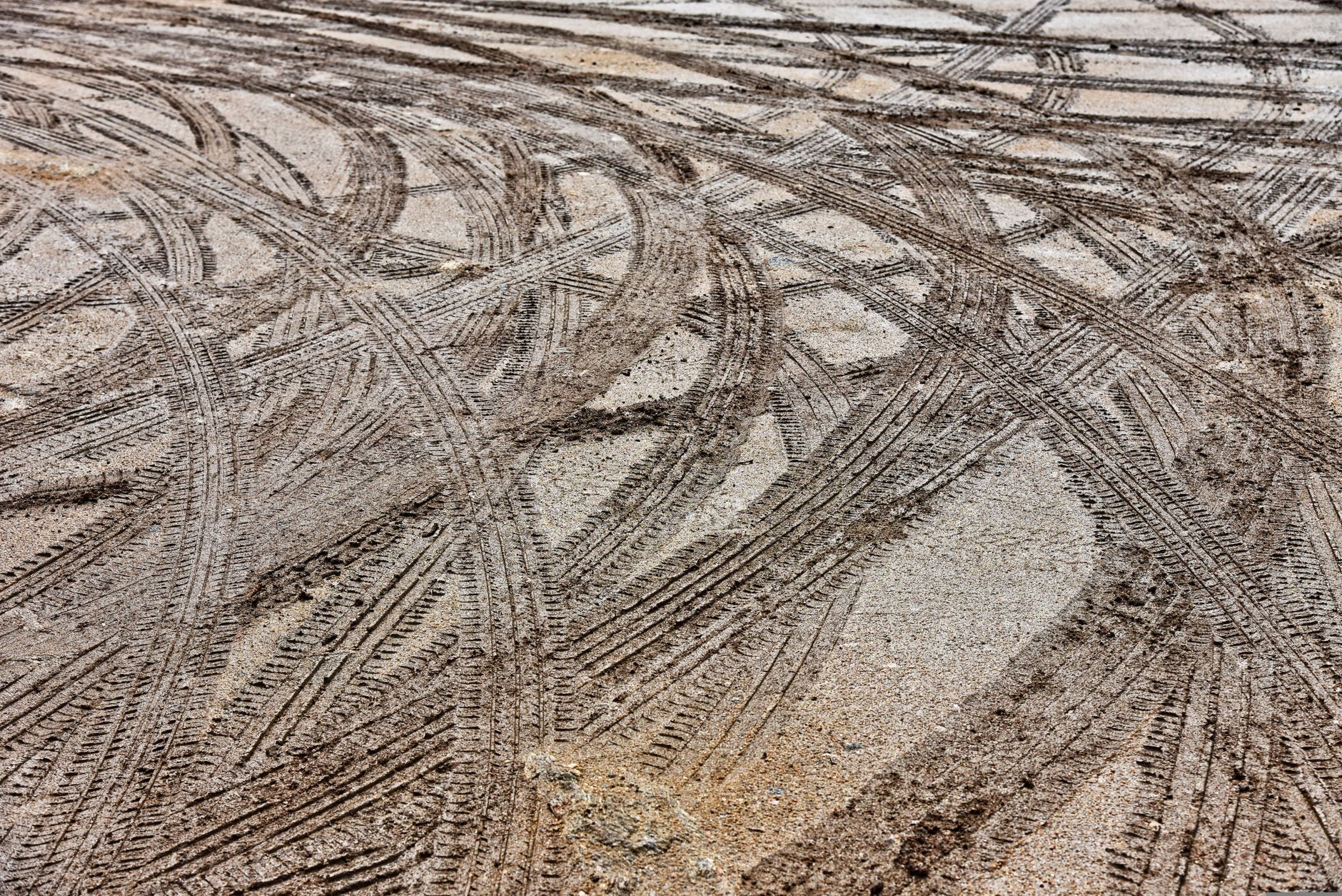
Rubber is the first reason. According to the U.S. Environmental Protection Agency, one tire can shed between 2 and 14 pounds of rubber particles over its life. A karting venue concentrates that wear indoors, then adds aggressive turning, braking, spin recovery, and repeated starts that push residue into track edges, pit entries, barrier lines, and walk-off paths.
The second reason is particle size. An EPA-listed study of indoor parking lot dust found that particles smaller than 250 micrometers accounted for more than 72 percent of total dust mass, and more than 70 percent of the measured tire-related chemicals were in that same under-250-micrometer fraction. Indoor karting is not the same environment as a parking garage, but it is a useful reminder that tire-related grime does not stay in chunky, easy-to-pick-up pieces. Much of it becomes fine residue that gets tracked into guest space and can smear if the cleaning sequence is wrong.
Then there is geometry. Karting operators love dramatic layouts, hairpins, railings, islands, podiums, bleachers, arcade edges, and bar-height seating because those elements make the venue feel active. They also create exactly the kind of small-radius navigation and interrupted runs that expose weak robotic deployment plans.
What does the cleaning sequence need to get right?
The usual failure mode is trying to scrub too early. Rubber crumbs, brake dust, and tracked-in grit should be picked up before wet cleaning where possible. Otherwise the machine can turn loose particulate into a gray film, especially around spectator thresholds and the transition from track zone to lobby or lounge.
A stronger sequence is dry debris removal first, then controlled scrubbing on mapped hard-floor surfaces, then hand detail on corners and protected edges. This is one reason floor-care robots in karting venues should be chosen for real soil conditions rather than brochure coverage claims. A floor scrubber for warehouses is not automatically the right answer for a venue with hostess stands, banquettes, and queue rails.
OSHA still expects walking-working surfaces to be kept clean and, to the extent feasible, dry. That matters in karting because an overnight floor-care program is not just about appearance. It is also about avoiding slick residue in morning prep hours, especially near concessions, restrooms, entry mats, and any place staff start their shift before guests arrive.
- Do not wet-scrub heavy rubber chunks and loose grit first.
- Map separate routes for track-adjacent hard floor, spectator space, and food-and-beverage zones.
- Set conservative water and speed profiles where traction residue tends to streak.
- Inspect thresholds and corners after the robot run, because that is where residue usually escapes coverage.
How do spectator zones change the robot plan?
Indoor karting is not just a track business. K1 Speed says its locations typically include arcade games, billiards, dining options, and a lounge where guests can watch on-track action. That means the floor-care standard is public-facing from wall to wall, not just along the race line. Sticky drink spots, food crumbs, party-room confetti, and shoe traffic all mix with track-derived grime.
This mix changes how operators should think about a cleaning robot commercial program. Track-adjacent concrete or sealed hard floor might reward long autonomous passes. Spectator decks and lounges often need slower routes, smaller turning envelopes, and stricter obstacle mapping. Queue stanchions, high-top tables, stool legs, and promotional displays can turn an apparently simple floor into a stop-and-go route that wipes out theoretical productivity.
Guest perception also rises sharply in these zones. People will tolerate a little track grit near barriers because it feels authentic. They notice streaks, tacky patches, or neglected corners near the host stand immediately.
Why does timing matter so much after close?
Indoor karting venues often operate late and turn quickly. A Texas location page for a major indoor karting chain lists Friday hours from 10:00 AM to 1:00 AM, and K1 Speed says many arrive-and-drive races run about 6 to 10 minutes. In practice that means repeated heats, waves of spectators, and private events can push soil load right up to close while shrinking the usable cleaning window.
That is why overnight cleaning no operator promises should be treated carefully. True lights-out autonomy is attractive, but karting venues often need at least some close-out prep before a robot can run cleanly: cones moved, loose debris pulled, chairs reset, and charging access cleared. The best programs reduce labor pressure and make the night crew more consistent. They do not remove the need for a disciplined close routine.
Event timing also affects chemical dwell, floor dry time, and morning readiness. If a venue hosts birthdays, league nights, or company events, the dirtiest nights are often the ones with the least recovery time. Route scheduling should be built around the real calendar, not an idealized empty building.
What about ventilation and grime migration?
Ventilation deserves more attention in karting than in many other entertainment formats. CDC states that carbon monoxide is hazardous inside buildings or semi-enclosed spaces and can build up rapidly. NIOSH recommends avoiding gasoline-powered engines or tools indoors where emissions can accumulate, and its exposure guidance for carbon monoxide remains 35 ppm as an 8-hour time-weighted average with a 200 ppm ceiling. For venues using combustion karts, that pushes air monitoring and housekeeping into the same operational conversation.
Even in electric-kart venues, ventilation still shapes cleaning. Outdoor particulate moves indoors, and the EPA notes that indoor particulate matter commonly includes outdoor dust tracked or blown inside, then re-suspended by walking and cleaning activity. In a karting building, that baseline dust mixes with tire and brake residue, then settles on floors, ledges, and spectator surfaces.
For robotic floor care, the lesson is simple. A clean route on paper can underperform if the site has poor capture at entries, heavy overnight dust fall, or residue drifting out of the track envelope. Robot deployment and integration should include air-path observation, mat strategy, and post-run inspection points, not just map creation.
Where does Service Robot Co. fit?
Indoor karting operators usually do not need a single vendor pitch. They need a robot that fits the floor, the schedule, and the building. Service Robot Co. works as an OEM-neutral commercial robot integrator for U.S. businesses, which matters here because karting sites vary widely in floor finish, obstacle density, venting, and staffing model. One building may need an autonomous floor scrubber rental program focused on long spectator concourses. Another may need a smaller commercial cleaning robot rental with heavier service support and tighter route design.
That OEM-neutral approach also matters after go-live. A niche venue does not just buy a machine and hope. It needs site assessment mapping, financing options such as robot rental monthly or lease rental or sale, staff training, remote triage, and field service through a nationwide engineer network. For operators who want a single partner and a single phone number through deployment, maintenance, and emergency support, that lifecycle model is often more useful than buying a unit in isolation.
What does a good pilot look like in a karting facility?
A credible pilot is narrow and measurable. Pick one building, one cleaning window, and two or three floor zones with different soil patterns. For example: a track-adjacent apron, a spectator concourse, and a party-room corridor. Measure repeatability, corner misses, residue streaking, manual touch-up minutes, and morning-readiness scores for several weeks.
This is also the right stage to compare robot leasing vs buying. A service robot rental or month to month robot lease can lower the friction for a venue that wants proof before standardizing. The point is not to chase the lowest monthly rates in a vacuum. It is to see whether the machine can hold a karting venue's finish standard through real late nights, real event spikes, and real debris.
If the pilot works, expand by floor type and operating pattern, not by square footage alone. Indoor karting venues reward disciplined sequencing far more than brute coverage claims.