Key takeaways
- Compact robots fit repetitive dry debris pickup in mapped aisles and open vestibule zones.
- Crews remain responsible for seats, bins, touchpoints, restrooms, spills, hazards, and final inspection.
- Platform-facing doors and gaps require physical controls, operating rules, and supervised release.
- Every car class needs its own mapping, clearance checks, acceptance tests, and cleaning recipe.
Where compact robots fit in the reset
Compact cleaning robots can help reset passenger-train interiors between service runs by vacuuming or sweeping mapped, continuous floor lanes. Their strongest assignment is repetitive dry debris pickup through center aisles and open vestibule areas after riders have left and the consist is secured.
They do not replace the cleaning crew. Seat pockets, tray tables, windows, waste bins, upholstery, restrooms, sticky spills, lost property, and high-touch surfaces remain human work. The practical division is simple: the robot covers predictable floor, while people handle fragmented spaces, judgment calls, and sanitation detail.
Safe operation also requires more than loading a map. The train must be protected from movement, passenger access must be closed, door edges must be controlled, and each car type must have a validated route. A robot should work inside a protected cleaning window, then be removed or parked before the train returns to service.
Why train interiors challenge ordinary floor robots
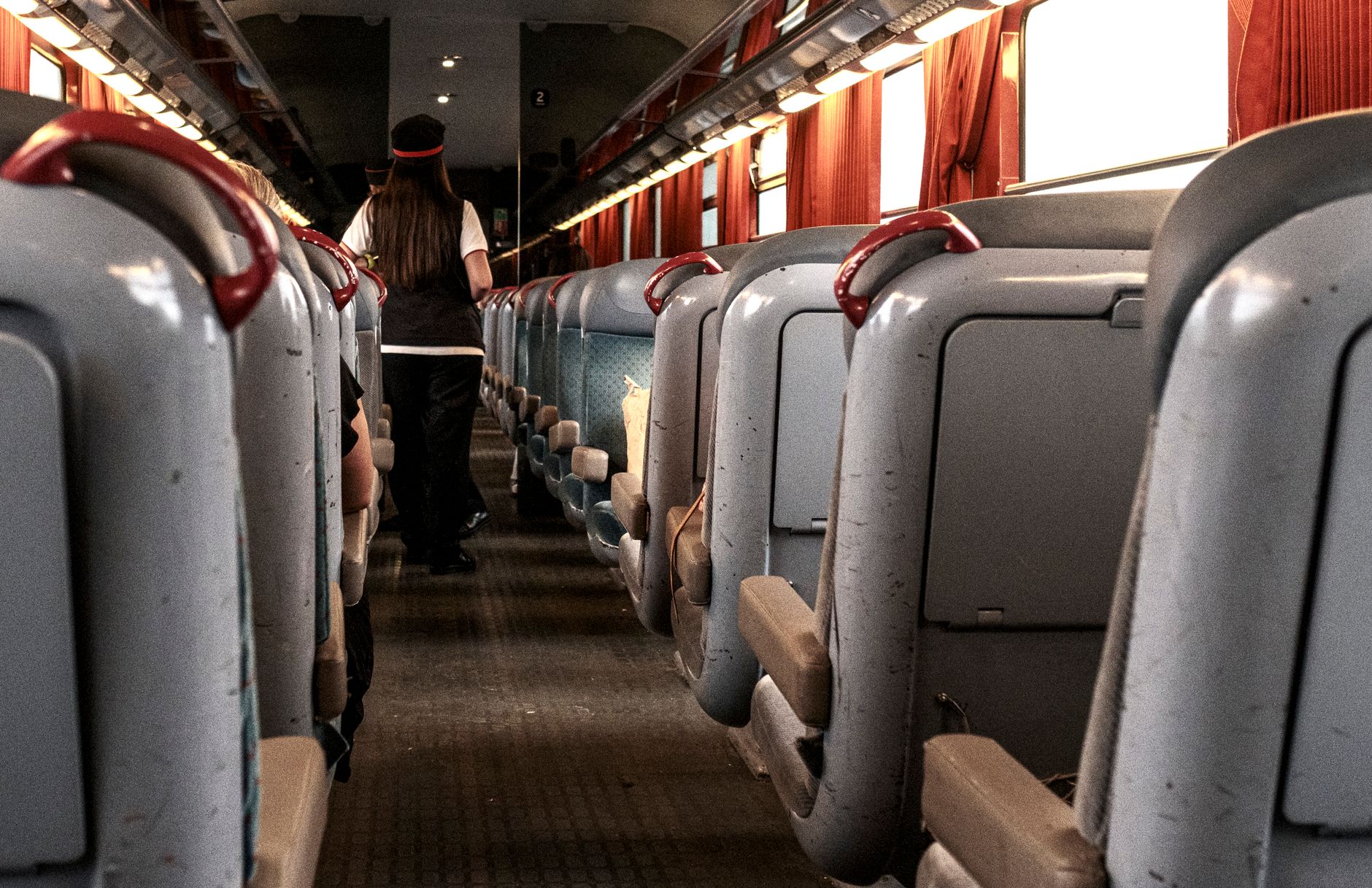
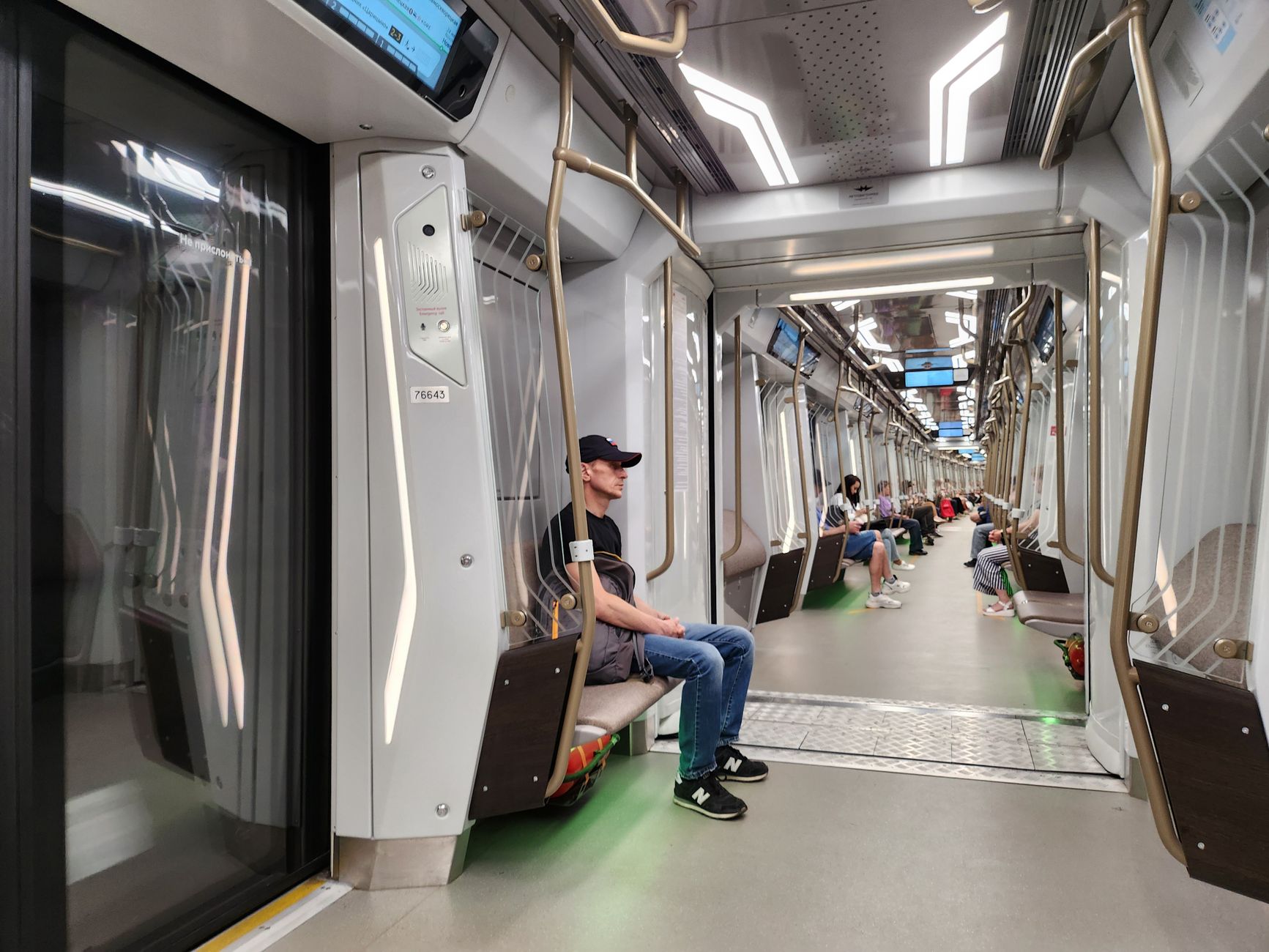
A passenger car is a long, articulated obstacle course. Seat legs, heaters, modesty panels, luggage, stanchions, door pockets, thresholds, and changes in floor material interrupt what appears to be one straight aisle. Articulation between cars can add movement, metal transition plates, and sensor reflections.
The U.S. Access Board's commuter-rail guidance requires a minimum 32-inch clear opening at designated boarding and coach doors, a 32-inch route to accessible seating, and a 42-inch minimum vestibule where that route passes through one. Those are accessibility requirements, not a promise that every aisle segment offers the same clearance. A machine needs turning and safety margin beyond its body width.
Measure the real train, not only the drawing. Armrests, reclined seats, protruding bags, partially open doors, and maintenance changes can narrow a mapped lane. A compact robot that fits one fleet class may fail at the bulkhead of another, which is why site assessment mapping must be repeated for each interior configuration.
What debris should the robot collect?
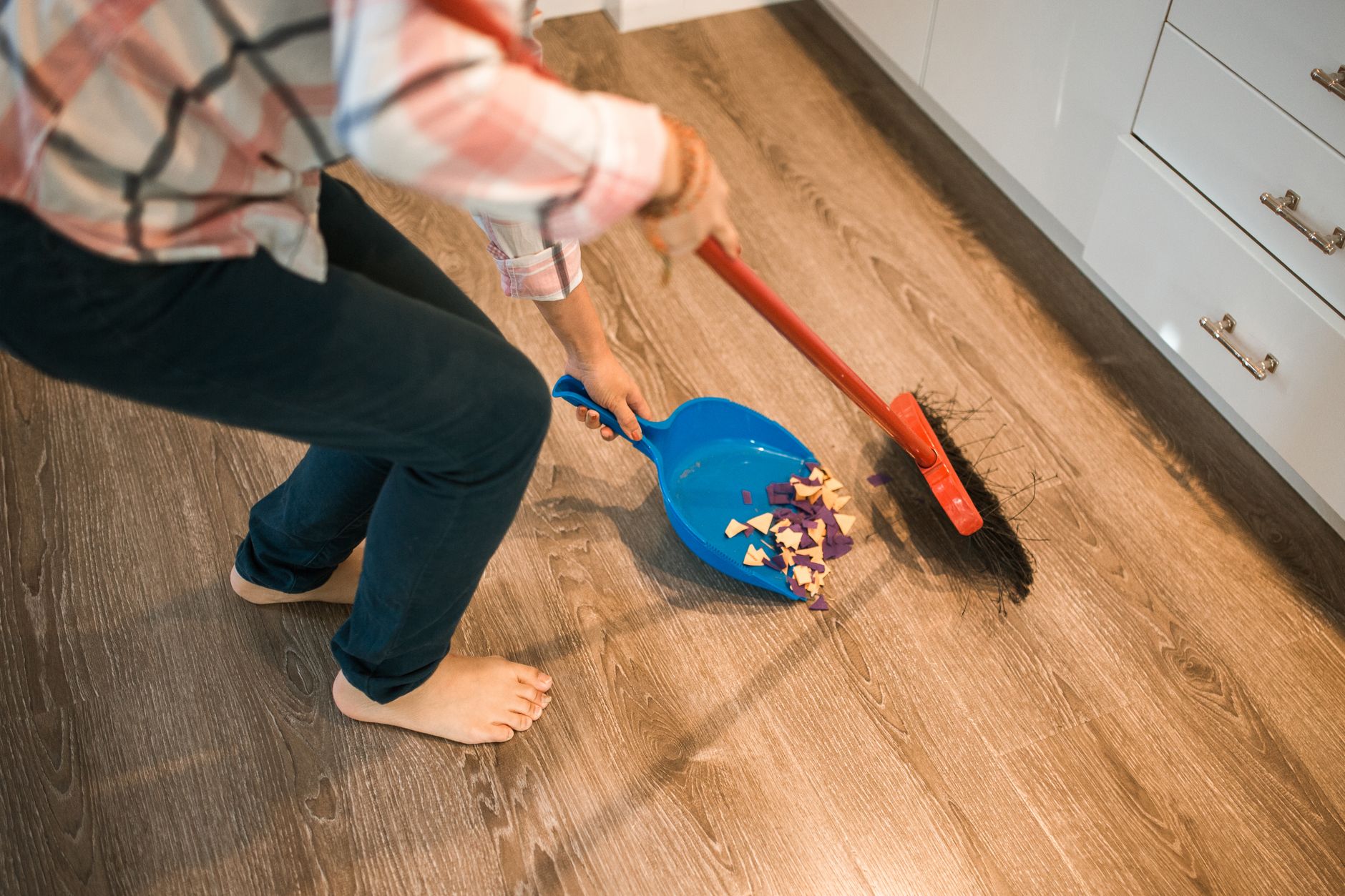
Dry, mobile debris is the best first assignment: grit, crumbs, paper scraps, small wrappers, hair, and tracked soil. A compact autonomous vacuum or sweeper can make consistent passes without forcing a crew member to walk the centerline repeatedly. Edge brushes help, but pickup performance still depends on airflow, brush geometry, filtration, and the gap between the cleaning head and seat hardware.
Liquids, needles, broken glass, chewing gum, bodily fluids, and unidentified objects require a stop-and-escalate rule. The robot should mark or report the location and move to a safe holding point. It should never smear a spill, ingest a hazardous item, or treat lost property as ordinary trash.
- Prove pickup on the actual grit, paper, crumbs, and fibers found after service.
- Test thresholds, floor joints, slopes, carpet edges, and vestibule plates at operating speed.
- Confirm that the debris bin can finish its assigned cars without overflowing or losing suction.
- Verify automatic stops for blocked aisles, open exclusion zones, and sensor uncertainty.
How should aisles, seat bases, and vestibules be mapped?
Map the aisle as a center lane with deliberate edge passes, not as one broad open room. Seat-row incursions should be separate optional zones. If the robot cannot enter and reverse without touching a seat base, the zone belongs to a crew member using a narrow vacuum tool.
Low-profile hardware can reach beneath some seat overhangs, but rails, footrests, electrical boxes, and floor-mounted legs often break the path. The honest objective is high repeatability on reachable floor, not a claim of total under-seat coverage. Manual under-seat inspection remains part of release.
Vestibules offer more turning room and often collect heavy tracked debris, yet they also contain doors, control hardware, bridge plates, and abrupt thresholds. Use slower travel, fixed stop lines, and a dedicated vestibule cleaning recipe. Wet cleaning belongs there only after testing recovery, drying, traction, and material compatibility.
Platform gaps must be treated as drop edges
The Access Board specifies that commuter cars serving high or mini-high platforms be coordinated so the horizontal gap is no greater than 3 inches and the floor is within plus or minus 5/8 inch of platform height. Legacy conditions and other boarding arrangements can differ. Even a compliant gap is an unacceptable wheel path for a compact cleaning robot.
Virtual boundaries are useful, but they should not be the only protection. Keep platform-facing doors closed when operations allow it. If a door must remain open, use an approved physical barrier, a verified interior stop line, and a crew member responsible for the opening. Passenger boarding and autonomous cleaning should never share the same zone.
Movement authority matters too. The consist must be secured under the railroad's operating rules before deployment. The Federal Transit Administration advises that critical vehicle access and egress paths remain unobstructed, so the robot, dock, cart, and charging cable must be clear before release to service.

Crews and robots should work as one cleaning cell
According to WMATA's fiscal 2024 second-quarter service report, almost every railcar used in service received nightly interior cleaning, including trash pickup, floor sweeping or mopping, glass cleaning, and spot treatment. Floors were mopped and buffed on as many as 94 cars nightly. The same report says major cleaning still covered nearly every interior surface by hand.
That layered program is the right model for automation. OSHA identifies floor and backpack vacuum use, heavy carts, long reaches, kneeling, and prolonged bending as housekeeping ergonomic hazards. Automating a repetitive aisle pass may reduce exposure to some of that work, but crews still need suitable tools and safe methods for the detailed tasks that remain.
- Robot lane: mapped dry pickup, repeat passes, coverage reporting, and exception marking.
- Crew lane: trash bins, seats, ledges, tables, windows, touchpoints, restrooms, and under-seat detail.
- Hazard lane: sharps, fluids, broken glass, suspicious items, and damaged interior components.
- Supervisor lane: consist release, door control, quality inspection, and dispatch handoff.
Build the turnaround around dispatch, not the robot
Passenger demand leaves little room for a cleaning experiment that delays departure. Amtrak reported 34.5 million customer trips in fiscal 2025, up 5.1 percent from fiscal 2024, and specifically connected faster terminal turn times with a better passenger experience. Automation earns its place only when it protects that operating rhythm.
Sequence the work so the hazard sweep and trash pull happen first. The robot can then cover its lane while the crew works from seat level upward in a defined adjacent zone. A final inspection closes exceptions, confirms dry floors, removes equipment, and hands the car back to operations. An overnight cleaning no operator promise is the wrong standard because supervised release remains essential.
- Track completed floor area by car and by planned cleaning window.
- Record interventions, blocked zones, missed debris, rework, and dispatch interference.
- Compare robot coverage with the same car class, service pattern, and debris load.
- Review data with cleaners and operations staff, not only fleet-management personnel.
How should an operator pilot and procure the equipment?
Begin with a commercial robot demo on a representative car class, then test a full consist under real turnaround conditions. A useful robot pilot program includes dim lighting, dirty sensors, crowded work carts, blocked rows, door changes, lost-property events, and recovery after an interrupted route. Try before you buy should mean testing failure behavior as seriously as normal pickup.
Service Robot Co. acts as an OEM-neutral, vendor-neutral robot integrator for U.S. businesses. It can compare compact platforms across manufacturers, conduct the site assessment, handle robot deployment and integration, train the crew, and support each unit through a nationwide engineer network. The operator gets one partner and one number across the equipment lifecycle.
Procurement can then match operational preference: purchase, financing, commercial cleaning robot rental, autonomous vacuum robot rental, or robot as a service with monthly payment programs. Service terms should define remote triage, on-site dispatch, preventive robot maintenance, replacement procedures, and measurable acceptance criteria. A maintenance-included structure is valuable only when its response commitments match the railroad's service calendar.