Key takeaways
- Warm-season turf keeps growing through much of the year, so mowing hours seldom drop to a clear winter low.
- A fixed crew calendar works when the crew keeps greens, bunkers and edges while a robot covers repetitive open turf.
- Map boundaries, exclusion zones, cart paths, drains and charging sites before any unattended pass runs.
- Most 2026 autonomous fairway results are vendor or event reports, so ask for logged hours from a reference site.
- Lease against a mapped site and a fixed lease payment quoted after the site assessment, not against a guessed hour count.
Do Sun Belt Courses Really Mow All Year?
For most of the Sun Belt, yes. Warm-season grasses keep producing growth through long stretches of the year, so a course in Florida does not get the clean winter lull that northern superintendents plan around. The mowing load tends to hold steady instead of falling to a low point.
That changes the math. A crew cannot count on a quiet season to absorb backlogs, training gaps or equipment downtime. Hours spread across the calendar, which means the crew schedule and any robot schedule must fit inside a steady week.
The short answer is that a fixed crew calendar and a scheduled robot mower can share this load well, as long as each takes the work that suits it. The robot covers repetitive open turf inside set windows. The crew keeps greens, bunkers, edges and anything that needs hands. The rest of this article covers how to set that split and what to map first.
Why Warm-Season Turf Does Not Go Quiet
A general golf turf profile identifies Bermuda as a warm-season grass. A lawn-care guide, which is a lower-authority source than a turf agronomy text, says Bermuda goes dormant when soil temperature falls below about 55 degrees Fahrenheit. Treat that figure as a starting point to confirm with your agronomist or extension office, not as a planning rule.
Milder areas often add a second layer. Many courses overseed cool-season ryegrass over Bermuda in cooler months, then let the Bermuda return as it warms. Each layer carries its own cut height, density and pass count, so a single mowing rule rarely fits the whole year. The load is not one season long. It is a series of transitions.

Where the Hours Land Across a Year

On a Sun Belt course, mowing load tends to concentrate in fairways, roughs, practice areas, and the collars and approaches that get trimmed often. Each zone has a distinct height and pass pattern. Hours do not disappear in winter. They shift between turf types as overseeding and transition work move through the property.
Two questions matter more than total acreage. First, how many passes does each zone need in a week? Second, which passes can run without a person beside the machine? Open fairway lanes are repetitive and predictable. Greens, bunker faces and tight edges are not. A robot schedule should target the first group and leave the second with the crew.
What Should You Map Before Setup?
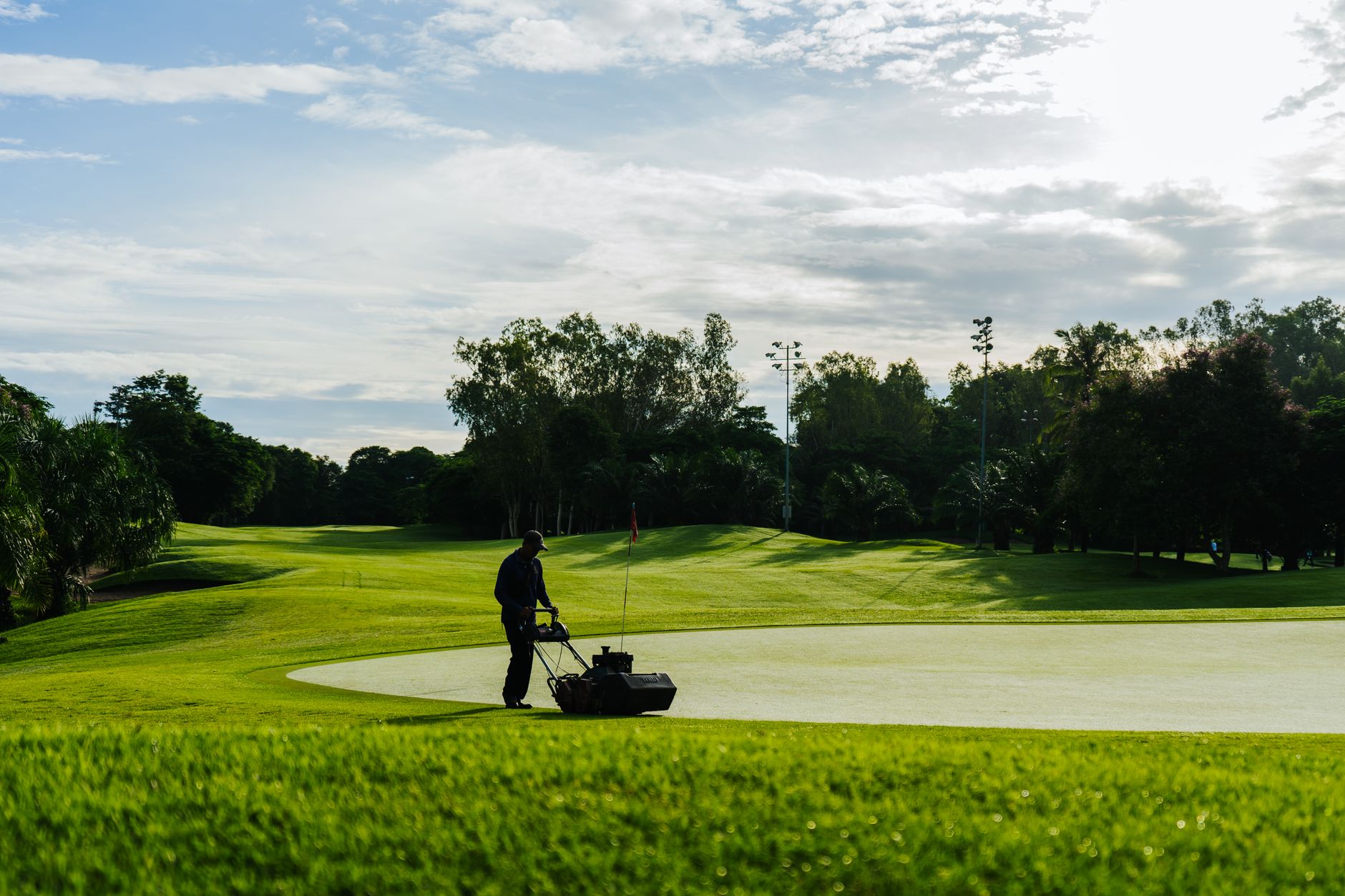
Mapping decides whether a robot schedule holds up on a busy, warm calendar. Walk the course with the crew lead, mark every zone the mower must avoid or slow for, and finish the map before the first unattended pass. Gaps found after launch cost days of stopped work.
Give overseed zones their own map layer. A ryegrass transition strip beside Bermuda can need another height and pass count, so one global setting will miss it. Service Robot Co. quotes one fixed lease payment only after a site assessment, which is where this kind of zone-by-zone site assessment mapping gets built.
- Hard boundaries and exclusion zones around greens, tees, bunker faces and water edges
- Cart paths, crossing points and the golf cart traffic at each one
- Drains, low spots and areas that stay soft after rain or irrigation
- Slopes and banks that change traction and turning behavior
- Irrigation heads, sprinkler lids and other objects the mower could strike
- Overseed transition zones, with the cut height each one needs
- Event, league and tournament calendars that close holes or areas
- Charging dock sites with dependable power and a path that stays out of play
How Much Weight Do Vendor Results Carry?
Autonomous fairway mowing moved fast in 2026, but most public results come from vendors or event organizers. According to Husqvarna, 16 robotic mowers worked the Brabazon Course at The Belfry during a rain-affected British Masters. That is a useful stress test, but it comes from a UK venue, not a warm-climate course, and it is not a mowing-hour log for a Sun Belt property.
Read each claim against its source. Ask for the area covered, the hours logged, the number of manual interventions and the charging pattern, then compare those figures with your own map. If a vendor cannot share those figures from a reference site, treat the claim as marketing rather than evidence.
How Does Service Robot Co. Fit a Year-Round Course?
Service Robot Co. is a full-service commercial robot integrator for US businesses. We are a vendor neutral robot integrator, so we match the right robots to the job across manufacturers. Then we handle commercial robot leasing, robot deployment and integration, training, and service through a nationwide US engineer network. One partner covers the whole lifecycle, which suits a course that cannot pause mowing while a machine is sorted out.
For a warm-climate course, the practical start is one leased unit on a few mapped zones, followed by a phased deployment that adds units as the crew trusts the windows. Our leases run three years, with one fixed lease payment quoted after a site assessment. A robot pilot program like that lets a superintendent test overlap with the crew before committing the whole calendar.
The test is the same for any machine: the map has to hold through an overseed week and a tournament.
Frequently asked questions
Want a robot working for you?
Tell us the job and the site. We will recommend the robot, quote the lease, and keep it serviced.
Sources
- Golf Compendium: Bermuda grass for golf
- Lawn Synergy: What is Bermuda grass
- Golf Compendium: Golf course warm-season grasses
- Husqvarna press room: Belfry British Masters 2026
- Golf Business News: Belfry autonomous mowers
- The Golf Wire: Concert Golf Partners and FireFly Automatix
- Golf Business News: Toro GeoLink with Reesink