Key takeaways
- A short pre run check catches most start failures before the mower leaves the shop.
- Tree canopy and nearby buildings can weaken satellite navigation, so shaded lawns need closer watching.
- Crew detail work and mower work need a fixed order so no one stands in the mower's path.
- Cleanup of clippings and hard surfaces is where a client sees whether the job is finished.
- No public source we checked sets supervision ratios for commercial mowers, so staffing follows your contract and site.
What a crew lead is responsible for when a robotic mower is on site
A crew lead does not run a robotic mower the way a seat operator runs a ride on. The machine works the open turf unattended, and the lead's job is to confirm it starts correctly, watch for the conditions it handles poorly, and keep the human crew on the detail work that clients notice most.
The daily routine has four parts: a pre run check, supervision while the unit works open turf, a crew shift into trimming, edging and bed work, and cleanup of clippings and hard surfaces afterward. Each part needs a named lead and a clear finish point, and the sequence matters more than any single step.
The routine below is a practical sequence a crew lead can adopt. The public sources we checked in November 2026 do not set supervision ratios, contractor staffing rules or safety standards for commercial mowers, so timing and headcount belong to your operation and your contract.
The pre run check before the mower leaves the shop
Most early problems trace back to a bad start: a boundary that did not register, a satellite fix that never locked, or a zone map that no longer matches the lawn after the crew laid new mulch the day before. A short check catches these before the unit cuts a single pass.
- Confirm the RTK base station, where fitted, has clear sky view, is powered on, and has its antenna standing vertical.
- Check the app for satellite count. One third party troubleshooting guide puts the RTK target at 15 or more satellites.
- Confirm the active zone, cutting height and map match the work order for that day.
- Walk the zone and clear sticks, hoses, toys, tools and any object the unit could push or wrap.
- Confirm the battery is charged and the blades are sharp before the unit goes out.
Supervising open turf while the unit works
Open turf is the easy part for the mower and the easy part for a lead to neglect. Satellite navigation is the first thing to watch. One third party guide says RTK works better in open yards with a clear sky view, and that dense tree canopy or nearby buildings can degrade GPS accuracy. Lawns with mature trees need a closer look, not a quick glance.
Shaded areas are where a wire boundary may suit better. A third party installation guide says wire keeps working under tree cover. Another third party source says the Husqvarna 450XH EPOS uses RTK as its primary navigation and can fall back to a wire boundary in difficult zones, while most consumer products commit to one method.
Model limits matter for the lot you actually have. A retailer listing gives the Automower 520H a rating for lawns up to about 0.6 acre and slopes up to 45 percent, with no ultrasonic sensor and reliance on lift and tilt sensors. The Automower 550H is listed for lawns up to 1.25 acres with 45 percent slopes and ultrasonic object detection. A Lowe's listing gives the 535 AWD coverage up to 3,500 square meters and slopes up to 70 percent. These are retailer listings checked in November 2026, not Husqvarna's own figures, so confirm them on the manufacturer's site before quoting any lawn against them.
Supervision means checking on a schedule, not hovering. Watch for the unit stopping, check the app for error messages, and walk the far boundary edge at intervals you set for the site.

Moving the crew onto trimming, edging and bed work
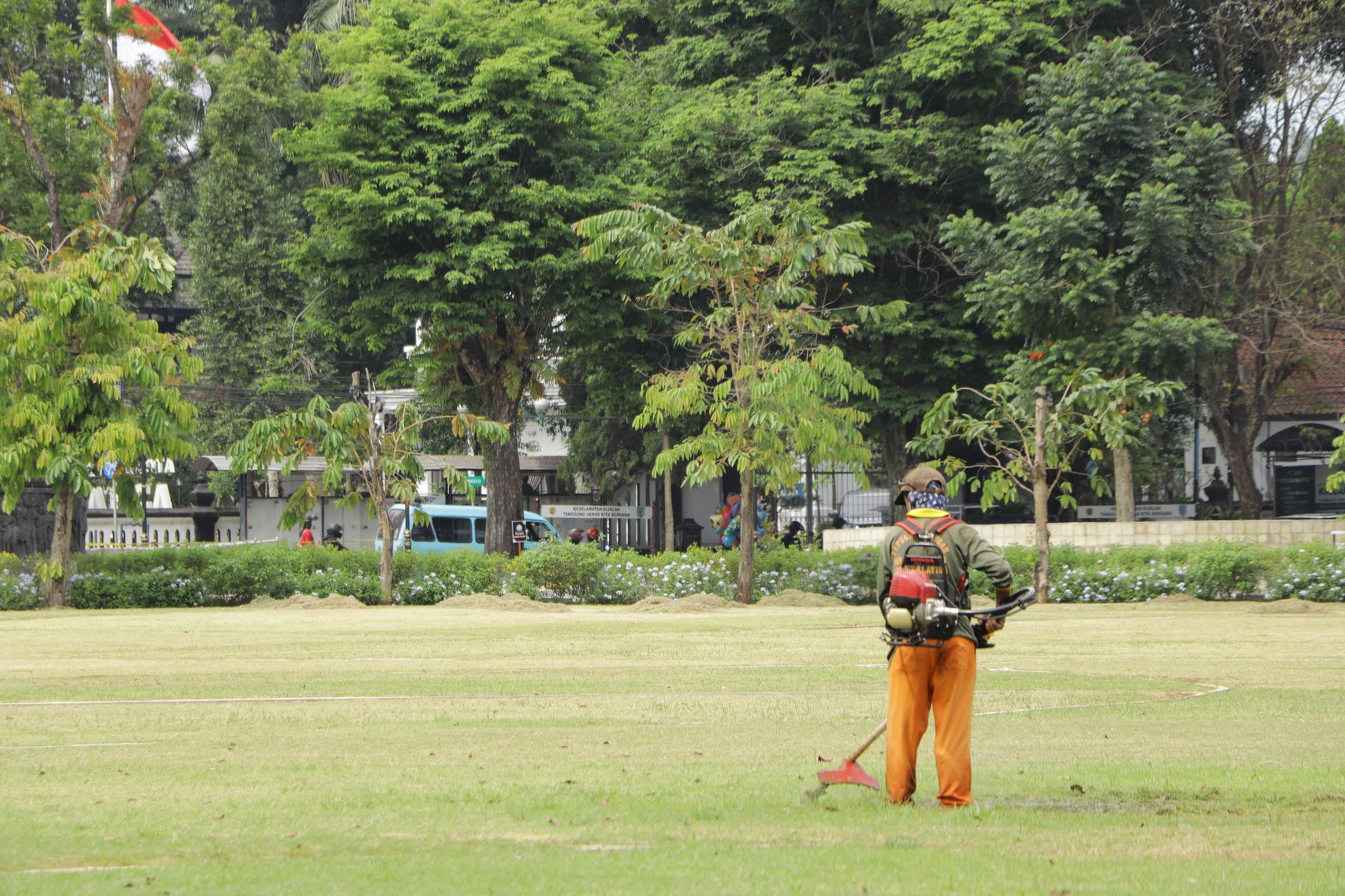
Once the unit has the open turf, the crew takes the work the mower cannot do: string trimming around trunks, posts and fixtures, hand edging along walks and beds, and bed work that needs a rake or a hand. The lead sets the order so no one stands in the mower's path.
Sequence is the hard part. Trim and edge a zone before the unit arrives or after it leaves, and use whatever hold or zone control the app offers to keep the mower out of an area where the crew is working. A crew member should never be the thing that stops the unit by stepping in front of it.
Clients judge the whole visit by the detail they can see. A clean edge and a tidy bed shape that judgment, and it carries into the renewal conversation.
Cleanup of clippings and hard surfaces afterward
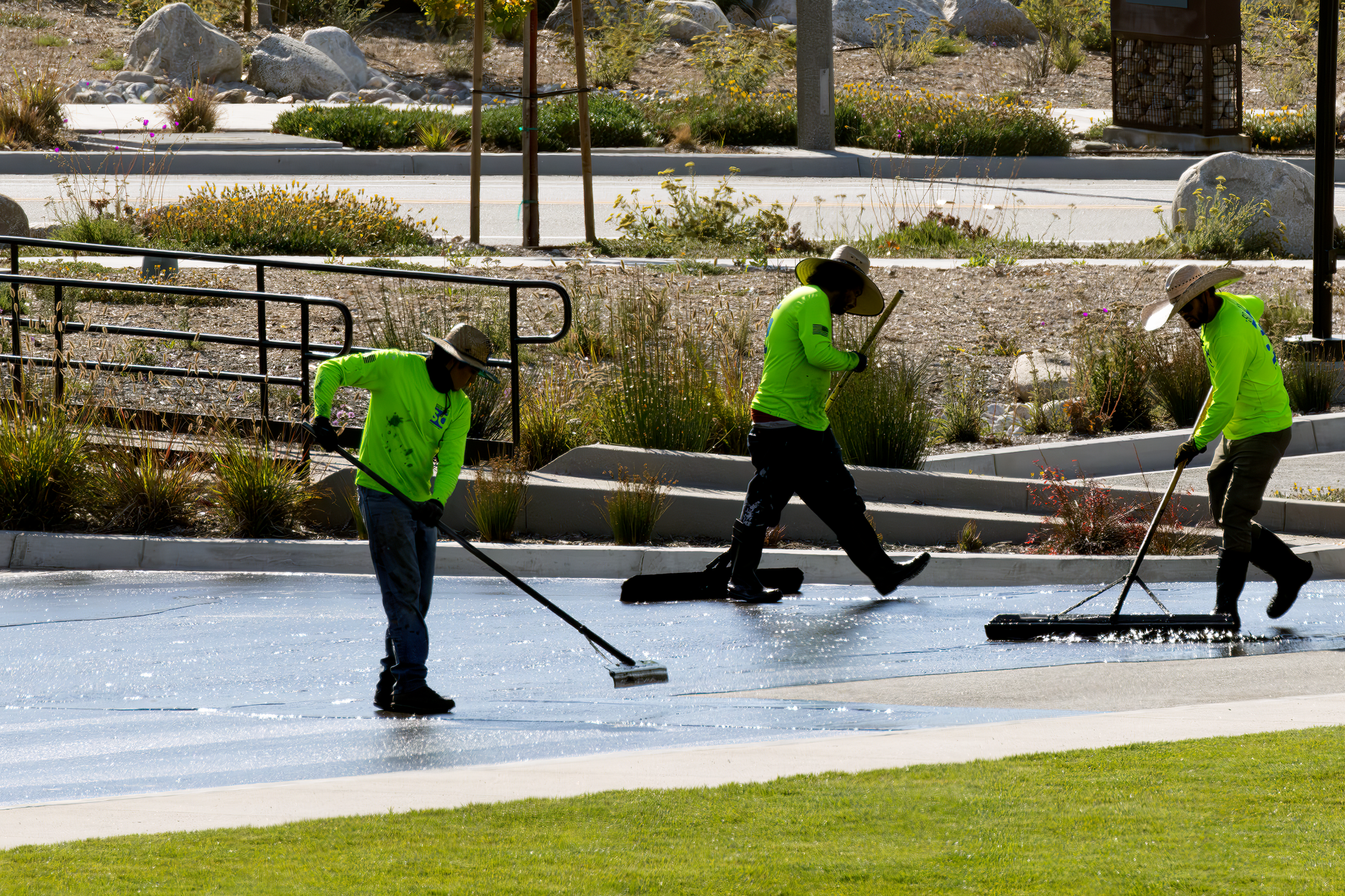
Robots leave fine clippings on the turf, yet the same clippings still land on walks, drives, curbs and patio edges. The cleanup pass is where a lead shows the job is finished.
Work in a fixed order. Sweep or blow hard surfaces from the edge inward, pick up clumps near beds and drains, check sprinkler heads and any lid or marker the unit may have nudged, and look for scalped turf at slopes and wet spots.
Record the cleanup on the same sheet as the pre run check so the day's record runs from start to finish. Note any zone the unit skipped and the reason it skipped it.
When to pause the unit and call for service
Every pause costs cut time, and every run through a problem zone risks turf. A lead needs a written rule for each case before the first week, rather than a decision made in the field.
Pause and call for service when the unit repeats a stop, when a signal problem persists after the base station check, or when the unit approaches a zone that was never mapped well. Resume only after the fault clears and the zone map matches the lawn.
Logging these pauses matters. A pattern of stops at the same tree line tells a service engineer more than a single fault message does.
What crew lead training should cover
Service Robot Co. trains crews as part of each deployment, and the crew lead portion should cover the routine above along with the reasons behind each step. We are OEM neutral, so the training follows the robot that fits the site, not one maker's manual.
- Pre run checks, including how to read base station and satellite status in the app.
- Which lawn features weaken satellite navigation and how the crew adjusts around them.
- Model limits for lot size, slope and object detection, checked against each site.
- Hold, pause and restart steps, plus the conditions that call for service.
- Crew sequencing around the mower, and the cleanup handoff at the end of each run.
- Escalation to RoboCare, our service plan, backed by regional service engineers in every state we service.
How a lease fits a crew lead's schedule
Service Robot Co. leases robots only, through financing on a three year lease. The lease is quoted after a site assessment that maps the lawn, notes slopes and canopy, and records the boundary approach, so the quote reflects the ground the unit will actually cover.
The lead's early logs feed that decision. Hold time, repeat stops at the same tree line and cleanup minutes show whether the site suits the model the assessment recommends. We quote one fixed payment for the lease term, and every unit we lease is serviced under RoboCare.
Frequently asked questions
Want a robot working for you?
Tell us the job and the site. We will recommend the robot, quote the lease, and keep it serviced.
Sources
- Household Robot guide: RTK GPS for lawn mowers
- Household Robot troubleshooting: lawn mower boundary errors
- Robot Mower Specs: RTK vs perimeter wire
- Household Robot guide: lawn mower installation
- The Power Tool Store: Husqvarna Automower 520H listing
- The Power Tool Store: Husqvarna Automower 550H listing
- Lowe's: Husqvarna 535 AWD listing