Key takeaways
- Overnight autonomous fairway passes can clear the biggest mowing block before sunrise play.
- Tournament weeks reward crews who can shift hours from fairways to bunkers and edges.
- Mapping and backup plans matter as much as the mower when stakes are high.
- Integrators should align routes, communication, and RoboCare coverage before the first event.
Why does tournament week squeeze bunker work first?
When a member guest day or a televised event lands on the calendar, the fairway cut still has to happen, but bunkers, collars, and detail work suddenly carry the visual weight. Superintendents often protect those surfaces by stealing hours from somewhere else. According to Golf Course Industry, Black Desert superintendent Ken Yates ran autonomous fairway mowers on bentgrass from about 2 a.m. to 6 a.m. during the 2024 Black Desert Championship so his team could spend daylight on bunkers and fine work instead of fairway units.
That pattern is not unique to a Tour stop. Any course with a compressed window faces the same math: one less person on a fairway mower is one more person hand-raking a bunker face before the first tee time. Autonomous fairway mowing does not replace agronomic judgment. It buys back predictable hours on the jobs that show up on television.
What should move up the crew list when fairways run themselves?
Start with bunkers and edges, because tournament optics punish a thin lip or a heel print. Yates told Golf Course Industry that during the Black Desert event his crew never touched a fairway mower, which pushed bunker work and detail tasks earlier in the day. Public and resort courses can copy that priority stack even without a broadcast.
Cart path blowing, approach cleanup, and native-area edging often sit on the someday list during peak season. GCMOnline reported in August 2025 that Myers Park Country Club in Charlotte redeployed staff from rough mowing to outer-edge and native detail once autonomous units covered more ground. Tournament week is when those someday tasks become must-do.
Communication with the pro shop matters too. Pin sheets, traffic control, and frost delays all shift when mowing happens overnight. Build a one-page tournament plan that names who owns bunkers, who watches autonomous runs, and who calls off a pass if weather turns.

How do you schedule autonomous passes around play?
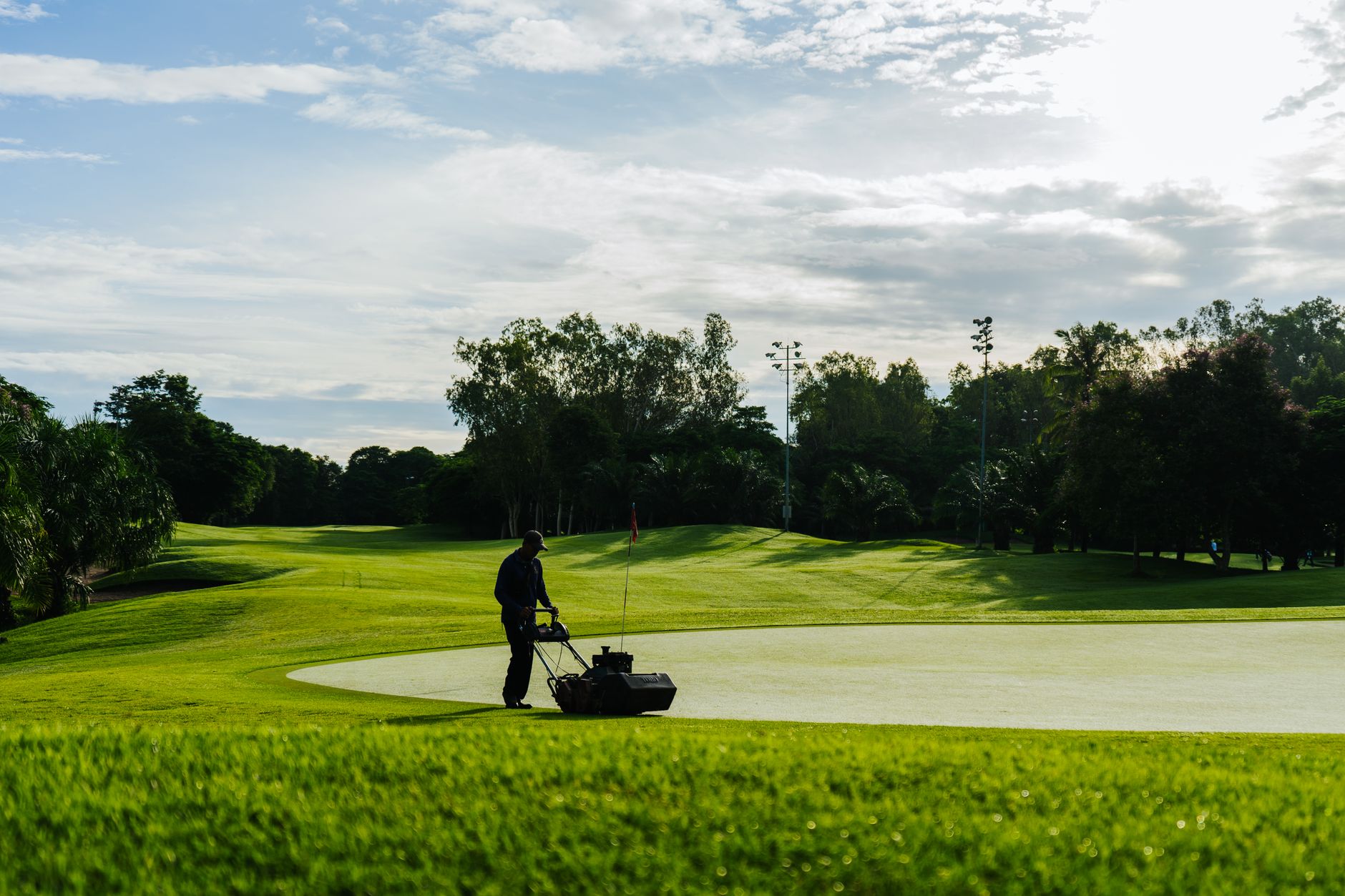
Treat autonomous fairway work like irrigation: it needs a window, a route, and a hard stop before golfers arrive. The Black Desert example used a 2 a.m. to 6 a.m. block on bentgrass fairways, which keeps reels finished before sunrise tee times in desert heat. Your window may differ by climate, but the rule holds: finish before the first group reaches the hole you are cutting.
Rough can run on a parallel schedule if your platform supports it, but confirm overlap with irrigation, syringing, and any early range traffic. GCMA reported in 2025 that Thonock Park programs fairway and rough autonomous units like timed sprinklers, including late-evening starts once play ends. Copy that mindset: set passes in advance, then adjust only when weather or events force a change.
Keep a manual backup slot on the calendar. Yates noted he still staged fairway mowers during the Tour debut because any new system deserves a fallback until routes are proven. That honesty saves reputation during a member tournament.
What mapping work happens before the first tournament week?
Autonomous fairway mowing lives or dies on clean geofences. Map every sprinkler head, stake, drainage lid, and temporary tee marker before you trust an overnight pass during an event. Walk the route with the crew lead who will answer member questions if a unit pauses mid-fairway.
Test weak-signal corners before you need them. Golf Course Industry described a Idaho course that upgraded to satellite correction when cellular RTK dropped in rural tree cover. You do not want that discovery on a Saturday before a club championship.
Document stop points and handoff zones where a technician can reach a unit without driving on a finished fairway. Service Robot Co. maps courses during a free site assessment, aligns financing if you buy or lease through monthly payment programs, and keeps RoboCare coverage on the same plan as clubhouse scrubbers or patrol cameras if you add them later.
Which crew skills still matter when machines cut fairways?
Operators become route managers and quality auditors. They watch cut quality, swap reels, and clear debris that software cannot classify. Thonock Park told GCMA that staff trained on programming and daily oversight before expanding autonomous coverage across eighteen holes.
Bunker specialists gain status when fairway seats empty out. Hand raking, moisture management, and lip definition still require eyes on the ground. Autonomous mowing simply stops fairway hours from eating the same people who know your sand.
Mechanics stay busy with batteries, reels, and guidance kits. Schedule preventive checks the week before a tournament, not the morning of. A stalled unit on hole seven is a pace-of-play problem and a member-relations problem.
How do labor shortages change the tournament-week calculation?
GCMOnline quoted Myers Park director of agronomy Scott Kennon in August 2025 saying labor challenges make autonomous units a way to redeploy skilled operators to precision work rather than rough mowing loops. Tournament weeks magnify that gap: you cannot hire three temps who already know your bunkers.
When you are down two people, autonomous fairway passes keep the base cut from slipping while veterans handle detail. That is different from cutting staffing on purpose. It is covering the work that must happen when every hour is visible to members or cameras.
What should a superintendent checklist cover seven days out?
Seven days before the event, confirm autonomous routes, irrigation conflicts, and backup manual plans. Five days out, walk bunkers with the crew lead and list lip repairs that need dry weather. Three days out, run a full overnight pass on the holes that will see the most gallery traffic.
The day before, brief the pro shop on any fairway closures and publish cart-path rules if a unit will still be finishing at dawn. Morning of, assign one person to monitor telemetry until the last pass exits hole eighteen. After play, log what slipped and adjust the next tournament template.
- Publish overnight mowing windows to the pro shop and starter stand
- Assign a bunker lead and an autonomous monitor for each tournament day
- Stage manual fairway units fueled and ready but off the schedule unless needed
- Verify guidance signal in the weakest corner of the property
- Capture photos of bunker faces after autonomous nights for year-over-year comparison

Where does an integrator fit without slowing the crew?
A vendor-neutral integrator should finish mapping, training, and service handoffs before you hang a tournament banner. Service Robot Co. selects fairway platforms alongside clubhouse floor scrubbers or cart-path sweepers when you want one partner for mowing and building care, finances purchases or leases, and services units through a nationwide engineer network.
Bring the integrator into the dress-rehearsal week, not the championship round. Let them watch a full overnight cycle, tune geofences, and confirm RoboCare remote triage paths. Your crew should meet the same technician they will call if a unit stops on a Sunday morning.