Key takeaways
- The critical root zone sets the mower boundary, at one foot of radius per inch of trunk diameter in common public guidance.
- Exposed or raised roots need a wire island or removal, while a sturdy trunk is often handled by bumping off.
- Hand trim the band inside the boundary, following the root zone rather than the visible trunk flare.
- Log every edge change after storms or new bed work, then remap and run a supervised pass.
- Clearances and slope limits come from each model's manual, not from a single industry standard.
Where a robot mower should stop near a trunk
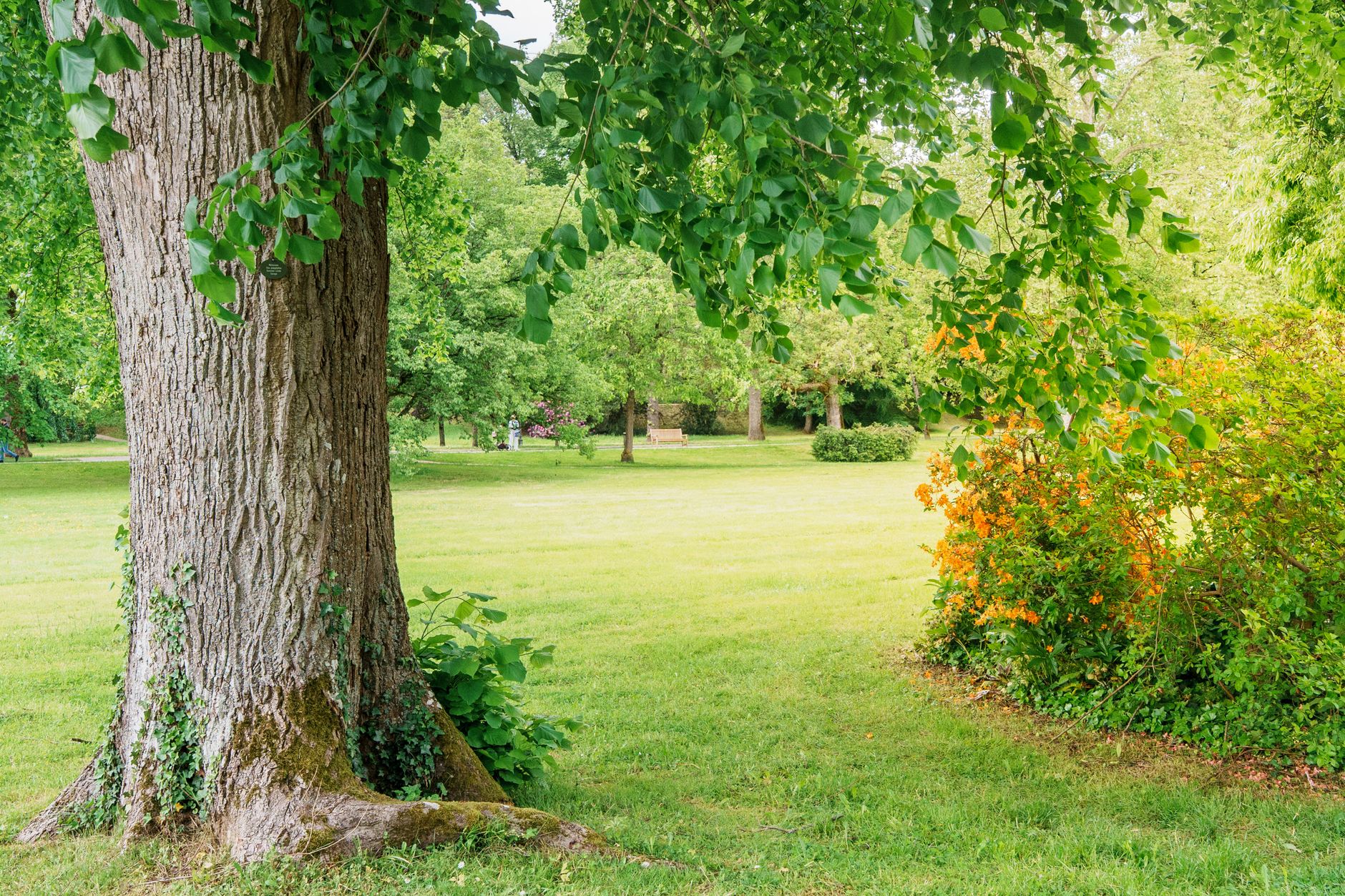
A robot mower should stay out of the critical root zone, the ground that carries a tree's roots, water and anchorage. In common public guidance that zone runs far wider than the trunk flare you can see, so the mower boundary is set by measurement, not by eye. The usual rule is one foot of radius for each inch of trunk diameter, measured at 4.5 feet.
Once the zone is measured, the crew makes two decisions. Exposed roots get a wire island or removal, while a sturdy trunk can often be left to bump off. The band between the boundary and the trunk is then hand trimmed, and every edge change is logged.
The zone sets the human boundary. The mower's own clearance from fixed obstacles comes from the model manual, and that figure varies from one machine to another.
How the root zone is sized on the site walk
Austin's guidance uses the same arithmetic, with an example of a 20 inch tree carrying a 20 foot radius. Fort Collins describes its critical root zone the same way. Fairfax County sets a minimum of 1 foot per inch and says a total of 1.5 feet per inch may be required based on site conditions.
WSDOT's standard starts from the same 1 foot per inch and splits the area into an inner critical root zone and an outer part. It treats encroachment within the inner zone as a permanent impact, and it says adjustments to the zone need certified arborist approval. A crew that finds a compacted or cut side should record it before deciding anything.
On the walk, measure the diameter at 4.5 feet, write the radius on the site map, and note which side the roots run. Where conditions point to a larger zone, use the larger figure and send the question to an arborist rather than guessing. Keep one radius per tree on file so every crew lead works from the same number.
Marking exposed roots and sturdy trunks before the first pass
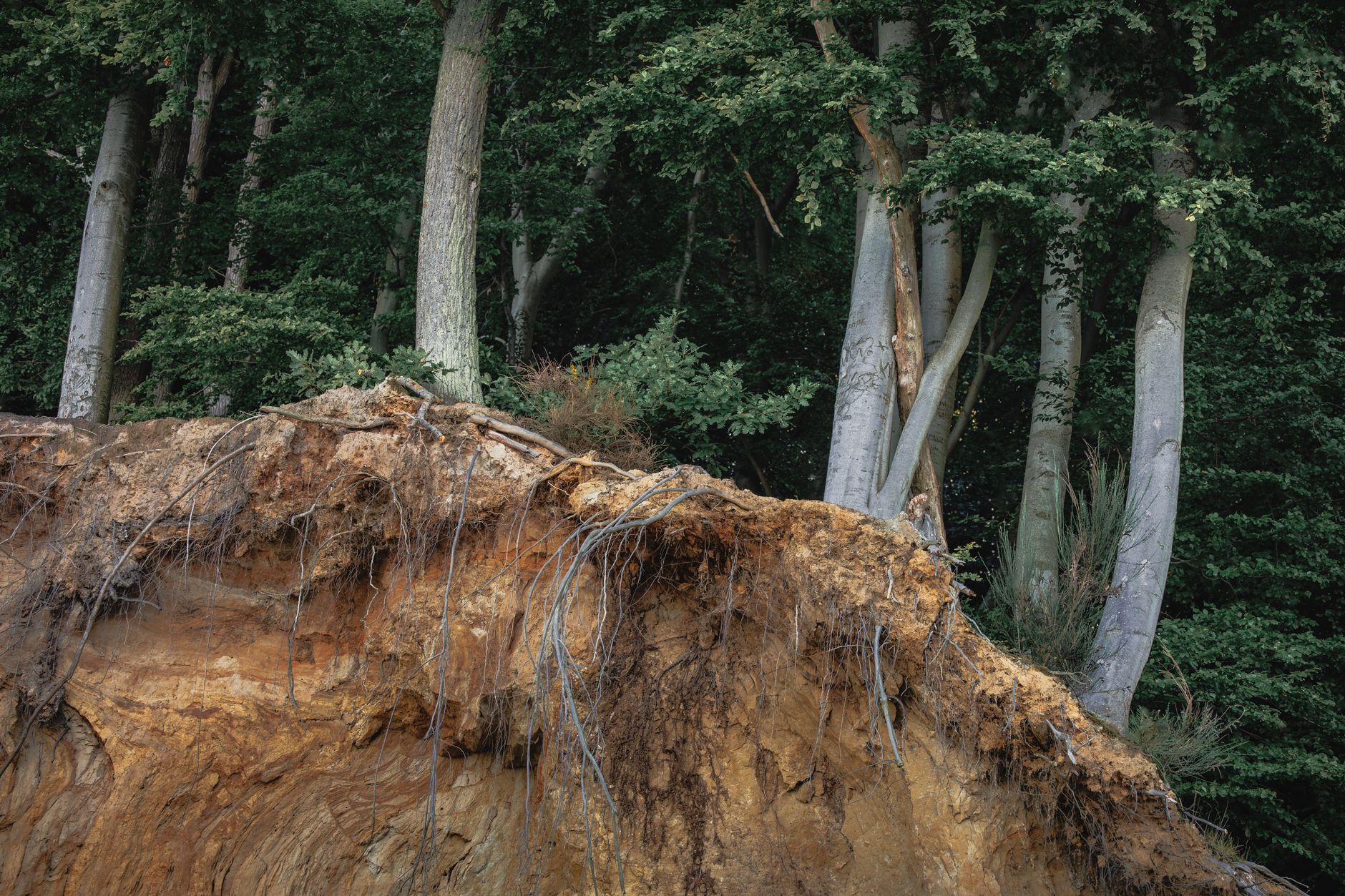
The manuals draw a line between two cases. Husqvarna's Automower 105 manual says sturdy obstacles such as trees generally don't need wire, because the mower turns when it bumps them. The same manual says large trees with raised roots should be isolated or removed, since the mower can climb onto roots and damage its blades.
Husqvarna's support article describes wiring an obstacle as an island the mower avoids. Navimow's layout guide, which is vendor reported and was checked in November 2026, describes running wire around a trunk and suggests about 30 to 35 cm from fixed obstacles. A UK retailer suggests a raised barrier around the trunk so the mower bumps off instead of relying on a wire island.
No single trunk clearance standard was found in the public sources reviewed, so treat the 30 to 35 cm figure as a vendor starting point and confirm it against the model in use. Mark each decision on the map before any wire goes in.
- Stake each exposed root and buttress on the site map before any wire goes in
- Choose island or bump off for each trunk, and record the choice with the radius
- Run a slow supervised pass before the first full cut
Where the crew trims by hand instead of trusting the robot
Hand work should follow the root zone, not the visible flare, because the zone extends well past the drip line. The mower takes the open turf inside the boundary. The crew takes the band between the wire or barrier and the trunk, the ground around stakes, and the edge along any raised root.
Edging and string trimming come after the robot pass, so the sequence runs mower, then crew, then cleanup. Clippings should be cleared from the trunk base before the crew leaves, and the crew should note any root that the mower has begun to climb or scuff.
Logging edge changes after storms and new bed work

A storm can lift a root, drop a limb across the boundary, or shift soil. New bed work changes the surface the mower reads, and an island mapped last spring may now sit in the wrong place. Each change should be logged with the date, the trunk identifier, the measured radius, the change itself, and who approved it.
Remap the boundary after any change and run a supervised pass before the mower returns to unattended mowing. Keep the log as a running file so the next crew lead inherits the boundary instead of rebuilding it from memory.
How Service Robot Co. maps and leases the mower
Service Robot Co. is OEM neutral, so the mower model follows the lawn, not one manufacturer's catalog. Our site assessment records trunks, roots, slopes and the boundary plan. The robot mower lease is quoted after that assessment as one fixed robot lease payment on a 3 year lease.
Deployment, integration, training and service run under RoboCare, our service plan, backed by regional service engineers in every state we service. One partner handles the root zone map, the install and the repairs, so the edge log has one owner and one number to call.
Frequently asked questions
Want a robot working for you?
Tell us the job and the site. We will recommend the robot, quote the lease, and keep it serviced.