Key takeaways
- Summer breaks robot plans at the edges of the store first: receiving doors, coolers, vestibules, and wet transition zones.
- Heat and humidity are not just comfort issues. They change traction, visibility, battery behavior, charging windows, and food-safe handoff timing.
- Beverage and ice replenishment needs more than payload capacity. It needs route timing that matches hotter, faster turns.
- A grocery store cleaning robot and any transport AMR should have a summer map, a summer schedule, and summer-specific service rules.
- Operators who plan for seasonal variance usually avoid the quiet failures that show up as stoppages, rescues, and missed overnight work.
What changes for robots when summer hits a grocery store?
In summer, a grocery robot has to handle more than longer hours and heavier traffic. It has to cope with hotter receiving areas, more humid backrooms, condensation near cold cases and dock doors, wetter vestibules after storms, and faster replenishment cycles for water, soda, sports drinks, and ice. If those conditions are ignored, autonomy degrades in exactly the places operators rely on it most.
The planning fix is straightforward. Treat summer as a different operating season with its own traction assumptions, route rules, charging windows, and exception handling. A robot that performs well in April can still struggle in August if the floor film changes, doors stay open longer, and warm humid air starts fogging sensors or creating slick patches near refrigeration transitions.
That matters because current weather patterns are not hypothetical. NOAA reported that the contiguous United States averaged 70.6 degrees Fahrenheit in June 2026, which was 2.2 degrees above the 20th century average, and the Climate Prediction Center said on July 16, 2026 that above normal temperatures were favored for much of the United States in August through October. Summer is now an operating condition you plan around, not a seasonal footnote.
Why do heat and humidity quietly break autonomy assumptions?
Most robot programs are tuned around nominal conditions. Clear floors, steady friction, ordinary battery cooling, and predictable human traffic. Summer disturbs all four. Dock plates get warmer, door cycles increase, moisture hangs in the air longer, and associates spend more time moving pallets of cold drinks and frozen goods through mixed-temperature spaces.
According to CDC NIOSH workplace heat guidance updated July 16, 2026, employers should use engineering and administrative controls for heat stress, including measures that reduce wet floors or humidity. That advice is written for worker safety, but it also maps cleanly to robot reliability. High humidity and residual moisture change wheel behavior, increase cleanup events, and raise the odds that a robot pauses where a planner expected an uninterrupted run.
The operational mistake is assuming the robot only needs a heat-safe room and a charger. In practice it also needs summer-specific path selection, more conservative speed in transition zones, and tighter alerts for repeated retries, wheel slip, or stalled missions around receiving, prep, and beverage staging.
Where does condensation create the biggest trouble?
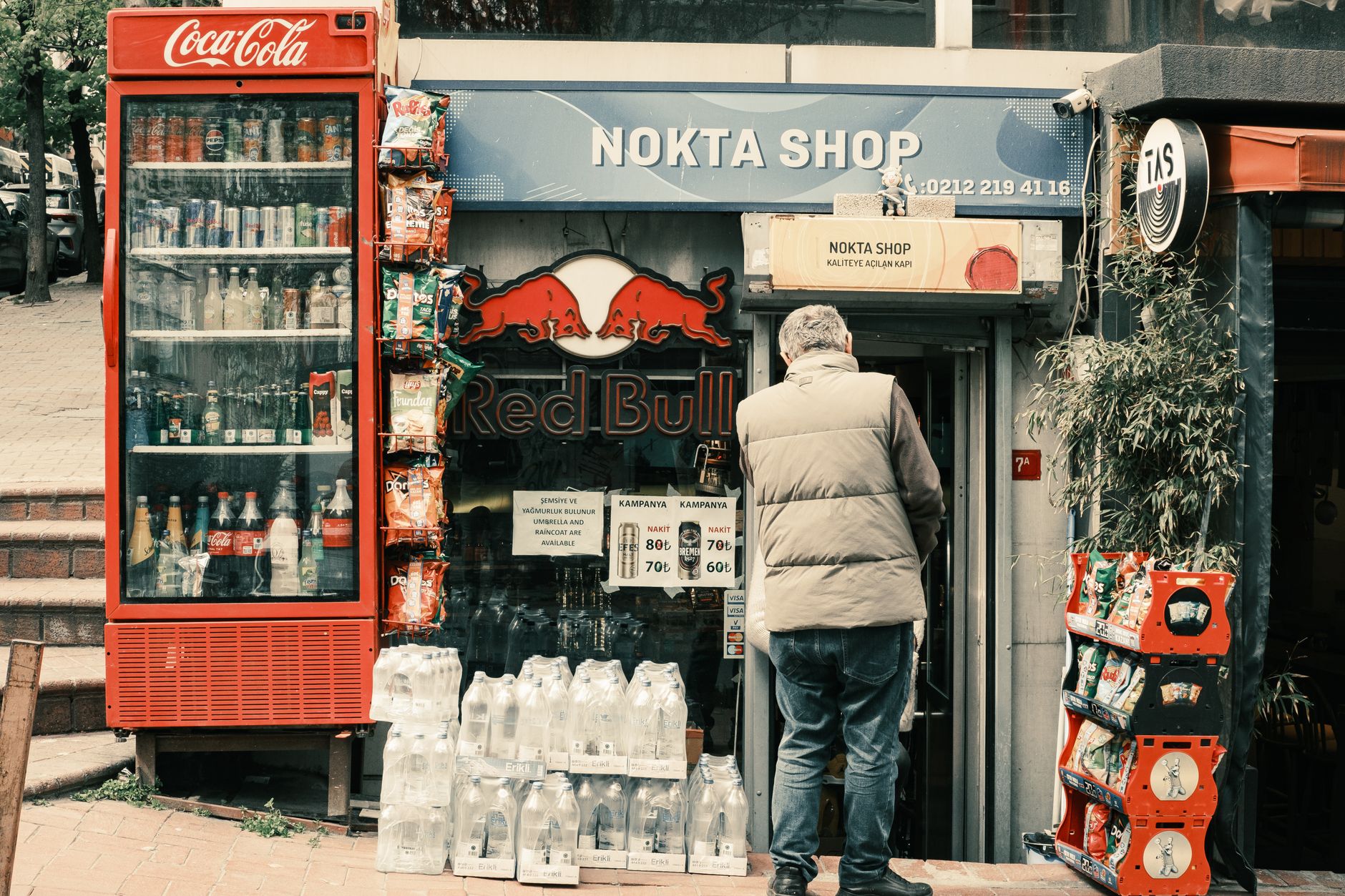
Condensation becomes a real issue anywhere cold assets meet warm, damp air. Think walk-in cooler thresholds, reach-in beverage doors, dairy backrooms, produce prep rooms, and the lane between the dock and refrigerated storage. The risk is rarely a dramatic puddle. More often it is a thin film that looks harmless to people and behaves badly for autonomy.
The physics are simple. The National Weather Service explains that condensation forms when air is cooled to its dew point, which is why moisture appears on a cold bottle from a refrigerator. Grocery operations recreate that effect every day. A pallet of chilled drinks rolling through humid air can leave a route that is technically passable but no longer stable enough for the same braking and turning assumptions.
This is where mapping and maintenance meet. Summer routes should flag cold transition points as special zones, with lower speed limits, higher confidence thresholds for turns, and inspection prompts after unloading spikes. If a robot is doing overnight cleaning no operator nearby, that threshold work matters even more because the machine is the first one to discover a changed floor condition.
What should you do about wet vestibules and storm-driven entries?
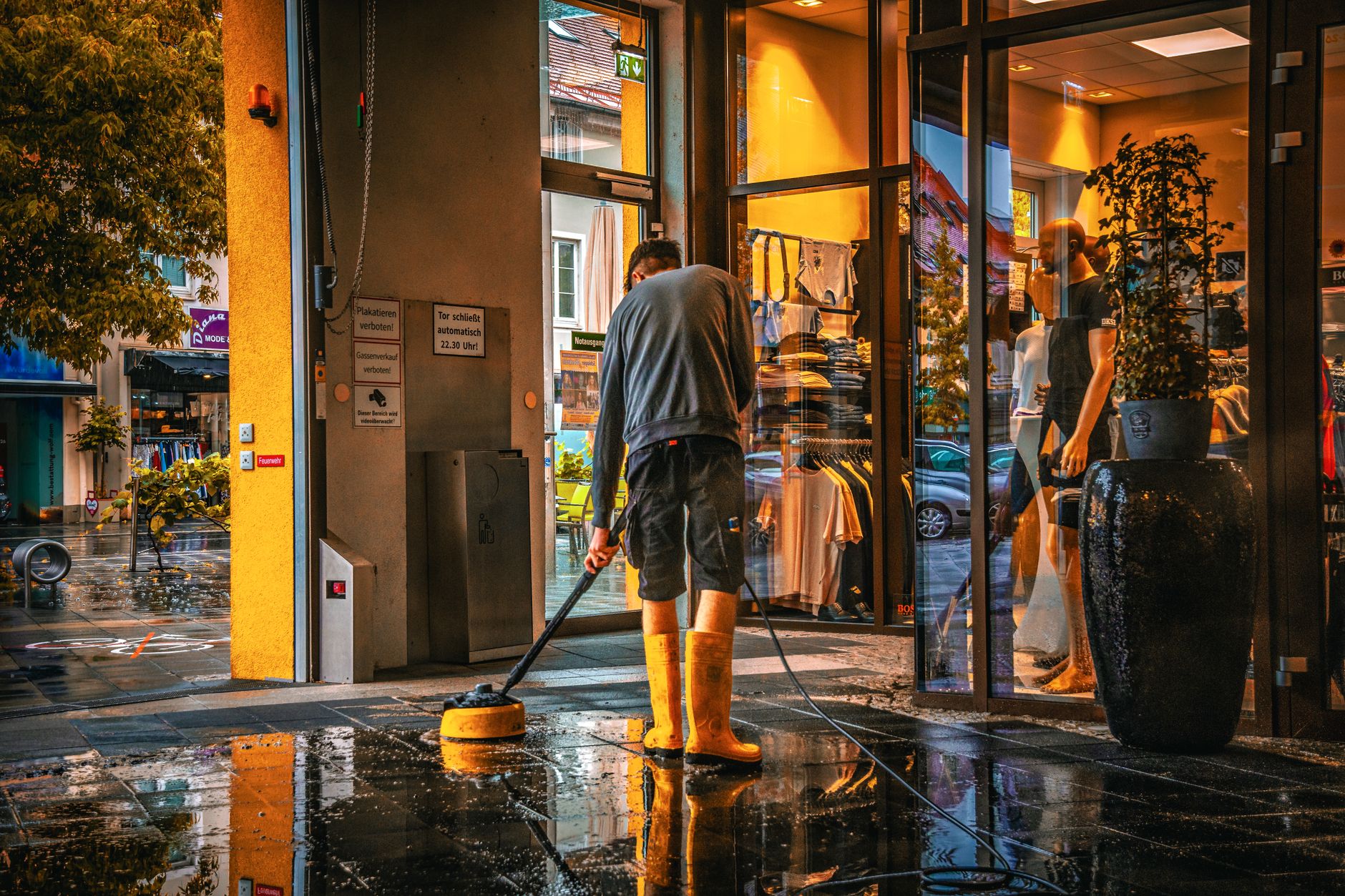
Front vestibules and side entries deserve their own summer operating policy. NOAA described June 2026 as wet and stormy across the South and Midwest, with U.S. precipitation averaging 3.23 inches, or 0.31 inch above the 20th century average, and several central states landing among their 10 wettest Junes on record. For grocery stores, that translates into repeated water carry-in, damp mats, and uneven drying across tile, sealed concrete, and polished surfaces.
OSHA is blunt on the underlying hazard. Its walking-working-surfaces guidance says wet floors, spills, and clutter can lead to slips, trips, and falls, and that floors should be kept clean and dry. The Bureau of Labor Statistics adds scale to that problem. In 2024, private industry recorded 479,480 days-away-from-work cases involving falls, slips, and trips, while retail trade posted 339,800 total injury and illness cases with a rate of 3.0 per 100 full-time workers.
For robots, that means vestibules are not just another cleaning route. They are volatile transition zones that need tighter triggers. Entry moisture may justify a daylight cleaning pass, a separate autonomous floor scrubber rental unit for entrances, or a rule that the robot skips saturated mat edges and calls for staff intervention instead of hunting for traction.
- Segment vestibules as their own map zones rather than extending the main front-end route through them.
- Set moisture-response rules by condition, not by clock. A stormy afternoon may need more interventions than a busy dry Saturday.
- Keep charging docks and idle positions away from entry splash paths and fan discharge that can blow water across the robot's return route.
- Review every rescue log from entrances during June through September as a seasonal engineering signal, not random noise.
How should beverage replenishment change robot planning?
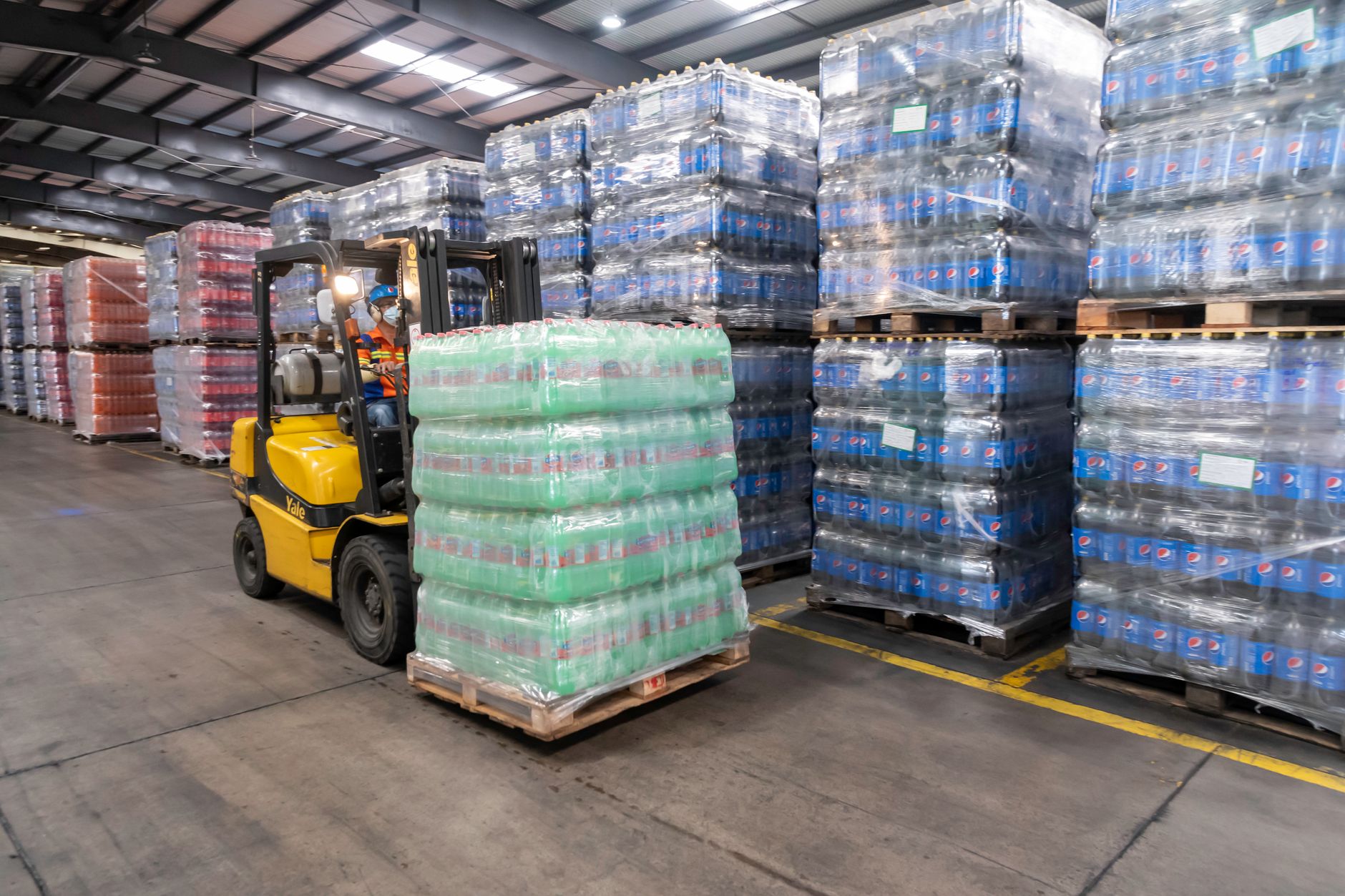
Summer beverage work is a timing problem disguised as a transport problem. Cases are heavy, replenishment windows compress, and the fastest-selling doors empty at the exact moments staff are also handling ice, produce, and chilled receiving. A pallet transport robot or autonomous mobile robot rental program helps only when route timing matches demand rhythms.
USDA's Economic Research Service reported on May 19, 2026 that food-at-home sales steadily increased from March through August during 2022 through 2025. The Census Bureau then reported on August 14, 2026 that U.S. retail and food services sales for July 2026 were $763.6 billion, up 5.0 percent from July 2025. Those are broad demand signals, but they support what grocery operators already feel on the floor. Summer keeps the store moving and raises the cost of slow replenishment.
So do not assign beverage transport to the leftover capacity of the robot fleet. Give it dedicated windows tied to door counts, end-cap checks, and cold room pull cycles. The right plan often looks like short, repeated missions between backroom staging and the sales floor, not long milk runs that try to serve every department equally.
What does a good summer robot playbook look like?
A workable playbook is specific. It names the hot zones, wet zones, cold-transition zones, and peak-replenishment windows. It defines when a grocery store cleaning robot can keep running, when it should slow, and when it should stop and escalate. It also tells supervisors what they will see first when summer conditions start pushing the system off nominal behavior.
Food safety and task timing belong in that same document. FDA retail guidance says cold foods should be stored and held at 41 degrees Fahrenheit or below, and hot foods at 135 degrees Fahrenheit or above. That matters for any robot supporting prepared foods, cold chain moves, or staging adjacent to chilled inventory. The robot workflow cannot create pretty route efficiency while quietly stretching the time product spends in the wrong place.
The playbook should also distinguish between floor care and transport. An industrial floor scrubbing robot may need more frequent route edits around wet entries, while a material handling robot rental fleet may need queue changes at receiving and beverage staging. Summer stress is not one problem. It is several problems arriving at the same time.
- Seasonal map update before peak heat. Recheck dock thresholds, cooler exits, vestibules, and any newly placed merchandisers.
- Summer charging plan. Avoid stacking the longest missions into the hottest part of the building day.
- Moisture escalation ladder. Slow mode, reroute, skip zone, and human assist should be predefined.
- Replenishment window design. Give beverages and ice fixed robot service intervals during hot periods.
- Daily exception review. Retries, localization faults, and traction-related stops should be tagged by zone so patterns surface fast.
Where does a full-service integrator matter most in summer?
Summer is where operators find out if they bought a robot or bought an operating capability. A full-service partner earns its keep when the floor condition changes, the route needs to be remapped, a spare unit is needed, or a site needs remote triage and on-site dispatch before missed work ripples into the next shift.
That is the practical case for Service Robot Co. As an OEM-neutral commercial robot integrator for U.S. businesses, the company can match the robot to the store's real summer operating pattern, then finance, deploy, integrate, train, and service the fleet through one vendor. For operators comparing robot leasing for business, commercial robot rental, or a lease rental or sale structure, that lifecycle support matters more in August than it does in a demo.
In grocery, the right answer is often not a single machine choice. It may be a grocery store cleaning robot for overnight floor care plus a separate AMR rental or month to month robot lease approach for repetitive transport during seasonal peaks. The key is one partner, one number, and a service model with maintenance included when summer conditions expose weak assumptions.
How should operators judge readiness before summer problems show up?
Judge the program by variance, not by average uptime. A robot that looks fine over a month can still be a poor summer fit if every rescue clusters around dock humidity, vestibule moisture, or beverage surges. Look at where interventions happen, how long they take, and whether they repeat after the same weather pattern or merchandising event.
The cleanest readiness test is a seasonal scenario review. Ask what happens after a thunderstorm at 4 p.m., during a dock unload of chilled beverages, or when a cooler threshold sweats just before the overnight cleaning cycle starts. If the answer depends on a supervisor improvising in real time, the robot program is not summer-ready yet.
Well-run fleets turn those edge cases into standard work. That is what keeps autonomy useful in the part of the year when grocery conditions become least forgiving.
Frequently asked questions
Sources
- U.S. Census Bureau retail sales report, August 14 2026
- USDA ERS seasonal food sales analysis, May 19 2026
- CDC NIOSH workplace heat recommendations, July 16 2026
- OSHA slips, trips, and falls guidance
- BLS nonfatal injuries and illnesses by industry, 2024
- BLS Injuries, Illnesses, and Fatalities latest numbers
- NOAA NCEI June 2026 U.S. temperature and precipitation analysis
- NOAA Climate Prediction Center seasonal outlook, July 16 2026