Key takeaways
- A YMCA robot rollout works best in phases, starting with predictable corridor work and adding harder zones only after staff trust and route data are in place.
- Locker corridors, lobby connectors, and other repeatable paths usually go first because they have steady traffic patterns and clear cleaning standards.
- Multipurpose rooms and indoor tracks need event-aware scheduling, while child-watch zones require the strictest hygiene, supervision, and exclusion rules.
- The strongest programs pair robot deployment and integration with training, maintenance included, and one partner who can finance, service, and support the fleet.
What does a robot deployment actually look like in a YMCA?
In a YMCA facility, a robot deployment usually starts small and boring on purpose. The first wave targets the stretches that repeat every day and punish staffing gaps the hardest: locker corridors, lobby connectors, fitness-floor edges, and other long runs that benefit from overnight floor care. Once those routes are stable, the program expands into multipurpose rooms, walking tracks, and only then into child-watch-adjacent areas with tighter operating rules.
That phased approach fits the building reality. A Y is not just a gym. YMCA says its network spans 2,560 Ys, serves 13 million people, and reaches more than 10,000 communities nationwide. Many of those sites combine exercise, youth programming, afterschool activity, and event turnover in one address, which means a good commercial cleaning robot rental plan has to respect school-like supervision, venue-like schedule swings, and gym-like wear on the floor.
Why is a YMCA harder than a standard fitness center?
A stand-alone gym mostly deals with workout peaks and locker traffic. A YMCA often carries a wider operating mix: child care, camps, classes, leagues, senior fitness, and community events. According to YMCA, 6.4 million children participate in Y programs each year, including 758 early learning centers, and the organization supports 500,000 children at an estimated 10,000 out-of-school-time sites each year. That is why a gym cleaning robot rental plan for a Y has to be built around program calendars, not just square footage.
The public footprint is also huge. The National Recreation and Park Association says an estimated 227 million adults or a household member visited a local park or recreation facility in 2025. In practice, that means rec buildings live with constant transitions: stroller traffic at 9 a.m., pickleball at noon, afterschool movement at 3 p.m., and rentals or community meetings at night. Large facility coverage matters, but timing matters more.
- Gym challenge: sweat, water, rubber flooring, and early-morning member traffic.
- School challenge: child-watch rules, shared spaces, and health-sensitive cleaning routines.
- Event venue challenge: rooms that change layout fast and need a predictable reset before the next booking.
Phase 1 starts with locker corridors and connector hallways
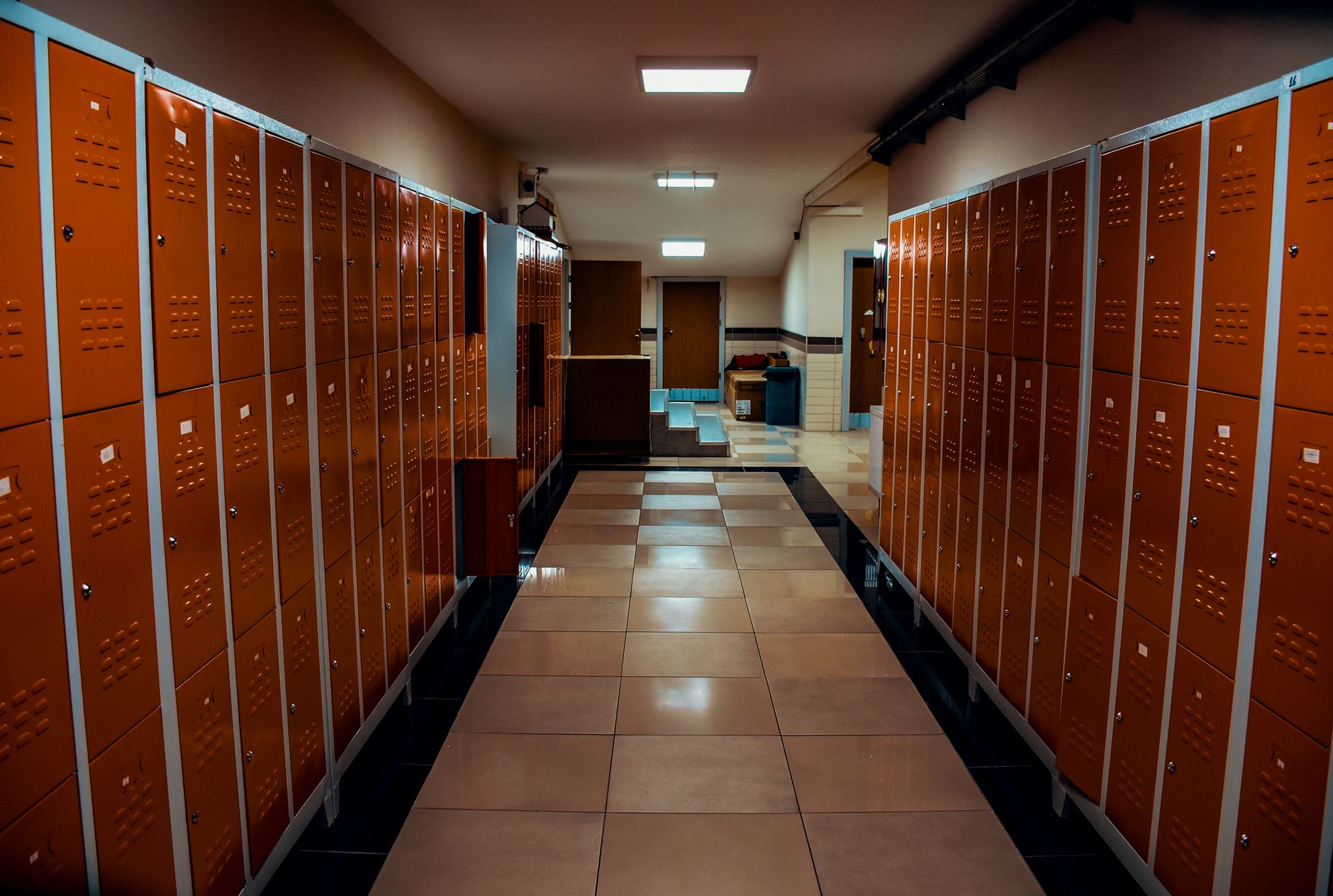
The first phase is about route discipline. Locker corridors, main hallways, and links between the lobby, wellness area, studios, and restrooms are ideal because they are linear, repeated, and easy to inspect. This is where a fitness center cleaning robot earns trust quickly. Staff can compare a manual route against an autonomous floor cleaning robot route and judge coverage, finish quality, recovery from wet spots, and how the machine behaves near benches, water fountains, and door swings.
This phase also handles one of the Y's dirtiest mixes: moisture, tracked-in debris, and frequent touchpoints. CDC says community facilities should clean high-touch surfaces regularly and clean more often in high-traffic areas. The robot handles the repetitive floor pass. Staff stay focused on the work a machine should not own, such as touchpoint disinfection, spills that need immediate attention, and locker-room detail work.
Operationally, the goal is not to replace the whole custodial plan on day one. It is to carve out the repetitive transport-and-scrub portion of the shift so the team is not spending its best labor on long, low-judgment miles. That is why phased deployment no shutdown works so well in nonprofit recreation buildings. The building keeps running while the route library gets sharper each night.
What changes in multipurpose rooms?
Multipurpose rooms look simple on a floor plan and messy in real life. A room can host youth art at 10 a.m., chair yoga at 1 p.m., and a birthday rental at 6 p.m. Tables move. Storage carts drift. Tape lines appear on the floor. A commercial robot demo that succeeds in an empty room can fail badly if nobody plans for layout drift and event reset timing.
That is why phase two usually pairs robots with booking data and room-turn standards. Instead of giving the machine one generic route, operators build room-specific missions for likely furniture states. One route after open gym. Another after banquet-style setup. Another after kids' programming with higher odds of craft debris or snack residue. The point is not fancy software for its own sake. It is reliable event turnaround cleaning in spaces that never stay still.
This is also where robot deployment and integration becomes more than a hardware question. The route schedule has to line up with who closes the room, where charging sits, who inspects the result, and how exceptions get logged. A service robot rental program works in rec centers when the robot is folded into the operating rhythm, not parked beside it.
Indoor walking tracks need perimeter logic, not guesswork

Walking tracks look perfect for automation because they are loops. They are also deceptively tricky. Traffic is directional at some sites, mixed-speed at others, and often heavily used by older adults in the first and last hours of the day. The route has to respect sightlines, edge clearances, entry ramps, and the moments when members cut across to reach stairs or courts.
Here the deployment playbook is usually a split shift. The robot does its full perimeter pass after close, then a lighter touch-up in a low-occupancy window if the site wants daytime freshness. The benefit is consistency. A night shift autonomous scrubber or robot floor cleaner rental can cover the same laps, edges, and transitions every time instead of leaving track care to whoever has enough time at the end of the shift.
Track zones also teach an important lesson about robot that fits your floor decisions. A YMCA often mixes rubber, sealed concrete, LVT, carpet transitions, and threshold plates in one route. That is one reason Service Robot Co. stays OEM-neutral. A vendor neutral robot integrator can match the machine to the path and the floor instead of forcing the building to adapt to one catalog.
Why are child-watch zones usually the last phase?
Because the risk tolerance is lower and the cleaning rules are tighter. Many Ys offer child watch while caregivers use the fitness facility, according to YMCA, and those rooms sit closer to child care than to general fitness. CDC says early care and education settings should clean surfaces regularly, sanitize items children use such as toys and play surfaces, and disinfect certain areas like bathrooms and diaper-changing tables. That means the robot's role has to be narrow and clearly bounded.
In most facilities, the robot does not run while children are present in the child-watch room. Instead, it serves adjacent corridors, entrances, or empty rooms during approved windows, while staff handle toy sanitation, soft-surface care, and anything touched by mouths or body fluids. This is not a limitation. It is the correct division of labor.
Safety context matters here too. The U.S. Consumer Product Safety Commission says more than 200,000 children go to U.S. hospital emergency rooms each year with playground-equipment injuries, with most injuries tied to falls. Even when a child-watch room is indoors, that statistic is a useful reminder that youth spaces deserve conservative operating rules, simple exclusion zones, and zero ambiguity about when a machine is allowed to move.
- Run only in approved empty-room windows or in adjacent corridors, not during active child-watch sessions.
- Keep soft play, toys, diapering areas, and hand-cleaning routines with staff, not the robot.
- Use visible exclusion rules, staff signoff, and post-clean inspection before the room reopens.
What has to be ready before go-live week?
The checklist is less glamorous than the machine, and more important. The site needs route maps, charging locations, chemical and pad standards, escort rules for first runs, and a clear answer to who owns recovery when a chair gets left out or a class runs late. Go live support matters because even a strong autonomous floor scrubber rental program can stumble if the building has no exception path.
Staff training should stay practical. Front desk and program leaders need to know what the robot is doing, where it should be, and what to do when the route cannot run. Custodial staff need the deeper workflow: inspection, refill, recovery, and escalation. This is where one partner one number beats a stack of disconnected vendors.
For Service Robot Co., this is the core job. We act as a full-service commercial robot integrator for U.S. facilities, which means free site assessment, site assessment mapping, finance options like robot leasing for business or monthly payment programs, deployment, training, and robot maintenance service plan support through a nationwide engineer network. For a nonprofit operator, that single accountability line is often the difference between a pilot that stalls and a robot as a service program that stays alive after month three.
- Map first routes and fallback routes before the unit arrives.
- Choose charging that does not block egress, carts, or after-hours lockup routines.
- Set inspection standards by zone so staff judge results the same way every shift.
- Decide in advance how emergency robot replacement, remote triage, and on-site dispatch will work.
What does a mature YMCA automation program look like after 90 days?
By the three-month mark, the building should have a stable coverage map and fewer nightly surprises. Locker corridors are routine. Walking-track care is predictable. Multipurpose rooms are tied to closing workflows instead of handled ad hoc. Child-watch-adjacent cleaning is running only inside approved windows with clear staff ownership of the higher-touch sanitation tasks.
That is the practical end state. Not a flashy robot parked in the lobby, but a quieter operation. Fewer skipped miles. Better overnight floor care. More time for staff to handle detail cleaning, member-facing issues, and program support. For Ys and community rec facilities, that is what a good service robot rental or commercial cleaning robot rental program is supposed to do.
Frequently asked questions
Sources
- YMCA Our U.S. Reach
- YMCA Child Care Programs and Services
- NRPA Engagement With Parks Report
- CDC When and How to Clean and Disinfect a Facility
- CDC How To Clean and Disinfect Early Care and Education Settings
- CDC Protecting Against Infections in Early Care and Education Programs
- CPSC Public Playground Safety Checklist