Key takeaways
- HCA Florida JFK Hospital in Atlantis, Florida put two indoor delivery robots into service on September 30, 2026.
- The units move lab specimens, pharmacy orders, medications, telemetry gear, and supplies, including wards without pneumatic tubes.
- Press materials describe elevator calls, badge-controlled doors, and coordination with existing life-safety systems without new tracks.
- Trade coverage of similar hospital rollouts often cites roughly eight to twelve weeks for integration, mapping, and staff training before go-live.
- US buyers should treat indoor hospital delivery as a facilities, IT, and clinical workflow project, not a single hardware purchase.
What changed at HCA Florida JFK on September 30, 2026?
On September 30, 2026, HCA Florida JFK Hospital in Atlantis, Florida began operating two autonomous indoor delivery robots for routine, time-sensitive transport inside the building, according to a hospital-system announcement carried on PR Newswire.
The stated workload includes lab specimens, pharmacy orders, medications, telemetry and monitoring equipment, and other clinical supplies. Coverage explicitly includes destinations that pneumatic tube networks do not reach, which matters in older wings and outpatient pods where retrofitting tubes is costly.
If you manage a US acute-care site, the headline is not novelty. It is proof that a community hospital scale facility can add cart-class automation without ripping up corridors for guided tracks.
Why tube-free zones push hospitals toward mobile couriers
Pneumatic tubes still move a high share of lab and pharmacy traffic on many campuses, but every nurse station and imaging suite is not on the map. When staff walk specimens or IV additives because the tube stop is three floors away, minutes stack into labor hours and delay-sensitive workflows.
Mobile indoor couriers close that gap when compartments are secured, chain-of-custody is logged, and routes are repeatable. The JFK deployment messaging emphasizes secure compartments and authorized retrieval at the destination, which mirrors how materials management already thinks about locked carts.
Community hospitals comparing options should list every recurring run that still rides elevators with a human escort. That list becomes your pilot scope before anyone signs a capital lease.

What elevator and door integration actually requires
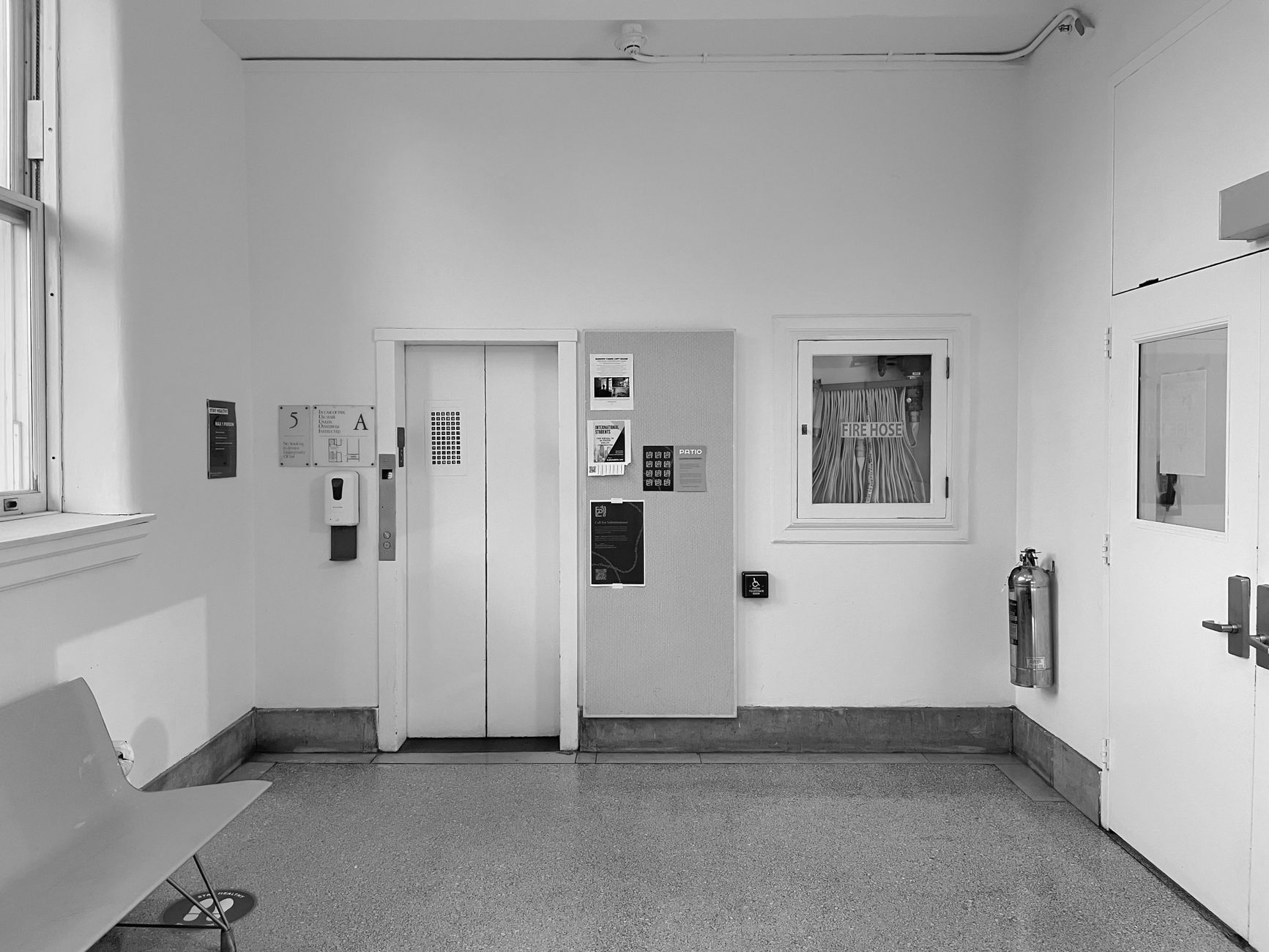
Hospital towers were not designed for robots. A workable deployment must call elevators, hold cars safely, and release them without trapping passengers. Press details for the JFK project describe robots moving between floors through integrated elevators and passing authorized secure doorways.
Badge-controlled doors are another choke point. The robot needs a defined credentialing path that security accepts, not a propped-open workaround that fails a night audit.
Facilities and IT should joint-own a sequence diagram: who owns the elevator interface, who tests fire-service mode, and what happens when a car is on inspection. Skipping that meeting is how pilots die in commissioning.
- Document every door type on the pilot route: automatic sliders, man-traps, and fire-rated pairs behave differently.
- Run elevator tests with peak visitor traffic, not only at 2 a.m.
- Define a manual override when infection control closes a unit wing on short notice.
How life-safety systems constrain robot routes
Smoke compartments, fire doors, and alarm panels do not pause for a delivery schedule. Announcement materials for the JFK deployment state that the robots operate alongside existing life-safety systems without major construction or physical tracks.
That wording implies coordinated signals: when an alarm demands door closure, the fleet must stop, reroute, or shelter in a approved holding zone. Your environment of care committee should see those rules in writing before go-live.
The same coordination extends to infection-control holds. A sealed unit may be off limits to shared carts even when the corridor looks open on a map.
Which tasks fit two robots on a busy med-surg floor
Two units are a staffing multiplier, not a replacement ward. They earn their keep on predictable loops: core lab to ED, pharmacy to med-surg, central supply to procedural areas, and equipment swaps for telemetry bays.
Pharmacy and lab leaders should set cutoffs for what still requires a licensed courier versus what can ride in a locked compartment with barcode verification. Controlled substances usually stay off robot routes in early phases even when the hardware could physically carry them.
Measure round-trip time and handoff failures for four weeks before you add routes. Hospitals that skip the baseline keep arguing about anecdotes.
What a realistic deployment timeline looks like
Trade reporting on hospital indoor delivery programs often cites roughly eight to twelve weeks for integration hardware work, facility mapping, and staff training, with about one to two weeks of onsite commissioning, according to coverage of the JFK announcement on Unite.AI summarizing the vendor's stated timeline.
Your calendar should add hospital committee reviews, cybersecurity questionnaires, and vendor-neutral acceptance tests. Eight weeks is possible on a friendly wing with modern elevators. Twelve weeks is more honest when badge systems and fire panels need formal sign-off.
Budget clinical educator time for nurses and lab techs, not only facilities. A robot that staff distrust becomes expensive furniture.
Financing and service when you want one partner
Hospital delivery robot rental and month-to-month service robot rental programs appeal to CFOs who want predictable operating expense instead of a single capital spike. The comparison is not only lease versus buy. It is who dispatches engineers when a door interface fails on a Sunday.
Service Robot Co. acts as a vendor-neutral integrator: we match indoor AMR hardware to your floor plan, finance or lease the fleet, integrate elevators and access control with your technology partners, train staff, and maintain units through a nationwide US engineer network. One vendor for deployment, remote triage, and on-site dispatch.
That model fits community hospitals watching HCA-scale announcements and asking how to pilot one tower without betting the entire IDN on a single OEM software stack.
Questions US safety and quality leaders should ask
Ask for logged chain-of-custody on every compartment open event. Ask how maps version when construction closes a hallway for two weeks. Ask what cyber controls protect the fleet VLAN.
Compare robot routes to existing manual run statistics. If the robot saves six minutes but adds a two-minute wait at a busy elevator bank, net benefit may be zero until you adjust nurse station timing.
Finally, align with patient experience. Visitors notice a slow robot in a main corridor. Night routes through back halls often win approval faster than lobby exposure during visiting hours.
Frequently asked questions
Sources
Service Robot Co. is not affiliated with, sponsored by, or endorsed by the companies mentioned in this article.