Key takeaways
- A cleaning robot fits the bare hard-floor perimeter around the mats, while mat tops and undersides stay with hand work and approved disinfectant.
- Mat edges are height changes, so expect stops or reroutes there and test that behavior before a full week of runs.
- Robot passes belong in the gap after the last session and before the next group arrives, never during active practice.
- Surface cleaning ranks behind skin and gear hygiene in athletic guidance, so floor work supports those habits rather than replacing them.
- A written log of products, areas, robot stops and spills is what lets an athletic director or health officer review the routine.
Where does a cleaning robot fit in a wrestling room?
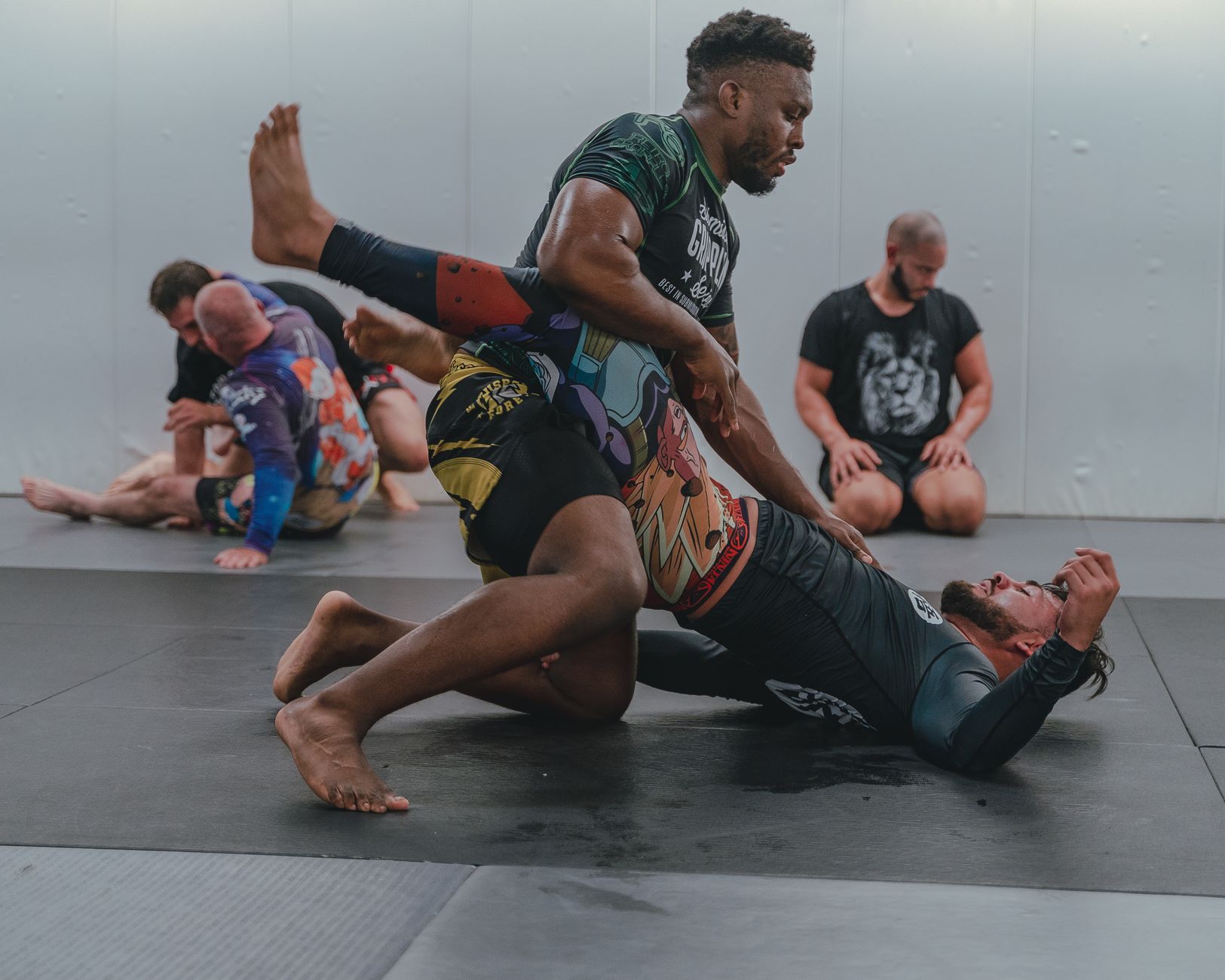
A cleaning robot fits the hard-floor perimeter of a wrestling room: the bare floor between the mat edge and the walls, plus the walkways that lead to lockers, doors and water. It does not take over the mats. School and athletic guidance treats mat cleaning as a hand task built on dry sweeping or vacuuming, then an approved disinfectant.
Treat the robot as one part of a sanitation routine, not the routine itself. Its job is to keep grit and debris off the floor that wrestlers walk on before and after they step onto the mat.
Which floor areas suit a robot, and which stay manual?
Start with the bare perimeter. A continuous hard surface with few thresholds gives a robot its cleanest run. The areas below still need people.
- Bare perimeter floor between mat edge and wall: a candidate for robot runs.
- Doorway thresholds and floor transitions: map them and test each one before the first run.
- Mat tops, seams and mat undersides: hand work with an approved disinfectant on a set schedule.
- Blood or other fluid on any surface: hand spot-cleaning first, then disinfectant, and never a robot pass over it.
How do mat edges and obstacles affect robot runs?
Cliff sensors look for a change in floor height and stop the robot before a drop, according to a patent describing that design. A mat edge is a raised step, so it can register as a change the robot must respond to. Expect stops, slowdowns or reroutes at every mat edge.
Another patent notes that a stair leading down is a particularly difficult cliff for these sensors. A bumper design in a different patent pairs obstacle sensing with cliff sensors, and a bumper impact can also trigger the cliff sensors, so a robot that touches a mat corner may stop for a reason that looks like a drop. These patents describe general robot-cleaner sensing, not commercial gym specifications, so verify the behavior on your own floor.
A third patent argues that a single sensor with a fixed detection angle leaves blind spots, which is why wider coverage calls for several or rotating sensors. Ask a vendor which sensing setup its commercial units use, and get the answer in writing.
When should cleaning happen between sessions?
Guidance sets the cadence. Montgomery County Public Schools says mats should be cleaned with an approved disinfectant before or after each day of use, with the underside of mats and the room floor cleaned on a periodic schedule. OSAA's MRSA guidance calls for daily cleaning before and after use.
A robot run fits the window after the last session and before the next group arrives, or an overnight gap when no one walks the floor. It should never run while wrestlers stand on the perimeter. Staff doing hand work should walk backward so they do not step on freshly cleaned mats, and street shoes stay off the mat.
Several of these school and athletic guidance files date from 2013 to 2018. Confirm the current versions with your state athletic association and local health office before you write a routine around them.
What should a sanitation check record?
Delaware guidance recommends an EPA-registered surface cleaner shown to kill MRSA. Check the label for that claim and record the product name and registration on each cleaning entry. Spot-cleaning blood promptly is treated as a central part of the regimen in the OSAA guidance we reviewed.
A useful log captures the following for every cycle.
- Date, time and name of the person who cleaned the mats
- Product name and label claim used on mats and on the surrounding floor
- Areas covered, including mat undersides on the periodic schedule
- Robot run ID, edge stops and any fault codes
- Spills handled by hand and any spot that needed a second pass
Why does skin and gear hygiene matter more than the floor?
Several athletic sources place surface cleaning behind skin protection. The momsteam guidance stresses antiseptic showering, covering wounds, and cleaning knee pads and braces daily. No floor machine replaces those habits, and a clean perimeter does not offset a wrestler who arrives with an uncovered cut.
Kentucky public health guidance says school closure is generally unnecessary for a single MRSA case. Its disinfection advice focuses on surfaces most likely to contact uncovered or poorly covered infections. That directs effort toward the places skin meets the room, not only the floor.
How does a leased robot program handle a room like this?
Service Robot Co. (servicerobotco.com) is an OEM-neutral integrator. We choose robots across manufacturers, lease them through financing on a 3-year lease, deploy and train on site, and service every unit under RoboCare, backed by regional service engineers in each state we service.
Before any lease quote, a site assessment maps the perimeter and tests behavior at the mat edges. The lease quote is one fixed figure set after that assessment, so a school or gym can see the scope before committing. For school and gym operators, commercial cleaning robot leasing usually starts with one room, which keeps the mat-edge test small and the sanitation log easy to review.
Frequently asked questions
Want a robot working for you?
Tell us the job and the site. We will recommend the robot, quote the lease, and keep it serviced.
Sources
- Montgomery County Public Schools wrestling mat cleaning guidelines
- OSAA MRSA guidance for schools
- Delaware DIAA wrestling newsletter
- Kentucky public health MRSA guidelines
- MomsTeam: contagious skin infections in wrestling prevention
- Google Patents US11771290
- Google Patents US11169533
- Google Patents US11465293