
The short answer
In an autonomous forklift vs forklift operator comparison at an e-commerce fulfillment center, the robot makes sense for repeated pallet moves between staging and racking that run on the same routes all shift. A human operator still fits better when the day is irregular, when loads need judgment at the dock, or when aisles are too cluttered for reliable routes. For most buildings the answer is a robot on the repeated lane with people still on the floor, not a robot in place of the team.
Key takeaways
- The robot earns its place on repeated, predictable pallet moves between staging and racking.
- A person still handles exceptions, damaged loads and dock work that needs judgment.
- Forklifts are a serious injury source, so part of the case for automation rests on safety.
- Turnover and shift coverage are the numbers to measure on your own floor before deciding.
- Start with one lane and one leased unit, then widen only after the measured results hold.
Autonomous forklift vs forklift operator: which fits an e-commerce fulfillment center?
The autonomous forklift vs forklift operator question at an e-commerce fulfillment center usually turns on one thing: whether the pallet work repeats on the same routes or changes every hour. Where loads move again and again between staging and racking, a robot can run that lane through the night and through peak weeks without a break. Where the day is full of one-off jobs, that advantage shrinks fast.
The robot makes sense when three things hold. The routes are fixed and the aisles are clear enough to map. The volume is steady enough to fill a lane or two. The site can also keep at least one person on the floor for exceptions. It is a weak fit when the building changes constantly, when loads need a person to read labels and check damage at the dock, or when trucks arrive too irregularly to schedule a lane.
A human operator still wins on flexibility. People handle mixed loads, work around a blocked aisle, and move to another task when the dock backs up. For most buildings the honest answer is a robot on the repeated lane, with people covering everything else. The team gets reassigned around the robot, not removed from it.
What does a forklift operator actually do in a shift?
An operator at a fulfillment center rarely runs one route all day. The shift usually starts with a pre-use check of the truck, then moves through unloading inbound trailers, putting pallets into staging, pulling reserve stock to replenish pick faces, and loading outbound trailers. Many operators switch between these jobs several times a shift as the dock queue and the wave plan change.
Peak season changes the rhythm more than the task list. Inbound volume rises, pallets pile up in staging, and the operator spends more time threading between pedestrians, other trucks and stacked loads. Speed rules and lane discipline matter more when aisles are crowded.
Operators also report damaged pallets, fix small faults, and keep the truck charged or fueled. In the US, employers must train and evaluate each operator before that person runs a powered truck, so the job carries certification and refresher duties along with the driving.
This list matters for a robot decision because it sets the scope. A robot that takes only the repeated lane leaves the rest of the operator's day in place, so the remaining work has to be planned in advance rather than assumed away.
Which pallet work can an autonomous forklift take over?
The strongest fit is the work the robot is built for: full pallets moved between staging and racking along fixed routes. An operator doing this on a set path makes the same moves, in the same order, many times a shift. A robot on that lane repeats the same moves without the drift that creeps in with fatigue or a rushed hand.
The work it cannot take is anything that needs judgment or a change of plan. That includes pulling from mixed-SKU pick faces where each pick differs, unloading and loading inside trailers with varied freight, handling damaged or oversized loads, and checking labels before a pallet moves. Yard moves, dock plates and ramps usually stay with people too.
The robot also depends on the floor. It needs a mapped lane, marked staging spots and racking that stays put. If the racking moves every week, the map needs upkeep, and a poor map turns into stops. The first lane should be the one with the most stable layout, not the busiest one.
- Repeated staging-to-racking moves
Autonomous Forklift
Runs a mapped lane through the shift without fatigue
Forklift Operator
Strong, and adjusts quickly when the lane changes
- Peak-week surge
Autonomous Forklift
Adds moves only on lanes already mapped and staged
Forklift Operator
Adds capacity through overtime and extra shifts within labor rules
- Damaged or unusual loads
Autonomous Forklift
Stops and waits for a person to clear the load
Forklift Operator
Reads damage and load condition and decides what moves
- Trailer loading and unloading
Autonomous Forklift
Limited, and tied to the dock and trailer setup
Forklift Operator
Works inside trailers with mixed freight
- Night coverage
Autonomous Forklift
Runs the mapped lane while a person covers exceptions on site
Forklift Operator
Needs a rostered shift and a schedule that covers every hour
- Absence and sick days
Autonomous Forklift
No call-outs, but a down unit needs a backup plan
Forklift Operator
Missed shifts covered by overtime or temporary staff
- Layout changes
Autonomous Forklift
Needs a remap and a test run after racking moves
Forklift Operator
Adapts to a new layout the same day
- Injury exposure in the lane
Autonomous Forklift
Removes the driver from the lane, though staff still work nearby
Forklift Operator
Carries the driver's own risk in the lane, managed through training and controls
How much labor and turnover is behind these jobs?
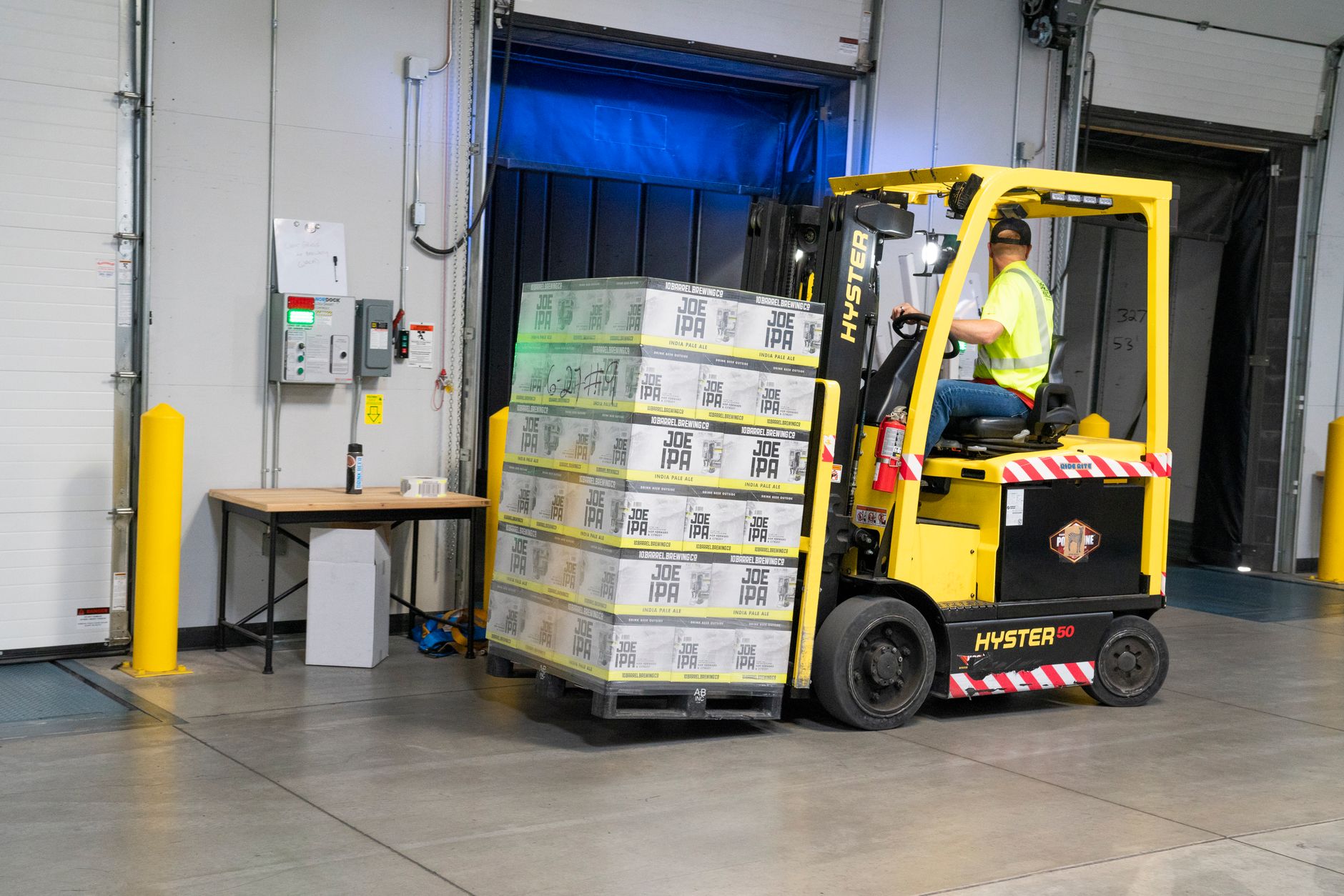
According to the Bureau of Labor Statistics, 778,920 people were employed as industrial truck and tractor operators in May 2023, per the OEWS release for that occupation. A secondary wage aggregator reports about 774,420 for May 2025, citing BLS, and projects about 1.1% growth from 2024 to 2034. That aggregator could not be checked against the official BLS pages, so treat its 2025 and growth figures as provisional.
Turnover is the labor number that matters most for a robot decision, and the published data is weaker than it should be. One secondary compilation of 2023 BLS data cites 49% warehouse worker turnover, but that figure was not confirmed on a BLS table. Use it as a reason to check your own exit and hire records, not as a benchmark.
Turnover also shapes training. Each new operator must be certified before running a truck, so high churn means constant training and slower coverage at peak. A robot on a lane reduces how many operators you must certify for that lane, though it does not remove the need for trained people on the floor.
What is missing matters too. No verified figure for overtime, night shift share or sick days for forklift operators or fulfillment staff turned up in published sources. For this decision, the hour picture has to come from your own timekeeping, measured against the lanes the robot would take.
What do forklift injury numbers mean for this decision?
According to the National Safety Council, forklifts were the source of 84 work-related deaths in 2024. The same NSC page lists 25,110 DART cases, including 15,460 days-away-from-work cases, for the period it reports. Those figures describe the whole forklift population, not fulfillment centers alone, so they show the stakes rather than a site rate.
The trend is contested. A material handling trade association piece from 2026 reports that forklift deaths rose in 2024 while overall US workplace fatalities fell. An equipment provider's review of OSHA data puts the 2024 count at 97, a figure not confirmed as an OSHA table and therefore in conflict with the NSC count. Quote one named source and state its method.
Warehouse rates point the same way. A warehouse safety vendor blog, citing BLS data, reports a warehousing and storage total recordable rate of 4.8 per 100 full-time workers in 2024, against 2.6 across all industries. A supply chain safety vendor page reports an injury rate of 4.4 per 100 full-time workers for transportation and warehousing in 2024. Both are vendor summaries, so check the BLS tables before quoting them.
For a fulfillment site, measure exposure on your own floor: near misses, pedestrian crossings in forklift lanes, and blocked aisles. Those logs show whether a mapped robot lane reduces exposure in your building, which is the number your safety committee will ask for.
How does a robot plus staff run a shift?
The team does not drop to zero. A robot covers the mapped lane, and one or more people cover what the robot cannot: dock work, damaged loads, blocked aisles, charging checks and the handoff between shifts. The lead operator usually becomes the robot's supervisor, with the same certification duties applied to the lane.
A typical shift on a site with one lane under robot control follows this sequence. The times are an example of order, not a benchmark.
The handoff between shifts is where most teams lose time. The outgoing lead logs lane status, blocked aisles, charging issues and pallets held for inspection. The incoming lead starts from that log, checks the lane map, and only then starts the first run. A short written log does more for reliability than a long meeting.
Staffing does not fall to zero at peak. The point of adding a robot to a peak week is to keep the lane moving while people spend their time on the work that needs them.
What can an autonomous forklift not do?
It cannot read a damaged pallet, decide that a load is unsafe to move, or improvise when a planned route is blocked by a pallet left in the aisle. It cannot take a trailer apart at the dock or work reliably on a floor with uneven slabs, standing water or constant pedestrian crossings. These gaps are why people stay on the floor.
It also cannot keep its lane running when it is down. A stopped robot stops its lane. The plan needs either a spare unit or an operator on standby for that lane, and the question of how fast a down unit is covered belongs in the written service terms.
Layout change is a real cost. Racking moves, new SKU zones and seasonal reslotting can all break a route. Each change needs a remap and a test run, so the robot works best where the building changes slowly.
Walk the lane during peak and during the quietest hour. Count the stops, the pedestrian crossings and the trucks that block the route. If a lane stops more often than it runs in either window, the robot is the wrong tool for that lane until the layout changes.
Peak season adds capacity only on mapped lanes. It does not add trailer doors at the dock, and it does not replace the extra people who handle the surge at receiving.
How do you start an autonomous forklift lease?
Start with a site assessment. We are a US commercial robot integrator, so we choose the robot for the floor, lease it through financing, deploy and integrate it, train your staff and service it nationwide. The fixed lease payment comes in a quote after a free site assessment, because it depends on lane count, floor preparation and the service terms.
Run one lane first. A pilot with one leased unit on one repeated staging-to-racking route gives you measured moves per shift, stops per shift, exceptions handled by staff and idle minutes before you widen the program. Set those measures before the first run, and track the same lane run by people during the same period so the comparison is fair.
Ask any integrator the same questions: the map plan, the downtime plan, who trains your operators to supervise, and what service is on site versus handled by remote triage. One partner, one number, and a written answer on how a down unit gets covered are the minimum test.

Frequently asked questions
Want an autonomous forklift at your e-commerce fulfillment center?
Tell us about your site. We will recommend the robot, quote the lease, and keep it serviced.
Sources
- Bureau of Labor Statistics, Occupational Employment and Wage Statistics, May 2023 (SOC 53-7051)
- Bureau of Labor Statistics, OEWS current release (SOC 53-7051)
- National Safety Council Injury Facts, forklift safety topic
- Material handling trade association journal, 2026 National Forklift Safety Day statistics
- Warehouse safety vendor blog citing BLS data
- Supply chain safety vendor page
- Secondary warehouse turnover compilation
- Secondary wage aggregator, industrial truck and tractor operators