
The short answer
For the autonomous mobile robot vs material handler in Baton Rouge decision, a robot makes sense when a site moves the same loads along the same fixed routes many times each shift on a floor predictable enough to map. It does not fit irregular work such as hand loading trucks, handling damaged or mixed loads, or making frequent judgment calls, where a material handler remains the better choice. For most sites the answer is a robot plus a leaner team rather than a robot alone, with the robot taking repeat moves and people covering exceptions, and the lease cost quoted only after a free site assessment.
Key takeaways
- A robot fits repeat moves on mapped routes, not hand loading, damaged loads or frequent judgment calls.
- A robot plus a leaner team is the realistic model. A robot alone is not.
- Hiring in transportation, warehousing and utilities ran below its long-term average, so each open shift is harder to cover.
- No verified hour figure for this job in Baton Rouge was found, so your own time records should set the baseline.
- The lease quote follows a free site assessment that maps routes, floor condition and traffic.
Autonomous mobile robot vs material handler in Baton Rouge: when does a robot make sense?
A robot makes sense when the work is repetitive and the route is known. Take a pallet or cart move that starts at a receiving door, ends at a staging lane, and repeats many times each shift along the same aisles. Moves like that can run from a map, with a person checking the system and clearing exceptions.
A material handler still makes more sense when each move is varied. Hand loading and unloading trucks, reaching into racks for irregular items, handling damaged or oversized loads and resolving mislabeled stock all need a person's hands and judgment. If most of a shift looks like that, a robot covers a small slice of the work and the bulk stays with people.
The local labor base makes this worth measuring. Use the government wage data on this page for the local wage for this job, then ask how many paid hours go to repeat moves versus other tasks. That split decides the fit more than any robot specification does.
What does a material handler actually do in a shift?
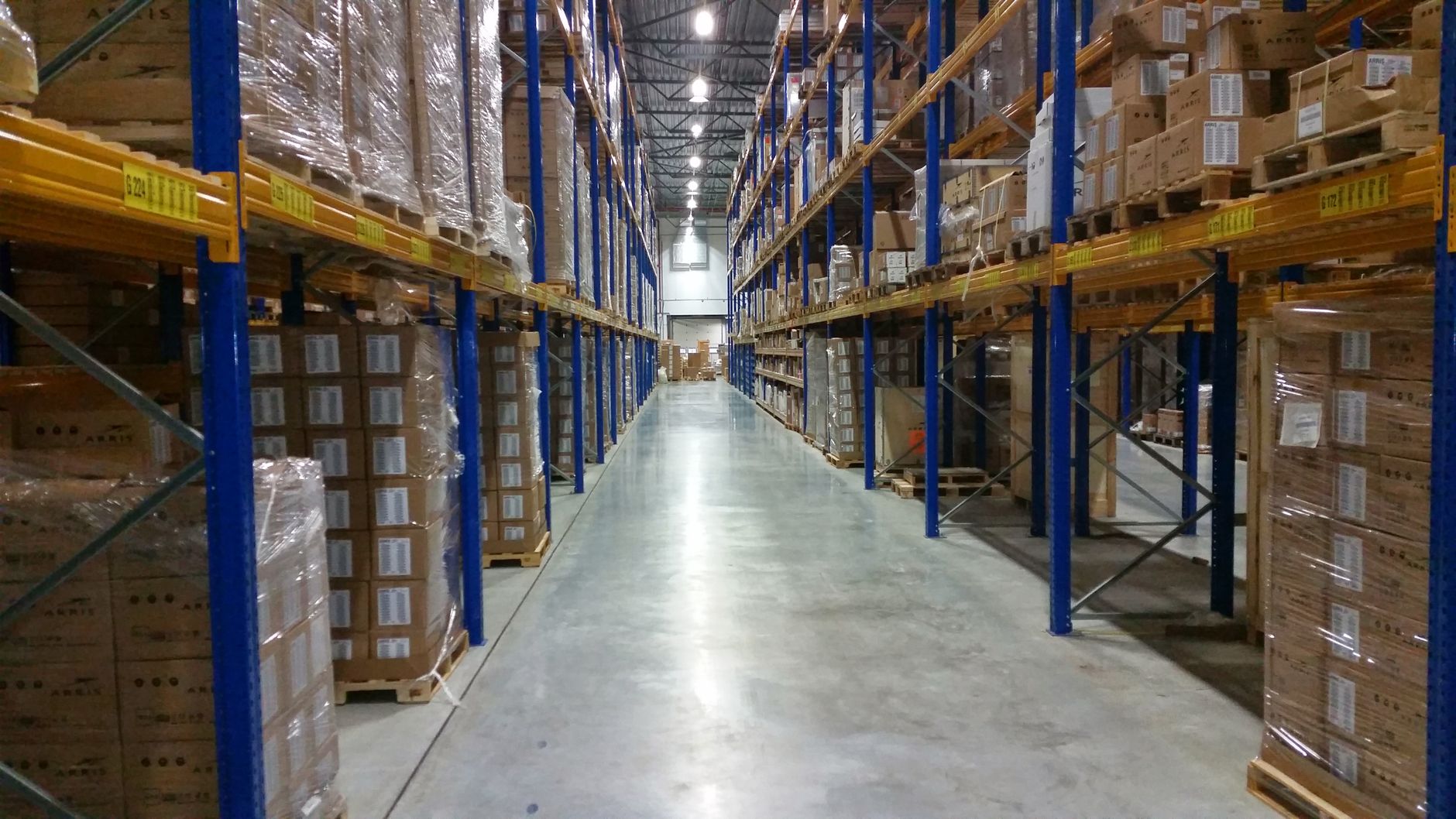
A material handler in a Baton Rouge warehouse or distribution room usually works across receiving, staging, replenishment and dispatch. Much of the day is walking, pushing and waiting for the next pickup, and the work gets interrupted by the dock, the office and the floor. The main tasks are listed below.
The sector that employs much of this work has been growing locally. According to FRED, which publishes BLS-based series, transportation, warehousing and utilities employment in the Baton Rouge metro was 17.2 thousand in December 2025, up from 17.1 thousand in November 2025. The 2024 annual average was 16.8 thousand, up from 15.9 thousand in 2023.
Work like this rarely shows up as one staffed line on a schedule. It is spread across receiving, dock and floor roles, so walking time hides inside shifts that look busy for other reasons. That is why the first step is a time study of the moves, not a guess about headcount.
- Unloading inbound freight
- Moving pallets with a hand pallet jack or walkie stacker
- Staging loads for outbound trucks
- Replenishing pick lines
- Taking carts or totes between areas
- Logging moves and counts
Median hourly wage, Laborers and Freight, Stock, and Material Movers, Hand
$3,997
Monthly cost of one full-time worker in Baton Rouge, LA, at the median wage plus payroll costs (an estimate, not a quote).
Which parts of the job can a robot take, and which can it not?
A robot takes the transport part of the job. It moves a known load from one point to another on a mapped route, returns to a charging point and repeats the cycle. Carts and tugs are a common match, as are pallet moves between receiving, staging and pick lines when the layout holds still.
It cannot load or unload a truck, lift an item from a rack, or decide what to do with a pallet that arrived damaged or with the wrong label. It cannot clear a blocked aisle, fix a jammed load or reroute through a space that has changed without a new map. Those tasks stay with people, and they often take the most time when a shift goes wrong.
List each task in a shift and mark who does it today. Anything with a fixed start, a fixed end and a load that fits the robot's deck can go to the robot. Anything with a judgment step, a lift or a hand transfer stays with a person.
- Repeat moves on fixed routes
Autonomous Mobile Robot
Runs the same mapped route many times per shift
Material Handler
Does it reliably, though walking the route takes a share of each shift
- Hand loading and unloading trucks
Autonomous Mobile Robot
Cannot do it
Material Handler
Does it, with hands and judgment
- Damaged or mixed loads
Autonomous Mobile Robot
Stops and reports, cannot decide
Material Handler
Assesses, sorts and decides
- Night and weekend coverage
Autonomous Mobile Robot
Runs mapped routes with a person on call
Material Handler
Needs a staffed shift, overtime or cover for sick days
- Layout changes
Autonomous Mobile Robot
Needs re-mapping and a site visit
Material Handler
Adapts the same day
- Blockages and exceptions
Autonomous Mobile Robot
Waits or reroutes only within the map
Material Handler
Clears the blockage and finds the cause
How do turnover, overtime and night shifts change the labor math?

The national hiring picture is slower than usual. According to a BLS hires rate tracker, the hires rate for transportation, warehousing and utilities was 2.50 percent in February 2026, against a long-term average of 3.60 percent. According to FRED, warehousing and storage employment was 1,842.0 thousand in November 2025 and 1,836.2 thousand in December 2025, seasonally adjusted.
A lower hiring rate means each open shift is harder to fill and tends to stay open longer, so the people who remain cover more moves, more overtime and more night work. A sick day adds to the same gap. This is where a robot earns its place, because it takes the repeat moves that otherwise get pushed to the end of a shift or skipped.
We did not find a verified turnover rate for material handlers or for warehousing alone, and a widely repeated warehouse turnover figure could not be traced to a primary source, so this page does not use one. We also did not find verified figures for overtime, night shift share or sick days in this job. Pull those from your payroll and time records. Multiply the hours you can free up by the local wage for this job, then compare that labor value with the lease quote after a site assessment.
How risky is material handling work, and does a robot change the injury picture?
Material moving carries real injury risk. According to BLS Occupational Injuries and Illnesses data for 2023 to 2024, transportation and material moving occupations had 468,830 days-away-from-work cases, about 26 percent of the total and the most of any occupation group. Those figures cover the national workforce, not Baton Rouge alone.
The fatality picture is also serious. According to Safety and Health magazine, reporting BLS data, the national fatal injury rate for this group was 12.5 per 100,000 full-time equivalent workers in 2024, down from 13.6 in 2023. The same reporting counts 1,391 deaths in 2024, the most of any occupational group.
A robot can cut the number of repeat lifts, pushes and walking trips a person makes on the moves it takes. It does not remove risk where forklifts and pedestrians share aisles, or where a person stands close to a moving load. Put a traffic and safety review into the site assessment, and set routes that keep robot paths away from staff crossing points where the layout allows.
Is autonomous mobile robot adoption common enough for a Baton Rouge site to try?
Adoption is still early. In the 2025 Industry Outlook survey of 110 qualified respondents, published by Supply Chain 247, about 10 percent of companies said they use AGVs or AMRs, and 30 percent said they will evaluate them within one to two years.
Broader robot demand is rising. According to A3, the robotics trade association, North American robot orders rose 6.6 percent in 2025, and the fourth quarter alone recorded 10,325 robots ordered. A3 does not break out AMR-only orders in its public results, so these figures cover industrial robots generally.
An early market means fewer local peers to visit and fewer standard references. Ask any integrator for references in similar layouts and for the service record of units already in the field. Starting with one route lets you test the fit before you commit the whole floor.
How does a team work alongside a robot?
The working model is a robot plus fewer staff, not a robot in place of everyone. The robot takes the repeat transport moves across its mapped routes. Staff move from walking those routes to receiving checks, load building, exception handling and clearing blocks, which are the tasks that matter most when a shift goes wrong.
Plan the team around the gaps. Night and weekend shifts often show the clearest value, because a mapped route can keep running while one person is reachable for exceptions. On day shifts the robot can keep staging lanes stocked so people spend their time loading rather than pushing carts.
Expect a learning period. Staff need to know how the robot pauses for a person, how to clear a stop and when to call for help. Training is part of deployment, and the first weeks show which routes need adjusting. Plan for route changes in the first months rather than treating the initial map as final.
What can an autonomous mobile robot not do?
Be direct about the limits. A robot cannot load a truck, handle a damaged pallet or decide that a shipment belongs elsewhere. It cannot climb stairs or reach a high rack. Payload and route limits are set during the site assessment, and loads beyond them stay with a material handler.
Layout changes and floor conditions cause most of the trouble. A blocked aisle, a new rack line, an uneven slab or a wet patch can stop a route until someone clears it or the map is updated. Charging plans matter too, because downtime at the charger reduces coverage on every shift. A site with frequent layout changes needs more mapping and more staff time.
The robot will not replace the local knowledge of your staff. The person who knows which pallet is always late, or which door sticks, does work the robot cannot see. Keep that person in the plan rather than counting the robot as a headcount cut on day one.
How do you get started with a robot lease in Baton Rouge?
Start with a free site assessment. We map the routes, measure aisles and floor condition, record the moves that repeat, and review traffic where forklifts and people share space. The result is a recommendation for the robot that fits the site and a lease quote for the route scope you agree on.
The lease runs through financing, and the quote follows the assessment. Our team picks the robot for the site, deploys and integrates it, trains your staff and services it nationwide. Dispatch and remote triage are part of service, and a loaner unit can be arranged where the service plan includes one.
A sensible first step is one route on one shift, not a full fleet. Measure the hours the robot takes over against your own time records, and expand only if those numbers hold. We set the go live date with you and stay on site through the first weeks.
Frequently asked questions
Put a robot to work in Baton Rouge.
We walk your site, learn the job, and recommend the unit that fits. Then we quote the lease, deploy it, and keep it serviced.
Sources
- US Bureau of Labor Statistics, Occupational Employment and Wage Statistics (OEWS May 2024)
- FRED, transportation, warehousing and utilities employment, Baton Rouge metro
- FRED, warehousing and storage employment, BLS-based series
- BLS, Occupational Injuries and Illnesses, 2023 to 2024 data
- Safety and Health magazine, reporting BLS fatal injury data
- BLS hires rate tracker, transportation, warehousing and utilities
- 2025 Industry Outlook survey, published by Supply Chain 247
- A3, North American robot orders in 2025, via Robotics 247