
The short answer
For an autonomous mobile robot vs material handler in Kansas City decision, the robot makes sense when the moves are repetitive, follow fixed routes on a clear floor, and are hard to staff on overnight or weekend shifts. It does not fit when a material handler spends most of the shift picking, unloading, or moving loads that change every hour, because the robot needs predictable routes and open lanes. In either case the realistic outcome is a robot plus fewer staff, not zero staff, and the fit should be confirmed by a site assessment.
Key takeaways
- A robot fits fixed, repetitive moves on a predictable floor, while people keep picking, unloading and handling exceptions.
- Kansas City has a large transportation and warehousing employment base, and the local wage for this job is in the government wage data on this page.
- Warehousing recorded a 2024 total recordable injury and illness rate of 4.8 per 100 full-time workers, so removing repetitive hauling is worth evaluating.
- Turnover in transportation and warehousing runs slightly above the all-industry average, so every departure restarts training.
- No published hours per shift for these moves was found, so measure your own floor before deciding.
When does an autonomous mobile robot vs material handler in Kansas City favor the robot?
An autonomous mobile robot makes sense when the moves repeat every shift: tote runs from receiving to staging, cart pulls between a dock and a pick zone, and pallet moves along a fixed loop. The case is strongest where the route stays put, the lanes stay clear for most of the shift, and the operation struggles to fill overnight or weekend hours. It also suits a site that wants to cut repetitive hauling without reorganizing the whole building.
It does not make sense when the work is mostly exception handling. If a material handler spends most of the shift picking from shelves, unloading mixed trailers, or moving loads that change size and weight, the robot will wait on people to clear its path. Facilities with unlabeled floors, shared travel lanes that never clear, or constant layout changes need floor work before any robot can run reliably.
For most operations, the autonomous mobile robot vs material handler in Kansas City choice comes down to one question: how predictable are the moves? Answer that with data from your own site before you look at any lease quote.
What does a material handler actually do in a shift here?
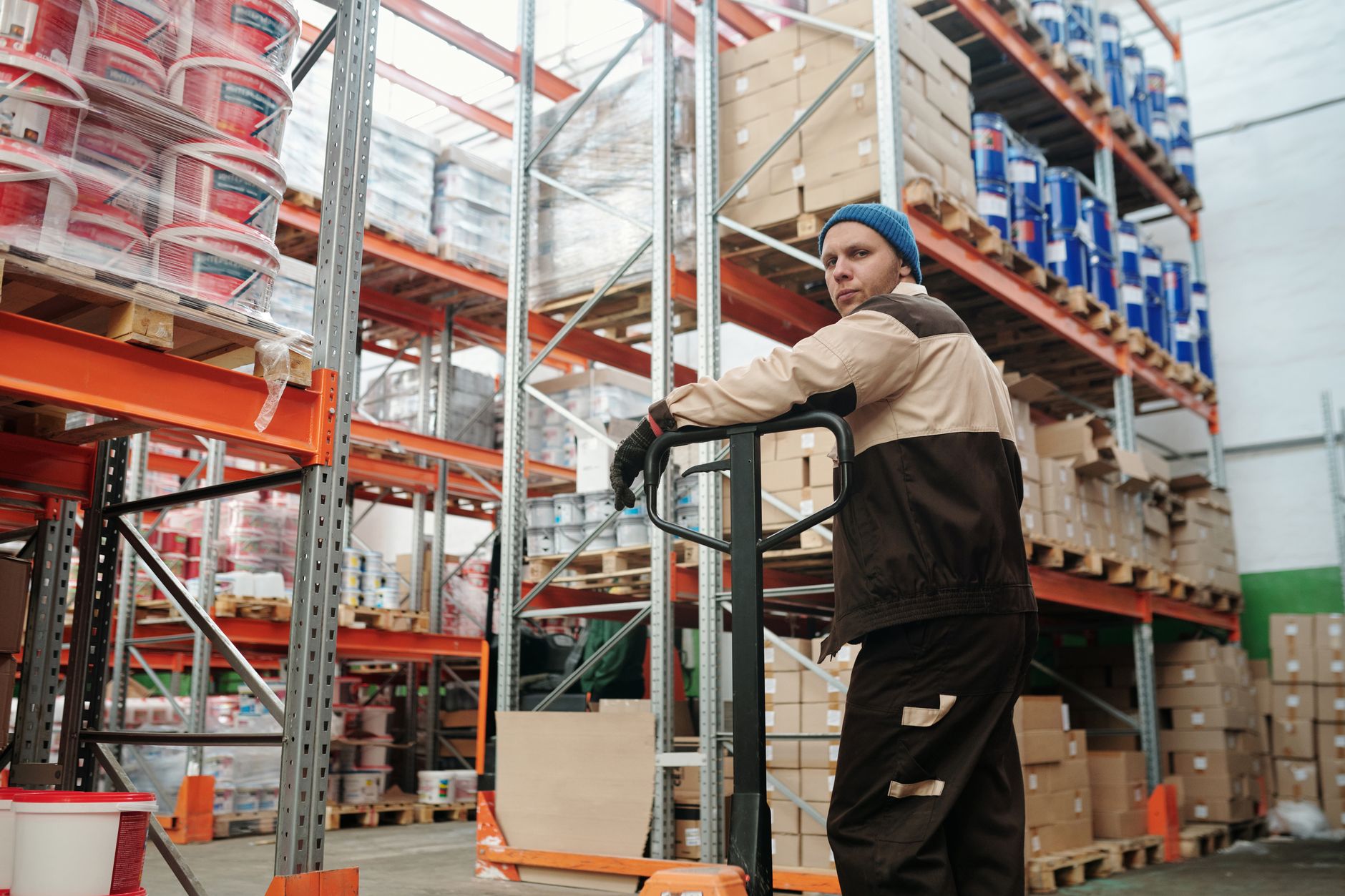
A material handler in a Kansas City warehouse or distribution site moves product between receiving, storage, staging and shipping. The work includes pulling totes or carts to a pick area, staging pallets at dock doors, replenishing forward locations, breaking down inbound loads, and building outbound stacks. The hours are split among walking, waiting for the next pick or trailer, and the moves themselves, and that split is what decides the case.
We did not find a published figure for hours per shift spent on these moves in this sector, and no floor area per shift figure either. Those numbers decide the case, and they come from your own site, not from a national average. A time study over several typical shifts, logging each move by route, load type and waiting time, gives you a baseline you can defend to the people who sign off.
Record who covers overtime and sick day gaps as well. Those are the shifts where a robot on a fixed schedule can do the most to keep routes running.
Median hourly wage, Laborers and Freight, Stock, and Material Movers, Hand
$4,542
Monthly cost of one full-time worker in Kansas City, MO, at the median wage plus payroll costs (an estimate, not a quote).
Which parts of the work can an autonomous mobile robot take, and which can it not?
The robot takes the repeat moves that follow a fixed path. It needs mapped routes, a clear travel lane, and stations that stay in the same place. Where the path is stable, one robot can cover runs that would otherwise tie up a person for long stretches of the shift.
The robot cannot unload trailers, pick from shelves, judge whether a load is damaged, or clear a blocked aisle. Those tasks need hands and judgment. Plan for people to handle exceptions, reload misplaced loads, and fix the floor problems the robot reports.
- Tote and cart moves between known stations
- Pallet loops between a dock and a staging area on a clear lane
- Scheduled repeat runs, including late and early shifts
- Long overnight runs that would otherwise go unfilled
- Repeat fixed-route moves
Autonomous Mobile Robot
Runs the same route each cycle while the lane stays clear
Material Handler
Covers the route, but needs breaks and a shift to be filled
- Night and weekend coverage
Autonomous Mobile Robot
Runs scheduled moves on a timetable, with staff on call for faults
Material Handler
Needs a person on the shift, and sick days leave gaps
- Unplanned blockage
Autonomous Mobile Robot
Stops and reports, then waits for a person to clear the path
Material Handler
Clears it, reroutes, and keeps the work moving
- Picking and unloading
Autonomous Mobile Robot
Cannot do this work
Material Handler
Does this work and judges damaged or mixed loads
- Layout change
Autonomous Mobile Robot
Needs remapping and route updates before it runs well again
Material Handler
Adjusts on the spot without any setup
- Departures
Autonomous Mobile Robot
Not affected by a departure, but a trained owner must stay on the team
Material Handler
Each departure restarts training on routes and rules
What does the Kansas City labor picture look like for this work?
According to the Federal Reserve Bank of St. Louis series for transportation, warehousing and utilities in the Kansas City, MO-KS metro, the 2024 annual average was 65.6 thousand jobs, against 66.4 thousand in 2022. That supersector includes utilities and transportation, so it overstates pure warehousing, but it shows a large base that has held fairly steady. The Kansas City, MO portion of the same series was 32.1 thousand in December 2024, and no 2025 update for that city series appeared in our search.
According to the University of Missouri Extension, which used private labor-market data rather than BLS figures, Missouri warehousing and storage employment grew 29% between 2020 and 2025. St. Charles County had about 5,800 warehousing jobs in 2025 and Cass County about 3,300. Growth on that scale tends to draw from the same workers who fill material handling roles.
For the job itself, the Bureau of Labor Statistics Occupational Outlook Handbook projects about 4% growth for the broad transportation and material moving group from 2024 to 2034, adding about 258,400 jobs from about 6.95 million. The O*NET detailed occupation for laborers and freight, stock, and material movers, hand lists 2,988,900 jobs in 2024 and 3,033,100 projected for 2034, about 1.5% growth. The local wage for this job is in the government wage data on this page, and it should sit beside your own hour and headcount numbers when you compare options.
What do injury and turnover rates say about this kind of work?
According to the Bureau of Labor Statistics industry profile for warehousing and storage, the 2024 total recordable nonfatal injury and illness rate was 4.8 per 100 full-time workers. Cases with days away, job restriction or transfer were 4.1, and days-away cases alone were 1.5. The same table lists 32 fatalities in the sector for 2024, up from 28, though BLS notes a series break from 2023 data because of the NAICS 2022 revision.
According to a vendor blog analysis of 2025 data, quits in transportation, warehousing and utilities averaged 2.2% a month, against 2.0% for total nonfarm employment, which implies about 26.4% annual voluntary turnover. Treat that as a vendor estimate and check your own separation records. Each departure restarts route training, and the cost tends to land on the shift leads who train the replacement.
Injury rates do not prove that a robot will lower injuries at your site. They do show that repetitive hauling is a reasonable area to evaluate, and your own incident log is the figure to compare against.
How does a team work once a robot is running on the floor?
The robot does not run alone. A working setup keeps a lead who owns the routes and the schedule, staff on exception duty, and at least one person who clears blockages and reloads. The robot takes the repeat moves, so people spend fewer hours on fixed hauls and more on picking, unloading and the tasks that need judgment.
Two things decide whether this works. Staff need training on how the robot signals a stop, how to clear a lane safely, and when to call for service. The schedule also has to be written around the robot's route list, not added on top of it.
Keep one person who owns the robot on every shift. Staffing down to zero is the wrong target, and a site that attempts it ends up with a stranded robot and a night crew that cannot keep up.
What can an autonomous mobile robot not do well?
A robot is slow where the floor is not controlled. Pallets left in lanes, cords across travel paths, uneven thresholds and frequent layout changes all cut the share of time it can run. Remapping after a layout change takes staff time, so budget for it before you commit.
It also fails a mix test. A site with many load sizes, odd carts, or loads that need a person to confirm placement will see the robot handling only the easy share of moves. That is not a flaw in the idea, but it is a poor fit. Measure how much of the work is truly repeatable before you decide.
Expect downtime and plan for it. Whether a single fault stops the route or only slows it depends on service coverage and a spare unit plan. Ask any provider what happens on the night a unit is down, and get the answer in writing.
Is automation already common among warehouses, and what do the surveys say?
A vendor-linked survey of warehouse operators, reported in trade coverage with no year stated, found more than 70% of respondents had adopted or planned to adopt autonomous mobile robots or automated guided vehicles, and 21% were using self-driving forklifts. Weigh that figure accordingly, since both the sample and the sponsor matter.
A separate survey of 217 professionals conducted in January 2025, cited by a robotics vendor, found more than 70% of warehouses polled were not yet using robots. The two results conflict and the questions differed, so neither should be quoted as the market rate. Together they suggest adoption is uneven, and what other warehouses do tells you little about your own moves.
How do you start a robot lease for a Kansas City site?
Start with a site assessment, not a robot. Record the moves you already know, including their routes, load types and the waiting time between them, then map the floor and mark any lanes that cannot be kept clear. We run a free site assessment, and lease terms are quoted after it, through financing, because a quote written without the floor in view would be a guess.
Pilot before you scale. Start with one leased unit on the most repetitive route, run it through a full set of shifts, and compare the moves it handled against your baseline. Keep a spare coverage plan for the first months so one fault does not stop the route. Train shift leads and the staff who clear blockages before go-live, and set a service call path that works at night.
Confirm three things before signing: the route and fleet plan on your actual floor, the service coverage and response time you need in the Kansas City area, and who owns the floor changes when the layout moves. We handle the lease, deployment, integration, training and nationwide service, so you deal with one team across all of them.
Frequently asked questions
Put a robot to work in Kansas City.
We walk your site, learn the job, and recommend the unit that fits. Then we quote the lease, deploy it, and keep it serviced.
Sources
- US Bureau of Labor Statistics, Occupational Employment and Wage Statistics (OEWS May 2024)
- BLS industry profile, Warehousing and Storage (NAICS 493)
- Federal Reserve Bank of St. Louis, transportation, warehousing and utilities employment, Kansas City MO-KS metro
- Federal Reserve Bank of St. Louis, transportation, warehousing and utilities employment, Kansas City, MO
- University of Missouri Extension, Missouri warehousing and storage industry growth
- BLS Occupational Outlook Handbook, Hand Laborers and Material Movers
- O*NET OnLine, 53-7062 Laborers and Freight, Stock, and Material Movers, Hand