

The short answer
An autonomous mobile robot beats a tugger driver for airline catering cart runs when the carts follow fixed routes between kitchen zones and staging areas on a predictable schedule, because the robot can keep those runs going outside driver shifts before each flight bank. A tugger driver still fits when routes change often, when carts need hands-on loading at many stops, or when the run count is too small to justify a lease. In most kitchens with a fixed run pattern, the right result is a robot plus fewer staff, not zero staff.
Key takeaways
- A robot fits fixed, repeated cart runs between kitchen zones and staging areas, while a tugger driver fits changing routes and hands-on loading.
- The public workforce figures we could verify do not split out turnover, overtime, night shifts or sick days for this job, so measure your own kitchen.
- Expect a robot plus fewer staff, with people still on the floor for loading, exceptions and cart faults.
- Hand material moving carries a measurable injury rate, so the safety case has to be checked against your own doors, lifts and carts.
- The lease quote follows a free site assessment that counts runs, routes and doors.
Autonomous mobile robot vs tugger driver at airline catering kitchens: which makes sense?
For cart runs in an airline catering kitchen, the autonomous mobile robot vs tugger driver decision turns on one question: does the route stay the same from shift to shift? When the same carts move along the same paths between prep zones, chilled storage and staging areas before each flight bank, a robot can run those trips on a fixed schedule, including the early and late runs that fall outside a driver's shift.
The robot does not fit well when routes change often, when carts need to be loaded or unloaded by hand at many stops, or when the run count is small enough that a driver covers the trips alongside other duties. In those cases a tugger driver is the simpler answer, and the choice should rest on your own run data rather than on a general rule.
Most kitchens we would assess land between those two cases. A robot takes the fixed runs, and a person keeps the variable work. We reach that split only after a free site assessment, because the route map and door timing decide it.
What does a tugger driver actually do during a shift at an airline catering kitchen?
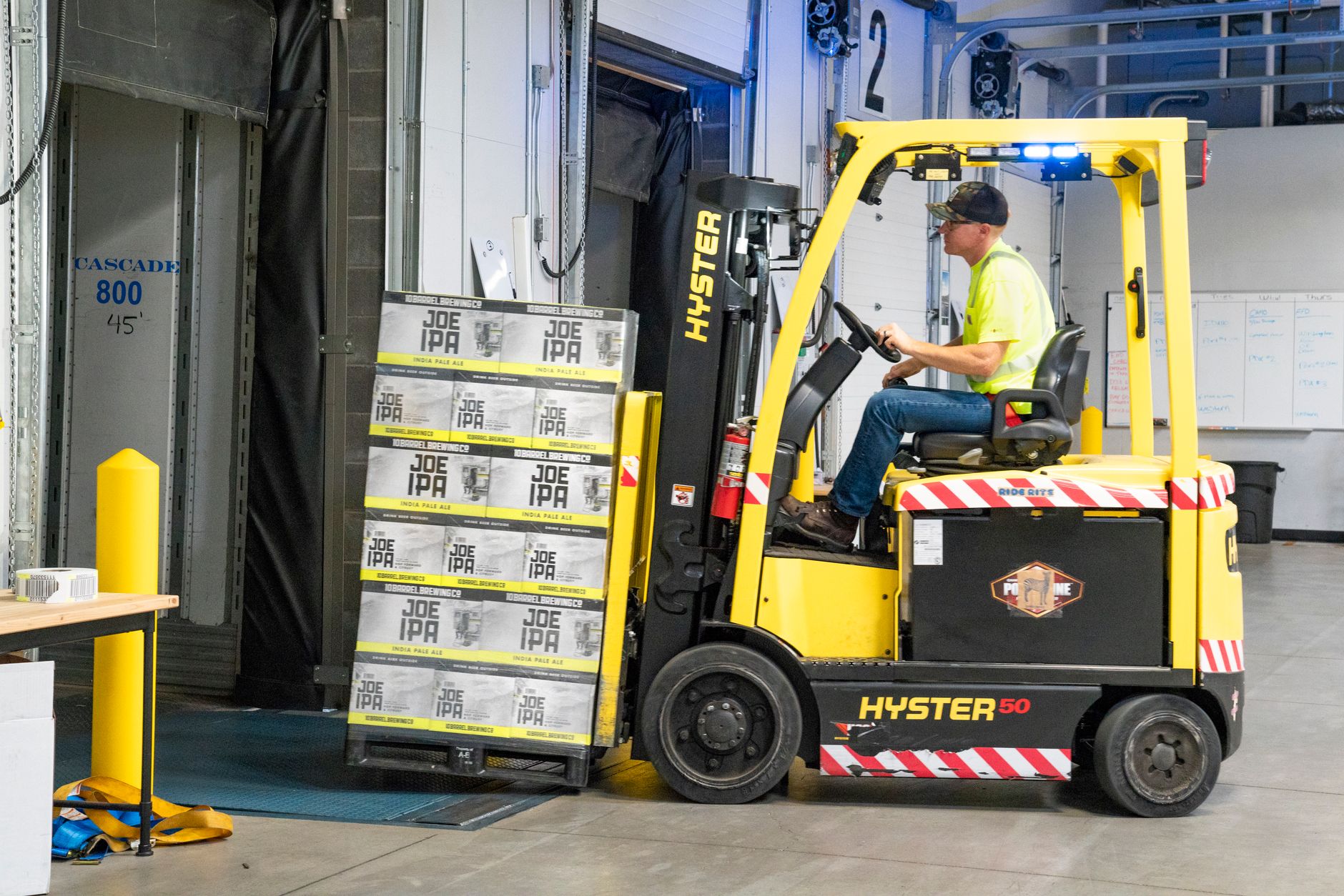
A tugger driver hitches a train of carts to a tow vehicle and moves prepared trays from the kitchen to staging areas along set routes. Timing matters as much as distance. Trains have to be staged before a flight bank, and a late train holds up loading on the aircraft side of the operation.
Between trips the driver usually checks cart condition, reports blocked doors or lifts, and helps the staging crew load and count trays. The driver's day is therefore a mix of driving, waiting at doors and lifts, and short physical tasks at each end of the route.
Before deciding anything, time one normal week of driver shifts and sort the minutes into four groups: driving, waiting, loading and everything else. That split shows how much of the shift is fixed route work, which is the part a robot can take, and how much is variable work that stays with people.
Median hourly wage, Laborers and Freight, Stock, and Material Movers, Hand
$4,380
Monthly cost of one full-time worker, at the median wage plus payroll costs (an estimate, not a quote).
Which parts of cart running can an autonomous mobile robot take, and which can it not?
An autonomous mobile robot is strongest on the driving part of the job. It follows a mapped route, starts and stops at known points, couples to a cart train that matches its hitch, and returns to charging between runs without a break in the schedule. Those repeatable steps make up most of a fixed cart run.
It cannot load or unload trays, judge whether a tray is seated correctly on a cart, or clear a blocked door or a stuck lift. A person still handles those steps, along with cart repairs and any route change the map does not cover.
- Robot takes: fixed-route runs between kitchen zones and staging areas
- Robot takes: scheduled runs timed ahead of each flight bank
- Robot takes: return trips and charging between runs
- Person keeps: loading and unloading trays at each stop
- Person keeps: clearing doors, lifts and dock steps
- Person keeps: cart repair, exception handling and staging counts
- Route repeatability
Autonomous Mobile Robot
Follows the same mapped path on every run
Tugger Driver
Adjusts on the spot to a changed route or a blocked corridor
- Early and late runs
Autonomous Mobile Robot
Runs on schedule with no driver on site, and faults go to remote triage
Tugger Driver
Needs a scheduled shift, and early or late runs add staffing planning
- Loading and unloading trays
Autonomous Mobile Robot
Cannot load or unload trays at stops
Tugger Driver
Loads, unloads and checks trays at each stop
- Doors, lifts and dock steps
Autonomous Mobile Robot
Needs a clear path, or a person to clear doors and lifts
Tugger Driver
Opens doors, waits for lifts and steps over thresholds
- Consistency across a shift
Autonomous Mobile Robot
Same speed and stops on every run, with no fatigue
Tugger Driver
Pace shifts with workload, breaks and time of day
- Exceptions and cart faults
Autonomous Mobile Robot
Stops, reports the fault and waits for a person
Tugger Driver
Spots a wobbly wheel or a misplaced cart and fixes it
How many hours and people does cart running take in a week, and who covers it?

We did not find a published figure for hours of cart running per shift or per week at airline caterers. The government and industry sources we checked also do not break out turnover, overtime, night shifts or sick days for this job. Treat any hour estimate from a vendor as a claim to test, and measure your own kitchen over a normal week that includes the peak bank.
The wider labor pool is large. The Bureau of Labor Statistics counts about 7.1 million jobs for hand laborers and material movers in 2023, and projects 4% growth from 2023 to 2033, according to its Occupational Outlook Handbook. The Occupational Employment and Wage Statistics program counted 3,008,300 people in Laborers and Freight, Stock, and Material Movers, Hand in May 2023. The government wage data on this page gives the local wage for this job, which is the figure to set against the hours you measure.
The airline catering side is shrinking in headcount. IBISWorld reports 51,360 people employed in US airline catering services in 2025, with an average annual change of -2.8% from 2020 to 2025. Fewer people in the sector is a reason to plan cart coverage with that in mind, though the data does not show what it does to any one kitchen's staffing.
One journal study gives a direction. A 2024 study of 300 workers at one Thai airport catering operation found that heavier work demands raised turnover intention, and that inadequate pay and benefits raised it further. It covers one site in another country, so use it to decide what to measure, not as a forecast for your kitchen.
Does a robot replace staff in an airline catering kitchen?
No. A plan that assumes zero staff on the cart runs will fail at the first blocked door or the first cart with a bad wheel. The realistic model is a robot plus fewer staff: the robot covers the fixed runs, and people cover loading, exceptions, cart repair and the peak bank. Fewer drivers on the floor means the people who remain spend more of their time on work that needs judgment.
Adoption is rising across industrial robotics. According to A3, North American robot orders rose 6.6% over full-year 2025, and collaborative robot orders reached 7,212 units for the year. A3 figures cover industrial robots in general, not mobile robots like these, so read them as a sign of buyer comfort rather than a benchmark for this use.
We integrate, lease, train and service the robot. We train the people who run the carts today, because they already know which doors stick and when the lifts are slow. That review is where the route plan gets checked against how the kitchen really runs.
What injury and safety risks come with moving carts?
Hand material moving is not a low-risk job. The Bureau of Labor Statistics reported an incidence rate of 289.8 cases per 10,000 full-time workers for this occupation in 2020, in its injury snapshot covering 2016 to 2020. That is the occupation's own rate, so it is the right baseline to set against your own injury log.
Across the broader group, transportation and material moving had 201,180 cases with days away, job transfer, or restriction from contact with objects or equipment in the 2021 to 2022 data, the highest of the major occupation groups, according to the Bureau of Labor Statistics. The same group had the most fatal work injuries in 2024, with a fatality rate of 12.5 per 100,000 full-time equivalent workers, down from 13.6 in 2023. The all-industry rate was 3.3 per 100,000 in 2024.
For the tug and the cart train, ANSI/A3 R15.08 is the US industrial mobile robot safety standard. Tow tractor references such as ANSI/ITSDF B56.5, ISO 3691-4 and OSHA 29 CFR 1910.178 are the ones vendor guides cite for tugs. A cart train carries more momentum than a single cart, so stopping distance and load limits belong in the site review, not in a later fix.
What can an autonomous mobile robot not do in an airline catering kitchen?
It cannot load trays onto racks at a stop, decide that a route is blocked by a delivery, or repair a cart. It can stop and wait for a person, but a crowded corridor during a flight bank can cause repeated stops that slow the whole run. That is a layout question, and it has to be tested on the actual floor during the bank, not on a drawing.
Cart trains bring coupling limits. If carts differ in size, height or hitch point, the robot needs standard carts or a change to the cart design, and that change belongs in the site assessment. Routes that cross dock steps, uneven thresholds or lifts with long waits will keep a person in the loop, and some of those routes are better left with a driver.
Early and late runs with no supervisor on site need a recovery plan. Someone has to know who responds to a stalled cart and how fast, and that response is part of the lease decision. We service units nationwide, with remote triage and on-site dispatch, but the kitchen still owns the trays and the timing.
How should you decide between a robot and a driver, and what should you check first?
Start with run data, not a product comparison. Count the runs per flight bank and per shift, the number of distinct routes, the minutes each run spends waiting at doors and lifts, and how often the route changes in a normal week. The answer usually shows up in those numbers before any quote is prepared.
Then check the points below before deciding. Each one either raises the share of runs a robot can take or adds work that stays with people.
How do you get started with robot leasing for an airline catering kitchen?
Start with a free site assessment. We map the routes, count the runs, time the doors and lifts, and check the carts. The fixed robot lease payment is then quoted through financing, after the assessment, so the figure reflects your floor and your schedule rather than a generic plan.
Most operators begin with one leased unit on the highest-volume route, run it through a few flight bank cycles, and widen only when the data supports it. Keep a spare unit in the plan for backup coverage, because one robot down during a peak bank can hold up a full set of carts.
Our deployment and integration work covers mapping, go live support and training for the staff who run the kitchen. We fit the robot to how your carts, doors and staging crews already work, and we service it nationwide, so one partner handles the robot from installation to repair.
Frequently asked questions
Want a warehouse robot at your airline catering kitchen?
Tell us about your site. We will recommend the robot, quote the lease, and keep it serviced.
Sources
- US Bureau of Labor Statistics, Occupational Employment and Wage Statistics (OEWS May 2024)
- Bureau of Labor Statistics Occupational Outlook Handbook, Hand laborers and material movers
- BLS Occupational Employment and Wage Statistics, May 2023, SOC 53-7062
- BLS injury snapshot, Laborers and Freight, Stock, and Material Movers, Hand, 2016 to 2020
- BLS Census of Fatal Occupational Injuries, 2024 rates by occupation
- BLS The Economics Daily, nonfatal injuries and illnesses, 1992 to 2022
- IBISWorld, Airline Catering Services employment, US
- A3 robot orders 2025, as reported by Robotics 24/7
- Journal study of 300 workers at a Thai airport catering operation, 2024