
The short answer
For most movie theaters, a cleaning robot makes sense for the repeat hard floor work in lobbies, concourses and aisle edges between showings and after close, while a floor cleaner is still needed for gum, spills, restrooms and any unpredictable mess. The cleaning robot vs floor cleaner choice is usually a robot plus fewer staff rather than one or the other, and a robot is a poor fit for a house with mostly carpet or a crew that cannot clear the route. A lease quote follows a free site assessment, so the floor plan decides the fit.
Key takeaways
- A cleaning robot covers repeat hard floor sweeping and scrubbing in lobbies, concourses and aisle edges, not the judgment work.
- The right setup is always a robot plus fewer staff, never zero staff.
- Clear the route before the robot runs, or the run is wasted.
- No published figures for theater floor hours were found, so time your own crew before you decide.
- A lease quote follows a free site assessment that tests floor type and the close schedule.
Cleaning robot vs floor cleaner at movie theaters: which makes sense?
For most movie theaters, a cleaning robot makes sense for the repeat hard floor work in lobbies, concourses and aisle edges between showings and after close. A floor cleaner, meaning a person with a machine, still wins where the mess is unpredictable: gum, spilled drinks in seating, restrooms, and any night the room needs a person to inspect and reset it.
The cleaning robot vs floor cleaner choice is rarely either or. The practical answer is a robot plus fewer staff. The robot covers the scheduled hard floor route, and a person keeps the judgment work. A robot with no staff on site is a poor fit for a building that has guests, trash, equipment and occasional incidents to handle.
The robot makes less sense when most of the floor is carpet, when loose seats or cords cannot be cleared before a run, or when the close cannot be held on a steady schedule. The lease quote depends on the floor plan, so the first step is a site assessment, not a machine choice.
What does a floor cleaner do in a theater shift?
In a typical multiplex, floor work falls into two windows. Between showings, a room that just emptied needs sweeping and spot cleaning. After the last show, the building gets its full close. Nothing published in the research for this page gives typical theater floor hours or floor area, so treat the sequence below as the operations pattern rather than a verified benchmark, and measure your own crew before deciding.
After close, the work usually runs in a set order: clear trash and loose items, sweep, scrub or mop hard floors, wipe high-touch areas, then reset the room for the morning. Seats and aisles take much of the time because the room is full of obstacles that cannot be swept in one pass. A person also catches things a machine would miss, such as a dropped phone or a spill that has spread under a seat row.
Between showings the work is smaller and more interrupted. The crew waits for guests to clear, works around the concession line, and returns to the next room. That stop and start pattern is where a thin crew feels the strain, because each interruption adds walking and reset time.
Median hourly wage, Janitors and Building Cleaners
$4,041
Monthly cost of one full-time worker, at the median wage plus payroll costs (an estimate, not a quote).
Which floor work can a cleaning robot take?
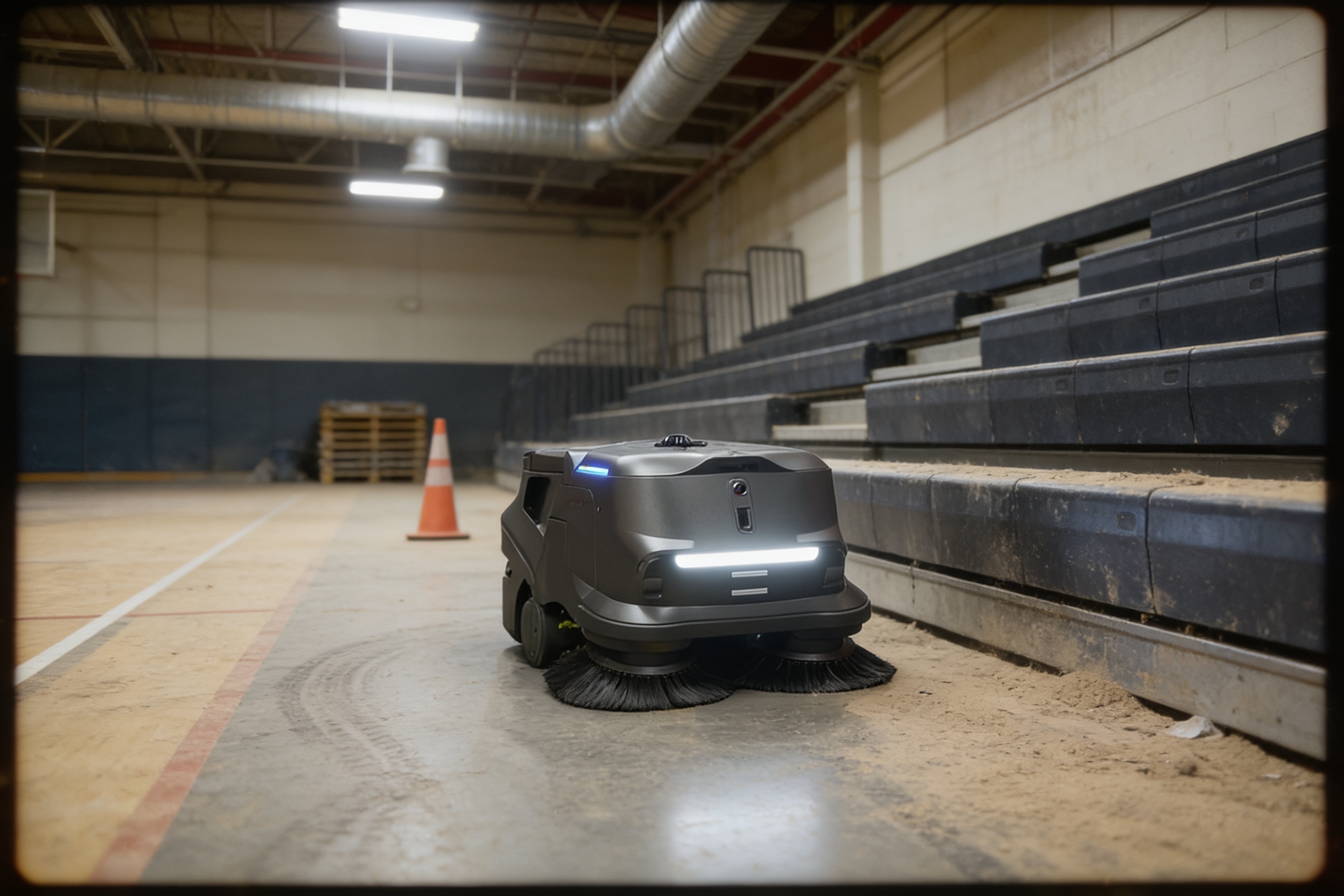
A cleaning robot takes the repeat hard floor work: sweeping and scrubbing lobby tile, concourse floors, and the hard aisle edges and corridors that carry guests to the screens. The 2019 AACEM and ISSA survey found autonomous scrubbers to be the most common tool among adopters, with 89% of them using scrubbers. That fits this kind of hard floor job, though the survey covered the cleaning industry generally, not theaters.
The robot does not take work that needs a judgment call or a hand: gum, sticky residue, spilled drinks on carpet, seat cleanup, restrooms, trash removal, and any hazard that needs a person to decide. It also needs a clear route. Loose seats, cords and stanchions must be cleared before a run, or the run stops or wastes the pass.
The useful way to split the work is by what repeats and what varies. Repeat work on a known route suits the robot. Work that changes from night to night, or that depends on what a guest left behind, stays with a person.
- Hard lobby and concourse floors
Cleaning Robot
Runs the same route on a schedule
Floor Cleaner
Adjusts the route and works faster around an unusual mess
- Sticky spills and gum
Cleaning Robot
Cannot take them, so a person must
Floor Cleaner
Handles them with the right tools and judgment
- Restrooms and trash
Cleaning Robot
Not a robot task
Floor Cleaner
Handles them with supplies and checks
- Consistency across the close
Cleaning Robot
Same route and pass count each time
Floor Cleaner
Varies with fatigue and turnover
- Coverage when someone calls out
Cleaning Robot
Runs if the route is set and the room is clear
Floor Cleaner
Needs a replacement, or the work waits
- Carpeted auditorium aisles
Cleaning Robot
Depends on the machine and floor match from the site assessment
Floor Cleaner
Can vacuum or spot clean as needed
- Judgment about guest incidents or damage
Cleaning Robot
Reports the problem, does not decide
Floor Cleaner
Decides and documents
How much labor sits behind floor care in this kind of building?
Theater floor care is done by janitors and building cleaners, and the government data on this page describes that group nationally. According to the BLS Occupational Outlook Handbook, there were about 2.45 million janitor and building cleaner jobs in 2024, with projected growth of 2% from 2024 to 2034, which BLS calls slower than average, and about 350,300 openings a year on average over the decade. Entry usually needs no formal education and workers learn on the job, so the pool turns over often.
Turnover is the number that matters most for a theater manager. Gitnux, an aggregator citing May 2023 data, puts average janitorial turnover in the US at 45% a year. That is not a primary survey, so check it against your own payroll records. CleanLink's 2025 survey of janitorial companies found that 61% name labor shortages as a major obstacle to growth, and 86% plan wage increases to attract and keep staff.
Injury belongs in the labor picture too. According to BLS, janitors and cleaners, except maids and housekeeping cleaners, had 21,100 nonfatal injury and illness cases with days away from work in private industry in 2020, an incidence rate of 191.6 per 10,000 full-time equivalent workers. BLS reported 86.9 per 10,000 for all occupations in 2019. Those are different years, so read them as direction, not a precise comparison. The local wage for this job, shown in the government wage data on this page, is the figure to set against your own overtime and call out costs.
How many cinemas are there, and is robot floor care spreading?
The count of theaters is hard to pin down. Cinema United, the trade association for theater owners, says in its boilerplate that it represents more than 31,000 screens across the US and Canada, and other releases have cited 32,000. Those are association-wide screen counts, not site counts. IBISWorld counts about 2,004 movie theater businesses in 2025, roughly flat year over year. A business can run several sites, so that is not a site count either.
Attendance sets how often a room turns over. Cinema United's 2025 update reports that Gen Z moviegoers averaged 6.1 visits in 2025, up from 4.9 in 2024. More visits mean more foot traffic on the lobby and aisles, which means more sweeping between showings and after close.
Adoption is the other half of the question. The AACEM and ISSA Autonomous Cleaning Survey from 2019, based on 250 complete responses with a margin of error of about 6%, found 27% of respondents used autonomous cleaning equipment, 7% had stopped, and 66% had never used it. That survey is seven years old, and its full report is members only, so treat it as a trend marker and check the full report before you cite it internally.
How does a theater team work with a cleaning robot?
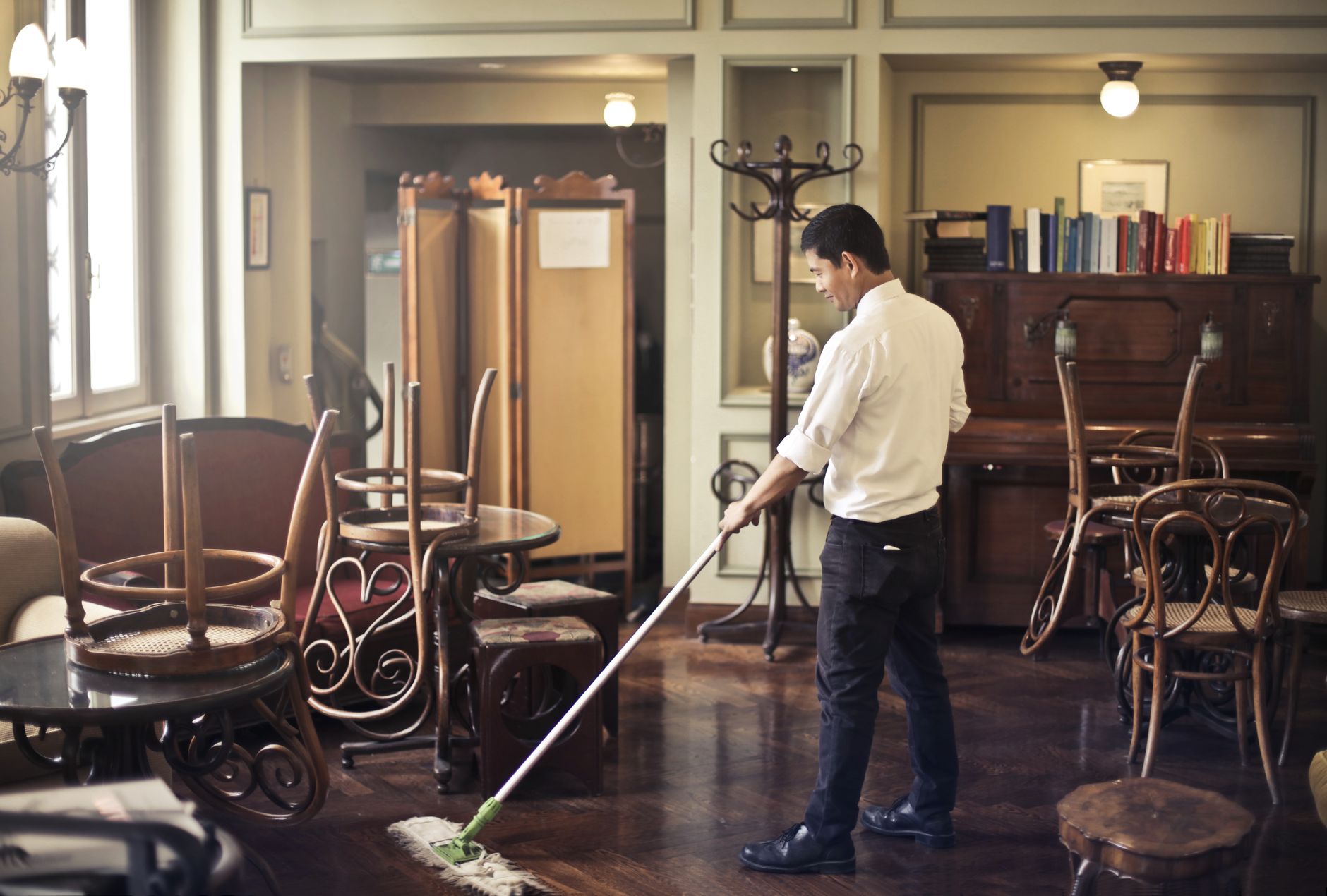
The right setup is always a robot plus fewer staff, never zero staff. The robot runs the scheduled hard floor route. A person sets up the run, clears the route, handles spills and gum, cleans restrooms, and checks the room. Fewer staff means the crew's hours move from sweeping toward exception handling and inspection, so the crew needs to know how to run the machine and when to stop it.
Our team picks the right robot for the site, leases it through financing, deploys and integrates it with the room schedule, trains the staff, and services it nationwide. Training is the step most often rushed. Plan supervised runs before anyone leaves the robot unattended, and write down the stop conditions the crew can act on alone.
Coverage is where a single robot setup fails. Sick days, call outs and turnover hit a thin crew hard, and the robot does not replace the person who opens or closes the building. Keep a backup plan for days the robot is down, and ask whether the quote includes spare unit coverage and on site dispatch.
What can a cleaning robot not do in a theater?
A robot is not a full replacement for a theater crew, and it will not fix every floor problem. Name the limits before you sign off, so the crew plan does not assume the robot can do work it cannot.
Floor type decides a lot. Robots of this kind suit hard, level floors. Many auditoriums carpet the seating area and aisles, and carpet changes the job from scrubbing to vacuuming, which may or may not match the machine. The site assessment should test aisle floors, transitions between tile and carpet, and any ramps before a quote is set.
The robot also depends on the room being cleared on time. If the close runs late and guests are still in the lobby, the run waits or the crew moves it. That is a schedule problem, not a robot problem, and it is fixed on the schedule rather than on the machine.
- Handle gum, sticky residue or spilled drinks on carpet without a person
- Clean restrooms, empty trash or restock supplies
- Run through a crowded lobby or past strollers during open hours
- Work in rooms with loose seats, cords or stanchions still on the floor
- Decide what to do about a guest incident, a broken seat or damage
- Notice everything a person notices across a full close
How do you get started with a cleaning robot lease?
Start with a free site assessment. Our team maps the lobby, concourse and aisle routes, notes obstacles and floor transitions, and works out which hours the robot can run. The lease quote comes after that assessment, so the fixed robot lease payment reflects the actual site and not a generic average.
Pilot one unit before you commit to more. One leased robot in one lobby and its aisles shows whether the schedule holds, whether the crew accepts the change, and how often staff have to step in. Ask whether the quote covers maintenance, remote triage, on site dispatch and training, and ask what happens when the robot is out of service.
Go live support matters in the first weeks. Expect the crew to change its routine and expect early runs to need watching. A strong quote shows who answers the phone, who comes on site, and how quickly a broken unit is repaired or replaced, with the response terms written down.
What changes the answer for your theater?
The answer shifts with four things: how much hard floor the robot can cover, how often the room turns over, how many people you can keep on the close, and how much crew time goes to exceptions. A theater with a large hard lobby, a clean aisle layout and a crew that struggles to hold a full close is a strong candidate. A small house with mostly carpet and a full crew may only need a floor cleaner.
The labor data points the same way. Occupation-level turnover, shortage survey results and injury counts all describe work where holding a full crew is hard and repetitive floor work carries risk. A robot does not fix turnover by itself, but it reduces the number of hard floor hours that depend on one person being present.
Decide with your own numbers. Time the crew across a full cycle of showings, log call outs and overtime, and bring those figures to the site assessment. The quote then compares your hours against the robot's route, which is a better test than any industry average on this page.
Frequently asked questions
Want a cleaning robot at your movie theater?
Tell us about your site. We will recommend the robot, quote the lease, and keep it serviced.
Sources
- US Bureau of Labor Statistics, Occupational Employment and Wage Statistics (OEWS May 2024)
- BLS Occupational Outlook Handbook, Janitors and Building Cleaners
- BLS Injuries, Illnesses and Fatalities snapshot, Janitors and Cleaners
- Cinema United boilerplate
- Cinema United 2025 Strength of Theatrical Exhibition update, via Celluloid Junkie
- IBISWorld, Number of Movie Theater Businesses
- Gitnux, Janitorial Industry Statistics
- CleanLink 2025 janitorial survey
- AACEM and ISSA Autonomous Cleaning Survey, via FMLink