
The short answer
A cleaning robot makes sense at a hospital for repeated overnight scrubbing of open hard floor corridors, the same route a night janitor walks on a set schedule. It does not replace the night team: staff still clean rooms, bathrooms, edges, spills and anything that needs infection-control judgment, so the right model is a robot plus fewer staff, never zero staff.
Key takeaways
- A cleaning robot fits repeated overnight scrubbing of open hard floor corridors, not the whole night shift.
- The Missouri Independent reports 42.5% EVS turnover in Missouri hospitals for 2025, so the labor pressure is real.
- Rooms, bathrooms, spills and edges stay with staff, so plan for a robot plus fewer staff.
- No verified robot run time for hospital corridors was found, so measure your own floors before deciding.
- A lease quote follows a free site assessment that maps your routes, floor types and doors.
Should a cleaning robot or a night janitor clean a hospital?
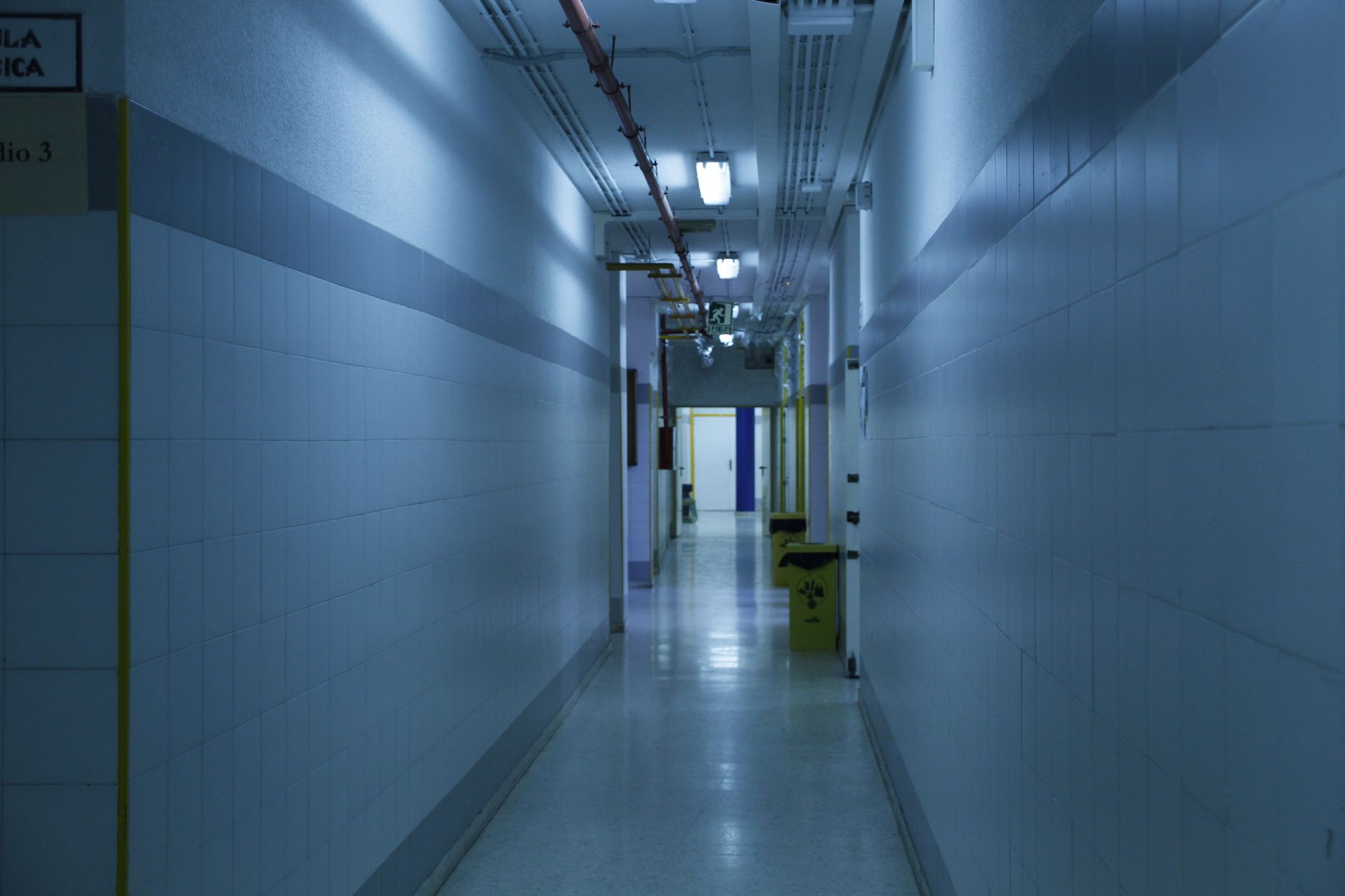
For most hospitals the honest answer is both, with the robot taking the repeated floor work and people keeping the rest. A cleaning robot makes sense where a hospital has long, open hard floor corridors that get the same overnight scrub on a set route, and where the night team is short-staffed or stretched across many tasks. It is a poor fit where a wing is mostly carpet, heavily cluttered, changes layout often, or has little repeated route work for the night crew.
A night janitor is still the right choice for work that needs hands, judgment and room-by-room standards: discharge cleans, bathrooms, bed-area surfaces, spills and any response to an infection-control concern. The useful question is not robot or person in the abstract. It is how many hours of repeated corridor work a site really has, and whether those hours can be freed for the people who do the detailed infection-control work.
How many hospitals are there in the US, and what does that mean for this job?
According to the AHA Fast Facts on US Hospitals 2025, which uses 2023 survey data, there are 6,093 hospitals in the US, including 5,112 community hospitals, with 913,136 staffed beds. That is a large base of sites that run around the clock and need overnight floor care, so the same routine shows up in very different buildings.
Our search did not verify a floor area figure for hospitals, so this page does not claim a typical square footage. Route size is set by each building. The useful measures are the length of open corridor on each floor, the number of lift lobbies, and how many doors and transitions the route must cross. Those are measured during a site assessment, not estimated from a hospital count.
Median hourly wage, Janitors and Building Cleaners
$4,041
Monthly cost of one full-time worker, at the median wage plus payroll costs (an estimate, not a quote).
What does a night janitor actually do in a hospital shift?
In a hospital, the night janitor or environmental services (EVS) worker works from a schedule and from requests. The routine usually includes emptying waste, restocking supplies, wiping high-touch surfaces, mopping ward corridors and lift lobbies, cleaning bathrooms, and responding to spills and special requests. Some of this runs on a fixed rota and some is driven by what happened during the shift.
Timing for the floor work is the part most relevant to a robot. A Welsh health board reported, as covered by Nation.Cymru, that manual corridor cleaning can take a member of staff up to four hours. A 2021 hospital report from Singapore found that manual mopping averaged 20 minutes per level for ward corridors and 15 minutes for lift lobbies. Those figures describe the manual baseline only and do not show what a robot takes.

Which hospital floor work can a robot take, and which can it not?
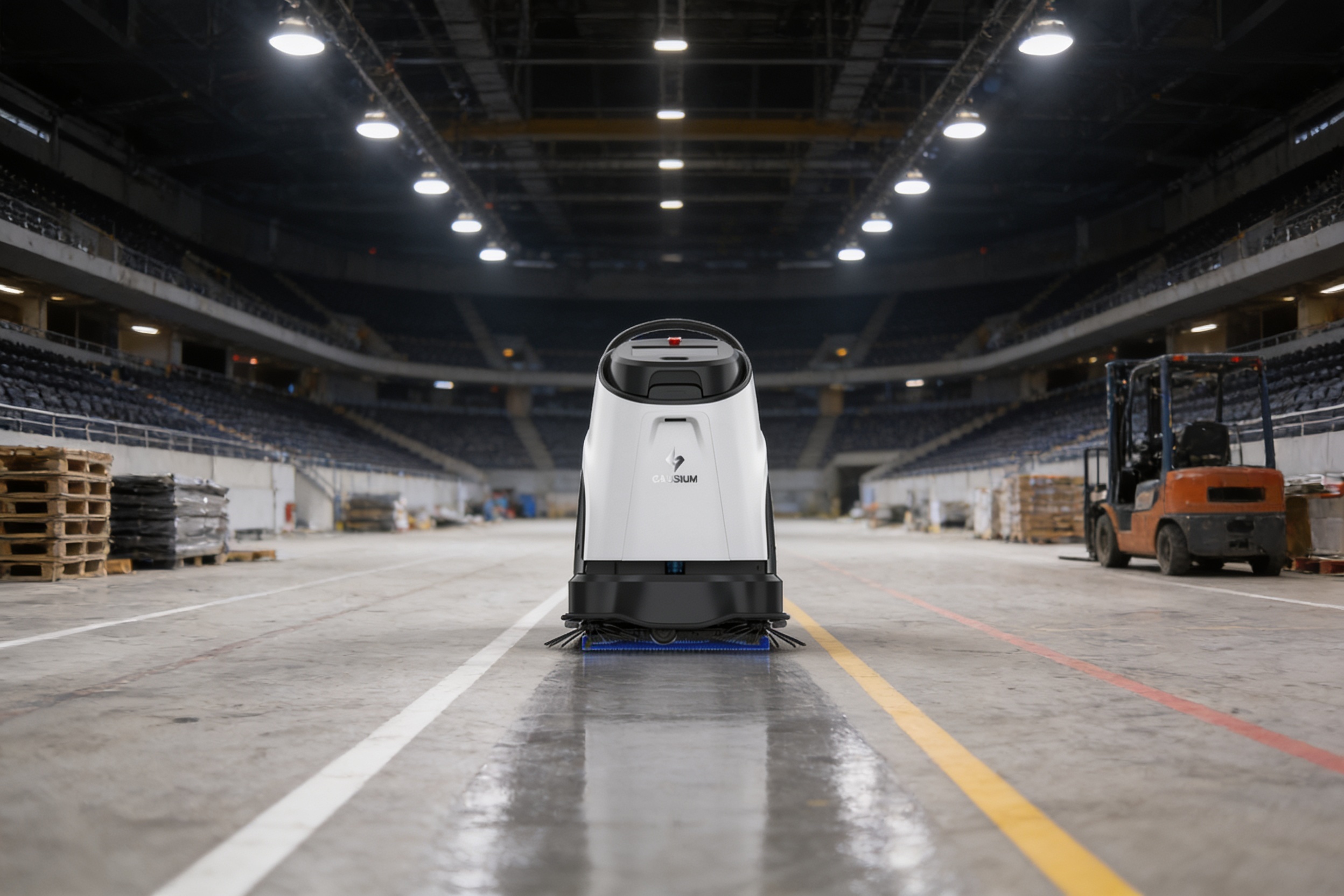
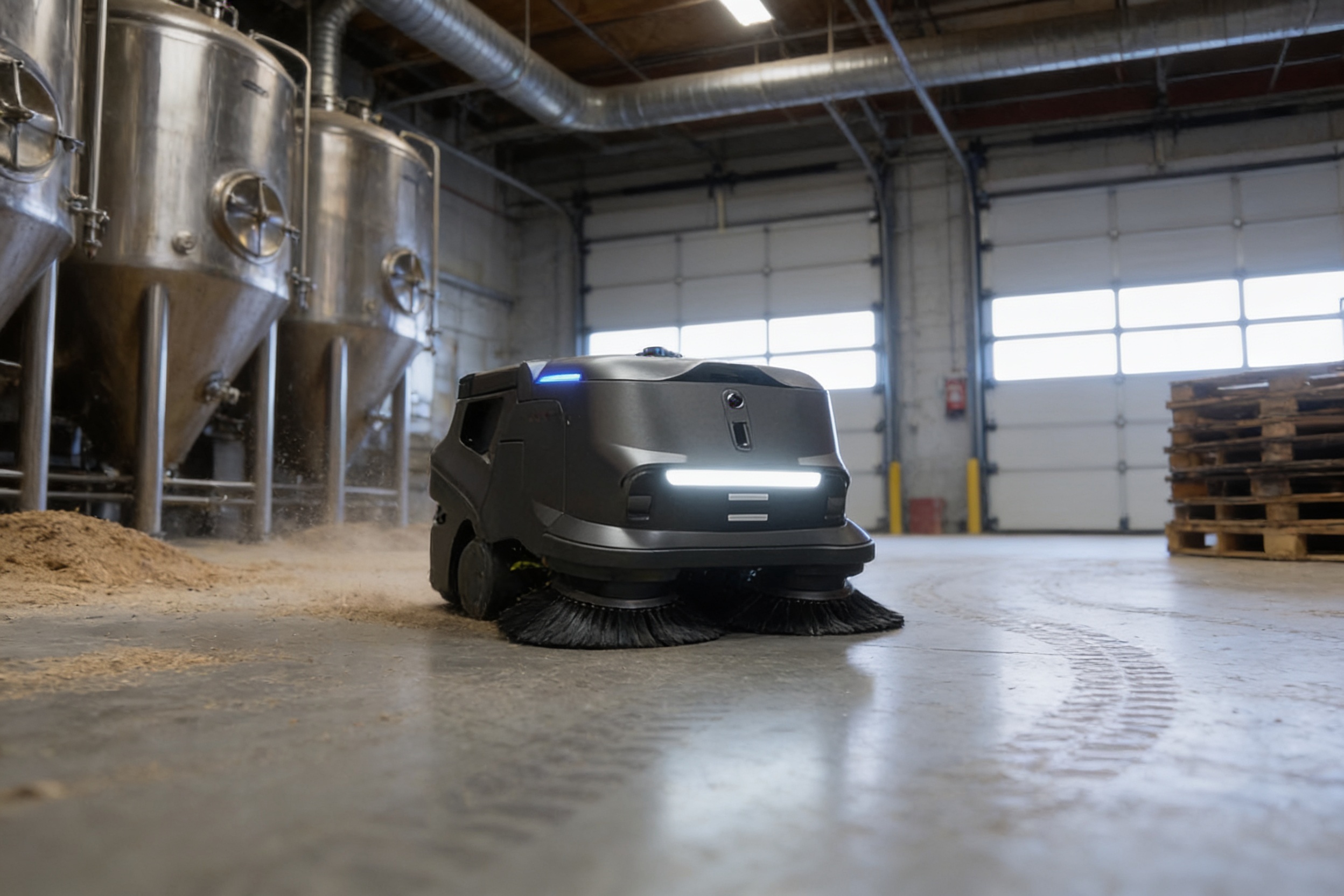
A cleaning robot can take the repeatable floor passes: scrubbing or sweeping open hard floor corridors and lift lobbies on a set route, at the same hours each night. Those passes follow a pattern, so the robot's steady route is a real match. The robot runs the same pass each time, does not get tired partway through a shift, and keeps to its schedule when the team is short.
It cannot take the work that needs hands or judgment. It does not clean inside patient rooms, bathrooms, or around beds and equipment, does not handle biohazard spills, and does not decide what needs extra attention after an infection-control event. Edges, corners and areas under fixtures usually still need a person with a tool. Disinfection with a separate machine is a different job and needs its own infection-control review.
- Repeated corridor passes
Cleaning Robot
Runs the same scheduled route each night
Night Janitor
Covers the route, varies from pass to pass, and tires over a long shift
- Edges, corners and under fixtures
Cleaning Robot
Limited reach, so often needs a person
Night Janitor
Works the detail by hand with tools
- Rooms, bathrooms and bed areas
Cleaning Robot
Does not do this work
Night Janitor
Handles it to a room-by-room standard
- Spills and biohazards
Cleaning Robot
Stops and alerts, then waits for a person
Night Janitor
Responds with training and protective equipment
- Infection-control judgment
Cleaning Robot
None beyond the programmed route
Night Janitor
Adjusts to events and protocol changes
- Coverage when a shift is short
Cleaning Robot
Keeps corridor passes running
Night Janitor
Covers every task only when fully staffed
What do the hours and labor numbers look like for hospital cleaning teams?

Turnover is the labor pressure that makes this question urgent. The Missouri Independent reports a 42.5% EVS turnover rate for 2025 in Missouri hospitals, and says overall hospital turnover rose from 22.2% in 2024 to 23.7% in 2025. The Missouri Hospital Association reports nearly 77% EVS turnover in the St. Louis region, using 2024 data. These are state and regional figures, so they describe pressure in those markets rather than a national average.
A national figure is also available. According to Becker's Hospital Review, citing AHA data via NSI for 2024, EVS turnover was 28.1%, against an 18.3% national hospital staff turnover rate. That gap means the cleaning team turns over faster than hospital staff as a whole. Every open shift that goes unfilled pushes the remaining people onto corridor work that a robot route could take.
Broader labor data points the same way. The Bureau of Labor Statistics reports that janitors and building cleaners held about 2.4 million jobs in 2024, with projected growth of 2% from 2024 to 2034, slower than the average for all occupations. It projects about 351,300 openings a year, mostly replacements for workers who leave. Our search did not verify overtime or sick-day figures for hospital cleaning teams, so measure those in your own timesheets. The government wage data on this page gives the local wage for this job, which is the figure to set against the hours of an open night shift and against a lease quote.
How does a robot and staff team work overnight?
The model that works is a robot plus fewer staff, never zero staff. The robot takes the scheduled corridor passes, and the team keeps the rooms, bathrooms, edges, spills and infection-control response. Staff start the route, clear obstacles, and check the run log at the end. The night crew does not drop to nobody, but it can cover more floor in the same hours.
Hospital work also changes during a shift. A chair left in a corridor, a cart in a doorway or an unexpected spill stops the robot until a person clears it. Hospitals that have published on this approach describe reviewing run time and how often obstacles interrupt the robot, which is the data to watch. Our search found these descriptions but no published hour totals for a full night.
What can a cleaning robot not do in a hospital?
The honest limits matter more than the pitch. The robot cannot meet a room-by-room standard, cannot judge a new contamination risk, and cannot take over the detail work that keeps a ward clean. It needs a clear, open route and a team that responds when it stops. Carpet, thresholds and changing layouts can also slow a route, and every layout change needs remapping.
The evidence base is thinner than vendor material suggests. Our search did not find an independent 2025 peer-reviewed study that times autonomous scrubber passes in hospital corridors, and it did not find a verified injury or incident rate for night janitors or EVS workers. Do not base the decision on a claimed injury reduction. Measure your own corridor times and interruption counts over a trial period before you commit to a route plan.
What should a hospital check before leasing a cleaning robot?
Start with the building, not the robot. A route needs open corridor width, clear floor paths, a charging location, and access through doors and lifts between floors and wings. The checklist below shows which facts decide whether the route is worth building.
Also check the infection-control protocol. It decides which tasks staff must keep, and it should be reviewed with infection prevention before any route goes live.
How do you get started with a leased cleaning robot at a hospital?
Begin with a free site assessment. We map the corridors, lift lobbies, doors and charging points, and identify the repeated overnight passes a robot can take. From that we pick the right robot for the site, quote a lease through financing, and set out the staff roles that stay in place. The lease payment comes in the quote after the site assessment, not before it.
We deploy and integrate the robot, train the night team on starting routes, clearing obstacles and reading the run log, and service it nationwide. A sensible start is a single unit on the highest-value corridors, with results measured on your own floors before any expansion. A phased rollout keeps the night team in control while the route proves itself.

Frequently asked questions
Want a cleaning robot at your hospital?
Tell us about your site. We will recommend the robot, quote the lease, and keep it serviced.
Sources
- US Bureau of Labor Statistics, Occupational Employment and Wage Statistics (OEWS May 2024)
- AHA Fast Facts on US Hospitals 2025
- Missouri Independent
- Missouri Hospital Association
- Becker's Hospital Review
- Bureau of Labor Statistics, Occupational Outlook Handbook
- Nation.Cymru
- 2021 hospital PDSA report, Singapore