
The short answer
Cleaning robot vs floor scrubber operator at distribution centers: a cleaning robot makes sense when the work is the same scrub and sweep passes on large, open, mapped concrete floors every night. It does not make sense for every building, especially where aisles change daily or the night is mostly spill and dock work. For most sites the workable answer is a robot plus fewer staff, not a robot in place of the whole night crew.
Key takeaways
- A cleaning robot fits repeated scrub and sweep passes on open, mapped concrete, not on cluttered or constantly changing floors.
- A floor scrubber operator's night is mostly routine passes, so the robot takes the largest and most repeatable share of that time.
- People still handle spills, debris, blocked lanes and service checks, so the night crew shrinks but never reaches zero.
- Measure your own floor and shift log in a site assessment, since national figures do not give a per-shift number for your building.
Cleaning robot vs floor scrubber operator at distribution centers: which one makes sense?
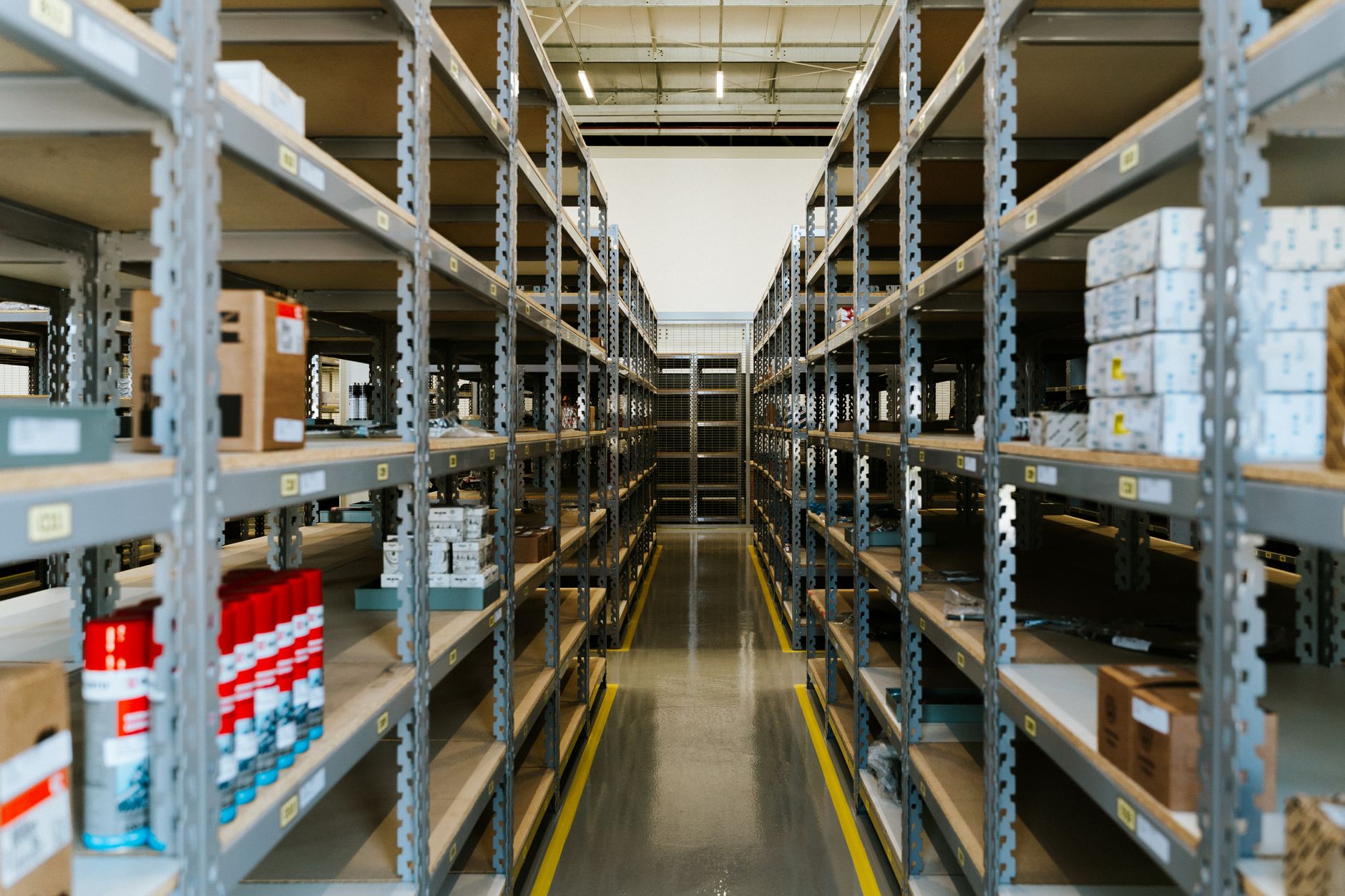
A distribution center is a strong test case for a cleaning robot because its floor work is large, repeatable and predictable. Most of the building is open concrete with long aisles and travel lanes, and the route barely changes from night to night. A floor scrubber operator drives the same kind of pass over that floor hour after hour, and that repetition is the part a robot is built to take over.
The robot makes sense when the floor is mapped, the scheduled window stays clear of pallets and carts, and most of the job is scrub and sweep. It makes less sense when staged freight blocks the cleaning path at random, when the racking layout is still changing, or when most of the night is spill response, dock edges and other hand work. In those buildings the operator stays the better tool for the unpredictable work, and a robot can help with the repeatable share.
Building scale is useful context. According to the SCG warehouse operations trending report, the average distribution center network was 222,620 square feet in 2025, up from 198,558 square feet in 2024. Those are network-level figures rather than single building figures, so measure your own floor before deciding.
What does a floor scrubber operator actually do in a shift at a distribution center?
A floor scrubber operator on a night shift usually starts with a route check and clears or flags anything blocking the lanes. Then the operator drives the scrubber through main aisles and staging areas, laying down cleaning fluid, scrubbing, and recovering the water. The operator watches for debris, pallet wrap, spills and people on foot, and stops to refill, empty the tank and charge the machine between loops.
The job has two parts that look alike on a checklist but differ in practice. The routine part is the scrub and sweep passes on open concrete, which is steady and predictable. The exception part is the broken pallet, the leaked fluid or the slick patch near a dock door, which needs a decision and sometimes a different tool. Most of the night is the routine part, which is also why it is the easiest to plan for and the easiest to automate.
This is where staffing strains. Night scrubber work is hard to fill and easy to leave, and a missed shift means either a skipped pass or overtime for someone who is already on the floor. The operator's value is reliability, so a route that runs the same way every night is a good place to start.
Median hourly wage, Janitors and Building Cleaners
$4,041
Monthly cost of one full-time worker, at the median wage plus payroll costs (an estimate, not a quote).
Which floor care tasks can a cleaning robot take, and which can it not?
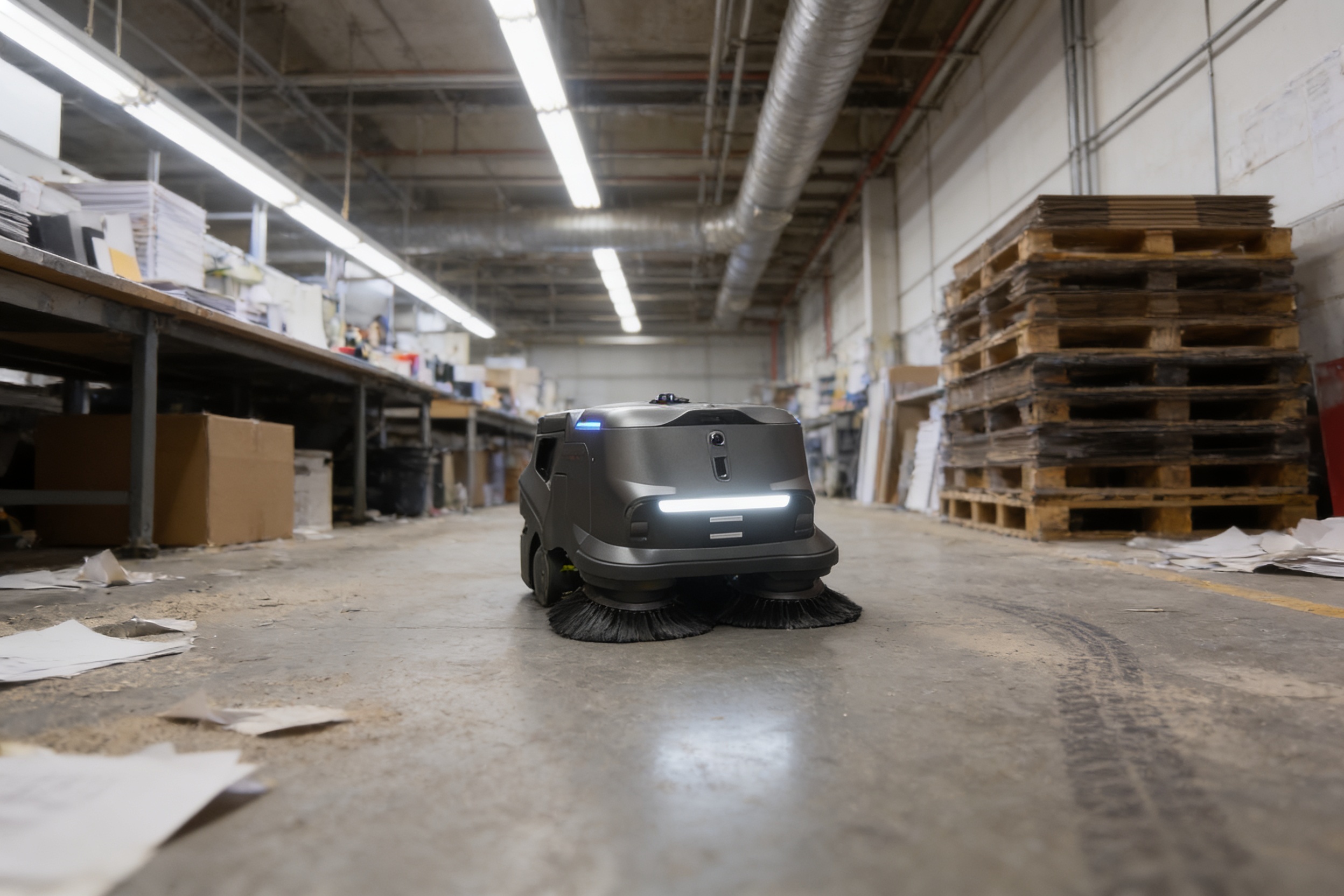
A cleaning robot is strongest on tasks that repeat on a fixed path: scrubbing and sweeping main aisles, travel lanes and open staging areas. These tasks share a floor surface, have clear boundaries, and can be mapped during the site assessment. They are the tasks where a robot takes the largest share of the operator's time.
The robot cannot reliably take the parts that need judgment or hands. Spill response, grease or chemical spots, dock plates and threshold edges, racking uprights, corners and anything outside the mapped route are still people work. Carts and pallets left in the path stop the unit, so staff clear those first.
A sensible split is for the robot to run the scheduled passes while a person works the exception list at the start and end of the shift. That keeps coverage going on a night the unit is down, and it keeps messes in human hands.
- Repeating the same mapped pass
Cleaning Robot
Runs the same route with the same settings each night
Floor Scrubber Operator
Repeats well but drifts on long shifts, and adjusts on the fly
- Night coverage
Cleaning Robot
Runs the routine passes without a driver when staffing is short
Floor Scrubber Operator
Needs a person on shift, and a sick day leaves a gap
- Spills and debris
Cleaning Robot
Stops and alerts, cannot judge what the spill is
Floor Scrubber Operator
Judges the spill, decides the response and clears it
- Tight spots and racking
Cleaning Robot
Limited to the mapped open route
Floor Scrubber Operator
Works around columns, racking and unknown obstacles
- Changing layout
Cleaning Robot
Needs re-mapping when racking or staging moves
Floor Scrubber Operator
Adapts the route as the layout changes
- Consistency
Cleaning Robot
Same passes and settings every night
Floor Scrubber Operator
Varies with fatigue, training and the shift
How many hours does floor care take, and what does the labor picture look like?
The government wage data on this page covers janitors and building cleaners, a large occupation that is growing slowly. According to the BLS Occupational Outlook Handbook, janitors and building cleaners held about 2.4 million jobs in 2024, with projected growth of 2% from 2024 to 2034, which the BLS labels slower than average. That is a net gain of 47,800 jobs, and the same handbook says services to buildings and dwellings is the top employer at 35%.
Turnover is the harder number. A janitorial industry blog cites BLS data showing average annual total separations of around 45% going back to 2017, which it describes as higher than construction and retail trade. That figure is secondhand, not a BLS release, and BLS publishes turnover by industry rather than by occupation, so use it as a signal and check it against your own exit records.
On hours, the best figure found is from a vendor case study for a food distribution site. Before automation, a manual scrubber there needed 2 to 4 hours of operator time per day, and the autonomous unit later logged more than 110 hours of runtime and more than 2.4 million square feet cleaned. Those numbers are vendor-reported, not an audit, and no independent per-shift figure for a distribution center was found. Your own shift log is the number that counts.
How do building size and layout change the math for a cleaning robot?
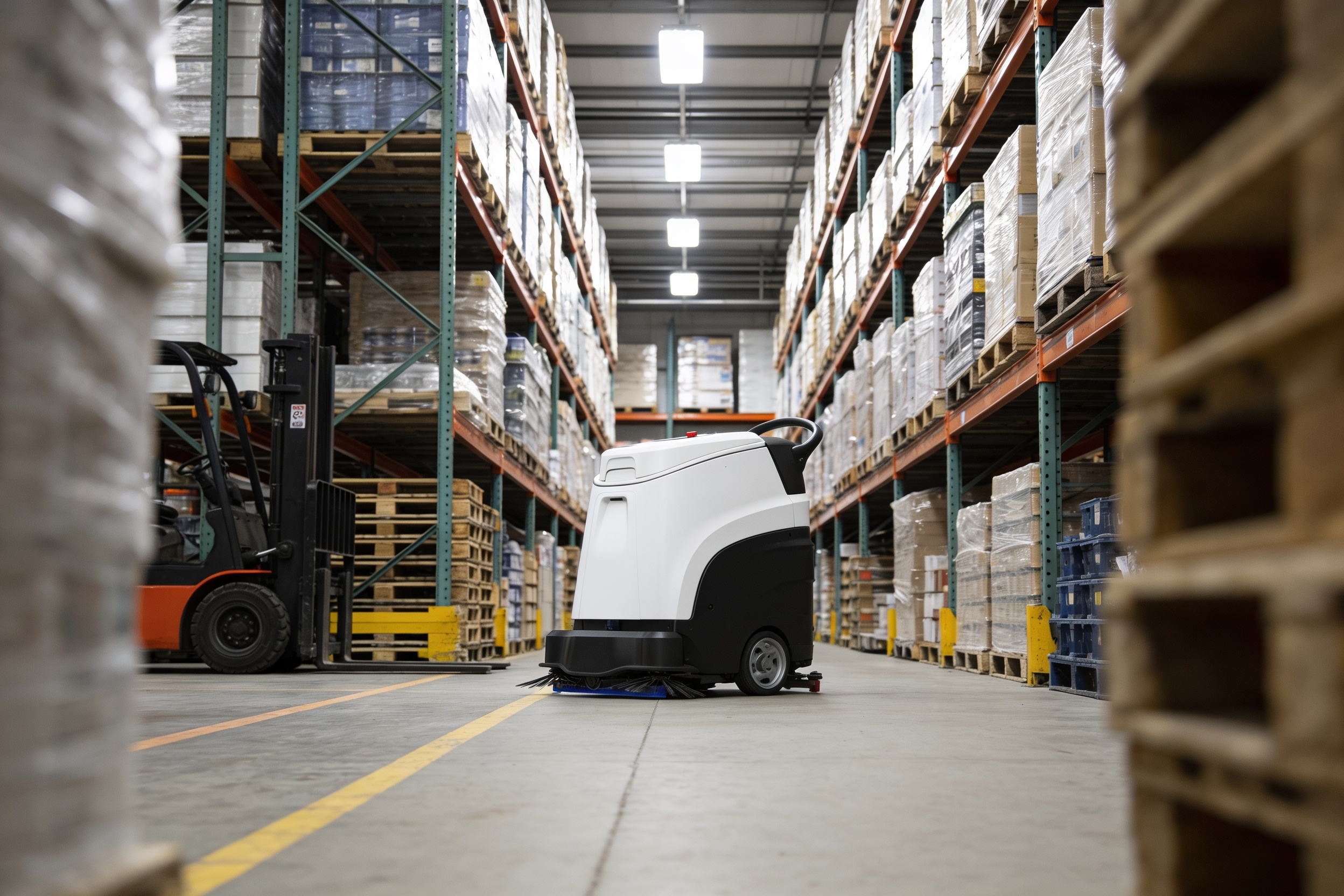
Layout matters more than total square footage. A single open building with long clear aisles can be mapped once and run with little change. A building with heavy racking, frequent slotting changes, many dock doors and stacked staging needs more mapping, more clear time and more staff checks. The site assessment is where that difference shows up, and it is the real test of the plan.
Height and building count also shape the job. The SCG survey reports an average clear height of 31.8 feet, which the site assessment needs to account for in mapping and sensor setup. Networks with four or more buildings averaged about 788,350 square feet, so a larger operator may plan several buildings. The first deployment should still be one building with one clear route.
National counts are harder to pin down. A Bureau of Transportation Statistics summary of Census County Business Patterns data reports that warehousing establishments grew just over 100% from 1998 to 2005. That is old data, and no recent national count of distribution centers was verified in this review, so the building count should come from your own portfolio.
How does a team work with a cleaning robot, and what happens to staffing?
The right model is a robot plus fewer staff, never zero. The unit takes the scheduled scrub and sweep passes, and the night team shrinks to people who check the route, clear blockers, handle spills and debris, watch alerts, and work the dock and corner edges. That is a smaller crew with a different job, not an empty building.
A typical night has one person owning the route check and the robot's alerts, a second person on exceptions and the dock, and a clear call path for service. Overtime can drop, because a sick day no longer means a skipped scrub pass, but a person must still cover the night when the unit is down. A spare unit or a manual fallback is part of the plan, not an afterthought.
Training is the step most often skipped. Staff need to know how to clear a path, restart the unit after a stop, when to call service, and what each alert means. Plan a stretch of paired shifts before anyone runs the robot alone, and keep the manual scrubber on site for the first months.
What can a cleaning robot not do?
A cleaning robot cannot read a spill the way a person can. It stops and alerts, but it does not judge whether a puddle is water, oil or a hazard, and it does not clean the mess by hand. It also cannot handle dock plates, wipe racking, or reach the corners and edges a scrubber cannot get to.
It cannot adapt to a changing route on its own. A pallet parked in the lane, a forklift stopped in front of the unit, or cardboard stacked in an aisle is a stop, and someone must clear it. A building that re-racks every few months needs re-mapping, and that work belongs in the plan rather than left to chance.
It does not solve staffing by itself either. The unit reduces hours spent on repeat passes, but it does not remove the need for people who handle exceptions, service calls and safety. A unit that sits idle because the aisles are blocked covers no floor at all.
Does a cleaning robot change safety and injury risk on the floor?
Warehousing is a high incident sector, so the safety case deserves a close look. According to the BLS injury and illness data for warehousing and storage, the 2024 total recordable case rate was 4.8 per 100 full-time workers, with 4.1 for cases with days away, restriction or transfer, and 1.5 for days-away cases alone. Fatalities were 32 in 2024, up from 28 in 2023, and BLS notes a series break from 2023 tied to the NAICS 2022 change.
Those rates cover the whole sector, not floor scrubbing, so they do not show how much risk a robot removes. What a robot can change is the time a person spends on a machine in mixed traffic, since the scheduled passes run without a driver. It does not change the hazards of people on foot, forklifts in the same aisles, or wet floors that someone still has to mark and clear.
A robot counts as a risk control only when it is paired with a traffic plan, signage, an exception route and operator training. Fewer hours in mixed traffic has to be checked on your own site, not assumed from a sector average.
How do you get started with a cleaning robot lease at a distribution center?
Start with a free site assessment. We map the building, measure aisles and clear times, review the racking and dock layout, and mark the areas that stay manual. That map sets the route, the charging location and the staffing plan, and it is the basis for the lease quote, which comes after the assessment rather than before it.
As a vendor neutral robot integrator, we pick the unit that fits the floor, lease it through financing, deploy and integrate it, train the staff and service it nationwide. The fixed lease payment is quoted after the site assessment so it reflects your actual floor, and the terms should list maintenance, service dispatch, remote triage and any spare unit coverage. Ask for those terms in writing before you sign.
A practical first step is one building and one leased unit on the most repeatable route, run beside the existing crew for several weeks. Expand only if the floor and labor numbers hold. Track operator hours, missed passes, exception calls and service events, and decide from those records.
Frequently asked questions
Want a cleaning robot at your distribution center?
Tell us about your site. We will recommend the robot, quote the lease, and keep it serviced.
Sources
- US Bureau of Labor Statistics, Occupational Employment and Wage Statistics (OEWS May 2024)
- BLS Occupational Outlook Handbook, Janitors and Building Cleaners
- BLS Industry at a Glance, Warehousing and Storage NAICS 493
- SCG warehouse operations trending report, September 2025
- Vendor case study, autonomous floor scrubber at a food distribution site (vendor-reported)
- Janitorial industry blog citing BLS data (secondhand)
- Bureau of Transportation Statistics, state transportation statistics summary table 6.1