

The short answer
A cleaning robot vs janitor in Chicago, IL decision comes down to floor hours. A robot fits large, mostly open floors with repeat passes such as corridors and open lobbies, especially when those passes can run after hours with no operator on site. A janitor still handles restrooms, stairs, spills and detail work, so the robot works best alongside a smaller team, not in place of one.
Key takeaways
- A cleaning robot vs janitor in Chicago is a floor hours question before it is a machine question.
- Robots take repeat passes on large open floors, while staff keep restrooms, stairs, spills and judgment calls.
- Public data on Chicago janitor turnover, overtime and sick days was not found, so log your own hours by zone.
- The model that works is a robot plus fewer staff, never zero staff.
- Lease quotes come after a free site assessment, so start with the floor, not the quote.
Is a cleaning robot vs janitor in Chicago, IL the right call?
The short version: a cleaning robot earns its place on large, mostly open floors that get the same pass again and again, and it fits best when that pass can run after hours with no operator in the building. It does not earn its place in a small, cluttered building where most of the labor is restrooms, stairs and spot work. Most Chicago sites sit somewhere in between, which is why the decision should start with hours, not with the machine.
Janitors and building cleaners are a large occupation. According to the BLS Occupational Outlook Handbook, they held about 2.4 million jobs in 2024, with projected growth of 2 percent from 2024 to 2034, which the Handbook describes as slower than average. Slow national growth explains why managers look at automation, but it says nothing about how your own building is cleaned.
A robot makes sense when three things are true: the floor is large and mostly open, the route repeats most nights, and the area can be left clear for a set window. It does not make sense when the building is small, the route changes almost every day, or most of the labor is detail work a machine cannot reach.
What does a janitor actually do in a Chicago shift?
The job is not one task. A janitor in a commercial building usually splits a shift among emptying trash, cleaning restrooms, mopping or scrubbing hard floors, vacuuming carpet, wiping high touch surfaces, restocking supplies and responding to spills or tenant requests. How those hours divide depends on the building, its tenants and its hours of use.
Timing matters. An archived 2012 version of the BLS Handbook said many cleaning workers work evening hours because office buildings are cleaned when they are empty. That wording is dated and the newer page was not checked for it, but the pattern holds in office cleaning: the heavy floor work tends to land when the building is quiet.
For Chicago specifically, the research found no up to date headcount. An archived May 2007 occupational table listed 1,620 workers in the Chicago-Naperville-Joliet metropolitan division in this occupation. That table is nearly two decades old, so use it only as a sign of scale, and confirm local staffing with your cleaning contractor or your own payroll records.
Median hourly wage, Janitors and Building Cleaners
$4,210
Monthly cost of one full-time worker in Chicago, IL, at the median wage plus payroll costs (an estimate, not a quote).
- Night coverage
Cleaning Robot
Runs a mapped route with no operator on site once loaded and started
Janitor
Needs a staffed shift and someone on hand to respond
- Route changes
Cleaning Robot
Needs a clear, mapped route, so daily changes slow it down
Janitor
Adapts on the fly to a moved chair, a spill or a new pallet
- Detail and spot work
Cleaning Robot
Covers open floor only
Janitor
Handles restrooms, stairs, glass, corners and spills
- Sick days and absence
Cleaning Robot
Keeps running when a person calls out
Janitor
Absence means someone else covers or the route gets skipped
- Physical strain
Cleaning Robot
Removes lifting and repetitive pushing from the repeat passes
Janitor
Carries the strain and slip exposure that injury data shows for this occupation
- Judgment and tenant contact
Cleaning Robot
Cannot read a room or answer a tenant
Janitor
Notices damage, reports problems and answers questions
Which cleaning jobs can a robot take, and which can it not?
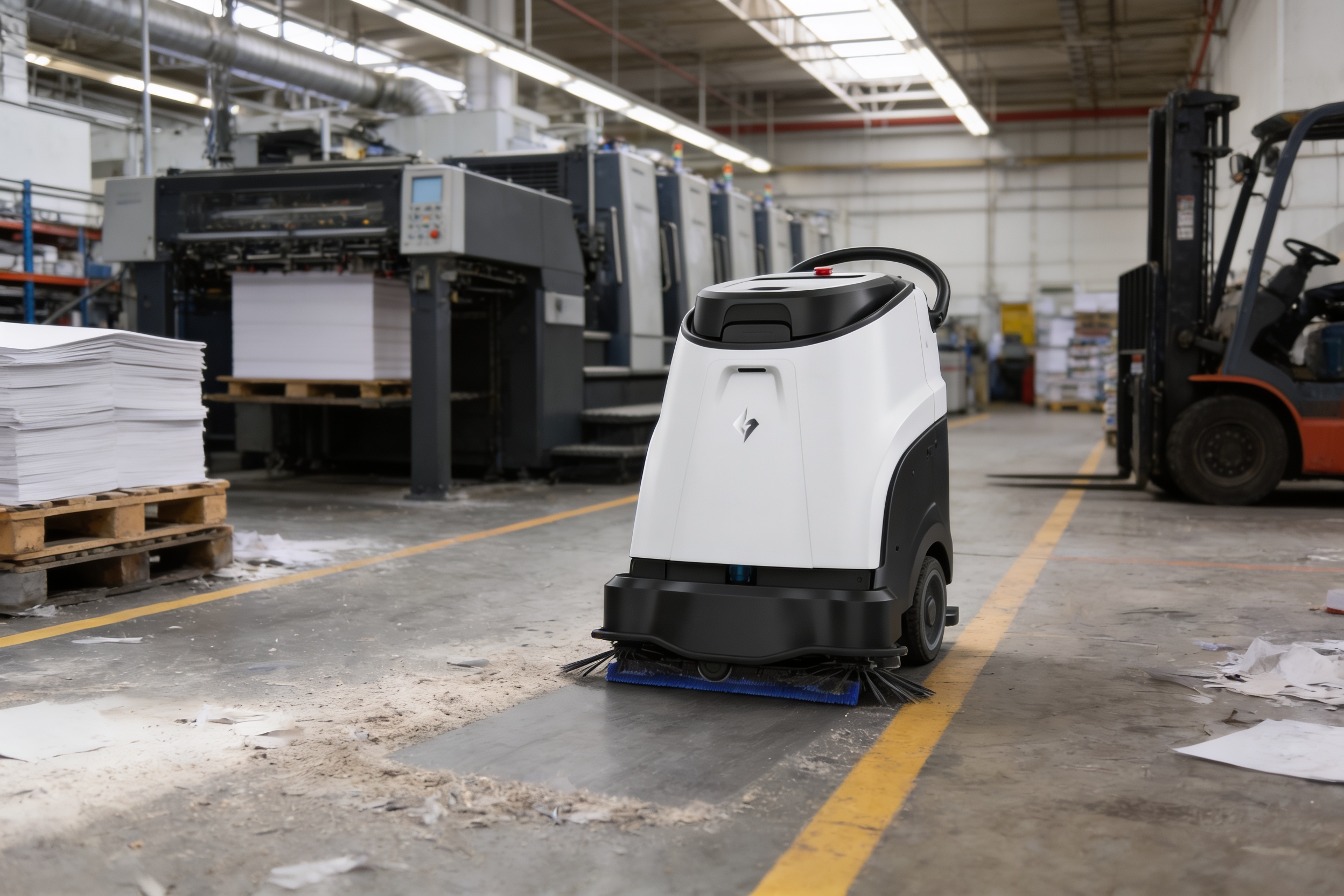
Floor scrubbing and sweeping on large open areas is the clearest fit. A vendor case study from a Denver school district reports that 14 units each cleaned autonomously for about 90 minutes per day, covering about 20,000 square feet per run. Vendor figures should be checked against your own floor, but they show the scale: a few machines on a repeat route can cover ground that would otherwise take staff hours in a window.
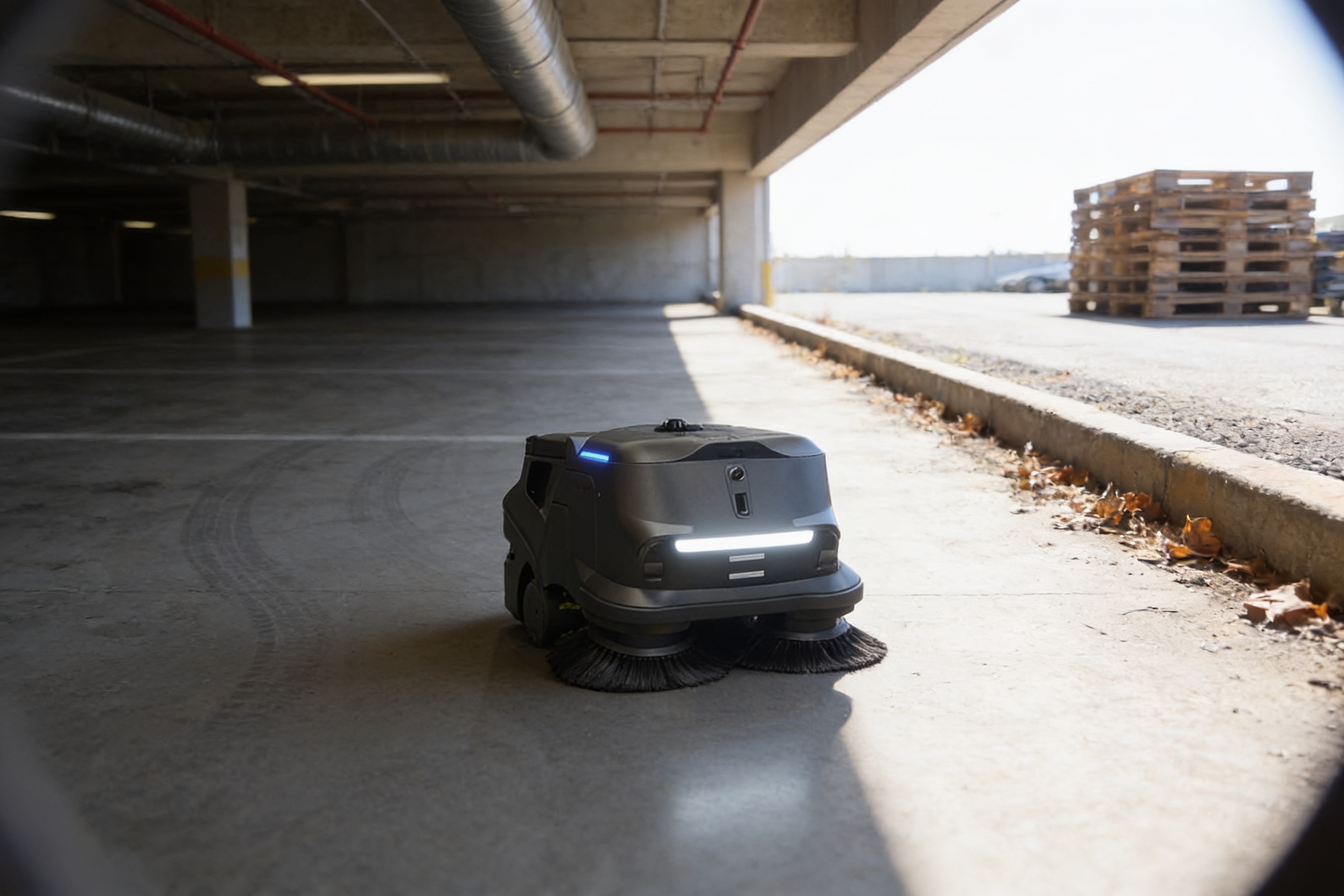
The robot handles the middle of the building well: long corridors, open lobbies, open office bays and clear parking traffic lanes. It does poorly where the floor is crowded with furniture, where steps or stairs break the route, and where the surface changes often enough to confuse the route.
What it cannot do is the list that matters most to a manager: restrooms and their fixtures, stairs and landings, spot cleaning of spills, glass and high surfaces, emptying trash, moving furniture, and any job that needs a person to decide. Those tasks stay with staff, which is why the best answer is usually a robot plus a smaller team rather than a robot alone.
What do the hours and labor numbers say?

The hard labor data is thinner than most managers expect. The research did not find a verified turnover rate for janitors and building cleaners, nor verified overtime or sick day rates for this occupation in Chicago or nationally. Very high frontline turnover figures for multisite cleaning operators circulate online with no primary source, so they should not be used to justify a decision.
What the Bureau of Labor Statistics does publish gives a sense of the job's injury exposure. A BLS injury snapshot for janitors and cleaners lists 18,680 nonfatal injury and illness cases requiring days away from work in 2019, an incidence rate of 157.4 per 10,000 full time equivalent workers. The research pass did not confirm which year that figure belongs to, so check the year labeling in the snapshot before quoting it. A separate BLS snapshot lists 21,100 cases involving days away from work in 2020.
The BLS JOLTS release reports total economy quits of 3.1 million, a rate of 1.9 percent. That covers all sectors combined, so it shows how the wider labor market is moving, not how fast building cleaning staff leave. Your own payroll and absence records are the only fair source for turnover at your site.
A state business guide citing employer injury reporting puts janitorial services employers at 2.5 work related injuries and illnesses per 100 full time workers in 2024. That is an aggregator figure and was not checked against BLS, so treat it as a rough signal only.
The local wage for this job is shown on the government wage data panel next to this text. Pay alone does not settle the question. The deciding figure is how many hours the repeat floor work takes, and whether those hours can move into a window when a machine can run.
What can a cleaning robot not do?
A robot cannot clean a restroom the way a person does. It does not handle toilets, sinks, partitions or the corners where most complaints start. It does not climb stairs, step over a cord or a dropped box, or tell a spill from a shadow on the floor.
It also does not replace the habit of noticing things. A janitor sees a leak, a broken fixture, a wet floor sign left out or a tenant with a problem. A robot can report some faults, but it does not walk the building with the eyes a staff member brings to the work.
It also depends on its own service. A unit that is down needs a repair path, a spare option or a trained person who can cover the route by hand that night. Plan for that before you lease, not after the first missed night.
What should you check before leasing a robot for Chicago?
Measure before you decide. The checks below change the answer more than any general claim about labor savings. Each one can move the decision toward a robot or away from it, and each one can be answered from your own building records within a few weeks.
How do you get started with a robot lease in Chicago?
Start with a site visit, not a model. We run a free site assessment, map the floor, time the repeat passes and set the route. The lease is quoted after that assessment as a fixed lease payment, so you see the number once the site is understood, not before.
Most first projects start small. A pilot with one leased unit on one repeat route tests the hour figures against your building before anything is scaled. We train staff on the route, the pre run checks and the handoff, and we service the unit nationwide, with on site dispatch and remote triage when something goes wrong.
Lease financing programs can spread the cost of the unit over the lease term, so the robot does not have to come out of the operating budget in one step. Ask for the quote to show how the lease, the service and the staff hours change together over the term you are considering.
Frequently asked questions
Put a robot to work in Chicago.
We walk your site, learn the job, and recommend the unit that fits. Then we quote the lease, deploy it, and keep it serviced.
Sources
- US Bureau of Labor Statistics, Occupational Employment and Wage Statistics (OEWS May 2024)
- BLS Occupational Outlook Handbook: Janitors and Building Cleaners
- BLS Injury and Illness Snapshot: Janitors and Cleaners
- BLS JOLTS news release
- Archived BLS Occupational Outlook Handbook, 2012
- Archived BLS OEWS table, May 2007
- Denver Public Schools case study
- Domus Building Cleaning case study
- Janitorial employer injury rate summary