
The short answer
Cleaning robot vs janitor in Buffalo is rarely all or nothing: a floor scrubbing robot fits large, open, repetitive floors on a set schedule, while a person still handles restrooms, trash, spills and judgment calls. A robot makes sense when it lets you cover the same open floor with fewer staff on a night or early shift, and it does not make sense when the building is small, cluttered or full of tasks that need hands. The government wage data on this page is the starting point for the labor math, and a site assessment settles the rest.
Key takeaways
- A floor robot covers large, open, scheduled floors, and a person covers everything else.
- Robots work best as a shift change with fewer staff, never as a way to run with zero staff.
- Published janitor turnover figures vary too widely to use directly, so your own hiring records matter most.
- The local wage data sets the labor baseline, and your timed shifts decide whether a robot fits.
- Robots are leased through financing, and the lease payment is quoted after a free site assessment.
Cleaning robot vs janitor in Buffalo: when does a robot make sense?
A cleaning robot vs janitor comparison in Buffalo usually comes down to one question: how much of the cleaning is open floor work that repeats on a schedule. Scrubbing and sweeping large hard surfaces is the clearest case. A warehouse aisle, a big-box sales floor, an open gymnasium or a wide concourse can be covered overnight without someone standing behind the machine.
A robot does not make sense when the building is small, split into many rooms, or full of furniture and obstacles that change day to day. It also fits poorly when most of the work is restrooms, trash and spills, because those tasks need hands and judgment. In those buildings a person stays the main cleaner, and a robot at best trims their floor time.
The practical test is simple. If a janitor spends a large share of each shift pushing a scrubber over the same open floors, a robot can take that work and free the person for the rest. If most of the shift is spent in rooms and around fixtures, the robot is a small add on and the decision should rest on the other tasks.
Buffalo adds its own factor. Winter brings slush, salt and tracked in moisture to entryways. A robot can run dry open floors well, but entry zones should be tested during a site assessment before you count on them.
What does a janitor actually do in a Buffalo shift?
A janitor's shift is a set of short jobs spread across a building, not one long floor job. A typical list includes emptying waste and recycling, restocking paper and soap, cleaning restrooms, spot mopping spills, sweeping or vacuuming, wiping high touch surfaces such as handles and rails, cleaning glass and doors, and reporting repairs or safety problems seen along the way.
Much of that work is interrupted. A janitor stops a floor pass to answer a spill call, clear a slow drain or move a table, so a shift that looks like it has a clear floor task still contains a lot of walking and waiting. Published time breakdowns for this exact job in Buffalo were not available for this page, so the hour figures below come from elsewhere and should be checked on site.
The government wage data on this page is the local baseline for any labor comparison. Use it with your own count of timed shift minutes, not with an assumed number of hours per task.
Median hourly wage, Janitors and Building Cleaners
$4,048
Monthly cost of one full-time worker in Buffalo, NY, at the median wage plus payroll costs (an estimate, not a quote).
Which cleaning tasks can a robot take, and which can it not?
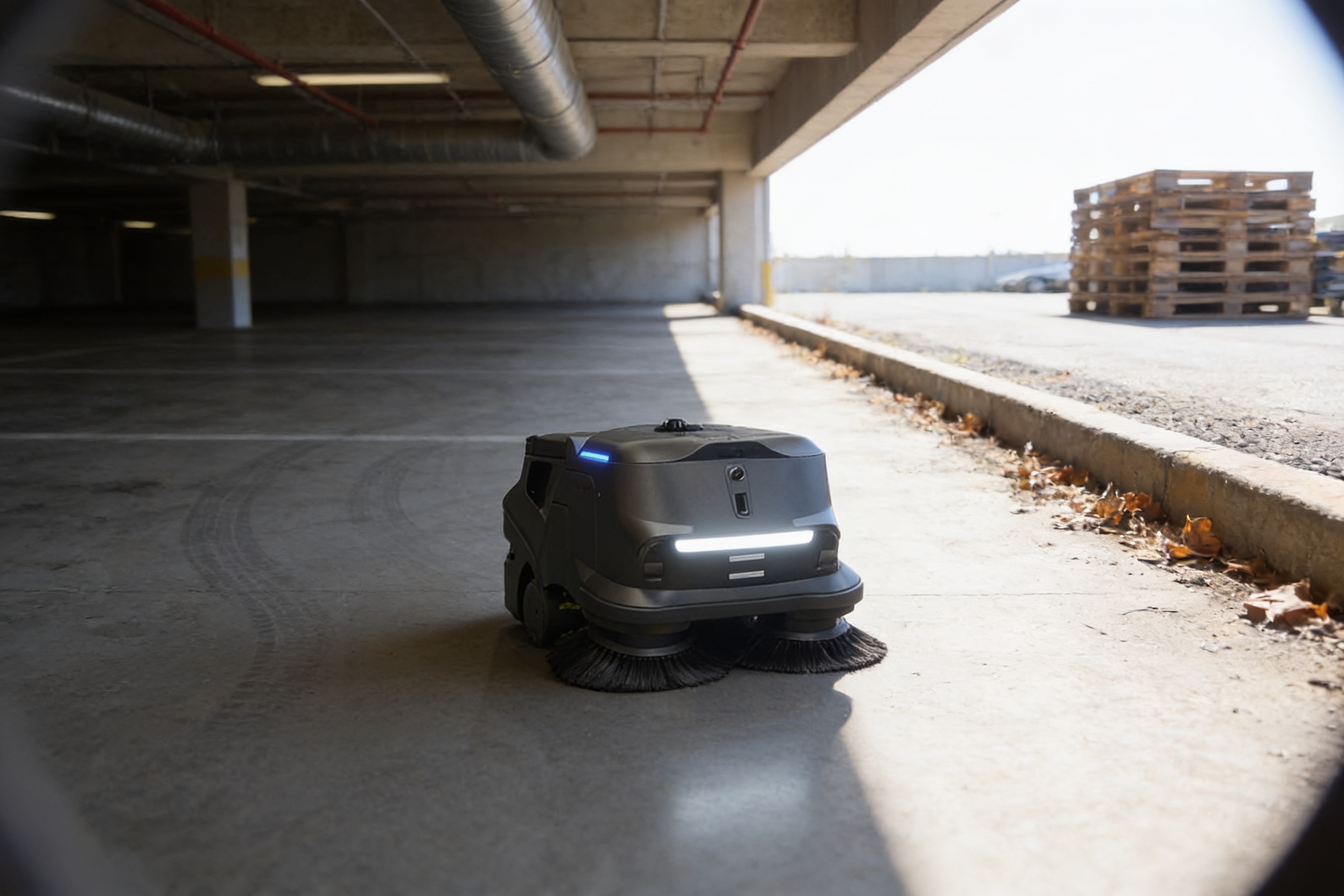
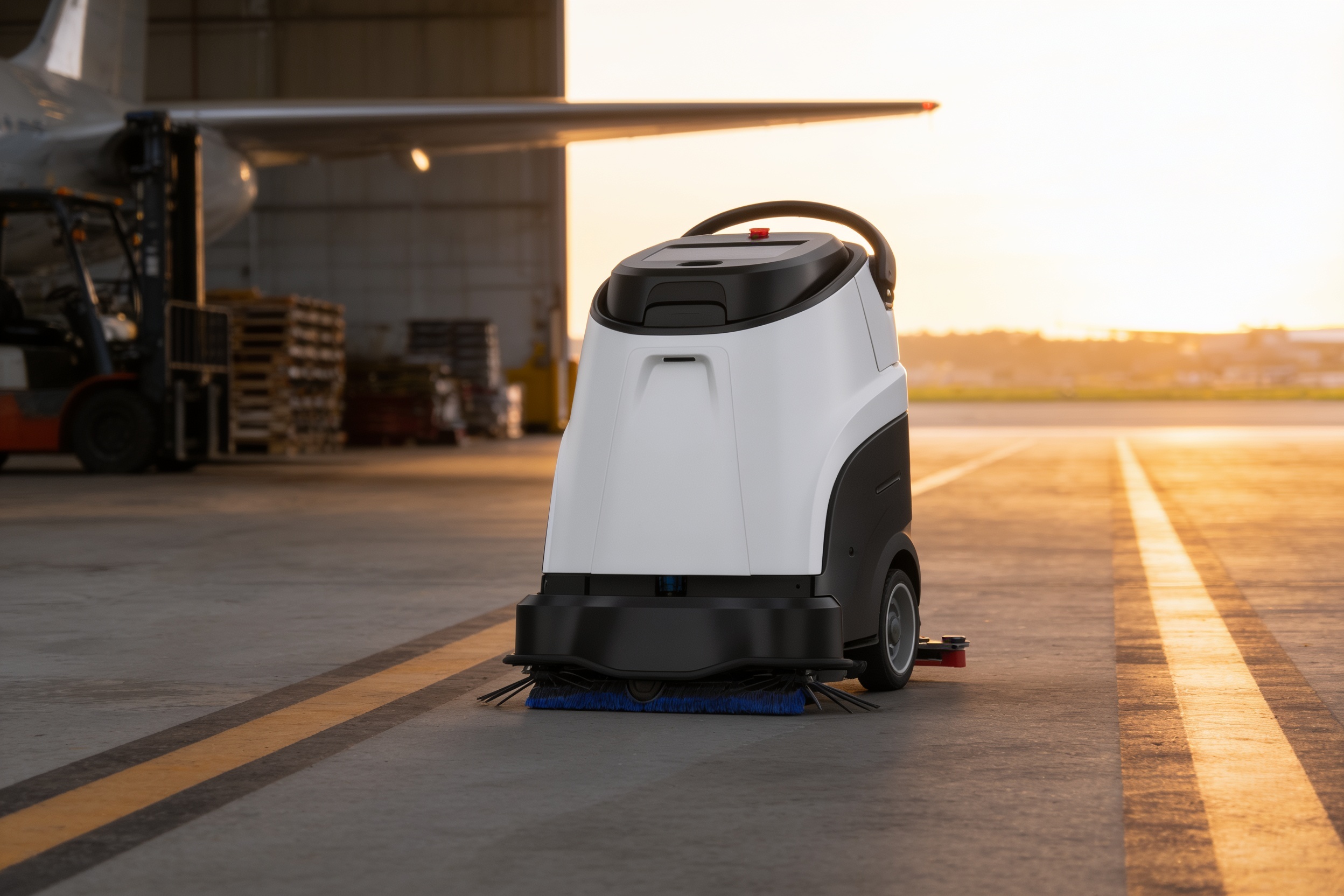
A floor scrubbing or sweeping robot takes the repeatable floor work: a set route, scheduled runs and a steady coverage pattern across open hard floors. Some units handle carpet in vacuum modes, but results depend on pile, edges and obstacles. The robot runs its route without an operator, and staff check it at the start and end of each run.
What a robot cannot take is most of the rest. It does not empty bins, restock supplies, clean toilets and sinks, wipe handrails by hand, clean glass, haul trash or move furniture. It cannot respond to an unexpected spill or a broken fixture, and it cannot decide that a floor is unsafe or that a stain needs a different method.
- Open floor scrubbing
Cleaning Robot
Runs a set route without an operator
Janitor
Covers odd corners and reacts to what it sees
- Restrooms and fixtures
Cleaning Robot
Not part of the job
Janitor
Full hand cleaning and inspection
- Spills and hazards
Cleaning Robot
Stops and alerts staff
Janitor
Judges and responds on the spot
- Scheduled coverage
Cleaning Robot
Runs on a timed schedule with a person at the start and end
Janitor
Available for call outs and changing priorities
- Sick days and resignations
Cleaning Robot
Not affected by sickness or a resignation
Janitor
Absences and turnover need cover and training
- Obstacles and clutter
Cleaning Robot
Stops until the route is clear
Janitor
Moves things and works around them
How many hours does floor cleaning take, and what changes with a robot?

The clearest hour figures available come from vendor case studies, which report their own results without independent controls. In one 2023 hospital case study from a robot maker, total manhours per night fell from 16 to 5, the time to finish cleaning fell from 8 hours to 5, and the floor team went from 3 people to 2. That is one site reported by the seller, so read it as an example of the shape of change, not a forecast for your building.
Two things make hours hard to forecast. The saving depends on how much of the shift is open floor work compared with the rest of the list. A robot also needs setup, a route check and someone to answer alerts. The table below separates the work a robot can take from the work that stays with staff.
We found no independent study of per-shift hours saved by floor scrubbing robots, and no Buffalo specific schedule, overtime or sick day data for this job. A timed week of your own shifts is the most reliable input you can collect.
What do national turnover and injury figures mean for a Buffalo business?
According to the Bureau of Labor Statistics Occupational Outlook Handbook, about 2.4 million people held janitor and building cleaner jobs in 2024, with projected growth of about 2 percent from 2024 to 2034 and about 351,300 openings a year on average. Many of those openings are replacement hiring, which means the job turns over even when the total number of jobs is steady.
No official BLS turnover rate for this occupation was found for this page. A cleaning trade publication's reader survey reports an industry average of 73 percent, while about 300 percent is often cited elsewhere. That survey reflects its readers rather than a random sample, and definitions differ on whether turnover counts voluntary exits, total exits, full time or part time staff. Compare figures only against your own hiring records.
Injury data matters for the decision too. A BLS snapshot covering 2015 to 2019 lists 18,680 nonfatal injury and illness cases with days away from work for janitors and cleaners, except maids and housekeeping cleaners, in private industry, an incidence rate of 157.4 per 10,000 full time equivalent workers. A second BLS snapshot covering 2016 to 2020 lists 191.6 per 10,000 and records 42 fatal work injuries in 2020 and 45 in 2019 for the occupation. A robot may reduce time spent on heavy scrubbing, but it does not remove slips, lifting and chemical exposure from the rest of the work.
Where does a cleaning robot work inside the building?
Think in zones rather than whole buildings. A robot works best where the floor is large, open and clear at the scheduled time. Warehouse aisles, retail sales floors, concourses and dining rooms that clear after closing are the usual candidates. Each zone needs a clear route and a fixed schedule, and staff should be able to clear obstacles before each run.
Other zones stay with staff. Restrooms, kitchens with grease, stairwells, back of house rooms with many doors and areas with frequent furniture changes are better handled by a person. Map the building and mark each zone as robot, person or shared before you choose how many units to lease.
How does a team work with a robot plus fewer staff?
The workable model is a robot added to the crew, with fewer people on open floor work, never zero staff. The person who used to push the scrubber now starts the route, checks it, clears obstacles, handles alerts and takes on restroom, trash and spill work. A building with no staff has no one to respond when the robot stops or a spill appears.
Plan the handover on paper before deployment. Decide who starts each run, who checks the route at the end, who answers an alert and what the next morning inspection covers. Staff need to know how the robot stops and which single step clears a jam.
Training is short but has to be hands on. Staff should practice starting a route, pausing, reading an alert and moving obstacles, and the first weeks should include supervised runs. Once the routine is steady, a person's time goes to the tasks the robot cannot take.
What can a cleaning robot not do?
A cleaning robot is not a full janitor. It does not handle trash, restroom fixtures, glass, stairs, furniture moves, or judgment about a stain, a spill or an unsafe floor. It also depends on a clear route. Pallets, cords, wet floor signs and open boxes stop it, and a stopped robot does nothing until someone clears the path.
Results on carpet, uneven floors, slush or heavy grease depend on the unit and the surface, so test them on your own floors before relying on them. The robot cleans only what its route covers, so the people who set routes and check results still decide the quality of the building. It also does not replace reporting repairs or safety issues.
For a Buffalo site with many rooms, frequent furniture changes and heavy winter tracking, a person remains the main cleaner and a robot is a helper for open floors. If most of the building is open floor, the case for a robot is considerably stronger.
How do you get started with a robot in a Buffalo building?
Start with a free site assessment. A site visit maps the floor, marks zones as robot, person or shared, and checks routes, doors, lighting and obstacles. The output is a plan covering which zones the robot takes and how staff handle the rest, along with a labor comparison built from the local wage data and your timed shifts.
Robots are leased through financing, and the lease payment is quoted after the site assessment, once the unit, route and service needs are clear. Our team handles selection, financing, deployment and integration, staff training, and service support nationwide. Ask directly whether maintenance and service sit inside the lease quote, and get that answer in writing.
Then run a short pilot with one unit in one zone. Time the shift before and after, record missed areas and stops, and keep the janitor's non floor work visible in the numbers. If the pilot holds, expand zone by zone. If it does not, you will have a clear answer for the next decision.
Frequently asked questions
Put a robot to work in Buffalo.
We walk your site, learn the job, and recommend the unit that fits. Then we quote the lease, deploy it, and keep it serviced.
Sources
- US Bureau of Labor Statistics, Occupational Employment and Wage Statistics (OEWS May 2024)
- BLS Occupational Outlook Handbook, Janitors and Building Cleaners
- BLS Injuries, Illnesses, and Fatalities snapshot, Janitors and Cleaners 2015 to 2019
- BLS Injuries, Illnesses, and Fatalities snapshot, Janitors and Cleaners 2016 to 2020
- CleanLink reader survey on cleaning industry turnover
- SoftBank Robotics hospital network case study, 2023 (vendor-reported)