

The short answer
When you weigh a cleaning robot vs janitor in Memphis, a robot makes sense for large, mostly open hard floors that get scrubbed on a predictable schedule, especially overnight when no one is walking through. It does not take over restrooms, trash, spills, glass, or the many small jobs that need a person to judge what they are looking at, so the realistic model is one robot plus fewer staff, not zero staff.
Key takeaways
- A floor robot fits large, open, hard floors on a set schedule, and it works best when the route rarely changes.
- It does not handle restrooms, trash, spills or glass, so people stay on the shift for that work.
- The right model is one robot plus fewer staff, never zero staff.
- Your own timesheets settle the math, and the lease payment is quoted only after a free site assessment.
When does a cleaning robot vs janitor in Memphis actually make sense?
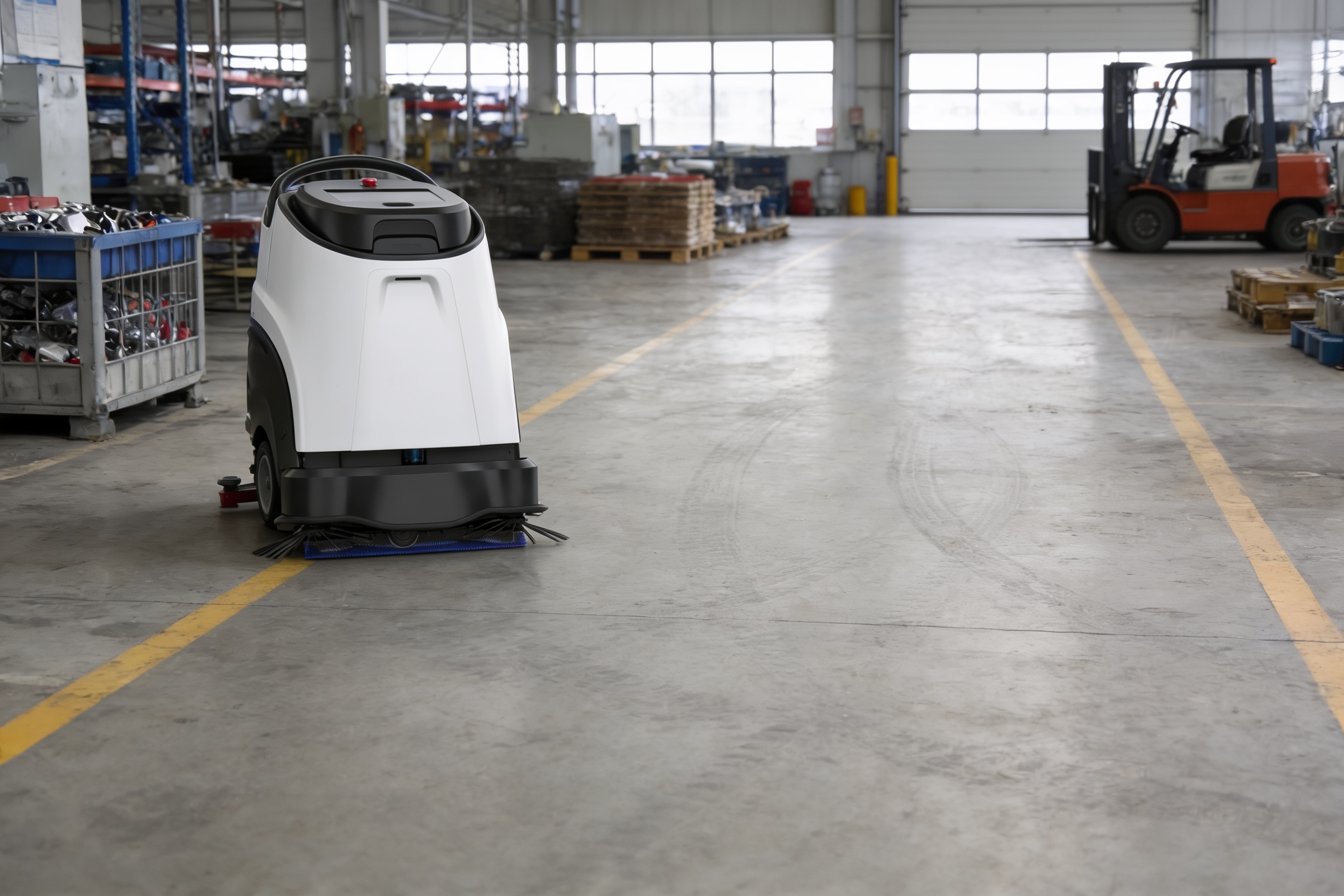
The short version is that a floor robot earns its place when the work is mostly the same route repeated over and over. Large retail floors, warehouse aisles, lobbies, long hallways and open concourses are the typical fit. A person pushing a scrubber across a big open floor spends most of the shift on one repeated pass, and many of those spaces sit empty overnight, which is when a robot can run without blocking traffic.
It makes less sense when the building is cut into many small rooms, when the floor is full of cords, pallets or furniture that moves every day, or when the main problem is restrooms and trash. A busy site with frequent spills, unpredictable foot traffic and a lot of carpet will still need a person on shift. Our first step is always a site walk, because the floor plan tells you more than a headcount does.
Memphis adds a local question. The government wage data on this page gives the local wage for this job, and that matters, but a wage alone does not settle the decision. What matters is how many paid hours your building spends on floor work each week and whether those hours fall at night, on weekends or in the hours you struggle to staff.
What does a janitor actually do in a shift?
A janitor's shift is rarely one task. It is a sequence of small jobs spread across the building, and the floor work is often only one part of it. In most commercial buildings the person on shift cleans restrooms, empties trash and recycling, restocks paper and soap, wipes high-touch surfaces, cleans glass and doors, responds to spills and odd messes, and reports damage or safety problems. Floor care is usually scheduled around that routine rather than the other way round.
This is why the split of tasks matters more than the job title. A robot can take the repeated floor passes. It cannot tell whether a puddle is harmless water or a slip hazard, and it cannot clean a toilet. When you plan the change, list each task, how often it happens and when it happens. The robot only replaces the rows that repeat on open floor.
The timing matters too. Restroom and trash work follows the building's open hours and traffic, so it is often the piece that needs a person in the daytime, while open floor passes can move to after close. That split is where the staffing plan changes.
- Restroom cleaning and restocking
- Trash and recycling removal
- Spill response, which arrives unpredictably
- Sweeping, vacuuming and scrubbing floors
- Glass, doors and high-touch surfaces
- Reporting damage, leaks and safety issues
Median hourly wage, Janitors and Building Cleaners
$3,552
Monthly cost of one full-time worker in Memphis, TN, at the median wage plus payroll costs (an estimate, not a quote).
Which parts of the cleaning job can a robot take?
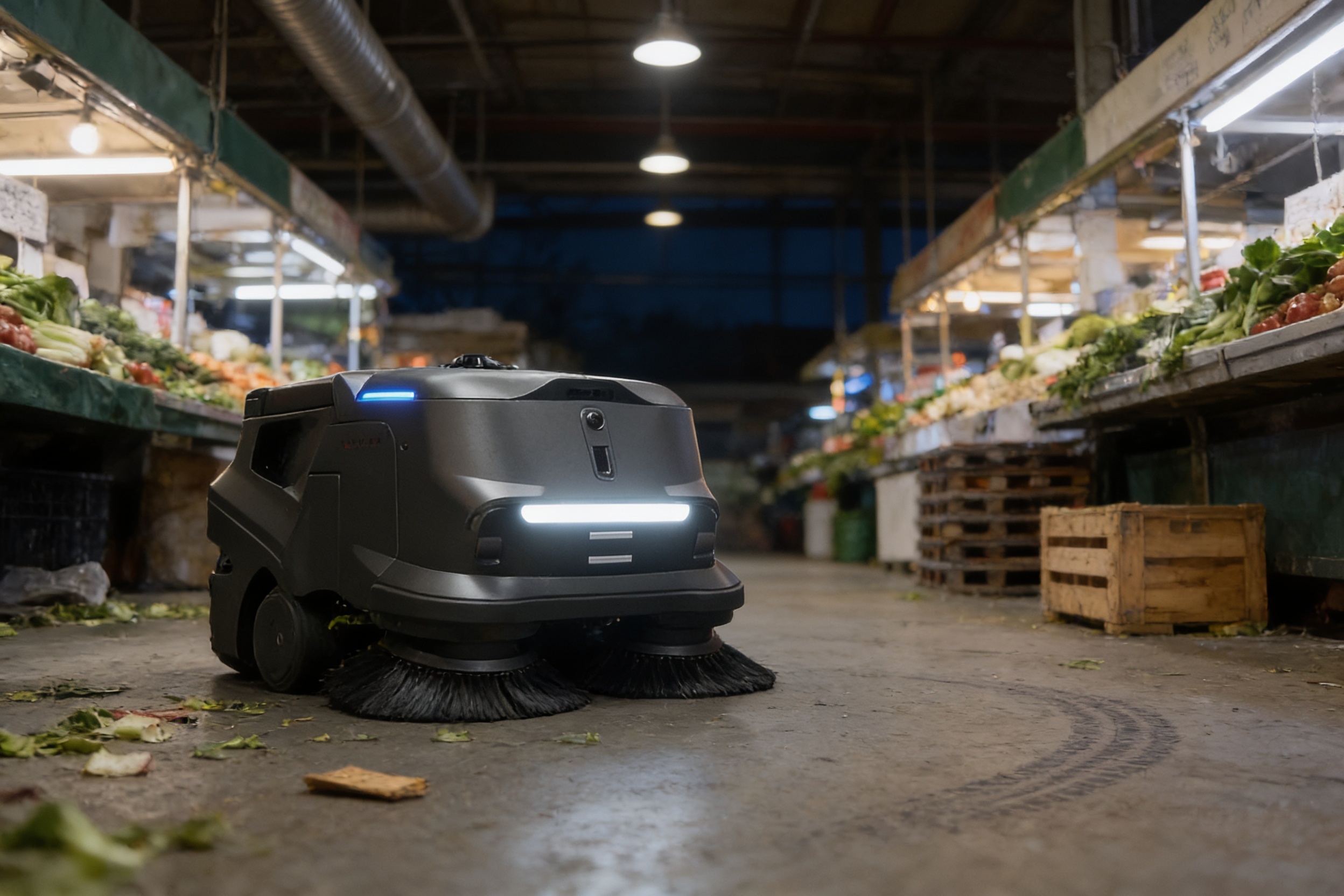
A floor robot can take scheduled scrubbing and sweeping of open hard floor. That is often the largest single block of repetitive walking in a big building, and it is where a person spends long stretches pushing a machine down the same aisles. Routes can be mapped once, run every night, and paused automatically when something blocks the path.
The wider market points the same way. According to the International Federation of Robotics, floor cleaning is the main use of professional cleaning robots, in places such as airports, supermarkets and shopping centers. The federation reports that professional cleaning robot sales were above 25,000 units in 2024, up 34%, and that cleaning robots ranked third among professional service robot categories. Those are sites with large open floors, close to the profile above.
The robot does not take the parts that need a decision. Anything that involves a fixture, a bin, a new hazard or a person's request stays with staff, and the lines between the two should be written down before any robot arrives. A clear split is also what makes the run record useful, because the team can see exactly which areas the robot covered and which it did not.
- Repeated floor passes
Cleaning Robot
Runs the same mapped route on schedule, including overnight
Janitor
Adapts to blocked aisles and uneven spots as they come up
- Spills and unknown messes
Cleaning Robot
Cannot judge what the spill is, so a person must respond
Janitor
Identifies the spill, decides how to clean it and flags the hazard
- Restrooms and trash
Cleaning Robot
Not a fit for restroom cleaning or emptying bins
Janitor
Handles restrooms, trash and restocking as part of the shift
- Night coverage
Cleaning Robot
Can run after close when no one is walking through
Janitor
Needs paid shift time and a night schedule, which can be hard to staff
- Reporting and judgment
Cleaning Robot
Flags its own faults and blocked routes
Janitor
Notices broken fixtures, leaks and safety issues across the whole building
How many people hold this job, and how hard is it to staff?
According to the Bureau of Labor Statistics Occupational Outlook Handbook, about 2.4 million janitor and building cleaner jobs existed in the United States in 2024. The agency projects 2% growth from 2024 to 2034, which it calls slower than average, and about 351,300 openings a year on average over the decade. Those openings cover growth and replacement together, so the turnover load is real even though the agency does not publish a turnover rate for this occupation.
The International Federation of Robotics also reports that professional service robot sales reached almost 200,000 units in 2024, up 9%, and cites staff shortages as a key driver. For Tennessee, Wagedex lists 37,440 janitor and cleaner jobs statewide, excluding maids and housekeeping cleaners, though the page does not confirm the reference period. We did not verify a Memphis headcount for this occupation in this pass, so treat any local staffing figure you find as a question to check against your own records.
We also did not find a verified turnover rate for this job. Vendor and blog estimates exist, but they state no method, so we have left them out. Overtime, night-shift share and sick-day rates for janitors were not verified either. Night shifts are a staffing question as much as a cost question, because the pool of people willing to work after close shapes what is possible. Your own payroll records will answer these questions more reliably than any national average. Pull the last year of cleaning-shift hours, overtime, open vacancies and call-outs, and set them beside the government wage data on this page.
How does a team work with a cleaning robot on site?
The robot does not work alone, and it does not work with zero staff. The realistic model is one robot plus fewer staff, where the people who remain own restrooms, trash, spills, glass and the daily check on the robot's runs. A person who spent most of a shift pushing a scrubber moves to the work that needs judgment, and the schedule is rebuilt around that.
Setup starts with a site assessment and mapping, then staff training on daily checks, pausing the robot, clearing blockages and reading the run record. We handle deployment, go-live support and training, so your team is not left to work out the controls during the first week. Staff who understand the robot's limits are the ones who keep it running well.
Plan the handoffs in writing. Decide who clears the route before a run, who responds to a paused robot, and who checks the record each morning. The robot is only as reliable as the routine around it.
Is a cleaning robot safer for staff than manual floor work?

The Bureau of Labor Statistics reported a total recordable injury and illness rate of 2.3 cases per 100 full-time equivalent workers for private industry in 2024, down from 2.4 in 2023, according to Business Insurance, which cites the agency's survey. That is an all-industry rate, not a cleaning rate, so use it as context only.
For this occupation, the BLS snapshot for janitors and cleaners, excluding maids and housekeeping cleaners, shows days-away-from-work cases at 191.6 per 10,000 full-time equivalent workers in 2020, against 157.4 in 2019. Those figures are a reason to look hard at how floor work is loaded onto people, especially repetitive pushing and wet floors.
A robot can remove some of the repeated pushing. It does not remove slip hazards from spills, and it does not replace the person who has to respond to them. Treat the robot as a way to reduce one kind of strain, and keep the spill and wet-floor procedure in writing, with a person named to respond.
What can a cleaning robot not do?
A floor robot does not clean restrooms, empty trash, restock supplies, or handle glass and doors. It cannot judge what a spill is or whether a wet floor is a hazard, and it cannot make the decisions a person makes when a fixture is broken or a door is blocked. Clutter, loose cords, moved furniture and unexpected pallets slow it down and can stop a run.
Robots also have downtime. A unit can need repair, a battery can need replacing, and a map can go stale when a building is rearranged. Ask how a site handles these cases before deciding. We service units nationwide and can dispatch on site, but a run that fails at two in the morning still needs a person to restart it, and someone must decide what the building does that night.
The robot also does not close a labor gap in restroom and trash work. If your shortage sits in those tasks, a floor robot will not solve it. Be honest about that in the assessment, because the best outcome is a robot that takes the work it does well and a staffing plan that covers the rest.
What should you check before you decide?
Start with your own hours, not a headline. Take the cleaning shift's logged time, split it by task, and mark which tasks sit on open hard floor and which sit on restrooms, trash and spills. Set that split beside the local wage for this job in the government wage data on this page, plus whatever overtime and vacancy time your payroll shows. The math for a cleaning robot vs janitor in Memphis is built from those rows, not from a national average.
Then check the floor. Measure how much open hard floor is in use each night, what blocks it, and how often the layout changes. A robot is judged on the route it can repeat, so a building with a stable layout is a far better test than one that is rearranged every few weeks.
Finally, decide what a pilot would prove. A single leased unit on one area, measured against the timesheets you already keep, tells you more than a building-wide estimate. If the pilot shows the open-floor work is steady and the staff can cover the rest, you have a basis for a larger decision.
How do you get started with a cleaning robot lease in Memphis?
Begin with a free site assessment. We walk the building, map the floors, check the routes and identify where the robot would work and where a person must stay. Robots are leased through financing, and the lease payment is quoted after that assessment, so the figure reflects your actual site rather than a generic plan.
We select the robot for the site, arrange the lease financing, deploy and integrate the unit, train your staff, and service the robot nationwide. Starting with one leased unit lets you measure the run record before you decide on more. If the site cannot support a robot, we will say so during the assessment rather than leasing you a unit that will not run well.
Bring your timesheets, a floor plan, the list of tasks and any records of overtime or vacancies. That is enough for us to tell you where a robot fits, where it does not, and what the remaining staff plan has to cover.
Frequently asked questions
Put a robot to work in Memphis.
We walk your site, learn the job, and recommend the unit that fits. Then we quote the lease, deploy it, and keep it serviced.
Sources
- US Bureau of Labor Statistics, Occupational Employment and Wage Statistics (OEWS May 2024)
- Bureau of Labor Statistics, Occupational Outlook Handbook: Janitors and Building Cleaners
- International Federation of Robotics, Service Robots Report via BusinessWire (October 2025)
- International Federation of Robotics, service robots growth news
- Business Insurance, BLS 2024 work injury data
- Bureau of Labor Statistics, injury and illness snapshot: Janitors and Cleaners, Except Maids and Housekeeping Cleaners, 2016 to 2020
- Wagedex, Janitors and Cleaners, Except Maids and Housekeeping Cleaners: Tennessee