
The short answer
For most sites, the cleaning robot vs janitor decision in Louisville/Jefferson County comes down to floor layout and shift hours. A cleaning robot makes sense where large, mostly open floors need the same route repeated on a schedule, especially overnight. It does not replace a janitor for restrooms, trash, spills, stairs or detail work, so the practical model is a robot plus fewer staff, not zero staff.
Key takeaways
- A cleaning robot fits repeat passes on large, open, mostly flat floors, not the whole building.
- Restrooms, trash, spills, stairs and detail work stay with staff.
- BLS data puts janitor injury incidence at 191.6 cases per 10,000 full-time workers for 2016 to 2020, so repetitive manual passes are worth weighing.
- Plan for a robot plus fewer staff, and get the lease quote after a free site assessment.
- Use the government wage data on this page with your own timesheets to size labor hours, not to guess a payback.
Is a cleaning robot or a janitor the better fit in Louisville/Jefferson County?
The question is rarely robot or janitor in full. Most buildings need both, and the real decision is which hours of floor work move to a machine and which stay with a person. For a facility here, the cleaning robot vs janitor comparison turns on floor area, shift hours, and how hard the open floor work is to staff.
Labor supply is tight across the country, not only in this metro. According to the BLS Occupational Outlook Handbook, about 2,447,700 janitors and building cleaners were counted in 2024, and about 47,800 jobs are projected to be added from 2024 to 2034. BLS calls that 2 percent growth, slower than the average for all occupations. A slow-growing pool means open shifts stay hard to fill.
We lease commercial robots through financing, pick the right unit for the site, deploy and integrate it, train the staff who work beside it, and service it nationwide. The first step is a free site assessment, and the lease quote follows from what that assessment finds.
When does a cleaning robot make sense, and when does it not?
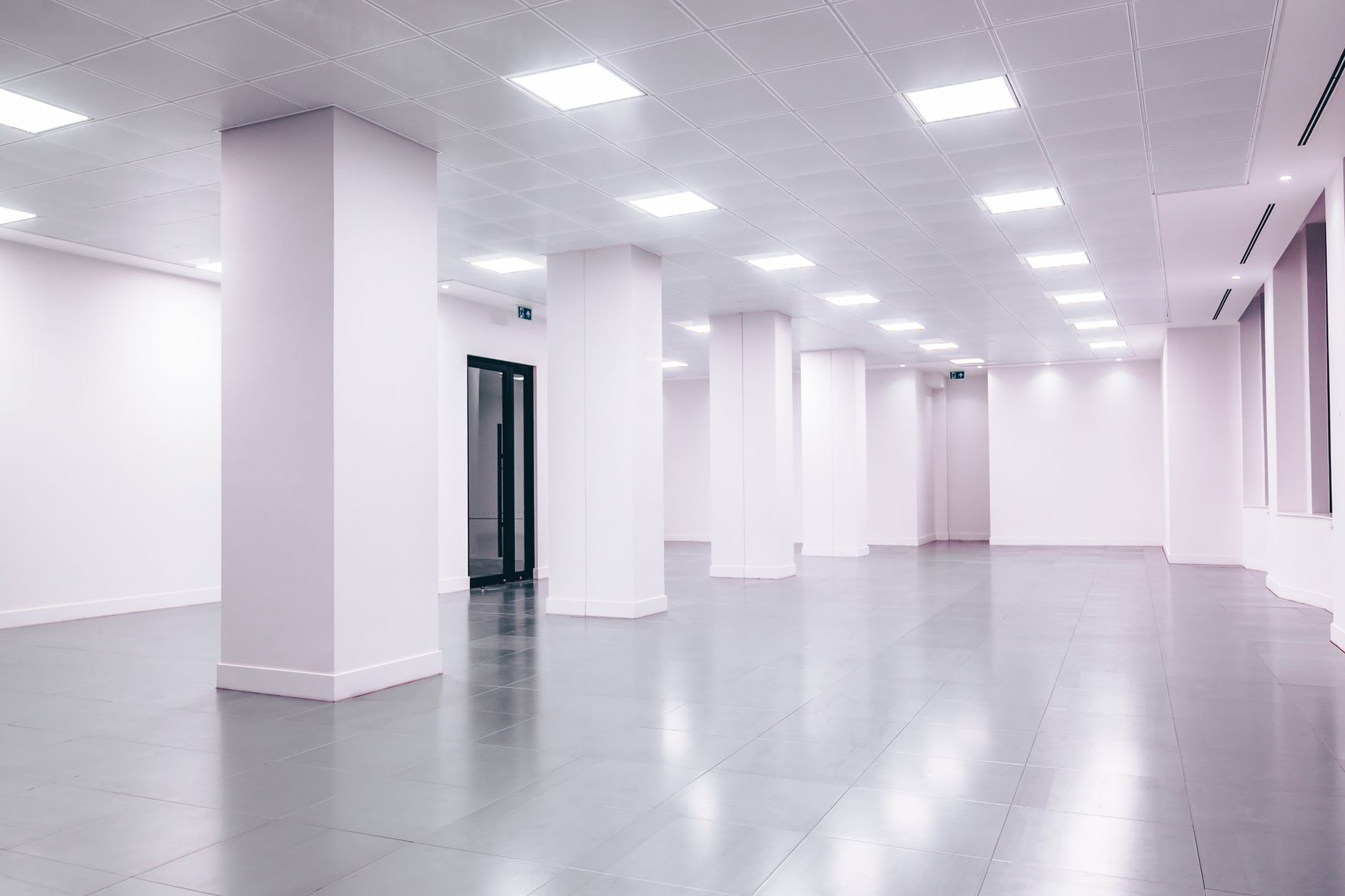
A cleaning robot earns its place where floor area is large, open and repetitive. Long straight corridors, open lobbies, retail aisles, back-of-house passages and dining floors with few obstacles all fit. The unit repeats the same mapped route on a schedule, so the work can happen overnight as well as during the day, with no operator on the floor.
It makes less sense when the building is many small rooms, when the layout changes every day, or when the soil needs hand tools. A robot needs a clear route. Furniture moved each day, cords across the floor, and frequent stairs or elevator trips cut its usable hours and bring the work back to a person.
The category is common but not universal. A 2019 AACEM/ISSA survey, reported by a facilities publication, found about 69 percent of facility and property managers had not used autonomous cleaning equipment and about 26 percent had used it. That is a baseline from 2019, so treat it as a starting point rather than today's share.
- Good fit: one level with a large open floor area and a route that stays the same from shift to shift.
- Good fit: an empty or lightly used building overnight, where staff are short or overtime is common.
- Poor fit: many small rooms, frequent layout changes, or heavy grease and debris that needs manual work.
- Poor fit: stairs or several floors that need a person to move the unit between areas.

Median hourly wage, Janitors and Building Cleaners
$3,742
Monthly cost of one full-time worker in Louisville/Jefferson County, KY, at the median wage plus payroll costs (an estimate, not a quote).
What does a janitor actually do in a shift?
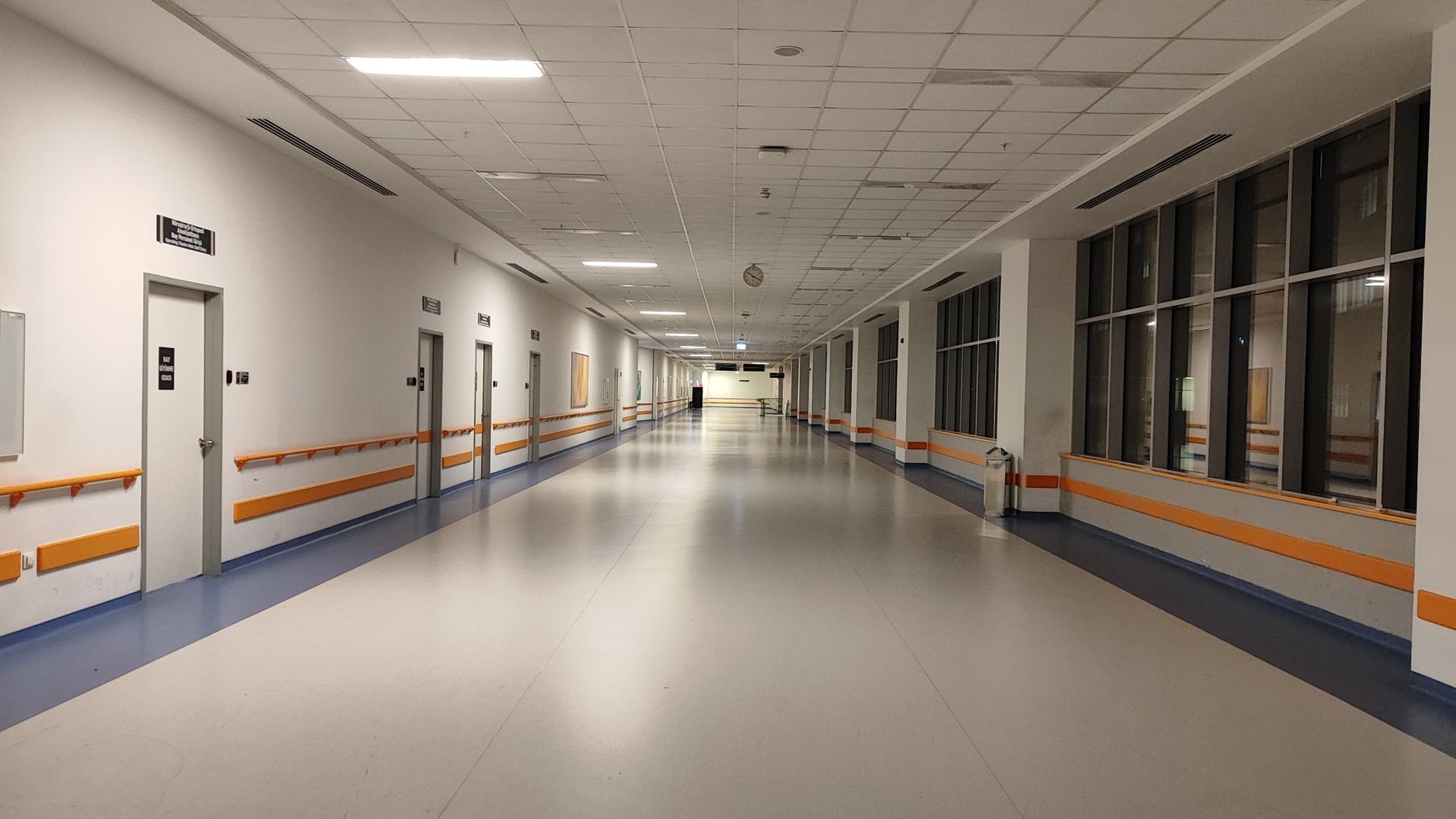
A janitor's shift is rarely one task. It mixes floor work such as sweeping, mopping and scrubbing with restroom cleaning and restocking, trash and recycling, spot cleaning of spills, dusting, glass, and reporting broken fixtures. Much of it is done on foot, bent over, and with chemical products in hand. Floor work is one thread of the day, not the whole day.
The injury record explains why managers look at repetitive work. According to the BLS injury and illness snapshot for janitors and cleaners, except maids and housekeeping cleaners, private industry recorded 21,100 nonfatal injury and illness cases involving days away from work in 2016 to 2020, an incidence rate of 191.6 per 10,000 full-time equivalent workers. The same series for 2015 to 2019 reported 18,680 cases and a rate of 157.4 per 10,000. The two windows overlap, so read them as a trend rather than two separate counts.
Those rates are a reason to take repeat floor passes off a person, not a reason to remove every person. A robot does not lift, carry or handle spill chemicals, so exposure in restrooms and trash areas stays with staff and needs the same controls as before.
Which cleaning tasks can a robot take, and which can it not?
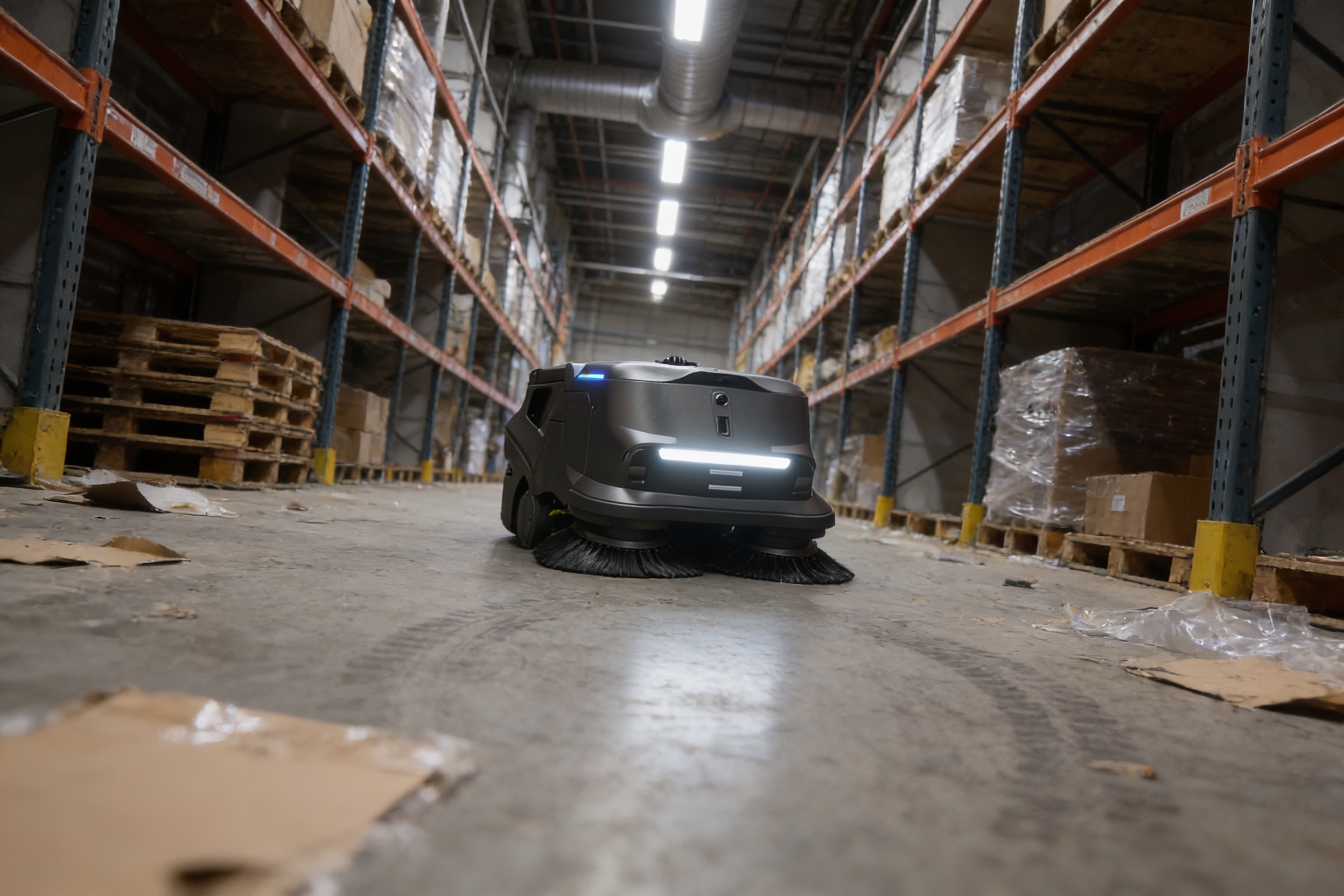
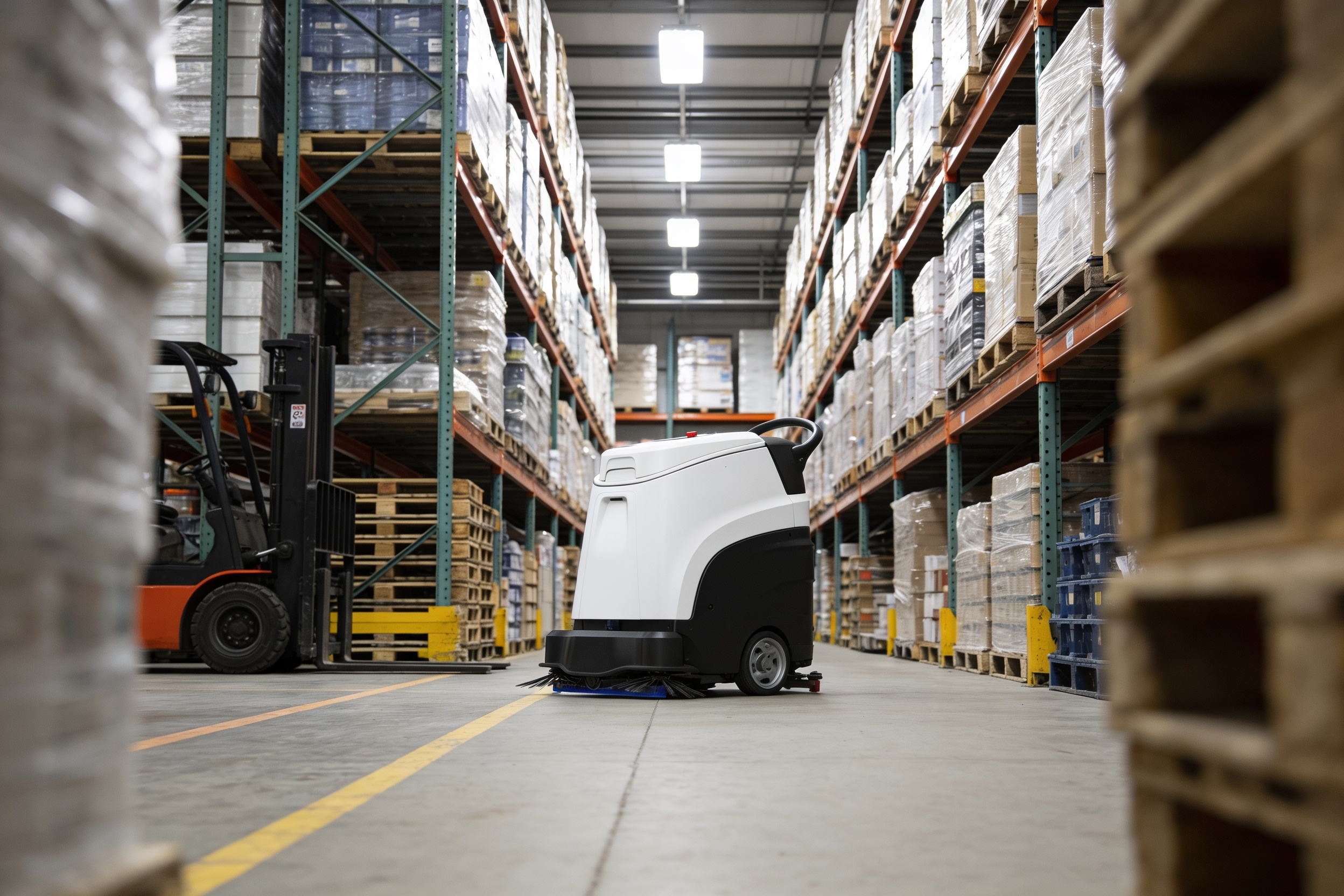
A scrubber or sweeping unit can take the repeat passes on open, flat floors: sweeping, scrubbing and vacuuming along the main routes, run without an operator on site. It can return to its charging point and keep a record of where it has been, which gives a supervisor a log that a verbal handover never did.
It cannot clean restrooms, empty trash, wipe high touch surfaces, decide whether a spill is a hazard, or climb stairs. Thresholds, cords, deep carpet and loose mats need checking before each run. A unit stops when it meets an obstacle it cannot pass, so the route needs clear floor at the start.
The zones below show where a robot usually works and where it stops. Confirm the layout during the site assessment, because a floor plan and the real floor often disagree.
What do the hours and labor picture look like?
The labor picture is less about one hourly rate and more about hours and gaps. According to the BLS Occupational Outlook Handbook, most janitors work full time, part-time work is common, and evening hours are common because offices are cleaned after they empty. The government wage data on this page gives the local wage for this job, which sets the baseline for the hours a person spends on floor work.
We checked the BLS area table for the Louisville-Jefferson County metro, but the janitor row did not come back in this pass, so this page states no local headcount or night share. Nationally, BLS counted 13,740 jobs for building cleaning workers, all other, in May 2023. That is a separate occupation category from janitors, so it does not stand in for a janitor headcount.
Turnover is where the numbers get loose. An industry statistics aggregator reports, citing an ISSA survey we did not verify against the original, that 76 percent of cleaning firms faced labor shortages in 2023 and annual turnover was 42 percent. A cleaning industry reader survey reports an average of 73 percent turnover, and vendor and blog estimates range from 75 to 400 percent. Treat these as directional, and pull overtime, sick days and night premiums from your own timesheets.
How does a robot and a staff team share the shift?
The model we recommend is always a robot plus fewer staff, never zero. A person still opens and closes the floor, clears the route, handles spills and restroom work, and checks the robot's results. The unit takes the repeat passes that used to fill much of a person's shift.
Staff change from pushing a machine to supervising one. That means a short daily route check, clearing obstacles before each run, and reviewing any stop or fault the unit logs. Training on that routine is part of deployment, and we set it up with the people who will run the unit, not only with a manager.
Plan for downtime. When one unit is out for service, the floor still needs a person to cover. That is why a spare unit or a service plan with on-site dispatch belongs in the staffing plan from the start.

How common is autonomous cleaning, and what worries managers?
Autonomous cleaning is established but far from universal. The 2019 AACEM/ISSA survey, reported by a facilities publication, found 69 percent of facility and property managers had not used autonomous equipment and 26 percent had used it. It is from 2019, so its numbers show the starting point, not the present.
Labor shortage is the pressure that moves most managers. The aggregator figure of 76 percent of cleaning firms reporting shortages in 2023 comes from an ISSA survey we did not check at source. Read it as a sign that open shifts are common, and that a robot reduces how many shifts depend on one person being present, rather than as a precise measure.
Common worries are breakdowns, safety around people, and staff resistance. Breakdowns are handled by a service plan with remote triage and on-site dispatch. The unit runs a mapped route and stops at obstacles, and staff are trained to supervise it. The model is fewer staff, not zero, and the people who stay do different work.
What can the robot not do, and where does a janitor still win?
A robot does not use judgment. It does not see that a wet floor sign is needed, that a puddle comes from a leak, or that a stain is a safety issue. It cannot climb stairs, clear a blocked route on its own, or clean a restroom. It will not notice a broken door latch or a cracked tile.
A person wins on flexibility. A janitor can change the route on the spot, move a cart, open a locked room, and respond to a request from a tenant or visitor. A janitor can also cover several floors and areas in one shift, which one unit on one route cannot.
The robot wins on repeat passes, steady coverage of large open areas overnight, and a written record of each run. The comparison below sets out where each one fits.
- Overnight floor passes
Cleaning Robot
Runs its mapped route with no operator on site
Janitor
Needs a staffed shift and someone to supervise it
- Restrooms and trash
Cleaning Robot
Cannot do it
Janitor
Does it as core work
- Changing the route on the spot
Cleaning Robot
Needs the route set or remapped
Janitor
Adjusts in moments
- Spills and judgment calls
Cleaning Robot
Stops and reports, but cannot judge the hazard
Janitor
Judges the hazard and acts
- Stairs and several floors
Cleaning Robot
Stays on its mapped floor and route
Janitor
Moves between floors
- Absences
Cleaning Robot
No sick days, but a stopped unit needs cover
Janitor
Sick days need backfilling on the same shift
- Record of work
Cleaning Robot
Logs each run
Janitor
Depends on a sign-off sheet or memory
How do we get started in Louisville/Jefferson County?
Start with a site assessment. We map the floor, mark the zones the robot can cover, identify the stops that need a person, and set the route and the hours it runs. The lease quote follows the assessment and reflects your site, not a generic figure.
After the quote, we deploy and integrate the unit, train the staff who will supervise it, and provide go live support on the first runs. Many teams start with one leased unit on one floor, then decide whether to add more after the first weeks of data.
Bring your floor plans, your shift hours, and a sample of your overtime and open shift records to the assessment. Those three inputs decide whether a robot plus fewer staff fits your building, and they are quick to pull together.
Frequently asked questions
Put a robot to work in Louisville/Jefferson County.
We walk your site, learn the job, and recommend the unit that fits. Then we quote the lease, deploy it, and keep it serviced.
Sources
- US Bureau of Labor Statistics, Occupational Employment and Wage Statistics (OEWS May 2024)
- BLS Occupational Outlook Handbook: Janitors and Building Cleaners
- BLS injury and illness snapshot: janitors and cleaners, except maids and housekeeping cleaners, 2016 to 2020
- BLS injury and illness snapshot: janitors, 2015 to 2019
- BLS OEWS May 2023: building cleaning workers, all other (national)
- BLS OEWS May 2023: Louisville-Jefferson County area table
- AACEM/ISSA autonomous cleaning survey, 2019 (as reported by a facilities publication)
- Cleaning industry statistics aggregator citing an ISSA survey (not verified against the ISSA original)
- Cleaning industry reader survey on turnover (not verified)