

The short answer
For a New Orleans business, a cleaning robot vs janitor decision favors the robot when large, open, hard floors are cleaned on a fixed schedule that is hard to staff, especially overnight. It does not favor the robot where restrooms, trash, spills and detail work fill most of the shift, so the realistic setup is a robot plus fewer staff, never zero staff. The local wage for this job is shown in the panel beside this text, but the decision turns mainly on how many hours a robot can take off each shift.
See what a cleaning robot costsRun the numbers in the ROI calculator
Key takeaways
- A robot fits best on large, open, hard floors cleaned on a fixed schedule.
- Restrooms, trash, spills and detail work stay with people in almost every building.
- Plan for a robot plus fewer staff, never zero staff.
- Measure your own route hours per shift before comparing against the local wage for this job.
- Public New Orleans labor figures are thin, so confirm local turnover and overtime from your own payroll.
Cleaning robot vs janitor in New Orleans: when does a robot make sense?
The short answer is that a robot makes sense when the work is mostly open floor on a regular route, and a janitor makes sense when the work is mostly detail, interruptions and people. In practice, a cleaning robot vs janitor in New Orleans decision turns on three facts about one building: how much open hard floor there is, when that floor can be cleaned, and how hard it is to staff that window.
A robot is a good fit for a large sales floor, a warehouse aisle or a school corridor that sits empty for a long stretch each night. It is a poor fit for a building with many small rooms, carpet, frequent spills, heavy traffic during the cleaning window, or a floor that is cluttered every day by moved furniture and displays.
Expect the answer to be a mix. Most sites keep at least one person on site for restrooms, trash and problems the robot cannot resolve. The robot changes how many hours that person spends pushing equipment across the floor, not whether anyone is there.
What does a janitor actually do in one shift?
A janitor's shift is rarely just floors. The work usually includes emptying trash and recycling, restocking paper and soap, cleaning restrooms, wiping high-touch surfaces, responding to spills, and sweeping or mopping by hand. The BLS Occupational Outlook Handbook notes that most janitors and building cleaners learn the job on the job, so training is typically done on site rather than through formal schooling.
Two points matter for this comparison. First, the floor work is spread across many small tasks, so the hours a person spends on floors are often less than the whole shift. Second, the same person who mops a corridor is usually the one who answers a call about a blocked toilet or a broken door, so a robot does not remove the need for someone who can respond.
The BLS counts about 2.4 million janitors and building cleaners nationally in 2024, which means a deep pool of trained workers exists in most labor markets. That pool helps when you need to backfill a shift, but it does not guarantee that every open shift gets filled, and it is a reason to be careful about assuming every hour can move to a machine.
Median hourly wage, Janitors and Building Cleaners
$3,276
Monthly cost of one full-time worker in New Orleans, LA, at the median wage plus payroll costs (an estimate, not a quote).
- Open hard floor on a fixed route
Cleaning Robot
Runs the same mapped route at the scheduled time
Janitor
Covers the route but slows, stops and gets pulled to other tasks
- Restrooms and touchpoints
Cleaning Robot
Cannot do this work
Janitor
Does this work and checks the result
- Spills, breakage and problems
Cleaning Robot
Stops and alerts, then needs a person
Janitor
Assesses and fixes on the spot
- People and events in the space
Cleaning Robot
Needs a clear path and stops for obstacles
Janitor
Adjusts around people and events
- Night coverage without a supervisor
Cleaning Robot
Runs unattended within its route and stop rules
Janitor
Needs scheduling, supervision and sick-day cover
- New hazards and judgment calls
Cleaning Robot
Does not judge; it follows its map and stop rules
Janitor
Notices the hazard and decides what to do
Which parts of the cleaning can a robot take, and which can it not?
A floor robot takes the repeated, route-based work: scrubbing or sweeping large open floors on a mapped path, running the same loop each night, and doing it without a person pushing the machine. That is usually the work that consumes the most hours per square foot in a big building, which is why it is the first target for automation.
A robot does not handle restroom cleaning, emptying bins and carrying trash to the dock, wiping touchpoints, responding to spills or broken glass, moving furniture, or working around people in the space. It also cannot decide that a stain needs another chemical, or notice that a drain is backing up. Those tasks stay with staff, and they are often the ones that generate complaints.
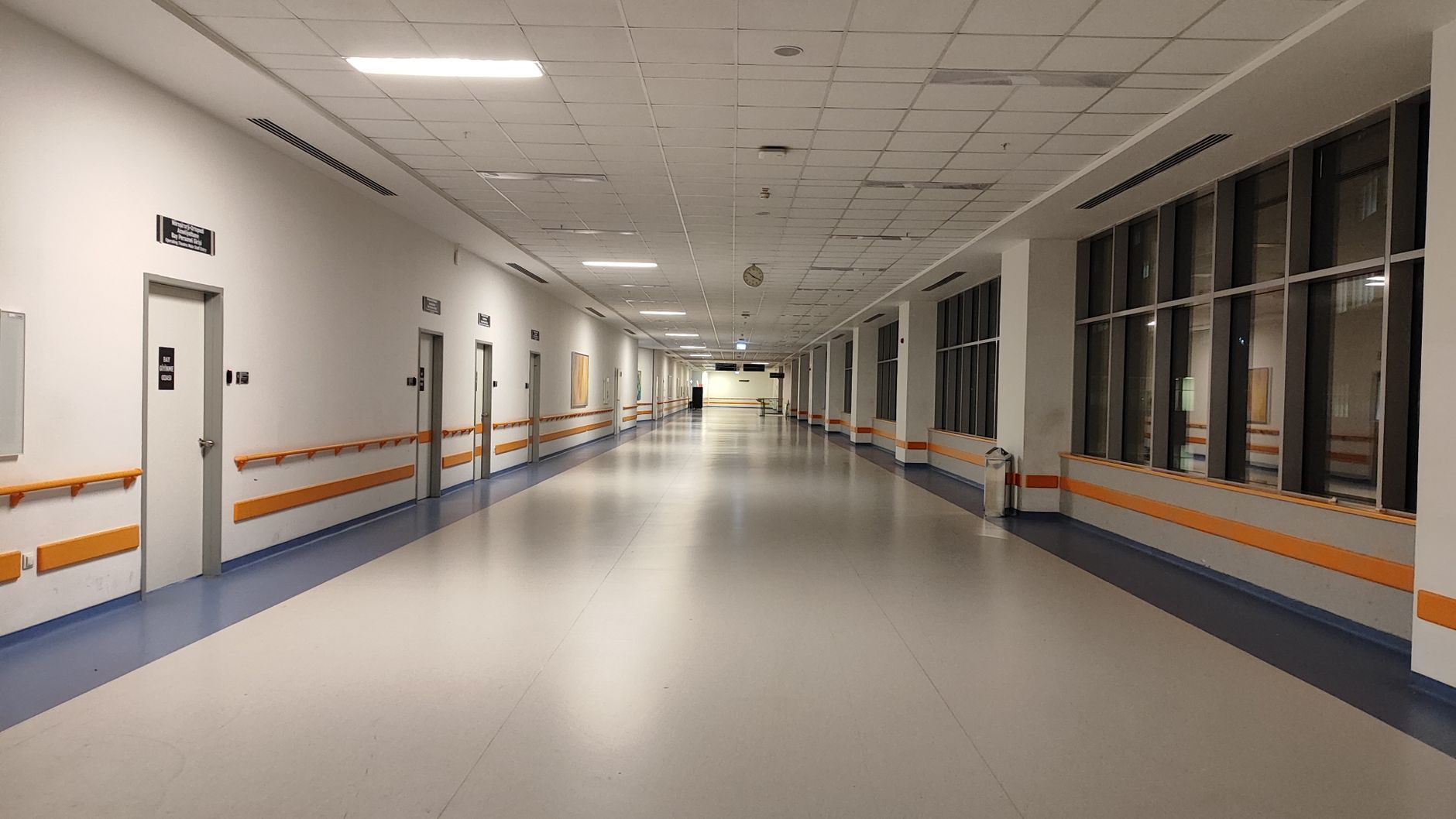
The line between the two lists moves with the building. A clean, empty, open office floor is largely robot work. A hospital corridor that needs disinfection after each room turnover is a separate job, and its floor scrubbing should be scheduled and scoped apart from the disinfection.
How big is the labor picture for this job in New Orleans?
New Orleans has a substantial base of workers in this occupation. According to a wage aggregator page for the New Orleans-Metairie metro, about 6,070 janitors and cleaners were counted there in May 2025, and a separate entry put building cleaning workers in the all-other category at about 70. Those are May 2025 aggregator figures, not the May 2024 government release, so treat them as a directional view.
Statewide, a Louisiana occupational wage aggregator reports about 27,610 janitors and cleaners in May 2025. Nationally, the BLS projects about 2 percent employment growth for janitors and building cleaners from 2024 to 2034, which it describes as slower than average. Hiring is unlikely to close a shift gap quickly, so the staffing question is a persistent one, not a one-time one.
Injury rates are part of the picture too. The BLS snapshot for janitors and cleaners, excluding maids and housekeeping cleaners, reports about 21,100 days-away-from-work cases in private industry in 2020, a rate of 191.6 per 10,000 full-time equivalent workers, against about 18,680 cases and a rate of 157.4 in 2019. It also reports 42 fatal work injuries in 2020, compared with 45 in 2019. These are national figures, but they show why hours spent on hard floors deserve a safety review as well as a cost review.
Turnover is the harder number. An older labor ebook for building services puts the quit rate at 8.1 percent a month, against 3.6 percent nationally. That data dates from about 2017, so read it as a sign of direction, not a current rate. We did not verify New Orleans turnover, night-shift share, sick-day use or overtime for this occupation, so pull those figures from your own payroll.
How many hours would a robot actually take off a shift?

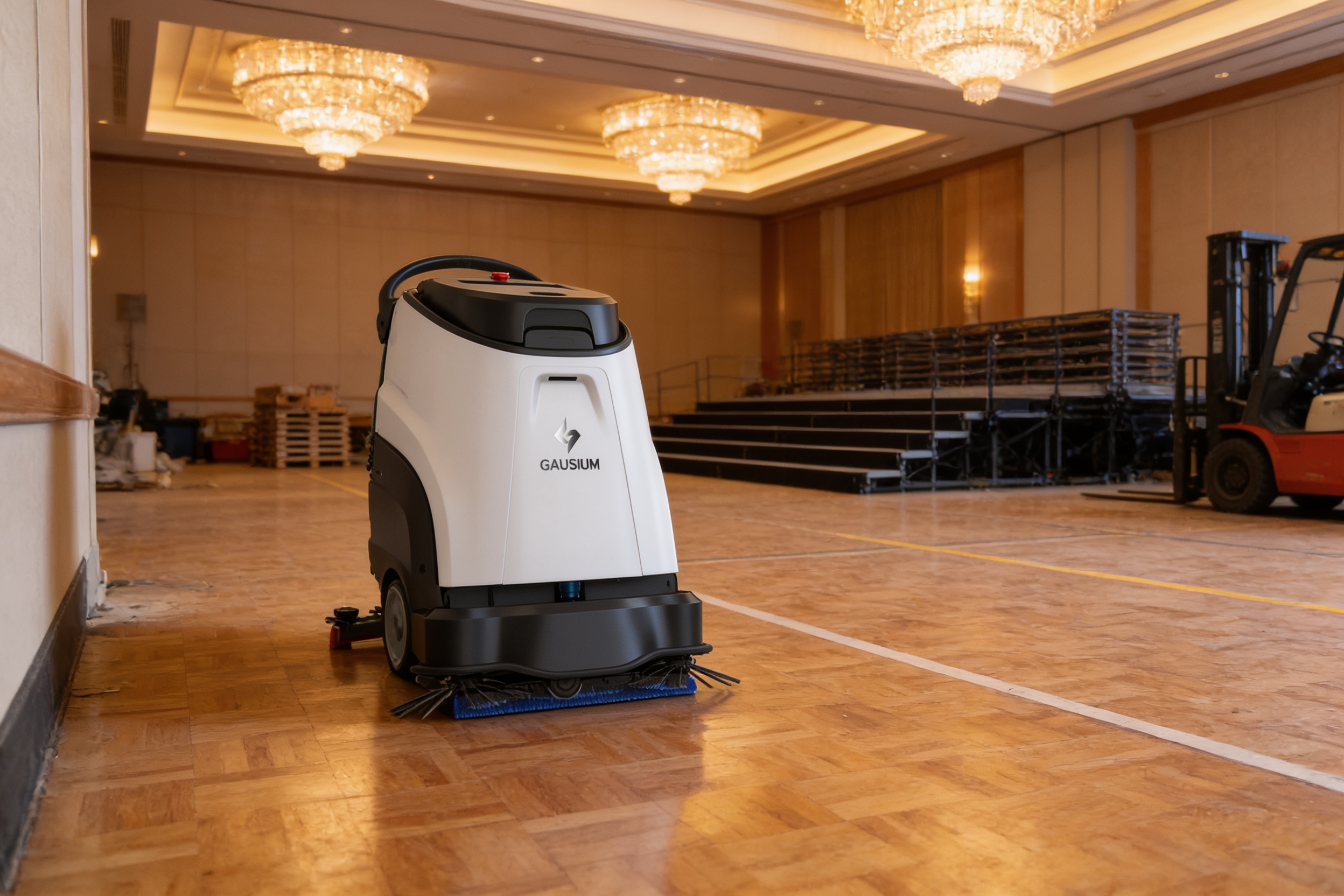
Vendor case studies give the best look at hours, but they are not independent trials. In a 2023 healthcare case study published by a robot maker, a team of three used about 16 total manhours per night for floor care before the change. With two scrubbers, the team was two people using about 5 manhours a night, with the scrubbers running from 8:30 pm to 2 am and covering about 50,000 square feet autonomously.
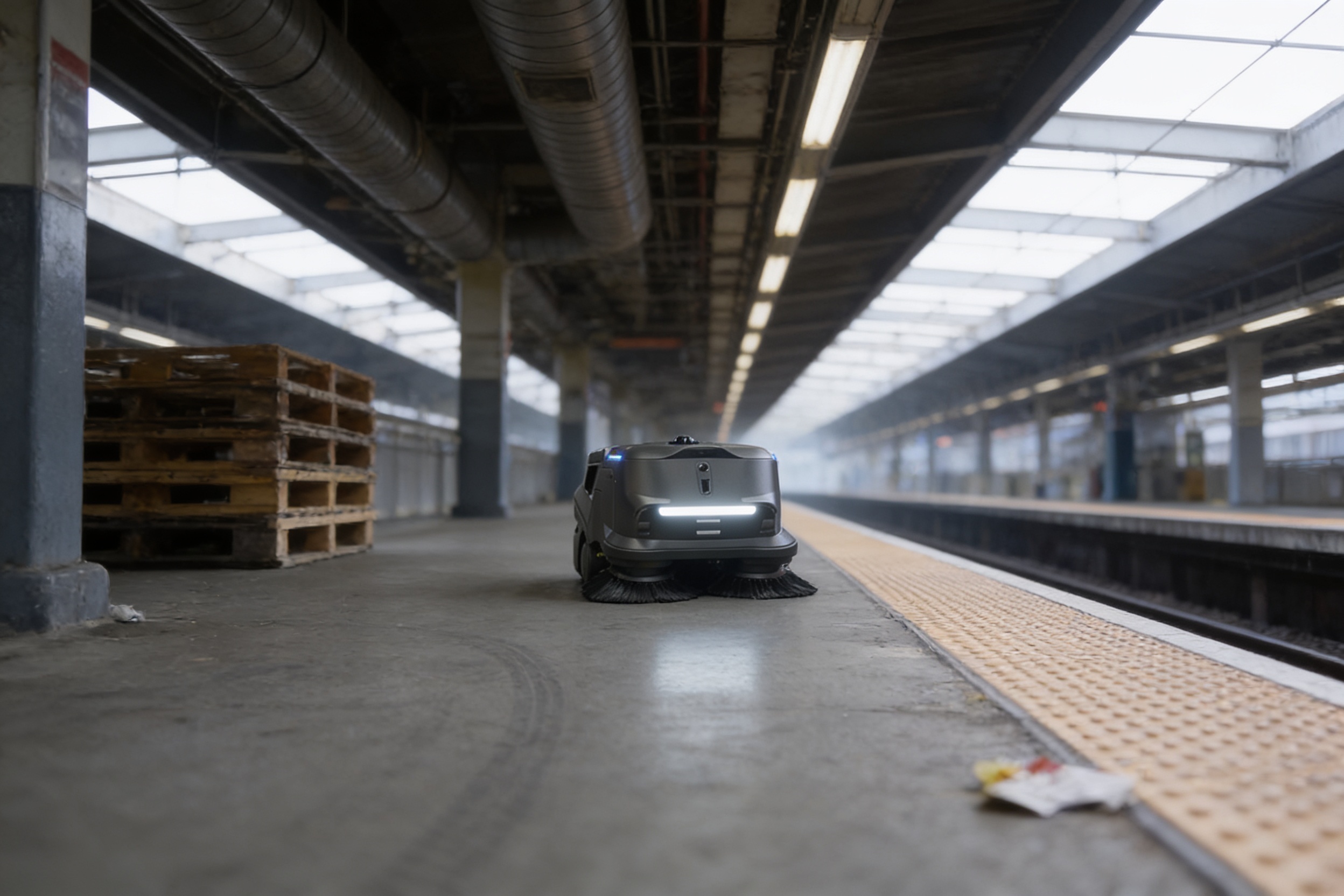
A second vendor case study, for a shopping center, reports more than 2.5 hours a day of autonomous cleaning on average, with 99.2 percent of runtime in autonomous mode. Runtime is not the same as labor saved. That number tells you how long the machine works, not how many person-hours left the schedule, so ask any vendor for the hours a staff member no longer spends on the floor.
A practical rule: the hours that move to a robot are the route hours a person used to spend pushing a machine, plus a short daily check. Restroom, trash and response hours do not move. Use the table below as a template to fill in with your own counts, not as a promise.
How does a team work with a robot in New Orleans?
The working model is always a robot plus fewer staff, not zero staff. The robot takes the route work during the hours the building is empty. The person keeps the restroom and trash work, the response calls and the morning handover. A common pattern is one janitor moved from long floor passes to restrooms, trash and checks, while the robot runs the open floors overnight.
Schedules and handover matter more than the machine itself. The team needs a start checklist, a clear rule for when the robot stops and a person takes over, and a morning check of what was cleaned and where the run stopped. Staff who already run floor equipment usually need less training, and the person who answers robot alerts needs the most.
As a US commercial robot integrator, we map the site, set the route and no-go zones, train the staff who run the handover, and then service the unit. That setup is what decides whether the first night runs cleanly.
What can a cleaning robot not do?
A robot cannot replace judgment. It will not notice a new spill that appeared after the route was set, a blocked exit, a patron or child in an unexpected place, or a fixture that moved. Good sites plan for those cases with stop rules and staff on call, rather than assuming the machine will work it out.
It also struggles in a building that changes its layout every week. Frequent furniture moves, loose cables, stacked displays and roped-off areas reduce how much floor the robot can run without intervention. If the building changes constantly, the savings shrink, and a janitor is the better choice for that zone.
Be honest about downtime. Any robot can stop, need a charge or wait for a part, and the night shift needs a plan for that. Ask how repairs are dispatched and what happens to the open route when a unit is down, and set a fallback for the floors it would have covered.
How do I get started with a robot lease in New Orleans?
Start with a free site assessment. We measure the open floor, map the route, note the no-go zones and the schedule, and review which work stays with staff. That assessment is what lets us quote a fixed lease payment through financing, and we do not quote a payment before we have seen the building.
We lease robots through financing, then deploy, integrate and train the staff who run them, and we service the units nationwide. A sensible first step is one leased unit on one zone to test the hours, then decide whether to add units or coverage.
Bring three things to the first call: the open floor area you want covered, the hours the floor is empty, and a rough count of the hours staff spend on that floor today. With those, the assessment and the lease quote can be specific rather than general.
Frequently asked questions
Upcoming events in New Orleans, LA
Put a robot to work in New Orleans.
We walk your site, learn the job, and recommend the unit that fits. Then we quote the lease, deploy it, and keep it serviced.
Sources
- US Bureau of Labor Statistics, Occupational Employment and Wage Statistics (OEWS May 2024)
- BLS Occupational Outlook Handbook, janitors and building cleaners
- BLS Injuries, Illnesses, and Fatalities snapshot, janitors and cleaners
- Occupational wage aggregator, New Orleans-Metairie janitors and cleaners
- Occupational wage aggregator, New Orleans-Metairie building cleaning workers
- Louisiana occupational wage aggregator, janitors and cleaners
- Vendor case study, shopping center autonomous scrubber
- Vendor healthcare case study, 2023
- Building services labor ebook, quit rate data