
The short answer
For a community college, a cleaning robot vs night janitor comparison usually favors the robot for the wide, open floors of corridors, classrooms and commons that follow the same route every night. A night janitor still handles restrooms, spills, locked rooms and anything that needs judgment, so the practical answer is a robot plus fewer night staff, not a robot in place of the crew. Confirm the fit with the floor plan and the route timing before deciding, since the answer depends on how much of the night is open floor.
Key takeaways
- A floor robot fits the open corridor, classroom and commons passes on a fixed route, while restrooms and spills stay with staff.
- The usual outcome is a robot plus fewer night staff, never a campus with no one on the night shift.
- Night cleaning is a lot of floor: APPA service levels in one college review show custodians covering tens of thousands of square feet.
- Hard-to-fill night shifts are a common reason colleges look at robots, so check vacancy and overtime in your own records.
- Start with a site walk and a timed route, then take a lease quote after a free site assessment.
Is a cleaning robot vs night janitor the right choice at a community college?
A cleaning robot is a good fit for the large, flat, repeatable floor work of a campus night, and a poor fit for work that needs a person in the room. Classrooms, corridors, stairwell landings and the main commons get the same route most nights, with the same obstacles and floor types. That repetition is what a floor robot handles well.
It makes less sense where the night is mostly reactive: restrooms that need checking and restocking, spills, wet floors after events, labs with hazardous material, locked studios, and rooms that change layout between classes. It also makes less sense where carpet, thresholds or narrow doorways stop the unit, or where the building has many steps. A short site walk settles most of these questions.
There are about 1,050 community colleges in the US in 2025, according to AACC-based reporting, so this question comes up at many campuses. In practice, the answer for most of them is a robot plus a smaller night crew. The robot takes the route that repeats, and staff take the work that changes.
What does a night janitor actually do in a shift at a community college?
A night janitor usually works a fixed route through academic buildings, student centers and administrative offices after classes end. The route covers emptying waste, wiping surfaces, cleaning restrooms, sweeping and vacuuming, mopping, scrubbing, restocking paper and soap, and checking for spills and damage. Event bookings and weekend use often change the route from one night to the next.
The work is physical. According to the Bureau of Labor Statistics Occupational Outlook Handbook, janitors and building cleaners spend much of the shift standing and operating equipment, lift heavy supplies frequently, and usually learn on the job without formal education. The same handbook counts about 2,447,700 jobs in this occupation in 2024 and projects 2 percent growth from 2024 to 2034, slower than average for all occupations. Educational services is one of the largest employers of this work, at 17 percent of employment, so colleges draw on the same labor pool as schools, hospitals and office buildings.
Injury data is specific but limited. BLS figures for janitors and cleaners, excluding maids and housekeeping cleaners, averaged 191.6 cases per 10,000 full-time equivalent workers from 2016 to 2020. A 2024 rate for building cleaning was not verified for this page, so check the BLS 2024 tables directly. For all private industry, a US insurance trade publication reported a 2024 injury rate of 2.2 cases per 100 full-time equivalent workers, the lowest level in about two decades, but that is not a janitor-specific rate.
Median hourly wage, Janitors and Building Cleaners
$4,041
Monthly cost of one full-time worker, at the median wage plus payroll costs (an estimate, not a quote).
Which parts of the night cleaning can a robot take over, and which can it not?
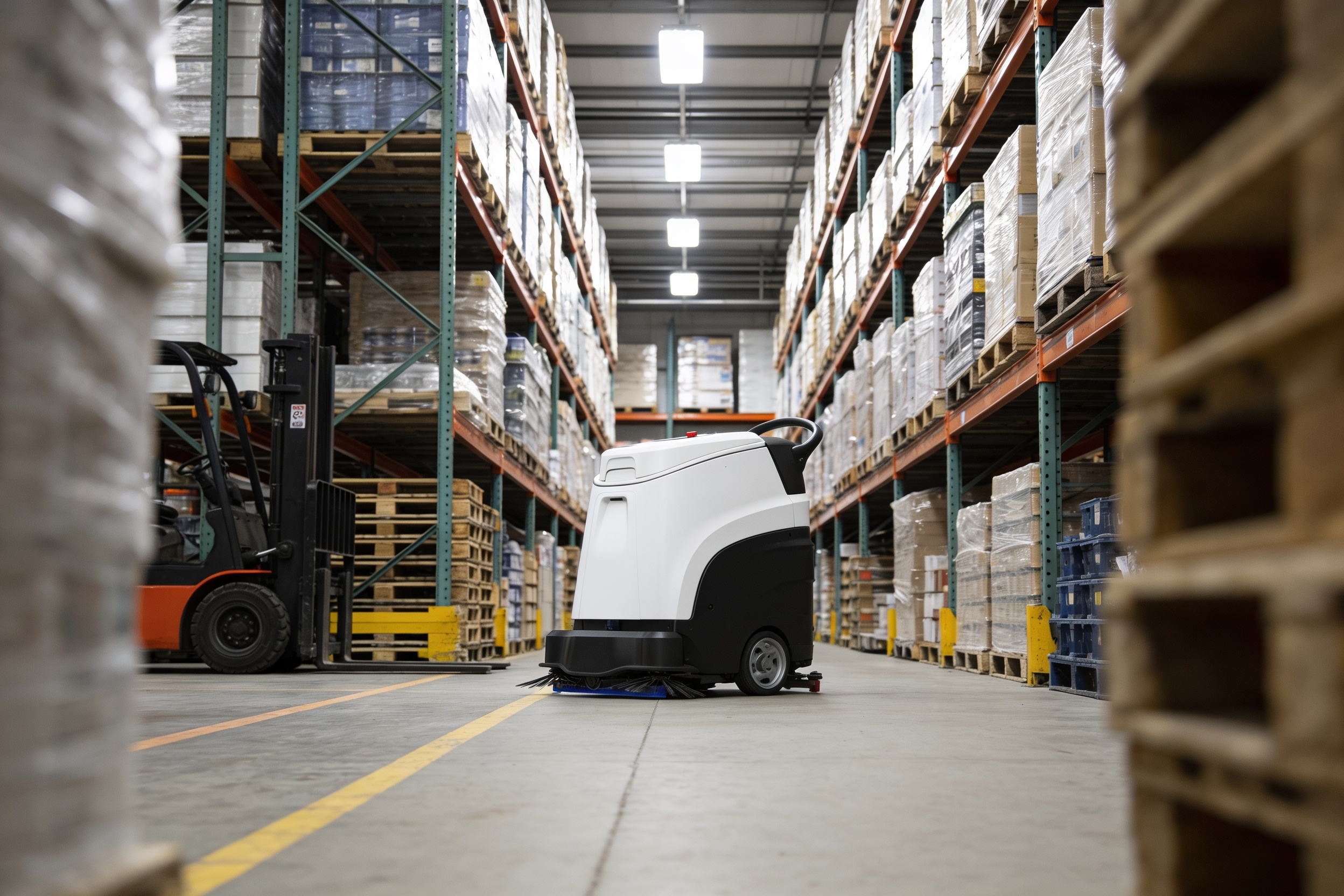
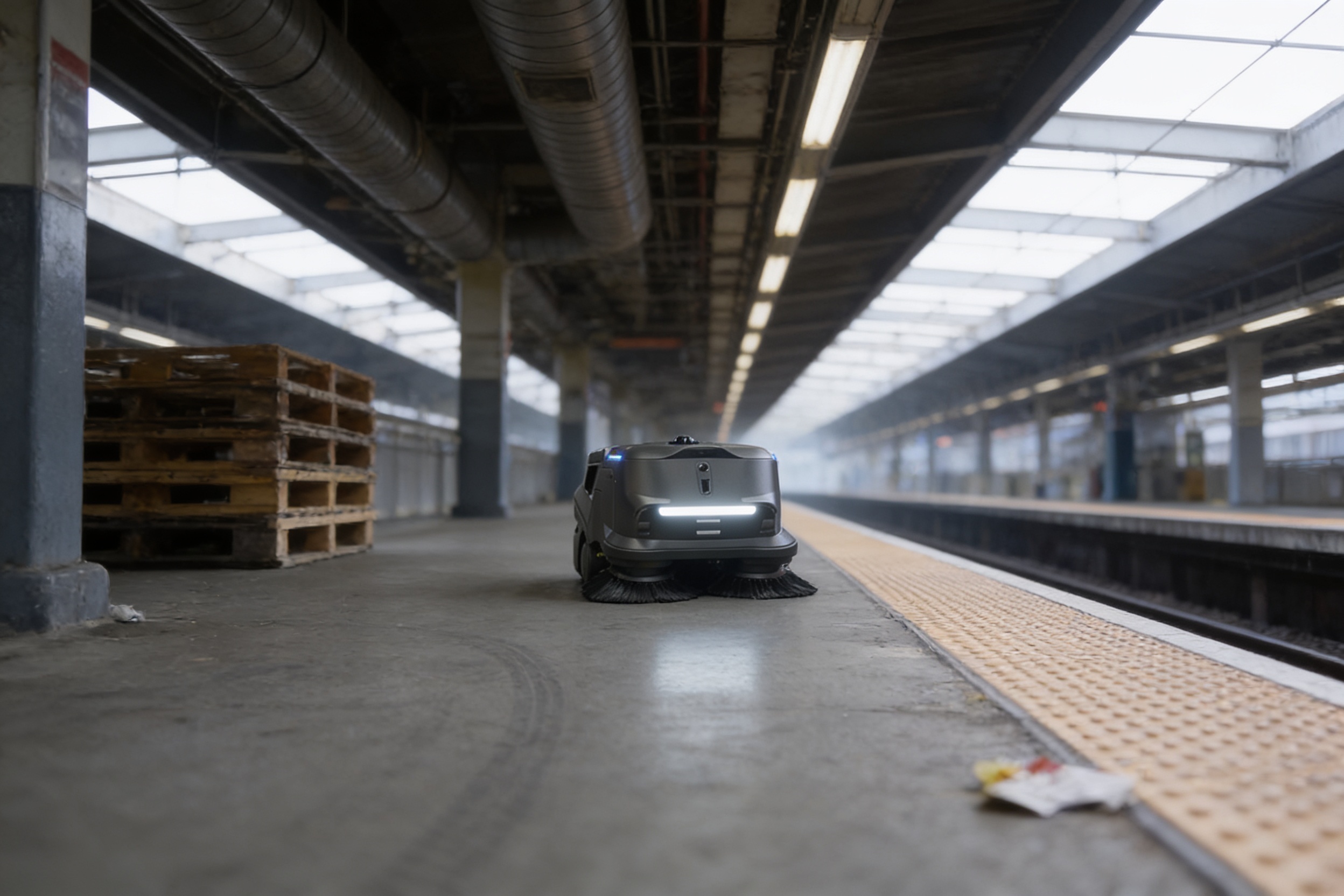
A floor cleaning robot takes the open-floor passes: sweeping or scrubbing corridors, classroom floors, lobbies, commons and flat stairwell landings. Once the route is mapped, it runs the same path each night, which is why it fits. An autonomous floor scrubber lease suits this kind of repeatable pass best, and it works most cleanly where the route stays stable.
It does not take over restrooms, which need hand cleaning, restocking, fixture checks and inspection. It also does not decide whether an unknown spill is safe to touch, whether a room is occupied or locked, or whether a moved table belongs in the aisle. Those calls stay with a person.
- Robot can usually take: corridor and hallway floors, open classroom floors, lobby and commons floors, flat stairwell landings.
- Staff keep: restrooms, spill response, labs and rooms with hazardous material, moved furniture, locked or occupied rooms, trash and event rooms.
- Fixed open-floor route
Cleaning Robot
Repeats the same mapped pass every night without a break
Night Janitor
Adapts to changed routes, events and closures on the spot
- Restrooms and fixtures
Cleaning Robot
Not designed for restroom cleaning
Night Janitor
Handles restrooms, restocking and fixture checks
- Spills and unknown material
Cleaning Robot
Stops at obstacles and needs a person to clear them and respond
Night Janitor
Judges what a spill is and how to handle it safely
- Night coverage
Cleaning Robot
Runs the open-floor pass while staff handle other work, within battery and route timing
Night Janitor
Covers the whole night, but is hard to staff and retain
- Consistency
Cleaning Robot
Same pass, same route, same pressure each night
Night Janitor
Quality varies with staffing, fatigue and turnover
- Where the person wins
Cleaning Robot
Little advantage on a changing campus night
Night Janitor
Anything that needs a decision, a hand or a conversation
How many hours and people does night cleaning take, and what does the labor data show?
Hour totals depend on building count, floor area and route, and this page does not publish a campus figure. Time each pass on your own route, then compare the result with the government wage data on this page for this job, applied to your real hours. Floor area gives a useful starting frame. A 2017 custodial program review from De Anza College, citing APPA service levels, lists square feet per custodian from 8,500 at Level 1 to 45,600 at Level 5. By those figures, a higher level number covers more area per custodian, so Level 5 is the least intensive standard in the scale.
One college in the same review reported about 968,836 square feet of cleanable space with 21 custodians, roughly 46,135 square feet each, while maintaining Level 5 service. At that load the crew spends the shift moving, and every open-floor hour the robot takes returns to staff for restrooms and spills.
Turnover is the harder number. An HR software vendor's blog cites a turnover range of 100 to 200 percent a year at many janitorial operations, but that is commentary, not a survey, so use it as a warning rather than a benchmark. In K-12 schools, an education news report put the Chicago district at about 2,200 custodians as of April 2026, with union representatives seeking more hires. Overtime and sick-day rates for campus night crews were not verified for this page, so pull those from your own timekeeping.
How does a team work with a robot on a community college campus?
The working model is a robot plus fewer staff, never zero staff. The robot runs the open-floor route, and staff run the parts of the night that need a person. In practice, one or two people handle restroom, spill and reset work across the same buildings the robot covers, instead of a full crew on every corridor.
The handoff matters more than the machine. Staff reset rooms before the pass, clear obstacles, and check the robot's stops and report at the start and end of the shift. At least two people should be trained to restart the unit, move it between buildings and recognize a blocked sensor, so the night does not depend on one person. We train the staff who will run the unit as part of deployment.
Day staff belong in the loop too. Event turnaround, closures and room changes happen in daytime and change the route. A short written handoff sheet from the day team to the night team prevents most surprises.
What can a cleaning robot not do at a college?
A floor robot is not a restroom cleaner, not a spill responder and not a substitute for someone who must make a call. It stops at unfamiliar objects and waits for a person to clear them, and a route that changes often adds setup time that a fixed route does not.
Floor type and layout set limits too. Some carpets, thresholds, ramps and narrow doorways can stop a unit, which is why the site assessment checks each route before any lease is quoted. Glass, stairs and unmapped areas stay with staff. Wet floor signage, access control and locking up still need people, and a cleaning robot is not a security device.
The honest staffing answer is that the robot reduces open-floor work, not the headcount needed to run a safe night. Plan for fewer night staff, not zero.
How do you get started with a cleaning robot lease at a community college?
Start with a site walk, not a catalog. We do a free site assessment that maps the routes, checks floor types, doorways and thresholds, and sets which rooms the robot covers and which stay with staff. The fixed robot lease payment is quoted after that assessment, through financing, so the figure reflects your actual route rather than a generic building.
Commercial robot leasing works best when you start small. A common way to begin is one leased unit on one building, run through a term, with the decision on more units made after the results are in. We handle deployment and integration, go live support and staff training, and we service units nationwide, including on-site dispatch when a unit needs attention.
We are a vendor neutral robot integrator, so we pick the robot that fits your floor rather than one brand. Bring the building list, the route timing and the night staffing plan to the assessment, and ask whether maintenance is included in the lease quote.
Is a cleaning robot worth it compared with unfilled night shifts and overtime?
Payback depends on the lease quote, the route and the crew you would otherwise need, so no figure appears here. The useful comparison is the open-floor hours that go unfilled or run as overtime, set against the fixed robot lease payment and the staff time to run the unit. Use your payroll records and the government wage data on this page for this job to build that comparison.
Industry context points the same way, but slowly. A 2019 Autonomous Cleaning Survey from AACEM and ISSA, sent to nearly 23,000 building service contractors, in-house providers and facility managers, found adoption at an early stage. Less than one-third of non-adopters were considering autonomous equipment. The full report is restricted to association members, so ask for a summary before relying on it.
Also weigh the cost of a missed night. An unfilled shift does not mean the floors go uncleaned. The work moves to someone already stretched, or it slips. The robot protects the open-floor route while staff handle the parts that matter most.
Frequently asked questions
Want a cleaning robot at your community college?
Tell us about your site. We will recommend the robot, quote the lease, and keep it serviced.
Sources
- US Bureau of Labor Statistics, Occupational Employment and Wage Statistics (OEWS May 2024)
- AACC Fast Facts 2025, as reported by a community college trade news outlet
- Bureau of Labor Statistics Occupational Outlook Handbook: Janitors and Building Cleaners
- Bureau of Labor Statistics injury snapshot: Janitors and Cleaners Except Maids and Housekeeping Cleaners, 2016 to 2020
- US insurance trade publication on BLS 2024 injury data
- De Anza College 2017 custodial program review citing APPA service levels
- HR software vendor blog on janitorial turnover
- Education news report on Chicago school custodians, May 2026
- AACEM and ISSA Autonomous Cleaning Survey report, 2019