

The short answer
For most coworking spaces, a cleaning robot vs night janitor choice is rarely one or the other: a floor robot can run the open desk areas and corridors overnight, while a smaller crew still cleans restrooms, kitchens and high-touch surfaces by hand. A robot makes sense when the open floor is large, repeated and clear at night. It does not make sense when the space is mostly small rooms, heavy spills or restrooms that need a person on every visit.
Key takeaways
- A floor robot suits the open desk floors and corridors of a coworking space, not its restrooms or kitchens.
- Keep at least one person on site or on call for the work a robot cannot do.
- Contract cleaning has high staff turnover, so fewer hard-to-fill night roles can reduce hiring churn.
- Janitor injury rates in government data run high, which makes less manual scrubbing a real safety gain.
- Measure your open floor area and night hours in a free site assessment before deciding.
Cleaning robot vs night janitor at a coworking space: which makes sense?
A cleaning robot makes sense at a coworking space when most of the night work is repeat floor cleaning across large open areas and corridors. A night janitor still makes sense for the work a machine does poorly or not at all, which is restrooms, kitchens, high-touch surfaces, spills and the small tasks that change from one night to the next.
For most sites the honest answer is a mix. The robot takes the floor passes that repeat every night, and one person does the hand work, sets up the run and checks the space at close and in the morning. Owners who expect to drop the night role entirely usually find the hand work still has to be done, so the plan should start from a robot plus fewer staff.
A robot is a weaker fit when the space is a cluster of small offices, when the floors are cluttered at close, or when the main need is deep work on carpet or glass. In those cases a night janitor on a shorter schedule often fits better, and the site assessment is the place to test that before committing.
How many coworking spaces are there in the US, and why does it matter for overnight cleaning?
A coworking industry quarterly report counted 8,854 coworking spaces in the US in its December 2025 data, up about 5 percent from the prior quarter. The same report put the combined footprint at 159.4 million square feet, up 4.7 percent. Those figures come from an industry tracker, not a government count, so treat them as a sense of scale.
Growth in space has not been steady. According to a coworking industry report on the second quarter of 2025, square footage growth slowed to 0.4 percent after 3 percent growth in the first quarter. The report's own headline, More Space, Fewer Places, describes consolidation as the industry matures, so the number of spaces and the total square footage can move in different directions.
An early 2025 commercial office report counted 7,814 coworking spaces nationwide, up 25 percent from the same point in 2024. The counts do not match across sources, so the practical lesson is to size each site from its own floor plan rather than from national totals.
Median hourly wage, Janitors and Building Cleaners
$4,041
Monthly cost of one full-time worker, at the median wage plus payroll costs (an estimate, not a quote).
What does a night janitor do in a coworking space shift?
The night work is a mix of repeat tasks and small jobs. A person typically empties trash and recycling from desks and bins, cleans restrooms, restocks paper and soap, wipes kitchen counters and appliances, and resets meeting rooms and phone booths for the next day.
They also vacuum or mop open areas, spot clean spills and sticky patches, and clean glass and high-touch surfaces such as door handles, switch plates and lift buttons. Trash often has to be carried to a dock or compactor, which means walking and lifting across the whole building, not just cleaning as they go.
The order of work depends on what the space looks like at close. A night person adjusts the plan when a meeting ran late, when a kitchen was left messy, or when a leak or broken fixture needs a call to the building team. That judgment is part of the job, and it is the part most likely to be lost if the night role is cut without a plan.
Which floor work can a cleaning robot take overnight?
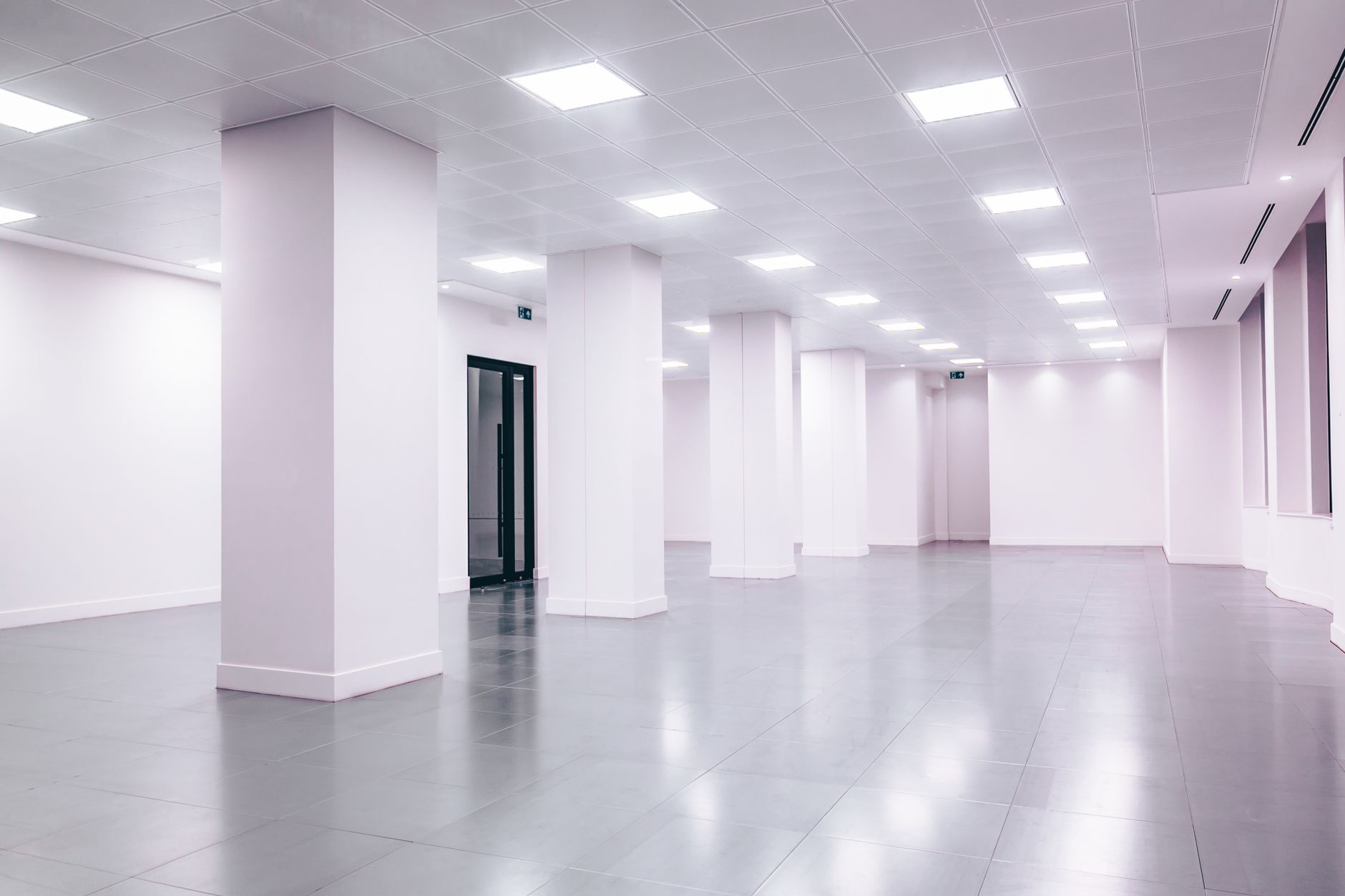
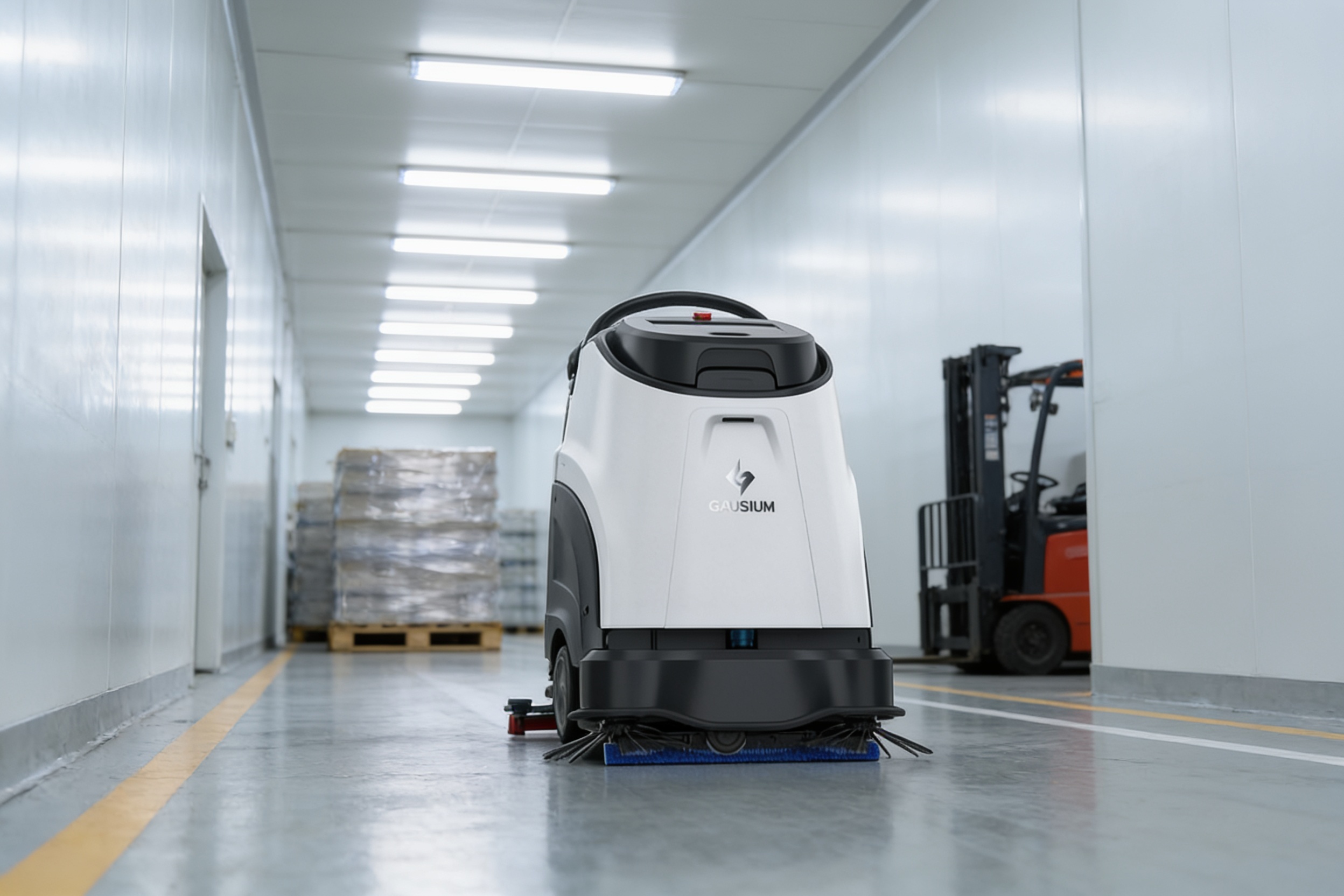
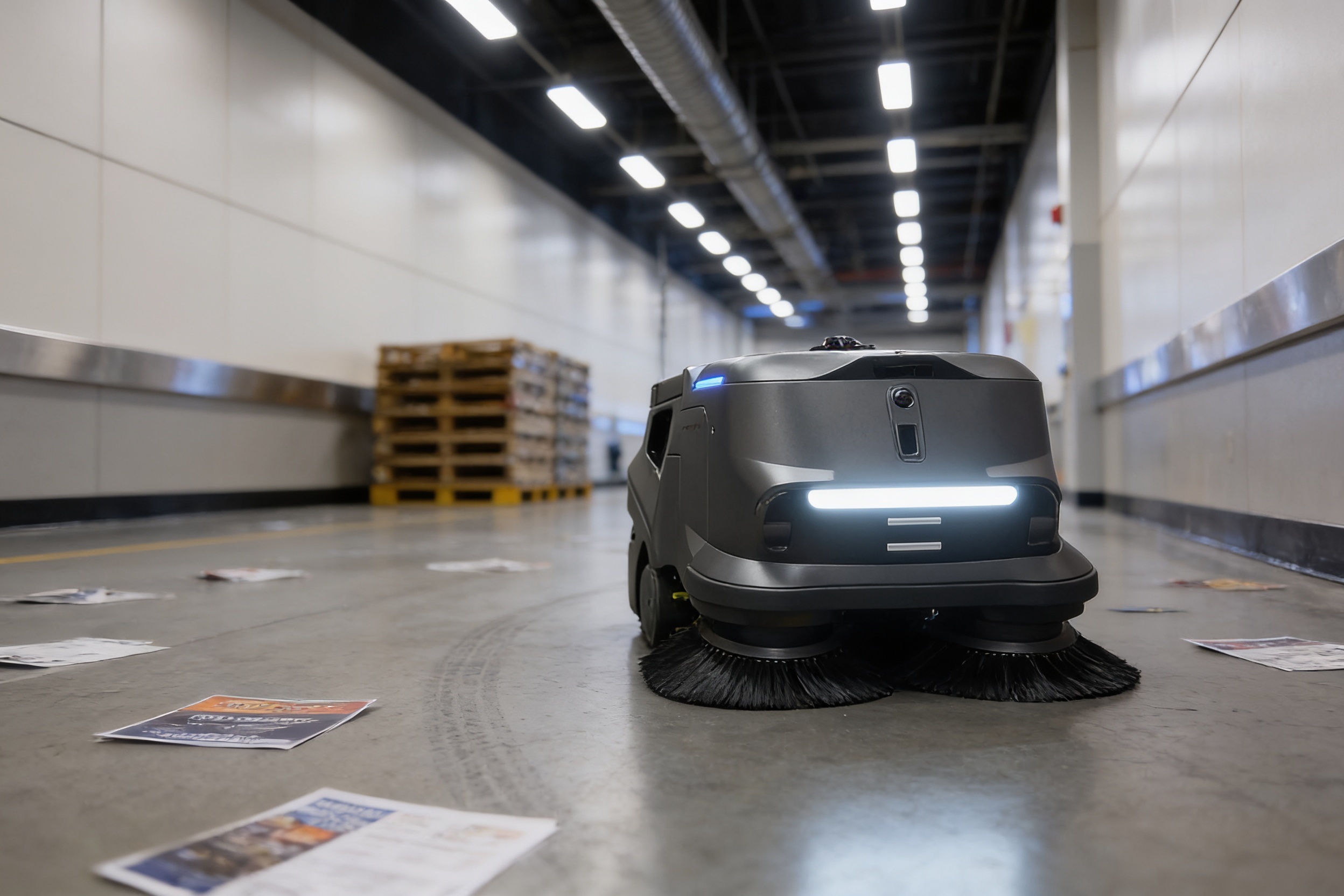
A floor robot is best at work that repeats across a wide, open floor: the desk areas between rows, main corridors, lobbies, and shared lounges with suitable floor surfaces. These are the passes that look the same every night, and they are the work a robot can run without a person beside it once the path is clear.
The machine type matters too. The 2019 autonomous cleaning survey run with the ISSA trade association found that among respondents who used autonomous equipment, 89 percent used floor scrubbers and 46 percent used vacuums. According to a press release summarizing a payback analysis of that survey data, which is vendor reported, scrubbers were the most common machine among adopters.
Whether a given floor suits a given machine depends on surface type, clearance, door widths, and whether the path is clear at close. Those checks belong in the site assessment, not in a general guess from the floor plan.
- Repeat floor passes
Cleaning Robot
Runs the same route at night without a person beside it, once the path is clear
Night Janitor
Adapts to odd layouts and sudden changes, but repeats the same pass every night and has to be scheduled
- Restrooms and kitchens
Cleaning Robot
Does not do this work
Night Janitor
Does the work and checks the result before the shift ends
- Spills and odd messes
Cleaning Robot
Can stop at a spill, but a person still cleans it and decides whether it is a leak
Night Janitor
Judges the mess and cleans it on the spot
- Closing check
Cleaning Robot
Logs faults, but may miss a broken chair or a wet patch of carpet
Night Janitor
Notices the problem and calls the building team
- Consistency
Cleaning Robot
Follows the same route and pattern each night when the path is clear
Night Janitor
Varies with the shift and with who is absent, but can decide what the night needs
What work still needs a person?
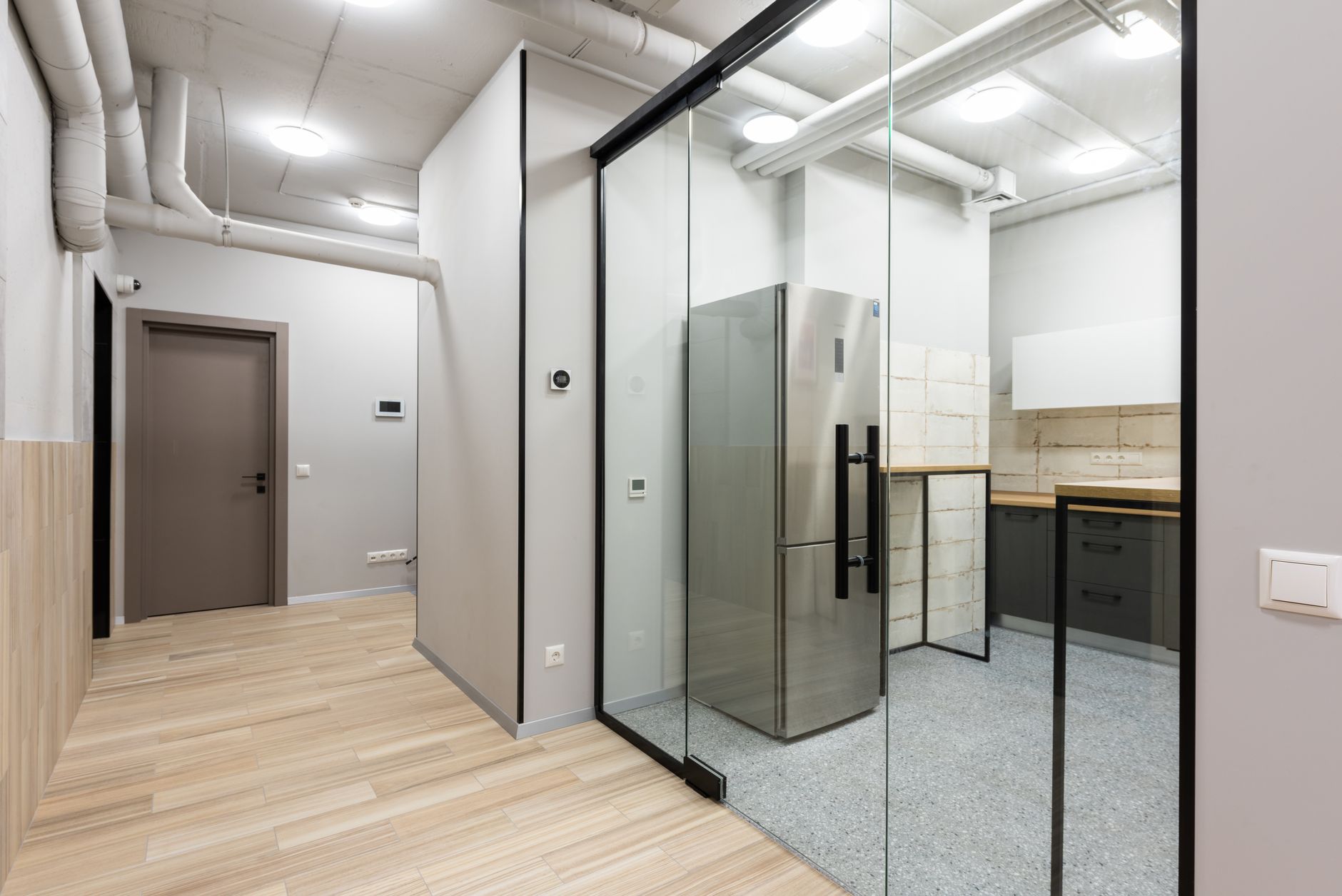
Restrooms and kitchens still need hand cleaning. These rooms involve fixtures, splash zones, food residue and sanitizing steps that a floor machine does not do, and a person has to check them after each shift. Treat them as the minimum staffed work in any plan.
High-touch surfaces, glass, trash collection, furniture moves and spot cleaning of unusual messes also stay with a person. A robot can move along a corridor and stop at a spill, but someone still has to clean the spill and decide whether it is a leak that needs a call to the building team.
Keep a person for the closing check as well: lights, doors, locked rooms, and anything the robot reported. The robot's log is useful, but it may not register a broken chair or a wet patch of carpet at the entrance the way a person walking the floor will.
What do the labor numbers say about night cleaning staff?
The Bureau of Labor Statistics counts about 2.4 million janitor and building cleaner jobs in 2024, and projects growth of 2 percent from 2024 to 2034, which it describes as slower than the average for all occupations. A slow-growing pool of workers and a steady need for night shifts means that hiring a night cleaner is an ongoing task, not a one-time search.
Turnover is the harder number to pin down. A 2019 report from the Building Service Contractors Association, as cited by a janitorial industry blog, found employees leave contract cleaning companies at 3.6 times the national average rate. We did not find an occupation-level turnover figure for janitors in government data, and no verified share of janitors working nights, so the site's own hiring record is the real baseline.
Absence matters too. Sick days, late starts and unfilled shifts push work onto whoever is on the schedule, and a robot does not replace the person who calls in. We did not find a verified figure for night cleaner absence, so measure it from your own schedule.
On safety, the Bureau of Labor Statistics reported 191.6 injury and illness cases per 10,000 full-time equivalent workers for janitors and cleaners, except maids and housekeeping cleaners, in 2020. Less hand scrubbing and less heavy lifting of equipment can reduce that exposure, though chemical handling and ladder work still need safe practice. The government wage data on this page gives the local wage for this job, which is the figure to use in your staffing math next to the hours.
How much of the shift does a robot actually take over?
The honest answer depends on floor area, how open the layout is, and how the night splits between floor passes and hand work. We did not verify hour figures for this setting in this review, so the table below names the tasks and how they change rather than putting numbers on them.
Time the existing shift for a week before deciding. Record how long each floor pass takes, how long restrooms and kitchens take, and how long the closing check takes. Multiply those by the nights the space runs, and you have the labor the robot could shift, which is the number that belongs in the business case.
A robot does not remove setup. Each shift still needs a person to clear paths, confirm the route, and check that the machine is charged and ready. A route blocked by a bag or a cable at close will stop a run before it starts, so plan for that small daily task.
| Task | Today | With a robot |
|---|---|---|
| Open desk floors | The main floor pass, timed on your own site | Runs on its route once the floor is clear |
| Corridors and lobby | A repeat floor pass after close | Runs on a set route with a check afterward |
| Restrooms and kitchen | Hand cleaning every night | Stays with staff, no change |
| Setup and route check | Not needed today | A short check before each run |
| Closing and morning checks | Staff walk-through | Staff walk-through plus a review of the robot's log |
Hour figures are not given because none were verified for this setting in this review. Time your own shift for a week and size the robot's share from your own floor plan and night log.
How do a robot and fewer staff work together?
The model that works is a robot plus fewer staff, not zero staff. The night role changes from doing every floor pass to setting up the run, doing the hand work the robot cannot do, and checking the machine and the space at close and again in the morning.
We pick the right robot for the site, lease it through financing, deploy and integrate it, train the staff, and service it nationwide. Training matters most for the closing and morning routines, because staff need to know which faults they can clear on site and which go to the service team.
Staffing is a plan you set during deployment. Some sites keep one person on site through the night, and others keep a person on call with a defined response window for blocked routes or faults. The right choice depends on how many people work late and how often a floor issue needs hands on it.
What can a cleaning robot not do?
A floor robot does not clean restrooms or kitchens, and it does not deep clean carpet or glass. Cables, loose furniture and bags on the floor must be cleared before the run. Steps, thresholds and unexpected obstacles need a check before each run, and a site with frequent layout changes will need more of that checking.
It also needs maintenance. Brushes, filters, batteries and sensors need attention on a schedule, and a machine that is not serviced will fail at the worst time, which is overnight. Response times, spare coverage and who clears a fault should be settled in the lease, not discovered during the first problem.
Adoption is still uneven. In the 2019 autonomous cleaning survey run with the ISSA trade association, 27 percent of total responses were active users of autonomous cleaning equipment. Among those who had not used it, 62 percent of building service contractors, 68 percent of in-house service providers and 69 percent of facility or property managers reported no use. The sample was 250 complete responses with a margin of error of 6 percent at 95 percent confidence, so read it as a snapshot of 2019, not a present-day rate.
How do you decide and get started?
Start with the floor map and the night log. Count the open floor area, the corridors and rooms, the restroom and kitchen work, and the nights the space is open. That gives you the baseline to compare against a robot plus fewer staff.
Next, book a free site assessment. We map the space, check surfaces, clearances and routes, and quote a robot lease after the assessment, so the lease figure reflects your actual floor and not a guess. The quote also sets out the service plan, including who responds to a fault and how the hand work is covered when the machine is down.
Consider a pilot with one unit on one floor before committing the whole site. A pilot shows how the route runs, how often a person has to clear a path, and what the real hour savings look like on your floors. It is a practical way to learn whether a robot plus fewer staff is the right model.
Frequently asked questions
Want a cleaning robot at your coworking space?
Tell us about your site. We will recommend the robot, quote the lease, and keep it serviced.
Sources
- US Bureau of Labor Statistics, Occupational Employment and Wage Statistics (OEWS May 2024)
- Bureau of Labor Statistics, Occupational Outlook Handbook: Janitors and Building Cleaners
- Bureau of Labor Statistics, injury and illness snapshot: Janitors and Cleaners, except Maids and Housekeeping Cleaners, 2016 to 2020
- Coworking industry quarterly report, December 2025 data
- Coworking industry report, second quarter 2025: More Space, Fewer Places
- Early 2025 commercial office report on coworking spaces
- 2019 autonomous cleaning survey, ISSA
- Janitorial industry blog citing 2019 Building Service Contractors Association report
- Press release: payback analysis of autonomous cleaning survey data