
The short answer
A cleaning robot makes sense at a fast-food restaurant when the closing crew spends much of its night on a repeatable sweep and scrub of open, hard-surface dining floors and the kitchen-adjacent walkway, and when the route can be cleared before the robot starts. It does not take over the heavy work of grease, drains, restrooms, trash or spill response, so for most units the cleaning robot vs night janitor choice is a robot plus fewer staff, not a robot instead of anyone. Whether it pays off depends on how many closing hours the floor pass takes at your site, which a free site assessment measures before any lease quote.
Key takeaways
- The robot takes the repeatable floor pass, not grease, restrooms or trash.
- Turnover in restaurants and janitorial work makes a reliable floor pass harder to cover.
- Plan for a robot plus fewer staff, never zero staff.
- Clear routes and hard floors decide the fit more than the restaurant's size.
- Set any lease quote against measured closing hours, after a free site assessment.
Cleaning robot vs night janitor at fast-food restaurants: which makes sense?
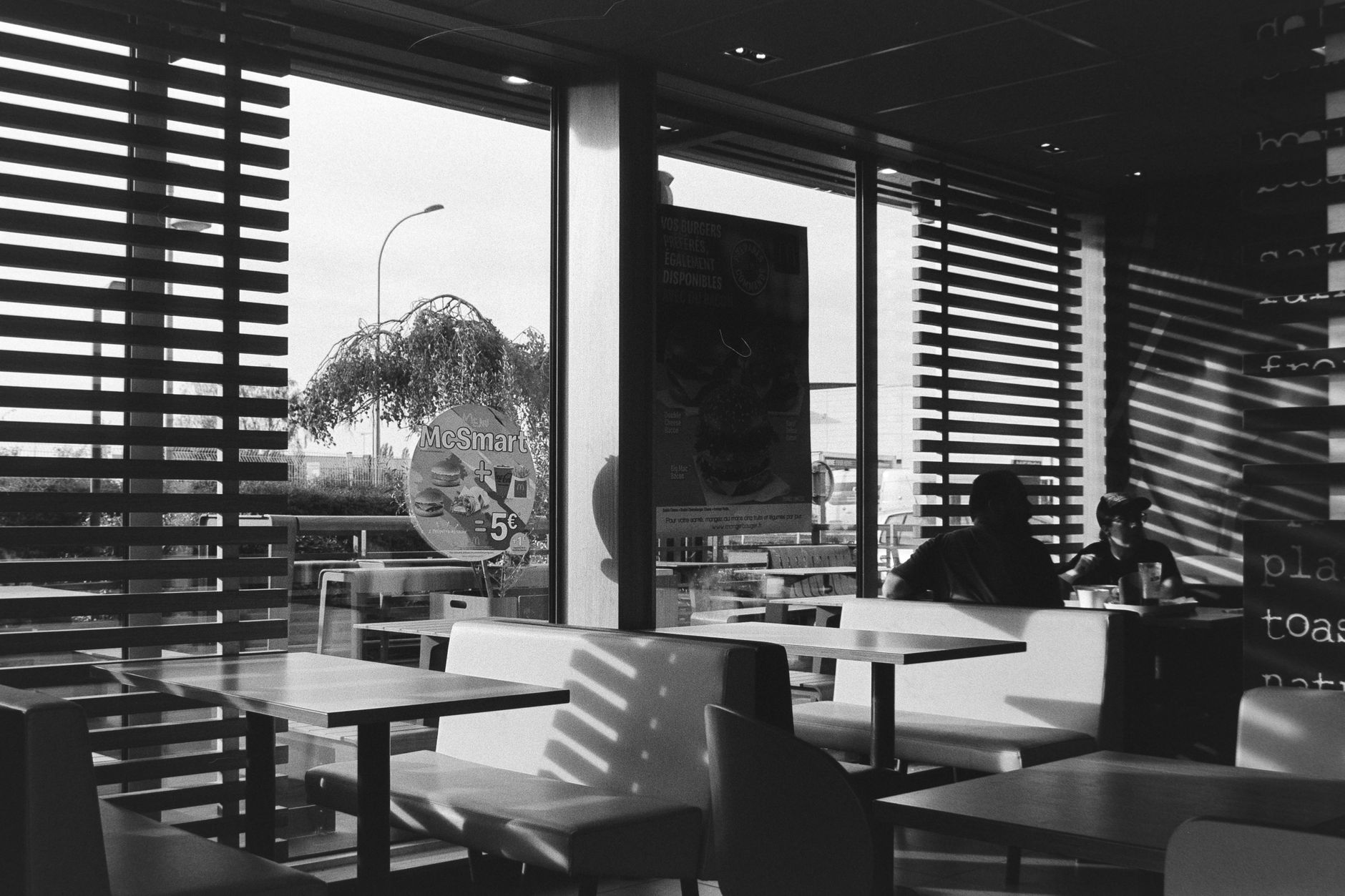
For a fast-food restaurant, the cleaning robot vs night janitor question comes down to the closing floor pass. A robot makes sense when the night crew spends much of its time on a repeatable sweep and scrub of open, hard-surface dining floors and the kitchen-adjacent walkway, and when the route can be cleared before the robot starts. It makes less sense when most of the closing work is grease, drains, restrooms, trash and spot cleaning after a rush, because those jobs need a person with tools and judgment.
The floor matters more than the name on the door. A typical unit has a dining room of sealed tile or concrete, an order and pickup lane, and a hallway to the kitchen, and those areas can be mapped. A unit with carpet, high thresholds or loose furniture left on the floor every night needs more prep, and the robot's share of the work shrinks.
For most single units the honest answer is a robot plus fewer staff, not a robot instead of the crew. Someone still clears the floor, handles the restroom and trash, degreases the kitchen side and checks the robot at the end of its run. The real question is whether the floor pass takes enough of the closing list to change how the shift is staffed.
How many fast-food restaurants are there in the US?
IBISWorld estimates 220,825 fast food restaurant businesses in the United States for 2025. That is an industry research estimate, not a government count, and the search for an official federal total for limited-service restaurants did not return a verified national figure. Treat the number as the size of the market, not as a census.
Estimates vary by definition, so treat the total as a rough measure of the market. For a planning decision, that uncertainty matters less than how many closing hours one unit spends on its floors.
The useful number for a site decision is the unit's own closing routine. A chain with many units can still decide one site at a time, starting with the floor, the route and the staffing gap that the assessment finds.
Median hourly wage, Janitors and Building Cleaners
$4,041
Monthly cost of one full-time worker, at the median wage plus payroll costs (an estimate, not a quote).
What does the night janitor actually do in a fast-food closing shift?
Archived BLS text notes that many cleaners work evening hours because buildings are cleaned while they are empty. In a fast-food unit, that means the closing janitor works after the last guest leaves, when the floors can be fully open and fully reachable. The shift is built around the dining room, and the rest of the list follows from it.
A typical closing list runs in a set order. Chairs come up or get cleared, trash and liners come out of dining and restroom bins, the dining room is swept and mopped, tables and high-touch points are wiped, the order and pickup lane is cleaned, the kitchen-adjacent hallway is degreased and mopped, the restroom is cleaned and restocked, and the back storage path is swept. The order matters, since the floor pass cannot start until the room is clear.
The site's own checklist is the real baseline. Walk the list with the closing lead once and time each task on the actual floor. No task-level hour figure for this job was verified in this research pass, so the site's own numbers should replace any generic estimate.
Which closing tasks can a floor robot take, and which can it not?
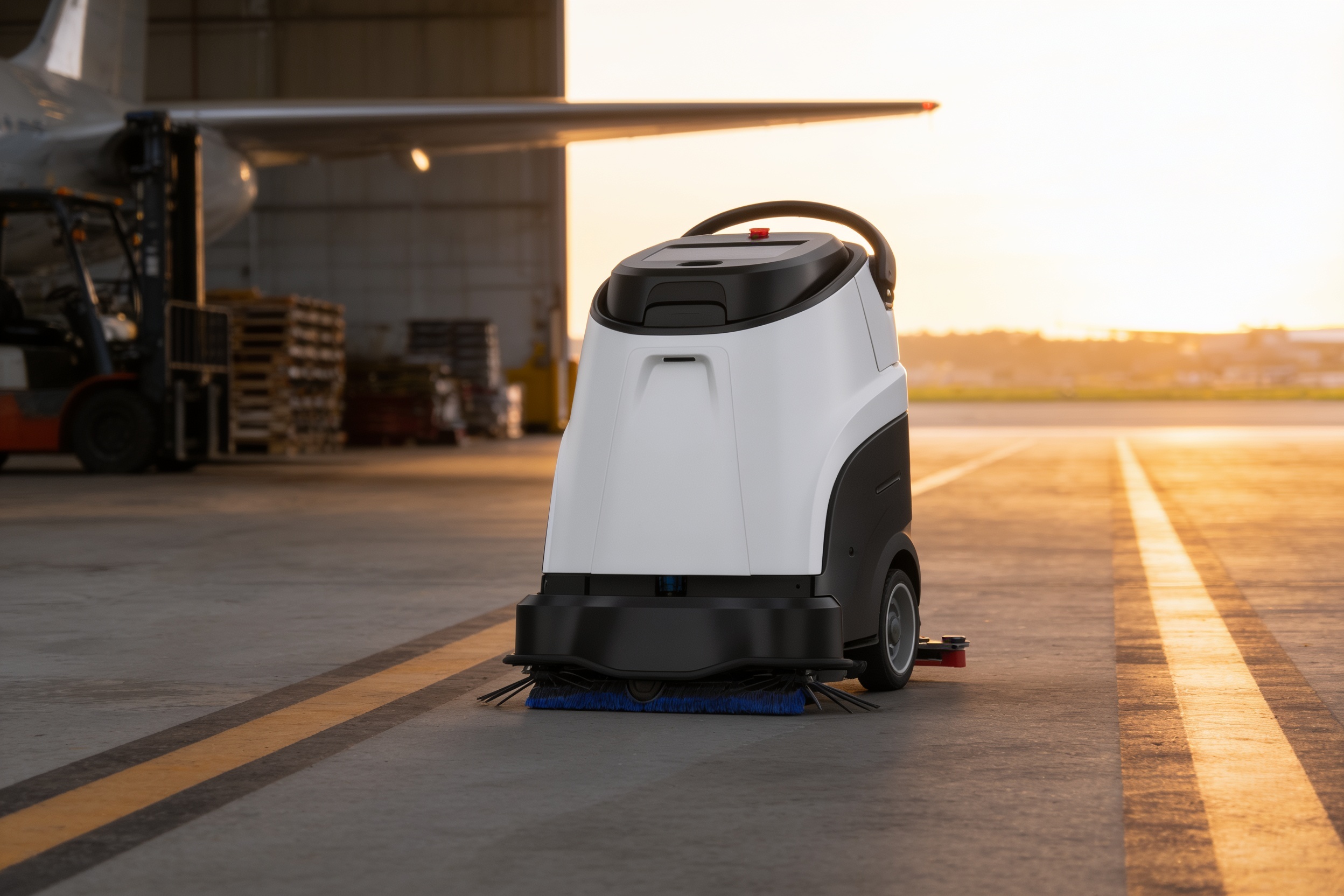
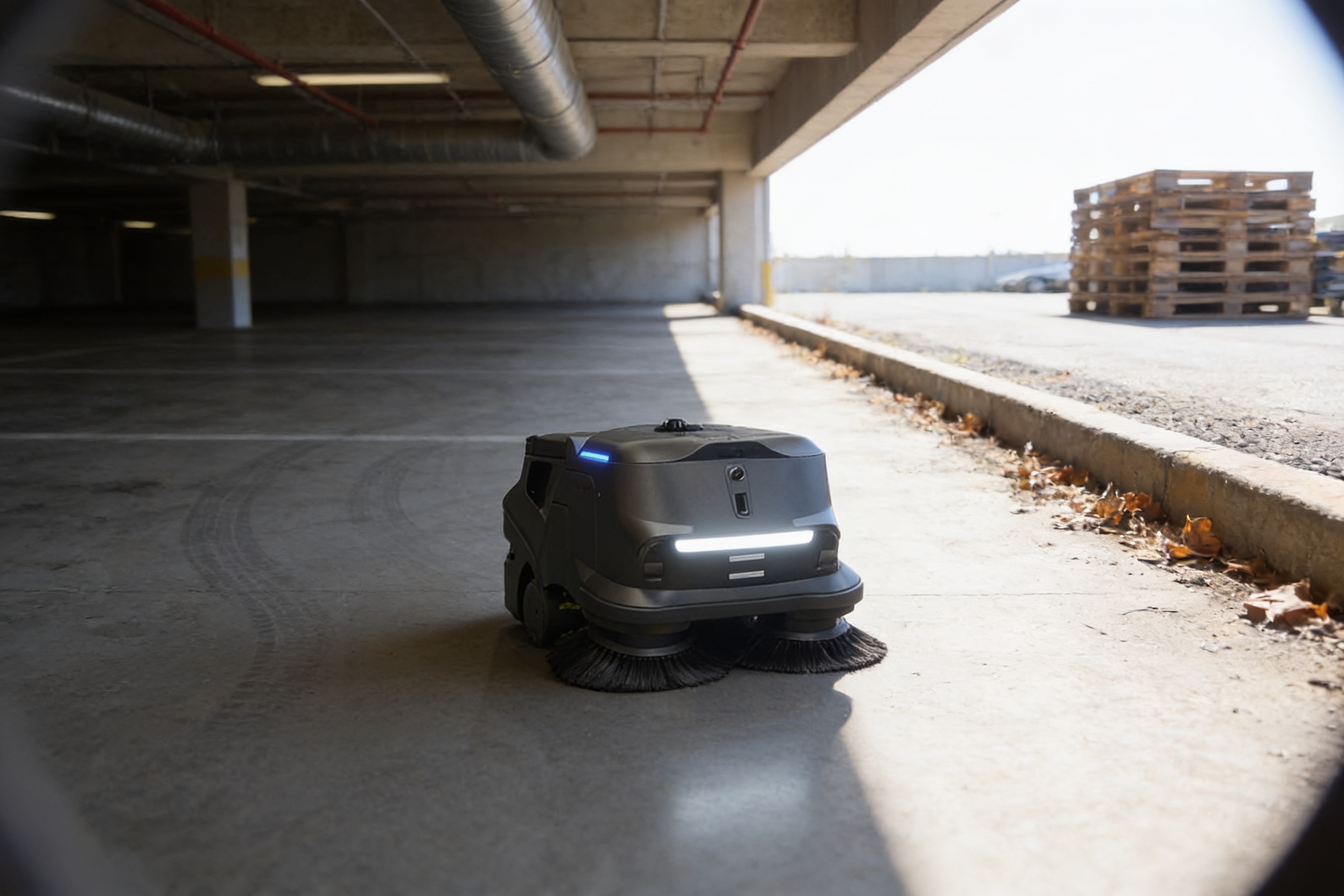
A floor robot can take the repeatable pass over open hard surfaces: the dining room floor between booths and counters, the order and pickup lane, the kitchen-adjacent hallway once heavy soil is gone, and the corridor up to the restroom door. It runs a mapped route on the same schedule each night, without a person walking behind it with a mop.
It cannot take the work that needs hands and judgment. That includes fryer-area and grease cleanup, drains, trash and cardboard, restroom sanitizing and restocking, spills of unknown material, and anything that means moving a chair or a bag. It also depends on a clear route, so the crew still has to stow cords and clear the floor first.
The useful question is what share of the closing list is repeatable floor work. If that share is large, the robot takes real labor off the shift. If the list is mostly grease and restroom work, the robot takes less, and the case for it is weaker.
- Repeatable floor pass
Cleaning Robot
Runs the same mapped route the same way each night.
Night Janitor
Does the same pass, but quality varies with fatigue and crew changes.
- Obstacles and spills
Cleaning Robot
Stops or reroutes at obstacles and needs a clear route.
Night Janitor
Moves the chair or bag, picks up the spill and decides what to do next. Person wins here.
- Grease and fryer-area soil
Cleaning Robot
Handles light soil on a mapped hard floor only.
Night Janitor
Degreases heavy soil with tools and chemicals. Person wins here.
- Restrooms and trash
Cleaning Robot
Does not do this work.
Night Janitor
Does this work. Person wins here.
- Shift coverage
Cleaning Robot
Runs when the floor is clear and does not call out sick.
Night Janitor
Covers the shift, but can call out, quit or need overtime cover.
- Judgment about the floor
Cleaning Robot
Follows its route and reports its status.
Night Janitor
Notices a bad tile, a leak or a sticky spot and acts on it.
How hard is it to staff a fast-food closing shift?
Turnover is the main staffing reality. A restaurant industry data provider's figures, as summarized on a vendor blog, put limited-service hourly turnover at about 110% on a rolling 12-month basis in Q3 2025, down from 133% in 2019. Those are secondhand vendor summaries, but they show why a closing shift is hard to fill and keep filled.
A restaurant workforce software vendor's blog reports average annual restaurant turnover of about 75% in 2025, and says quick-service can exceed 130%. Janitorial turnover is a separate question. Secondary industry estimates put it between 50% and over 100% a year, and those were not checked against government turnover data.
On the janitor side, BLS reports about 2.45 million jobs for janitors and building cleaners in 2024, with 2% projected growth from 2024 to 2034, which it describes as slower than average. Most of that work is full time, part-time work is common, and schedules can vary. This research pass did not verify up-to-date figures for overtime, night-shift share or sick days for this job, so your own timesheets should supply those before you decide.
What does a closing shift look like with a robot and fewer staff?

With the robot in the mix, the closing shift is still staffed by people, but fewer hours go to the repeatable floor pass. The lead and one or more cleaners handle the work that needs hands, and the robot takes the floor pass that would otherwise tie up a person for the whole run. The shift keeps its people and stops depending on one person to finish everything.
A typical sequence starts when the last guest leaves. Staff clear chairs and bags, confirm the route, and start the robot on its mapped dining floor route. While it runs, staff degrease the kitchen side and handle the restroom and trash. At the end of the run, a person checks the robot's status, returns it to its charging spot and walks the floor before lock-up.
Plan for the robot to stop, need a clear route or call for help. Someone on shift has to own the start, the check and the response when the robot goes off route or meets a spill. That role is part of the staffing picture, and it is the reason the realistic setup is a robot plus fewer staff, never zero staff.
How much does it cost to lease a cleaning robot for a restaurant?
Robots are leased through financing, and the payment is a fixed robot lease payment quoted after a free site assessment. We do not give a lease quote before we have seen the floor, the route and the closing list, because those set the fit and the scope of service. A quote without that visit is a guess.
The comparison that matters is the one you can measure: shift hours spent on the repeatable floor pass, overtime or cover shifts when a cleaner calls out, and manager time spent filling gaps. Put those numbers next to the quoted lease. Payback depends on how many of those hours the robot actually takes over, which is why a pilot on one unit is a common starting point.
The government wage data on this page is the reference for the janitor side of the labor math, so the comparison should use it for the hours the robot takes. Ask that the quote state what the lease covers, including deployment, integration, staff training and service, and what response applies during a repair.
What can a floor robot not do, and where is the injury risk?
A floor robot does not remove injury risk from the closing shift. BLS data for janitors and cleaners, excluding maids and housekeeping cleaners, show 191.6 cases with days away from work per 10,000 full-time equivalent workers in 2020, up from 157.4 in 2019. A 2019 BLS analysis said the janitor rate was nearly twice the all-occupations rate of 86.9 per 10,000.
Restaurant floors add their own hazards. A journal abstract on restaurant worker injuries names same-level falls as the leading cause, and it supports slip-resistant footwear and higher floor friction as preventive measures. A floor robot does not change footwear, grease films or the need for wet-floor warnings, and this research did not find a measured change in injury rates from floor robots.
Use the robot for the repeatable pass and keep people on the hazards: grease, wet spills and the restroom. That split is the realistic case, and it is why a robot plus fewer staff is the answer for most units.

How do you decide and get started with a robot at a fast-food restaurant?
Start with a free site assessment. We map the floor, record the closing routine, test the route, and note the surfaces, thresholds and furniture that must be cleared. We also check where the robot can charge. The output is a fit decision and, if the fit is good, a lease quote for the site.
Pilot one unit before you talk about more. The first runs test the route, the closing crew's habits and how the team handles stops and faults. Staff training happens on site, and go-live support covers the early runs, when most adjustments happen.
Ask about the service plan before you agree to a lease. The plan should name who responds, how on-site dispatch works, what happens during a repair and whether a spare unit is available. Without a back-up plan, one robot failure can leave the closing floor undone, so the manual closing routine stays in place as the fallback.
Frequently asked questions
Want a cleaning robot at your fast-food restaurant?
Tell us about your site. We will recommend the robot, quote the lease, and keep it serviced.
Sources
- US Bureau of Labor Statistics, Occupational Employment and Wage Statistics (OEWS May 2024)
- BLS Occupational Outlook Handbook, Janitors and Building Cleaners
- BLS Injuries, Illnesses and Fatalities snapshot, janitors and cleaners
- IBISWorld, fast food restaurants number of businesses
- Archived BLS Occupational Outlook Handbook, Janitors and Building Cleaners
- DailyPay, QSR and restaurant turnover rates
- Homebase, restaurant employee turnover
- AACEM/ISSA autonomous cleaning survey report
- Webull news, 2026 building service contractor market study