
Key takeaways
- Coworking floors take constant foot traffic and often outpace a small cleaning team.
- A floor cleaning robot runs a mapped route on a schedule, usually after hours.
- Savings come from labor hours that are cut or redeployed, not from the machine alone.
- Staff still start the run, open doors and handle exceptions, so plan for a robot plus a small team.
- Robots are leased through financing, and the payment comes in a quote after a free site assessment.
How can cleaning robots benefit coworking spaces?
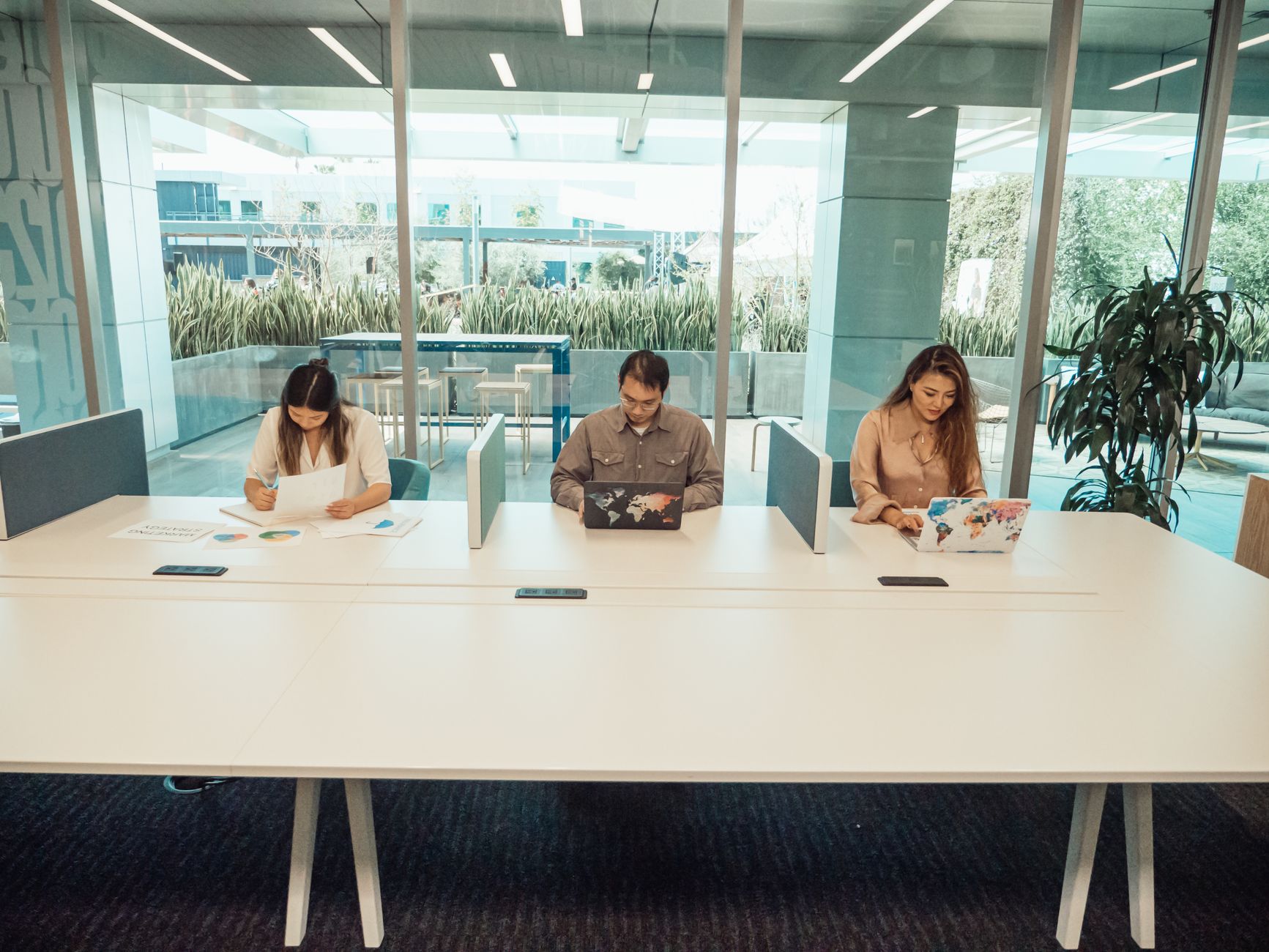
Cleaning robots for coworking spaces solve a plain problem. A shared floor takes steady foot traffic from members, guests and staff all day, and a small team cannot keep pace with it. A floor cleaning robot runs a set route on a schedule, usually in quiet hours, so the floor is reset before the next morning instead of at the end of a long shift that nobody wants to start.
The scale of the category makes the point. According to CoworkingCafe as reported by Allwork.space, US coworking locations reached 9,612 in Q3 2026, and total space reached 168.36 million square feet in the same quarter. Many of those floors are large, open and busy, which is the layout a floor cleaning robot handles best.
For an operator, the benefit comes down to three things: floors that look and feel clean at opening, fewer hours spent on repetitive floor passes, and staff time freed for the work members actually notice. Service Robot Co. is a US commercial robot integrator. We pick the right robot for the site, lease it through financing, deploy and integrate it, train the staff and service it nationwide, so the decision starts with a site visit rather than a catalog.
What are the main benefits of a floor cleaning robot in a coworking space?
The first benefit is consistency. A robot runs the same route on the same schedule, so the floor gets the same standard every night instead of depending on who had time that week.
The second is timing. Because the machine runs in quiet hours, members walk into a clean floor, and the cleaning does not pull staff into a loud machine in the middle of the workday. An industry summary from Robolist says autonomous machines typically use up to 70 percent less water than conventional scrubbers and roughly 67 percent less energy per cycle, though that is an industry estimate and not a measured result for any one site.
The third is labor. Robolist's trade analysis puts labor at 50 to 90 percent of commercial cleaning costs, depending on contract scope and service frequency, so the hours are where the value sits. The same analysis reports about 2.5 labor hours saved per day for each autonomous scrubber in a large retailer's deployment. That is a retail case, not a coworking one, so read it as a sign of scale rather than a forecast for your floor.
How does a floor cleaning robot work in a coworking space day to day?
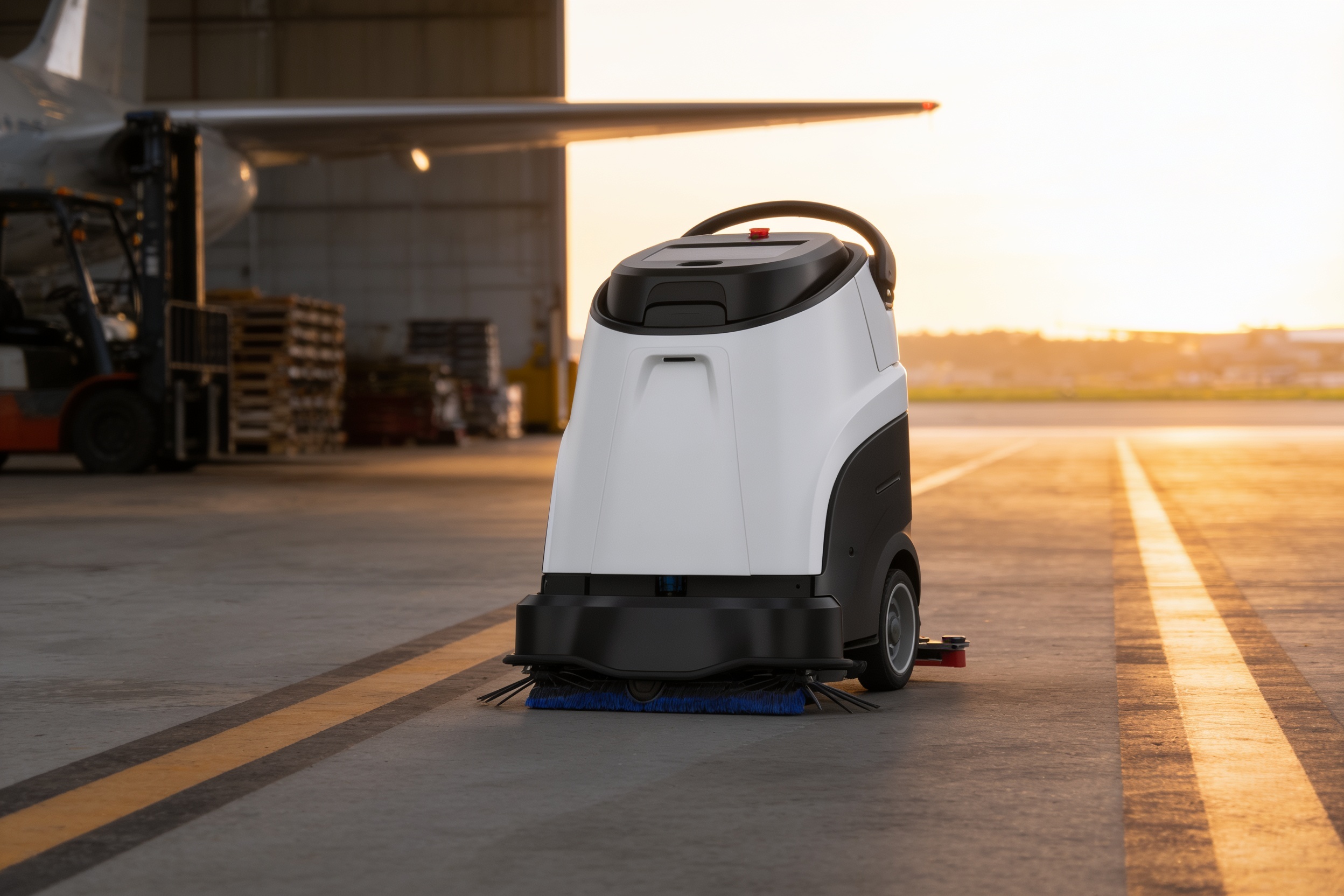
Setup starts with a site assessment. The robot maps the floor, the team marks the routes and any no go areas, and the schedule is set around the building's quiet window. Predictable routes are what these machines do best, so the mapping work pays off every night after that.
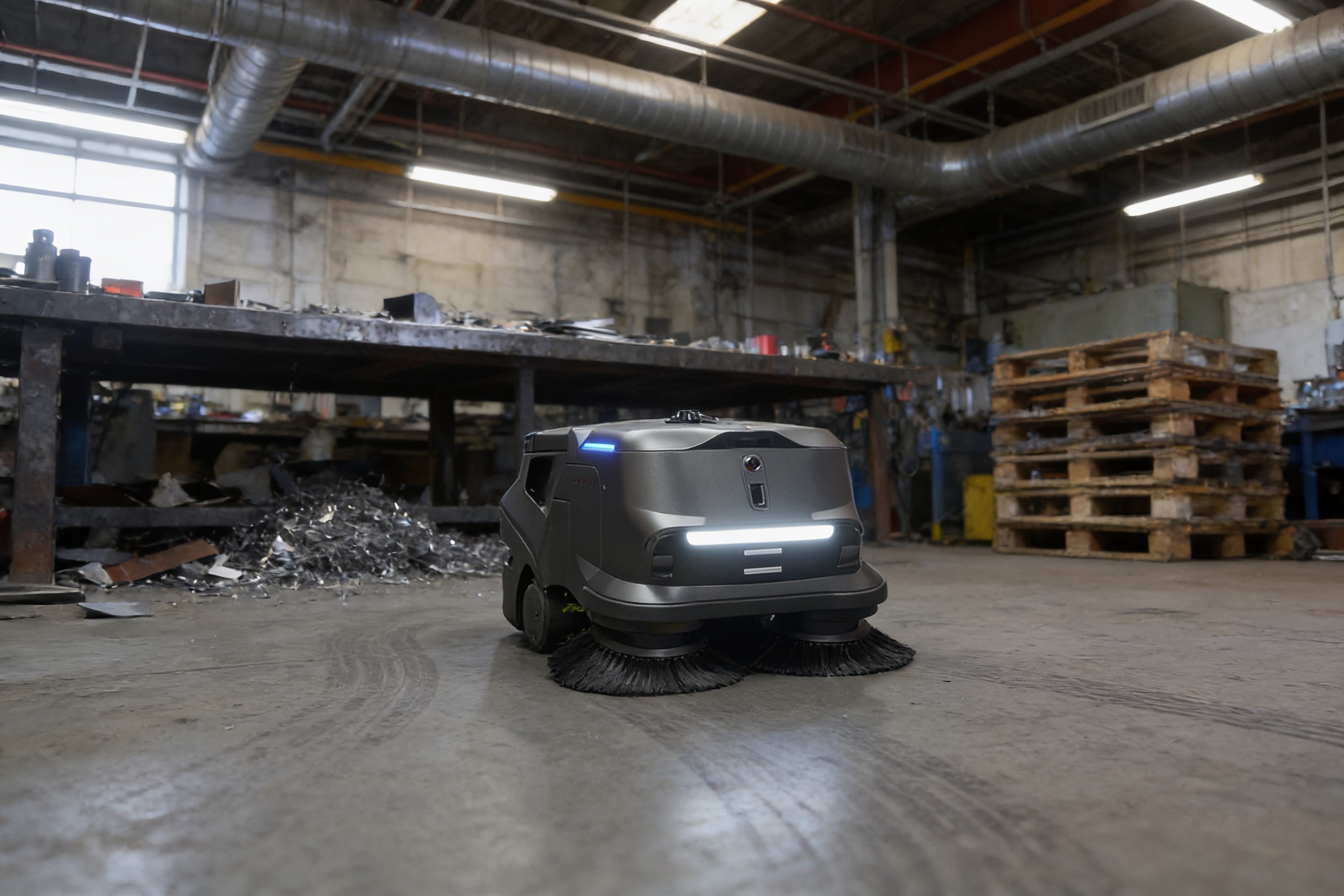
On a normal night the robot follows its route, slows where the debris is heavier, and returns to its dock to charge. Robot schedules can assign prioritized, higher debris zones more frequent passes and slow in messy areas, which suits the kitchen and entry zones of a coworking floor. Staff check the machine status at open and at close, clear any blocked path and review the completion report.
Coworking floors have practical wrinkles. Doors, glass entries and loose cables need planning, and a chair pushed into the path will stop the run until someone moves it. Operators who do well treat the robot as one more team member with a short daily checklist.
Which areas of a coworking space does the robot clean?
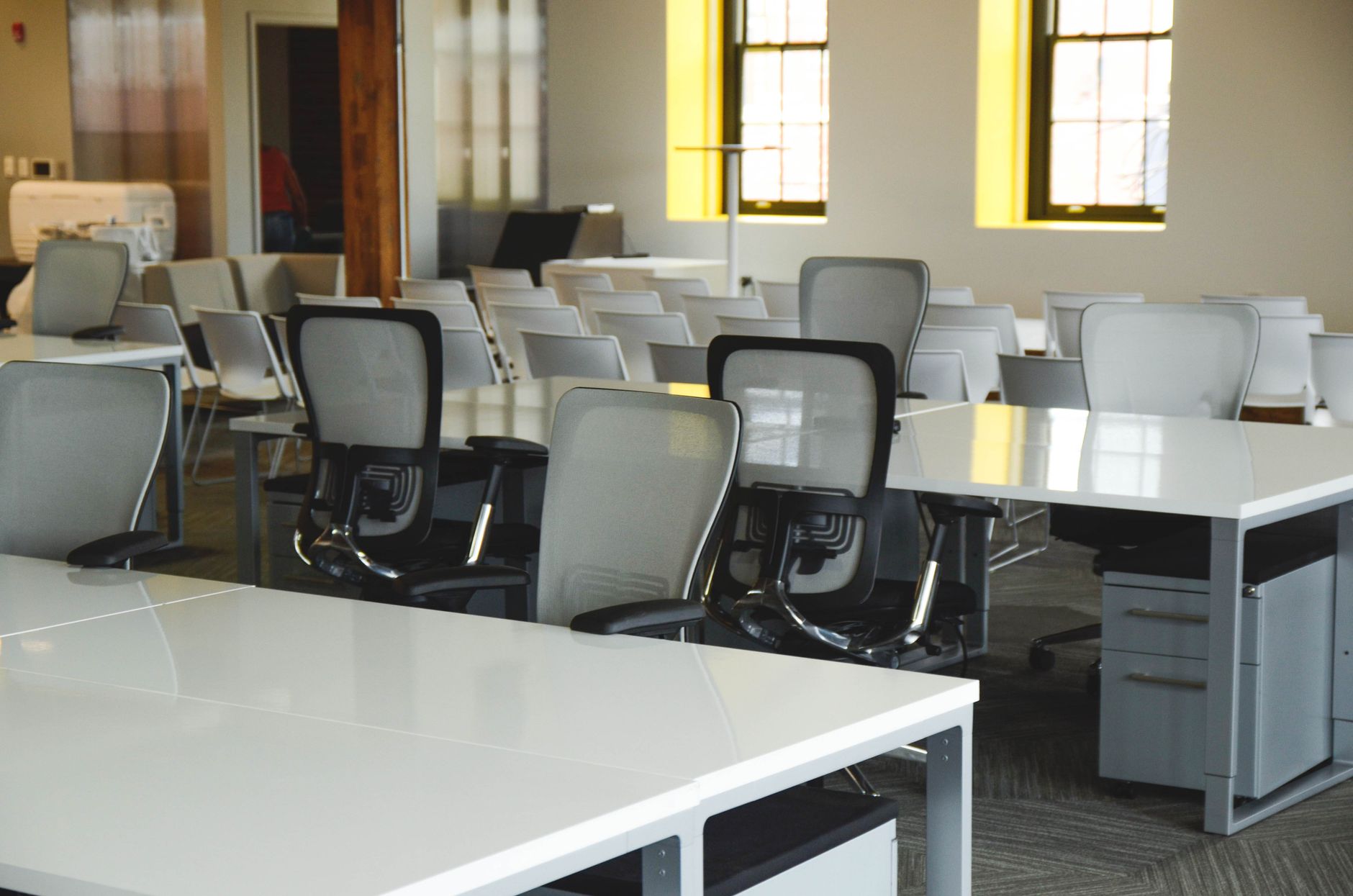
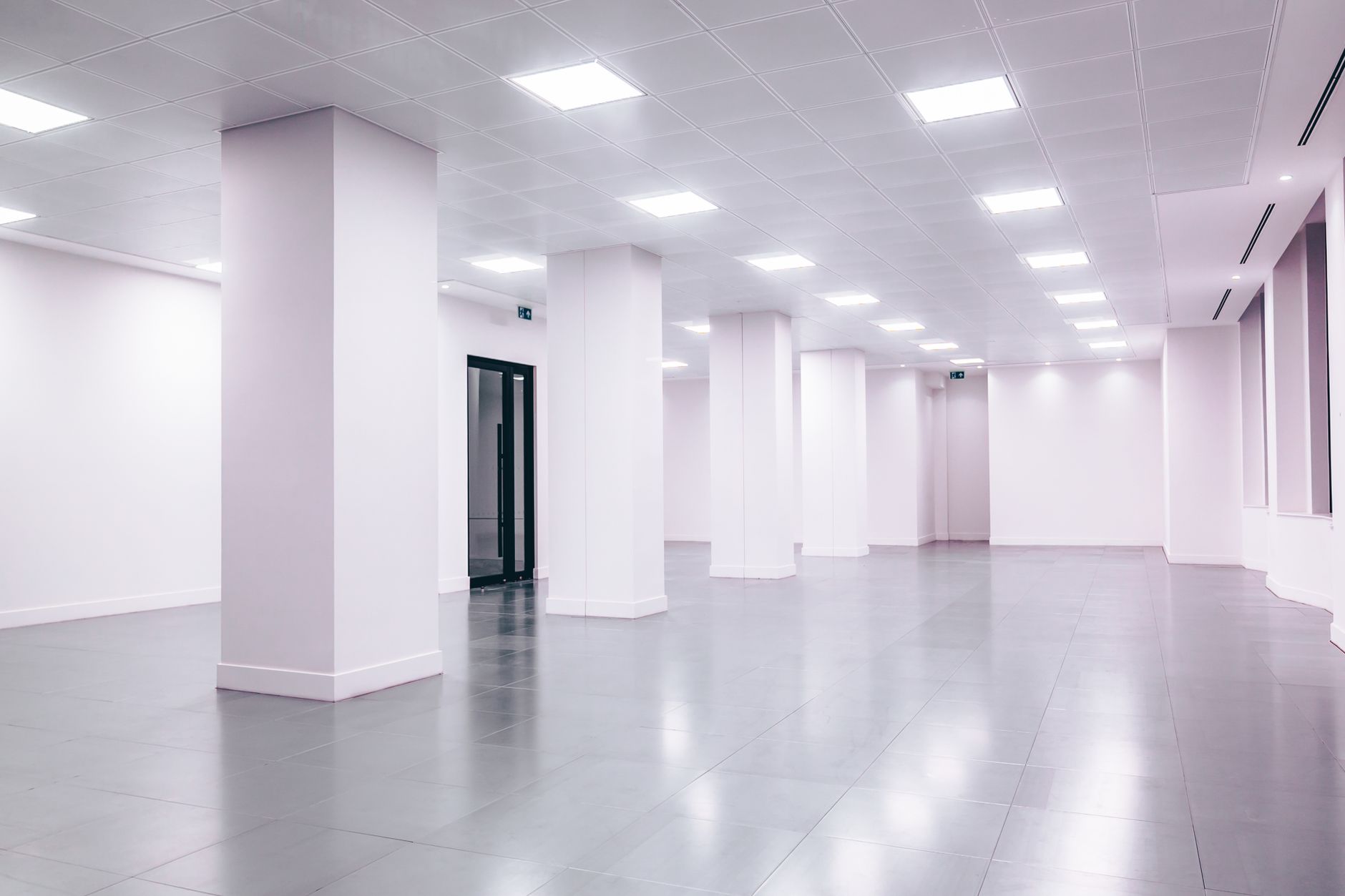
Most of the value sits in the large open floor plates where desks run in rows. These are the areas a manual crew would otherwise walk every night, and they are where a robot's route is simplest to set.
The zones below cover the six areas we see most often. Each one collects different debris and carries different routing and timing rules, so each gets its own plan during the site assessment.
Keep some spots off the route. Loose cables, curled rugs and any area with wet work should be cleared by a person before the robot runs through.
How does a robot work alongside existing staff?
A robot does not replace the people who run the space. It takes over the repetitive floor pass so the team can focus on members, tours, events and maintenance problems that need a human eye.
One older case study on a robotic vacuum reported 2.25 hours of human labor freed per clean, five cleans a week, about 49 man-hours in a month. The same case noted that staff still had to start the machine, open doors and move it between floors by elevator, so the savings came with hands-on steps that a team has to plan for.
This is why we staff the machine with a small team. A community manager or facilities lead owns the schedule, a second person handles exceptions, and the team reviews the route report each week. Training is part of deployment, so the people on shift know the checks, the recovery steps and when to call for service.
What drives the savings in labor hours?
Savings come from hours, not from a headline number. The useful questions are how many hours the floor takes today, how many of those hours the robot can cover, and whether the freed time is actually cut or redeployed. ScrubberGuide's comparison makes the same point: savings only become real if freed hours are cut or redeployed.
Two national figures show the size of the labor pool. According to Nassco's analysis of Bureau of Labor Statistics data, the BLS projects about 321,800 openings a year for janitors and building cleaners from 2025 through 2035, mostly from workers leaving or moving to other jobs. The BLS Occupational Outlook Handbook lists 2,432,600 janitors and cleaners, excluding maids, employed in 2025. Hard-to-fill cleaning roles are a real constraint, and a robot lowers how much a small team depends on filling every opening.
For a worked example, ScrubberGuide estimated that a 20,000 square foot office and lobby floor cleaned 260 nights a year would save about 270 labor hours annually. That is an illustrative calculation, not a measured result. Robot returns depend on utilization, route completion, maintenance, software fees, downtime and staffing, so the site assessment should run the numbers on your own floor.
What can a floor cleaning robot not do?
It does not handle everything. A floor cleaning robot is a floor machine. It does not empty bins, wipe kitchen counters, clean restrooms or reset furniture, and it will not catch a spill it has not been told about.
Size and layout also set limits. Trade comparisons put the sweet spot at large open floors cleaned daily, typically 40,000 square feet or more per night, where a robot frees several labor hours a shift. ScrubberGuide notes that on smaller or cluttered floors a manual walk-behind is usually cheaper. The average coworking location, at 17,728 square feet, sits well below that threshold, so a smaller space may need a different tool or a shared plan across two floors.
Expect the robot to slow in messy areas and to need staff for doors, elevators and stuck obstacles. Water and energy savings reported by industry estimates are not guaranteed on every floor. A site assessment is where we check the real layout before anyone commits to a plan.
How do you get started?
Start with a free site assessment. We walk the floor, map the routes, note the doors, elevators and busiest zones, and measure the hours your team spends on floor care today. Nothing is committed at that stage.
Robots are leased through financing, and the payment comes in the quote after the assessment. Service Robot Co. picks the robot that fits the floor, deploys and integrates it, trains the staff who will run it, and services it nationwide. The quote lays out the lease terms and the support plan in one place.
Our advice on cleaning robots for coworking spaces is simple: start with one floor. A short pilot gives you your own hours and completion numbers to compare, which beats relying on another site's results.
Frequently asked questions
Want a cleaning robot at your coworking space?
Tell us about your site. We will recommend the robot, quote the lease, and keep it serviced.
Sources
- Allwork.space: US coworking reaches 9,612 locations (CoworkingCafe data, Q3 2026)
- Makerstations: coworking space industry statistics
- Yardi Kube: urban vs suburban coworking 2026
- Bureau of Labor Statistics: Occupational Outlook Handbook, janitors and building cleaners
- Nassco analysis of BLS data via PR Newswire (September 28, 2026)
- Robolist: where cleaning robots pay back
- ScrubberGuide: robotic vs manual floor scrubbers
- Alliance Maintenance: are robotic floor cleaners worth the cost