
Key takeaways
- A floor cleaning robot fits best on large, open floors that are used every day.
- Staff time freed from floor passes goes to restrooms, spills, room setup and guests.
- Savings are real only when freed hours are put to work, and they build over months.
- BLS projections show janitorial openings come mostly from replacement hiring, so small staffs feel every gap.
- A free site assessment shows whether a robot fits your floors before any lease is signed.
How can cleaning robots for community centers help a small staff?
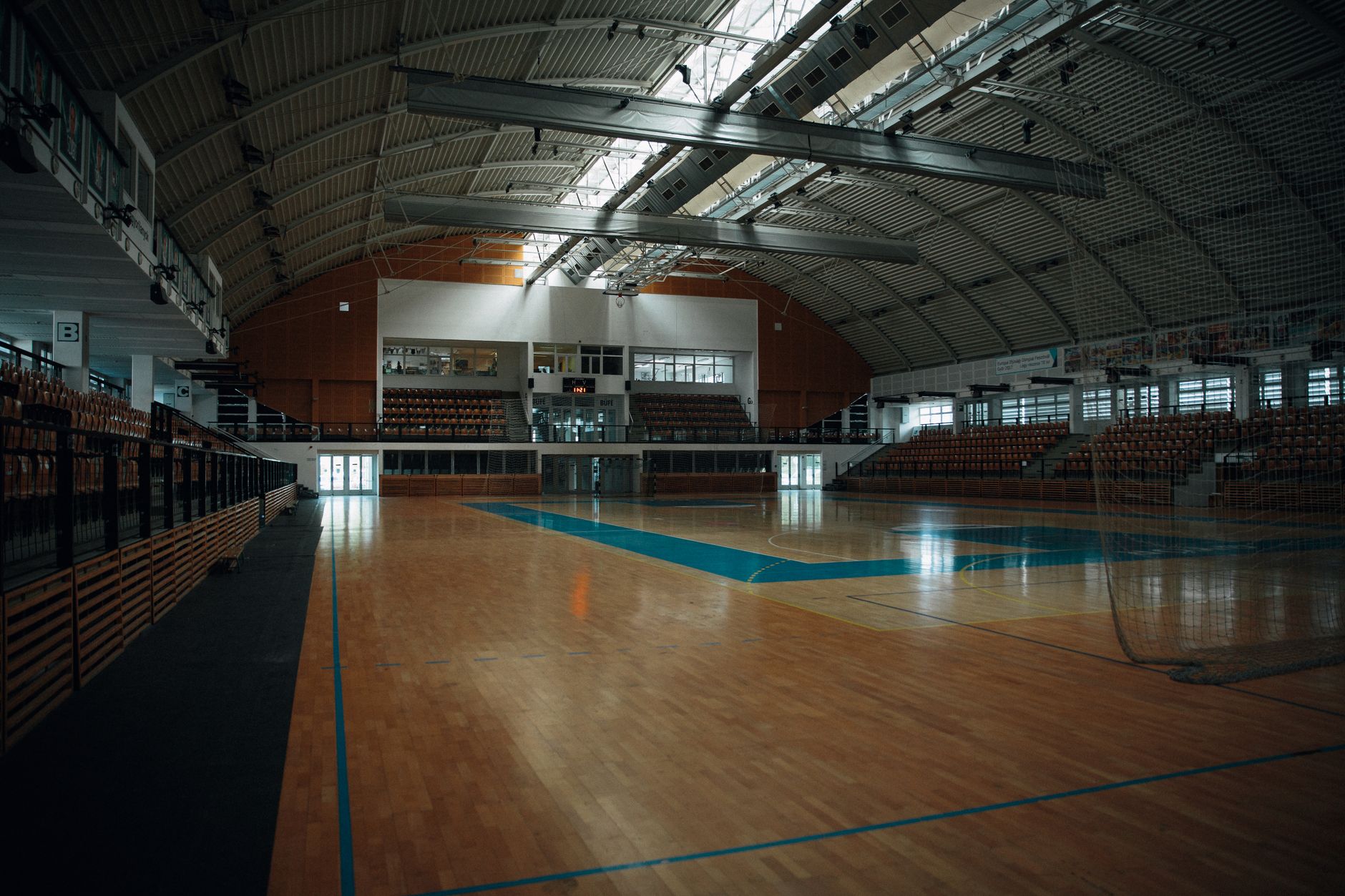
A community center runs from early morning to late evening, and its main rooms rarely sit empty for long. Cleaning robots for community centers can take over the repetitive floor passes in large multipurpose rooms and hallways, so the work gets done between programs instead of piling up for the next shift.
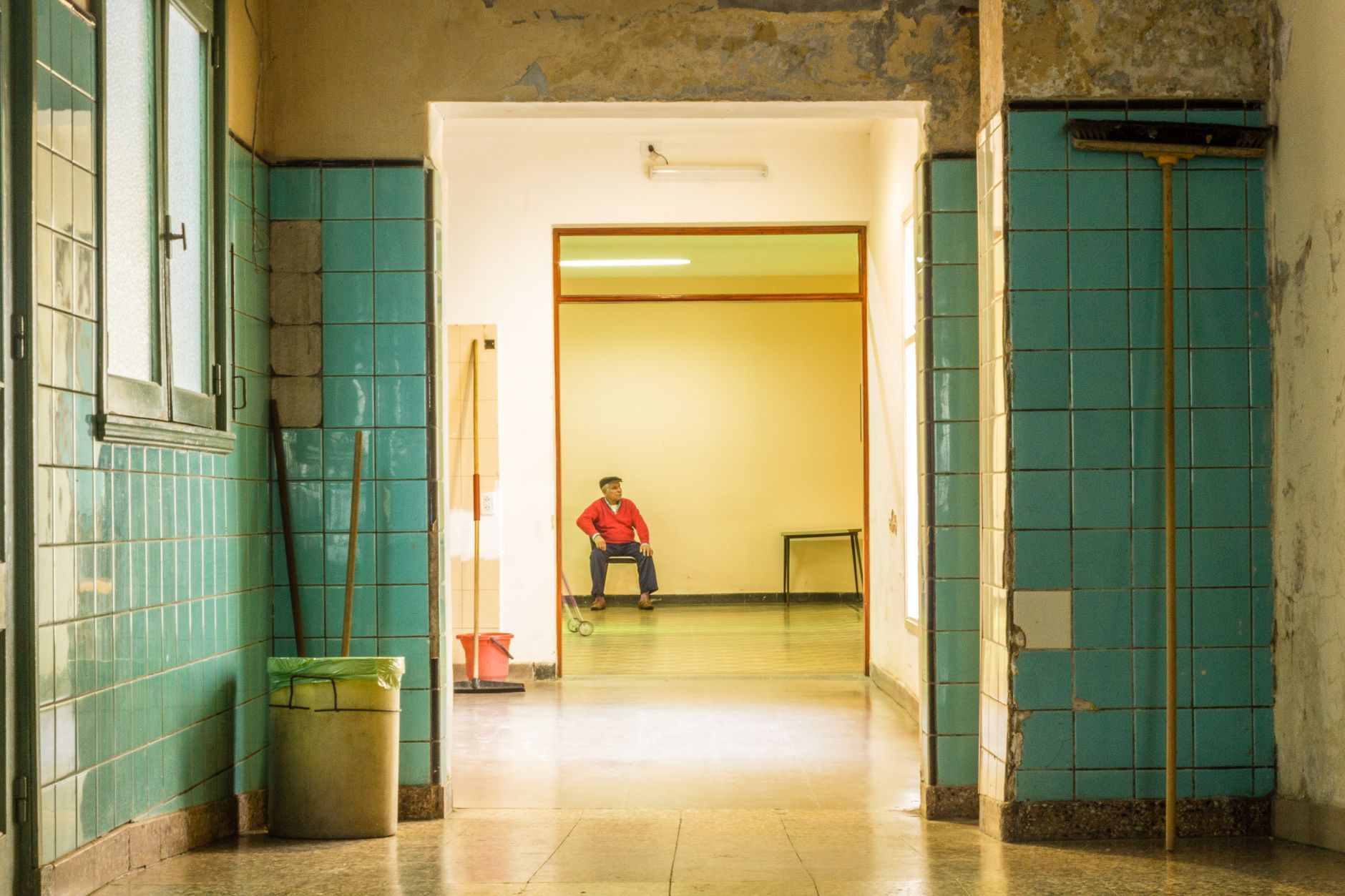
The benefit is not that a machine replaces your team. A floor cleaning robot keeps the same route, runs at the same time each day and handles the long straight passes that eat up an hour of a busy custodian's shift. Your staff then handles restrooms, spills, trash, room setup and the people who walk through the door.
We are a US commercial robot integrator. We help you pick the right robot for your building, lease it through financing, deploy and integrate it, train your staff, and service it nationwide, so the robot becomes part of your daily routine.
What does cleaning look like at a community center today?
Community centers host youth sports, senior exercise classes, meetings, elections, food pantries and weekend events, often in the same rooms on the same day. Each change of program leaves footprints, dust and spills, and the cleaning has to fit into a short gap before the next group arrives.
Staffing is thin in most of these buildings. Published counts of staff at community centers are hard to find, so measure your own hours before you decide anything. The national data does show how large the trade is and how hard it is to fill. According to the Bureau of Labor Statistics, 2,432,600 janitor and building cleaner jobs were counted in 2025, and the projection calls for about 321,800 openings through 2035, mostly from replacement needs, as a PR Newswire release analyzing BLS data reports.
Wages are climbing too. The median hourly wage for janitors and building cleaners rose 26.7 percent from May 2020 to May 2025, according to the same analysis. An hour of floor work now costs a center more than it did five years ago, so the hours spent on repetitive passes deserve a close look.
What are the main benefits for a community center?
The first benefit is consistency. A robot runs the same route at the same speed, and it does not skip the back corridor when the front desk gets busy. Floors are cleaned between programs on schedule rather than whenever someone finds a free twenty minutes.
The second is staff time. Hours that used to go to long floor passes can go to restroom checks, cleaning up a spilled drink before a child slips, setting up chairs and greeting members. Those tasks need hands and judgment, and a robot cannot do them.
The third is a cleaner building for the people who use it most, including older adults and children who sit or play on the floor. Regular passes also keep grit from building up on the surfaces people touch and walk on every day.
How does the robot work day to day?
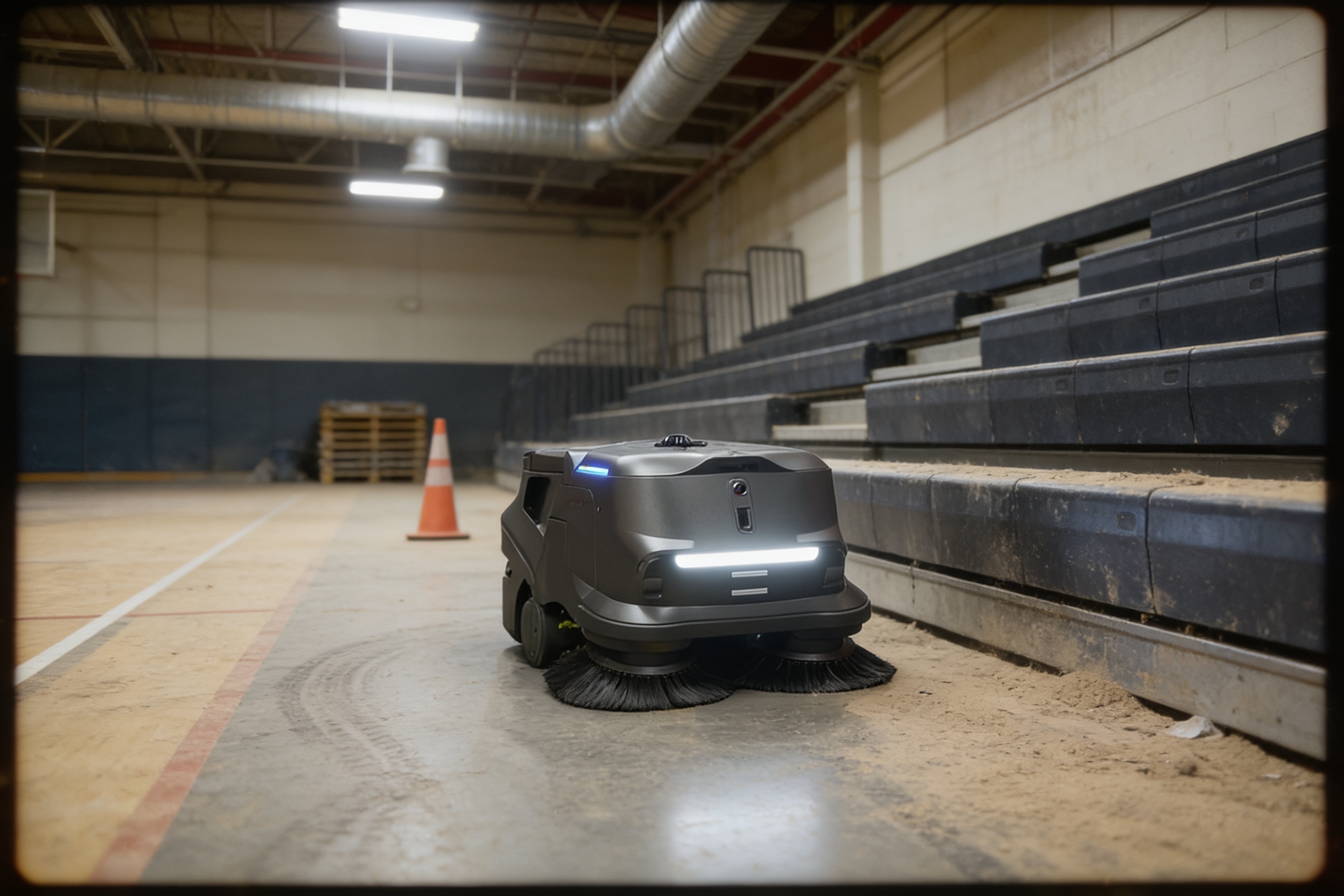
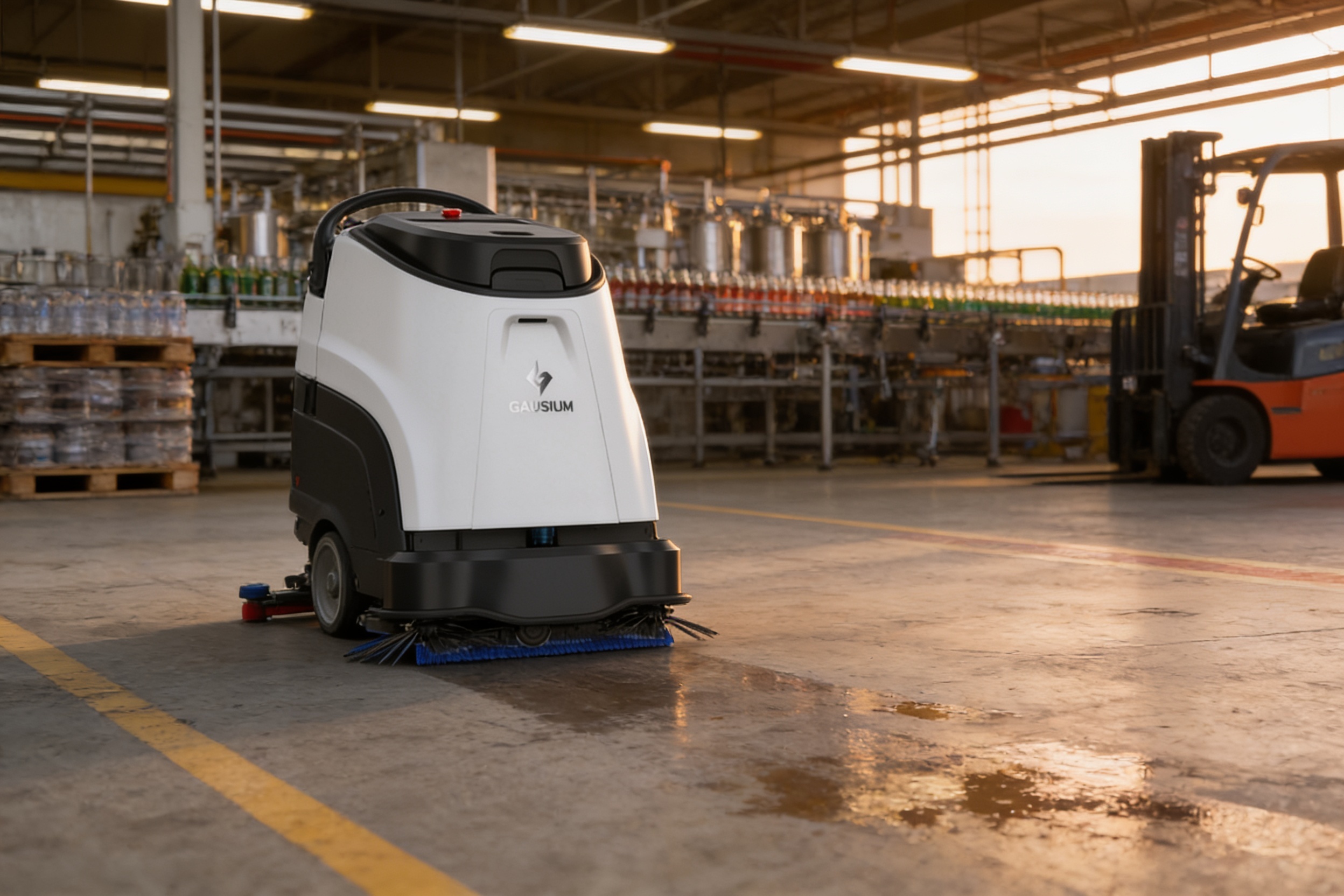
Setup happens once. Our team maps the building, marks no-go zones such as stairs, stage edges and loose cords, and sets the route and schedule. Staff walk the robot through the rooms and show it where the docking station goes.
After that, the routine is short. The robot leaves its dock at a set time, runs its route, returns to charge and reports what it covered. Staff check the report at the start of the shift and see whether a chair or a bag blocked any part of the route.
A sample daily plan looks like this, though every center sets its own times around its programs.
Which areas of a community center can the robot clean?
A floor cleaning robot works best on hard, open floors that are clear of furniture. The strongest fit is a large room with few obstacles, where one pass covers the floor in less time than a person would need.
Hallways and lobbies are often good targets too, since they are long and see traffic all day. Rooms with heavy clutter, many tables, or constant traffic from carts and children need more setup and more staff attention.
Check each area against the size rule. According to ScrubberGuide, robots make financial sense on large, open floors cleaned every day, typically 40,000 sq ft or more per night, and on smaller or cluttered floors a manual walk-behind is usually cheaper. Many buildings will have a few zones that qualify and a few that do not.
How does a robot work alongside existing staff?
The robot should never be the only person in the building. A community center still needs at least one staff member on site during programs to open rooms, greet guests, watch for hazards and handle whatever the robot cannot.
Think of the robot as taking the longest, most repetitive part of the floor work. In one scenario from a cleaning automation industry article, a staff member running a ride-on scrubber for a five-hour shift, five days a week, plus 20 minutes of setup, spent 1,386 hours a year on the job. With an autonomous scrubber, the same work took 86 hours a year. That source is vendor-side, so treat the numbers as a model for your own hours, not a promise.
What drives the savings, and how large can they be?
Savings come from hours, and they depend on three things: how much floor you clean each night, how fast the robot covers it compared with the person it replaces, and whether the freed time gets used. The math runs in hours, so measure your hours first.
On throughput, Robolist reports that a manual ride-on scrubber covers 6,000 to 9,000 square feet per hour in real facilities, against 8,000 to 12,000 under ideal conditions. The same source says an autonomous scrubber saved about 2.5 labor hours a day in a typical retail store, a different building but a useful comparison.
A worked example from ScrubberGuide shows the scale. A 20,000 sq ft office and lobby floor cleaned 260 nights a year gives about 270 labor hours saved a year, with the robot's staff time assumed at 0.75 hours a night. Change the floor size or the number of nights and the total moves with it.
Be realistic about early returns. A robotic vacuum case study from Alliance Maintenance found the operator's savings were probably closer to 7 to 12 percent than the 25 to 30 percent first calculated, and that a net benefit took 6 to 12 months to appear.
What can the robot not do?
A floor cleaning robot does not clean restrooms, wipe tables, empty bins, scrub dried stains or climb stairs. It needs a clear path, so a room full of folding chairs or a gym covered in mats needs a reset before each run.
It is a poor fit for small, cluttered or unusual floors, where a manual walk-behind is often the better tool. Robolist warns that in smaller or complex spaces, the same hardware can become an expensive experiment.
Some of the benefit depends on how the building is run. A janitorial services guide on robotic floor scrubber payback makes the point plainly: a robot sitting idle does not create labor savings, and savings depend on whether freed employee time is redirected to useful work.
How do we get started?
Start with a free site assessment. We walk the building, measure the main floors, note the obstacles and the hours your staff spend on floors now, and tell you plainly which areas are worth a robot and which are not.
If the numbers work, we pick the right robot for your site and offer it on a lease through financing. The payment comes in the quote, which we prepare after the assessment, so you see the full picture before you sign anything. We deploy and integrate the robot, train your staff to clear the route and read the report, and service it nationwide, including on-site dispatch when a unit needs repair.
Ask for a short trial period on your main hall before you commit to a route across the whole building. Measure your hours for a few weeks before and after, then decide with real numbers in hand.
Frequently asked questions
Want a cleaning robot at your community center?
Tell us about your site. We will recommend the robot, quote the lease, and keep it serviced.
Sources
- U.S. Bureau of Labor Statistics, Occupational Outlook Handbook: Janitors and Building Cleaners
- PR Newswire release analyzing BLS janitor wage and openings data
- Cleaning automation industry article on debunking cleaning automation myths
- Robolist guide: where cleaning robots pay back
- ScrubberGuide: robotic vs manual floor scrubber comparison
- Alliance Maintenance blog: are robotic floor cleaners worth the cost
- Janitorial services guide on robotic floor scrubber cost and ROI