
The short answer
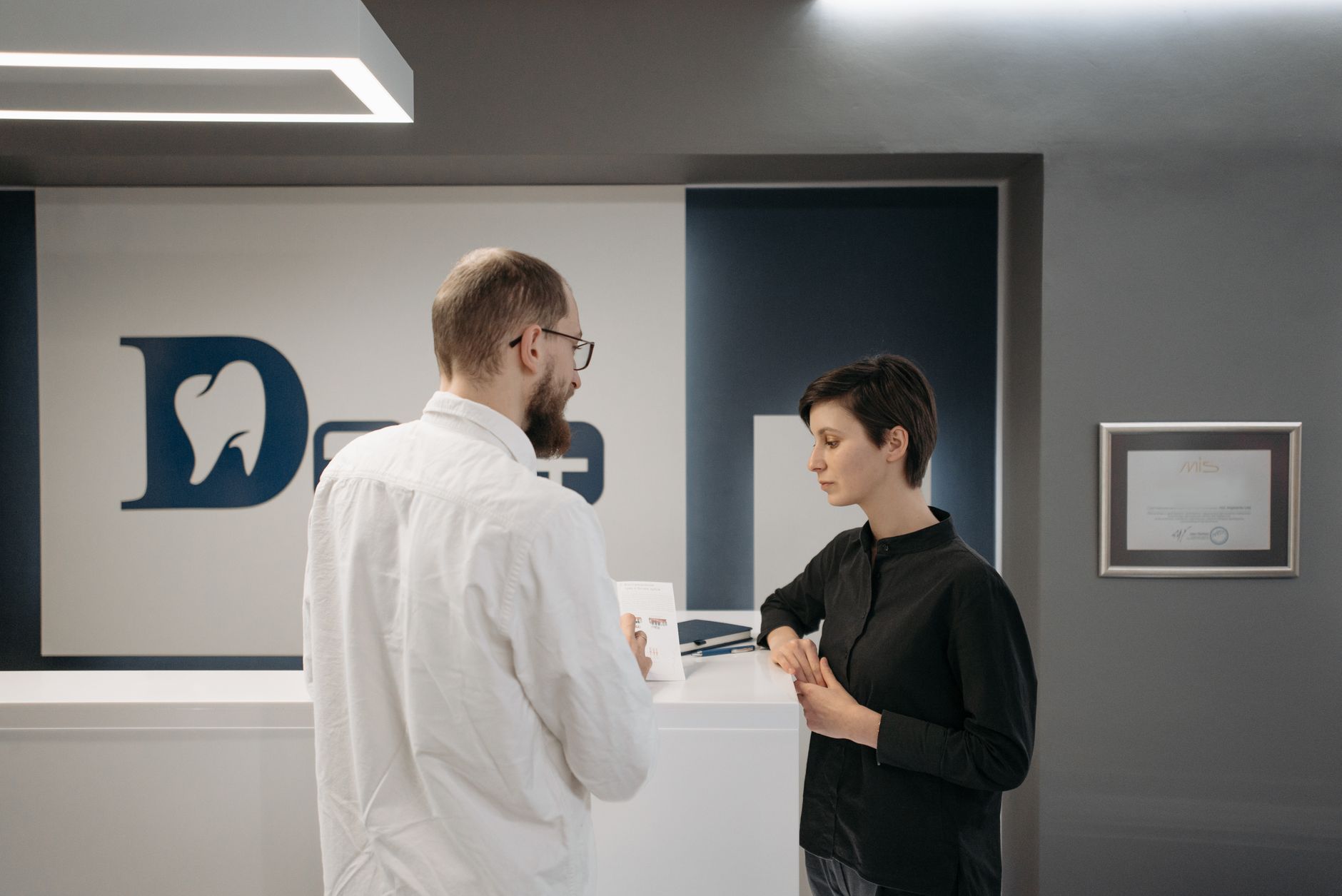
A cleaning robot makes sense at a dental office when the after-hours floor work is mostly open hard floor, such as the reception area, waiting room and corridors, and the route can be kept clear. It makes less sense when the work is mostly hands-on, such as sanitizing chairs, handling waste, cleaning sinks and checking each treatment room, and it does not work where cords or clutter block the route. For most practices the answer is a cleaning robot plus fewer staff hours, not a choice between the two, so the cleaning robot vs night janitor decision comes down to how much of the floor time is repetitive and how much needs hands on the work.
Key takeaways
- A cleaning robot fits the open hard floors of a dental office, not the treatment rooms or clinical surfaces.
- Most dental offices still need a person on the closing routine, so plan for a robot plus fewer staff hours, never zero staff.
- No verified national figure gives dental night hours, so measure your own route and passes on a site walk.
- Dental assistant recruiting is hard, which is the pressure a robot can ease but not remove.
- Start with one site, one route and a free site assessment before any lease quote.
Cleaning robot vs night janitor for dental offices: when each makes sense
A cleaning robot makes sense at a dental office when the after-hours floor work is mostly open hard floor, such as the reception area, waiting room and corridors, and the route can be kept clear. It makes less sense when the work is mostly hands-on, such as sanitizing chairs, handling waste, cleaning sinks and checking each treatment room. Most practices are better served by a cleaning robot doing the repeat floor passes and a person doing the detail work.
Many dental offices have no night janitor at all. The floors are handled by the last staff member out, a daytime crew, or a contract cleaner who comes in a few times a week. That changes the comparison. The real choice is often between a robot plus fewer staff hours and the routine as it runs today, not between a robot and a full overnight payroll.
How many dental offices are there in the US, and how are they run?
The count depends on what is measured. According to Becker's, citing the ADA Health Policy Institute Dental Office Database, 191,669 of 202,401 practicing US dentists were analyzed, and 13% of dentists are affiliated with a dental service organization. Those figures count dentists, not office locations, so a local site list is still the right first step.
The structure matters more than the headcount. According to Becker's, three-quarters of US dentists work in a practice with only one location. A single-location office usually has one floor plan, one closing routine and one owner who signs off, so the decision is made once and the route is learned quickly.
The American Dental Association also reports the sector's national weight. According to the ADA, dental offices support 2.5 million jobs directly and indirectly. For one practice that number means little, but it explains why staffing is a national topic in dentistry, and why the people who run the closing routine sit in a wider labor pool.

Median hourly wage, Janitors and Building Cleaners
$4,041
Monthly cost of one full-time worker, at the median wage plus payroll costs (an estimate, not a quote).
What does a night janitor actually do in a dental office shift?
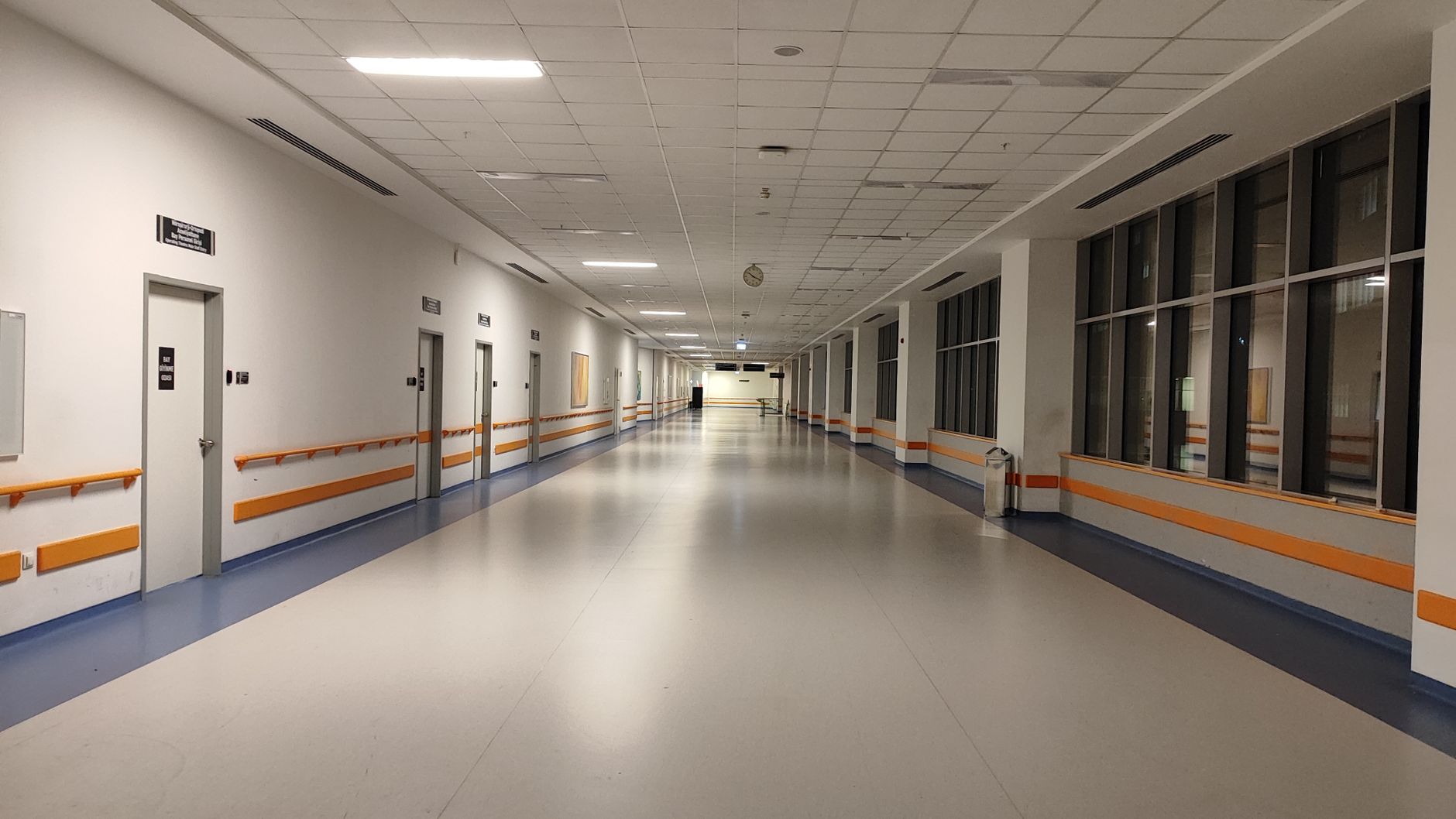
Where an after-hours cleaner is used, the shift turns the clinical side of the building over for the next morning. The work usually includes emptying waste, wiping clinical surfaces, cleaning and restocking restrooms, and sweeping and mopping the reception area, hallways and treatment rooms. Some of it has to be done by hand, because the cleaning standard for treatment spaces is set by the practice and its infection control protocols.
The floor work is the most repeatable piece. A person walks the same route, sweeps the same areas and mops the same tile every night. That repetition is why floor care is the part most often considered for automation, while the rest of the shift stays with a person.
A person also catches what a floor machine cannot judge. They notice a spill under a chair, a dropped instrument, a damp patch by the sink, or a door left open. They decide when a room needs more than a pass, and they report it. Those checks are the first thing lost when a closing shift is cut to a fast loop.
Which parts of the night floor work can a cleaning robot take?
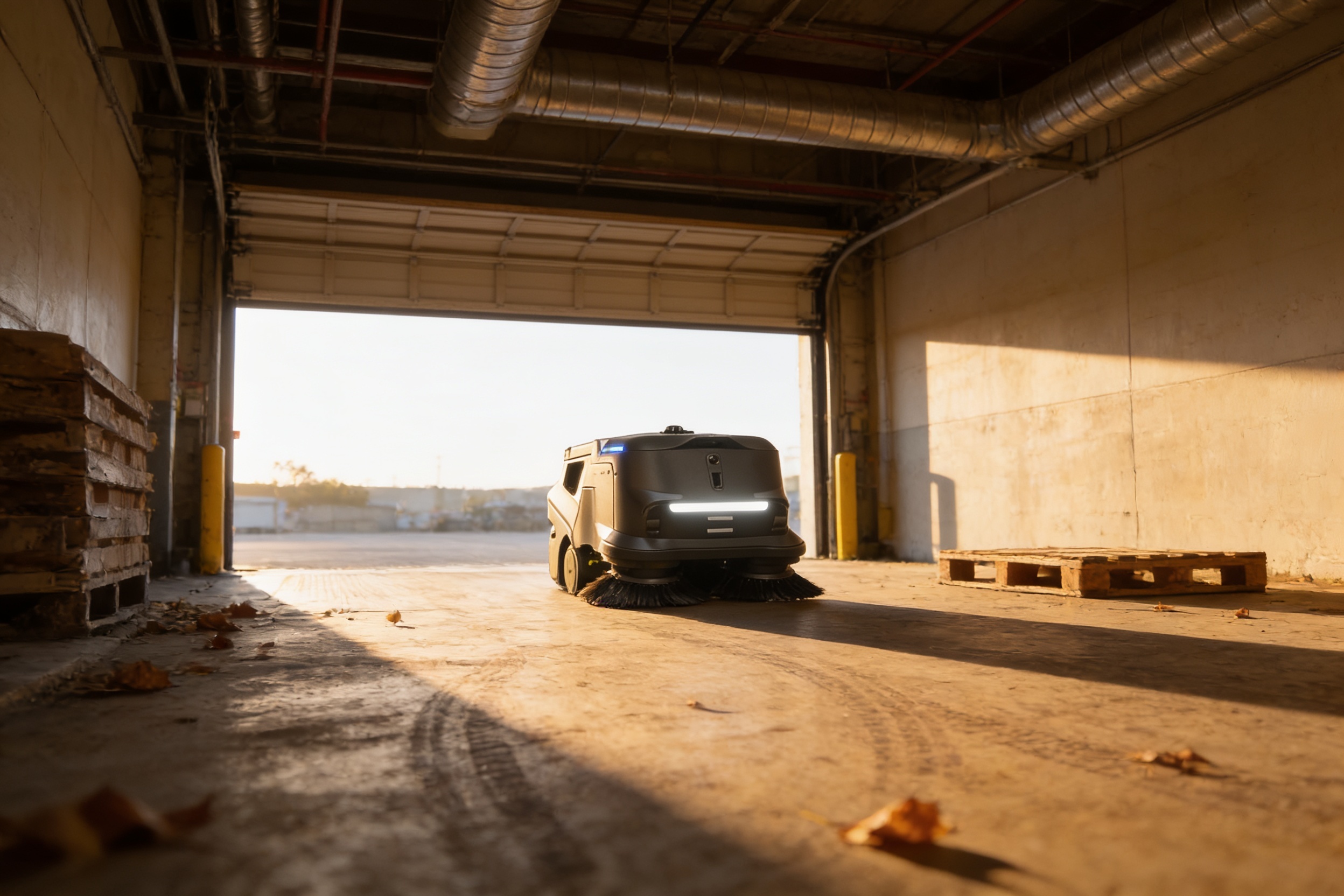
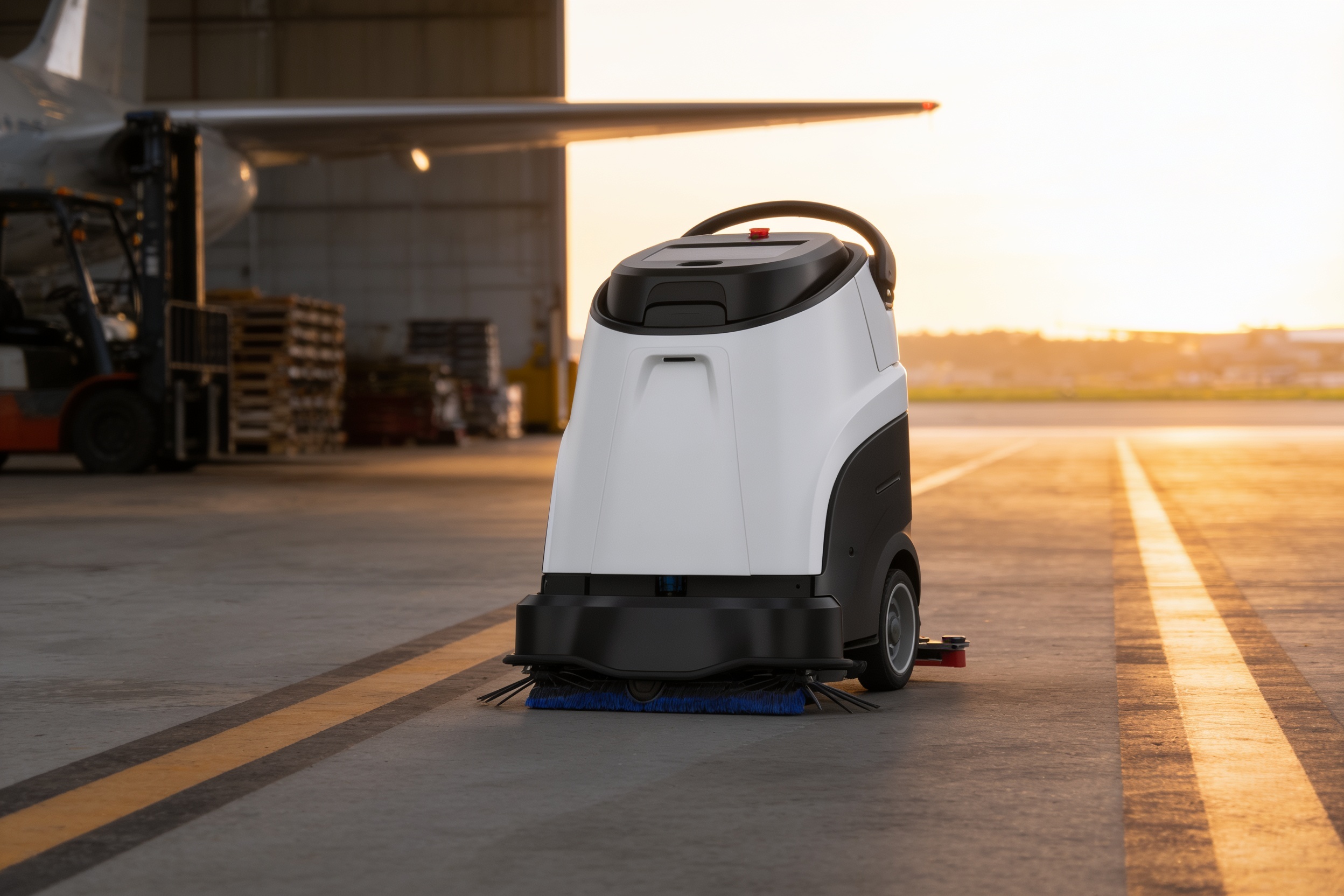
A cleaning robot is best at the open, repeatable parts of the route: hard-floor sweeping and scrubbing of the reception area, waiting room and main corridors. These areas have few obstacles once patients have left, and they are usually the largest uninterrupted floor spans in the building.
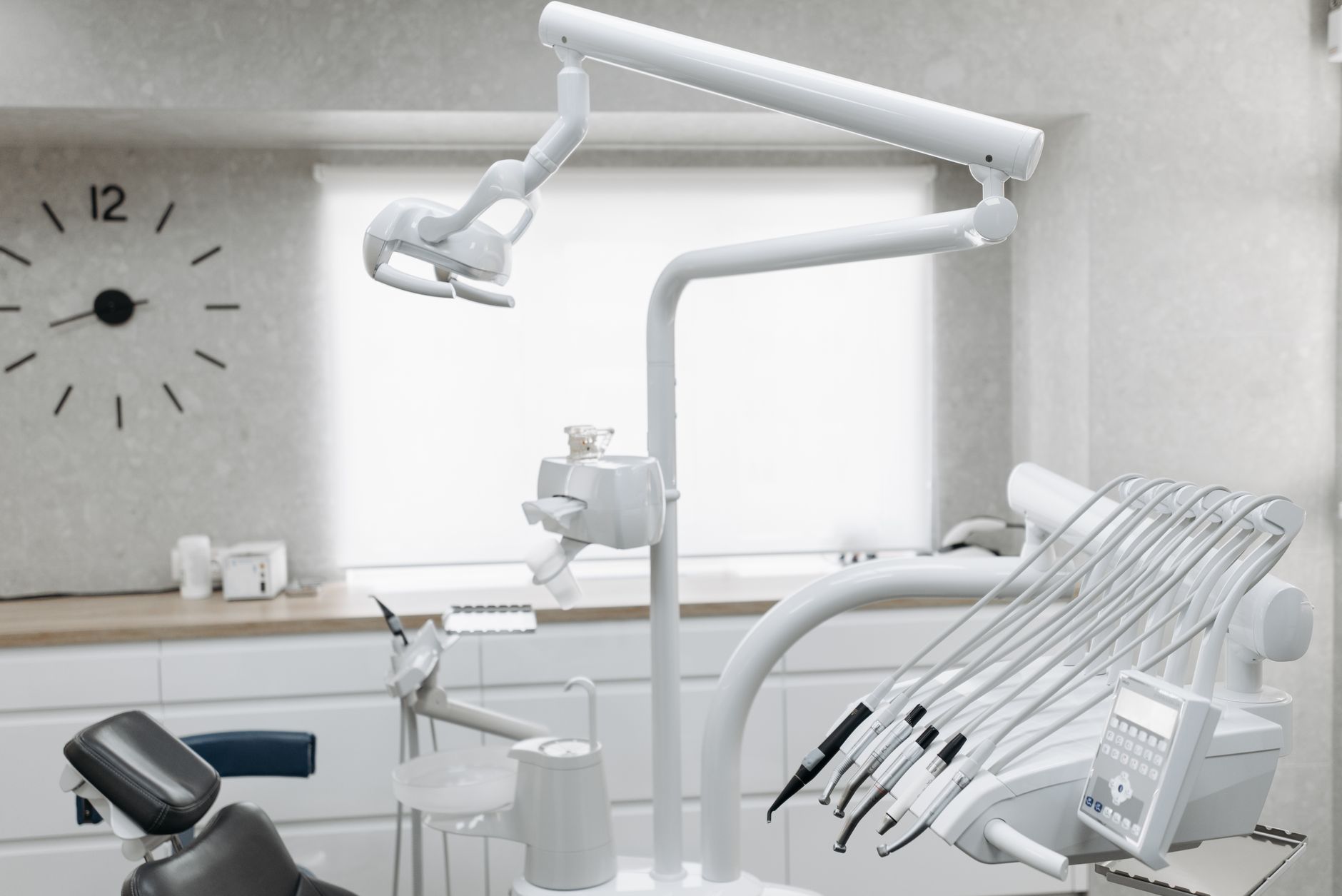
Treatment rooms are harder. They are smaller, full of cabinets, chair bases, cords and equipment, and the floor under the chair needs hand work. A robot can cover the clear floor of a treatment room if the layout allows, but it cannot move equipment, reach corners under cabinets, or confirm that a room is ready for the next patient.
It also cannot do the clinical surfaces, the restroom fixtures, the waste or the restocking. Those stay with a person. The split is why the plan should be drawn zone by zone, not as a single yes or no for the whole building.
- Open hard floors
Cleaning Robot
Runs the reception, waiting room and corridor routes on a schedule, with no one working in the open area during the run.
Night Janitor
Covers the same floors, but needs a route, breaks and a sign-off, and is quicker to adjust when the floor is cluttered.
- Treatment rooms
Cleaning Robot
Can cover clear floor if the layout allows, but cannot move equipment or reach under cabinets.
Night Janitor
Handles the floor under chairs, equipment and corners, and confirms the room is ready for the next patient.
- Clinical surfaces and waste
Cleaning Robot
Cannot do these tasks.
Night Janitor
Does them by hand, to the practice protocol.
- Spills and dropped items
Cleaning Robot
Only what its sensors read, so low, reflective or wet items can be missed.
Night Janitor
Notices the item, decides what to do and reports it.
- Route consistency
Cleaning Robot
Repeats the same route the same way every night.
Night Janitor
Varies with the person, the shift and the day, and is harder to keep identical.
How many hours does the floor work take, and what does the labor picture look like?
No verified national figure exists for the hours a dental office night takes, so the hour count has to come from a site walk. Measure the open floor area, time one full pass, and count how many passes the practice needs each night. Then set those hours beside the local wage for this job shown in the government wage data on this page.
Turnover is the labor problem to plan for. Federal JOLTS data does not publish turnover for this occupation, so the number that counts is the one you measure on site. The wider signal comes from dental staffing. According to an ADA quarterly poll for Q3 2025, as reported by Becker's, 40.1% of dentists who recruited in the prior three months rated recruiting assistants as extremely challenging.
Turnover on the clinical team is high as well, and the closing routine often leans on the same people. According to Dentalpost's 2025 salary survey, 47% of dental assistants were considering changing jobs within two years, the highest share of any dental group, while 54% said they were satisfied or very satisfied with their work. According to DANB, about one in five dental assistants changed jobs in the last year, though that is a rough figure.
Injury data for the janitorial job is worth knowing too. According to the BLS snapshot for 2020, private industry recorded 21,100 nonfatal injury and illness cases with days away from work for janitors and cleaners, an incidence rate of 191.6 per 10,000 full-time equivalent workers. The same snapshot reports 42 fatal work injuries in 2020, down from 45 in 2019. Those are occupation-wide figures, not dental office figures, so use them to plan for slip and lifting risk, not as a forecast for your practice.
How does a team work with a cleaning robot in a dental office?
The team stays. The robot takes the repeat floor passes, and a person still closes out the clinical side, checks each room and signs off the shift. The goal is fewer staff hours on the closing routine, not zero staff. Plan the robot as a way to free the same person for the detail work, not as a reason to remove the last check.
The routine needs a fixed start. Someone clears cords, loose chairs and bags from the route, confirms the doors are set and starts the run. In the morning someone reads the run log, looks at any area the robot reported as unreachable, and tells the team what needs a hand pass. The sample evening below shows the order of steps, and the times depend on the practice. The robot does not know a patient left a bag under a chair.
Training matters because the robot needs a clear route and clear rules, and the staff need to know what it will and will not do. We train the staff who run it during deployment and service the unit nationwide after go-live. The result depends on a routine everyone follows, not on the machine alone.
What can a cleaning robot not do at a dental office?
It cannot clean the clinical surfaces, chairs, sinks or restroom fixtures, and it cannot handle waste. It cannot judge whether a room is clean enough for the next patient. It cannot step around a dropped instrument, a cord on the floor or a wet patch that nobody has cleared.
Layout limits it too. Cramped reception desks, low clearance under cabinets, thresholds and stairs can stop a run. Glossy or wet surfaces and reflective glass can affect how some units read the floor, so the site walk should check surfaces as well as the route. A room the robot cannot enter still needs a person.
A robot also does not solve the staffing question on its own. If the closing shift is unfilled, the robot does not fill it. It changes the hours a person spends, so the staffing plan still has to say who closes the room and who checks the run.
Is a cleaning robot worth it for a dental office? Cost, lease and payback
The cost question is best answered in hours, not in a number from a website. Measure the open floor area, the time one full pass takes and how many passes the practice needs each night. Compare those hours with the local wage for this job from the government wage data on this page, and include the cost of any contracted visit you already pay for.
Robots are leased through financing, and the payment comes in a quote after a free site assessment. That assessment maps the route, the obstacles and the surfaces and sets the scope. The result is a fixed lease payment that you weigh against the hours it takes off the closing routine, with service handled by our team nationwide.
Payback is a question about hours and gaps. A robot that covers the open floors saves part of a shift, which matters most when the practice struggles to keep a closing person. A missed close costs more than a floor pass, so count the gaps as well as the minutes.
Adoption is moving too. According to the 2026 BSC Market Study as reported by Nassco, about 32% of building service contractors plan to adopt robotic floor equipment within 12 months, roughly double the 2025 share. The study does not establish how many are already installed, so treat it as a sign of direction, not of proven results.
How do we get started with a cleaning robot for a dental office?
Start with one site and one route. Ask for a free site assessment, which maps the open floor, the route, the clear areas and the surfaces that need hand work. The output is a short plan: which zones the robot covers, which the team covers, and what the closing routine looks like on the first run.
Pick a pilot. One leased unit in one practice is enough to learn the route, the staffing change and the reporting. We pick the right robot for the site, lease it through financing, deploy and integrate it, train the staff who run it, and service it nationwide, so one partner handles setup and support.
Measure before and after. Log the hours of hand floor work, the number of flagged gaps, the staff hours on the closing routine and any slip or lifting reports. Those lines show whether the robot earns its place, and they become the figures for the next decision.
Frequently asked questions
Want a cleaning robot at your dental office?
Tell us about your site. We will recommend the robot, quote the lease, and keep it serviced.
Sources
- US Bureau of Labor Statistics, Occupational Employment and Wage Statistics (OEWS May 2024)
- Becker's Dental, 13% of dentists affiliated with DSOs
- Becker's Dental, three-quarters of dentists in single-location practices
- American Dental Association, economic impact of dental offices
- Becker's Dental, dentistry's workforce challenge (ADA poll)
- Dentalpost, 2025 salary survey and dental team turnover
- DANB, dental assisting trends and insights 2025
- Bureau of Labor Statistics, injuries snapshot for janitors and cleaners 2016 to 2020
- Nassco release of the 2026 BSC Market Study