

The short answer
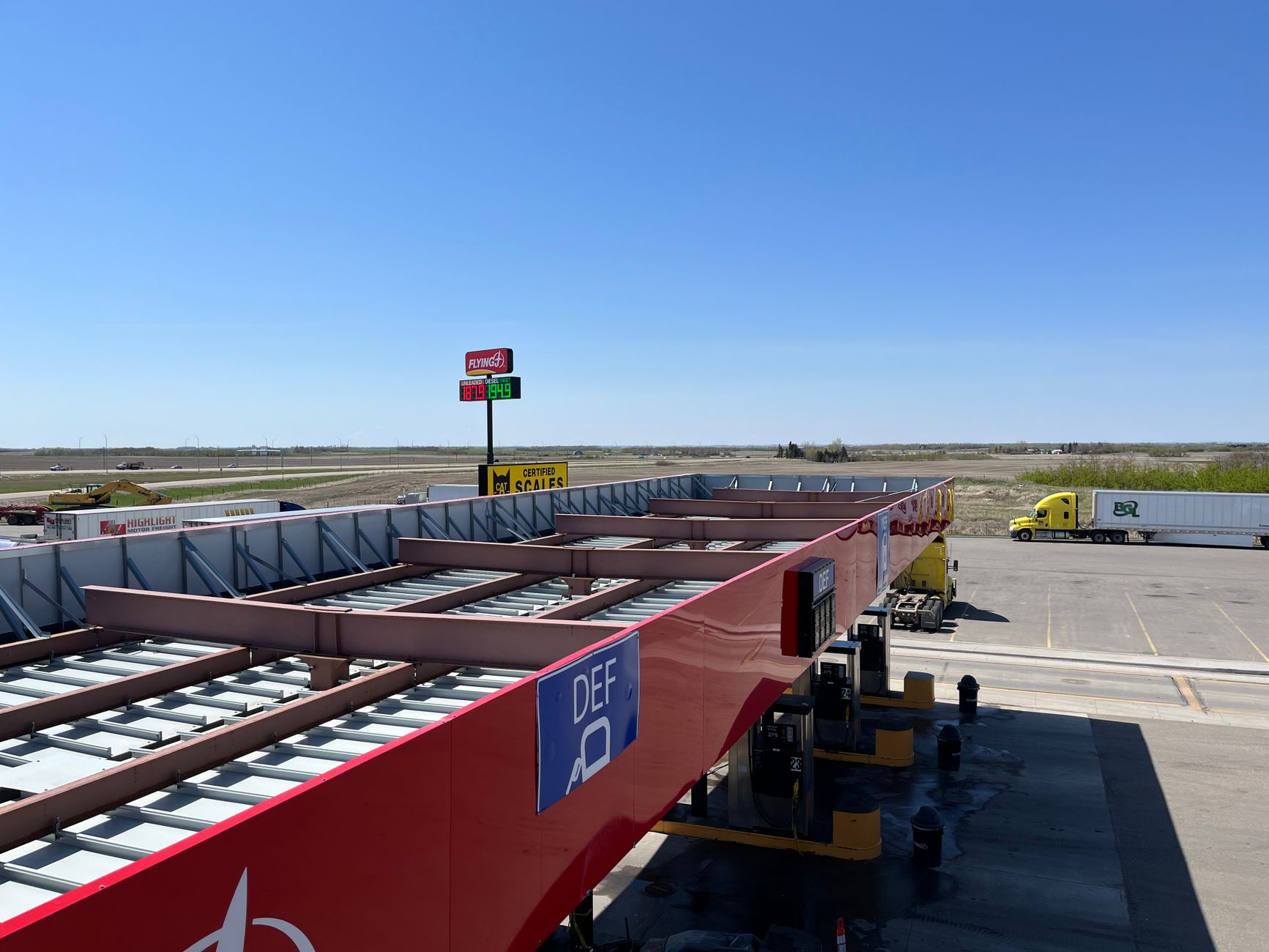
In a cleaning robot vs night janitor decision at a truck stop, the robot makes sense when most of the overnight work is repeat sweeping and scrubbing of hard floors in open areas, and a person still covers restrooms, spills and checks. A night janitor remains the better fit when the shift is mostly hands-on restroom cleaning or when no one can set up and supervise a machine. For most truck stops the answer is a cleaning robot plus fewer night staff, not a robot that replaces the whole shift.
Key takeaways
- A cleaning robot takes the repeat hard-floor passes, while restrooms and spills stay with people.
- Government data shows a large, replacement-driven occupation, with no published turnover rate for truck stops.
- Injury data points to the general risk of floor work, and a robot does not remove slip hazards on its own.
- Plan for a robot plus fewer night staff, and measure your own hours before you decide.
Should a truck stop use a cleaning robot or a night janitor?
In a cleaning robot vs night janitor comparison, the floor work decides most of the answer. Truck stops run around the clock, so that floor work never waits for a quiet hour. A cleaning robot can take over the repeat sweeping and scrubbing of hard floors that a night janitor does between waves of traffic, but it cannot take over the whole job.
A robot makes sense when the open floor is large, the routes are mostly clear at night, and the site keeps at least one person on shift who can start the machine, check the finish and handle restrooms and spills. It does not make sense when the building is small enough that one person finishes the floors anyway, when the floors are often cluttered with pallets or displays after dark, or when no one is available to supervise a machine.
In most cases the sensible plan is not a robot instead of people. It is a robot doing the floor passes while fewer staff cover restrooms, stocking and checks. Our team works through that split during a free site assessment, and the lease is quoted after that assessment.
What does a night janitor actually do on a truck stop shift?
NATSO, the trade association for the travel center industry, describes three levels of restroom care: courtesy checks, routine cleaning and deep cleaning. Deep cleaning usually means closing a restroom for a period, so it is typically done on the overnight shift, at least once a day per restroom. According to NATSO, clean restrooms are often the top reason a customer picks a truck stop, which is why the night crew cannot treat them as an afterthought.
Between restroom passes, the night person usually sweeps and mops hard floors in the store, dining area and corridors, empties trash, restocks supplies and answers spills. That work arrives in bursts, because the same traffic that dirties the floor also drives the restroom load. The person often has to stop a floor pass for a spill or a restroom call, then go back and pick up the route.
On many 24-hour sites, that can mean one person covering the whole floor and restroom routine for the shift, with little slack for a call-out. The work is physical and repetitive, but it also needs judgment at every stop: what needs a second pass, what is a safety issue and what can wait until morning.
Median hourly wage, Janitors and Building Cleaners
$4,041
Monthly cost of one full-time worker, at the median wage plus payroll costs (an estimate, not a quote).
- Hard-floor passes
Cleaning Robot
Repeats the same mapped route on a set schedule without breaks
Night Janitor
Covers the same route and adjusts when a section needs more work
- Restroom cleaning
Cleaning Robot
Stays out of restroom interiors
Night Janitor
Does restroom passes and deep cleaning, usually overnight
- Spill response
Cleaning Robot
Pauses and waits, and cannot clean a spill that spreads past its route
Night Janitor
Assesses the spill, cleans it and resets the area
- Customer contact
Cleaning Robot
Cannot help a driver or answer a question
Night Janitor
Answers questions and handles problems on the spot
- Working around traffic
Cleaning Robot
Needs a clear route, so heavy clutter or people in the path stop the run
Night Janitor
Steps around people, carts and displays as traffic changes
- Coverage on a sick day
Cleaning Robot
Still runs if a trained person is on shift to start and check it
Night Janitor
The shift goes uncovered if no one can come in
Which floor work can a robot take, and which can't it?
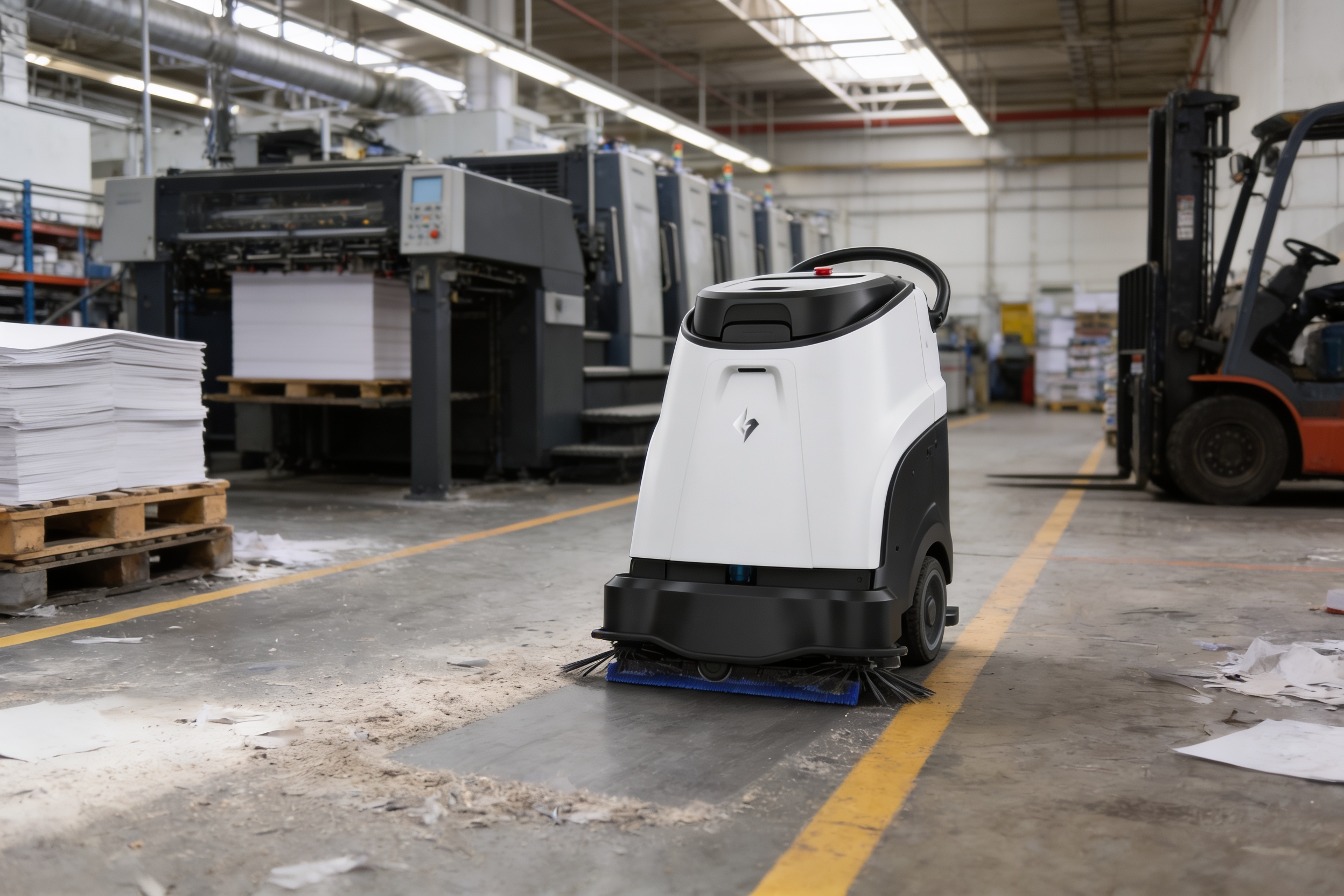
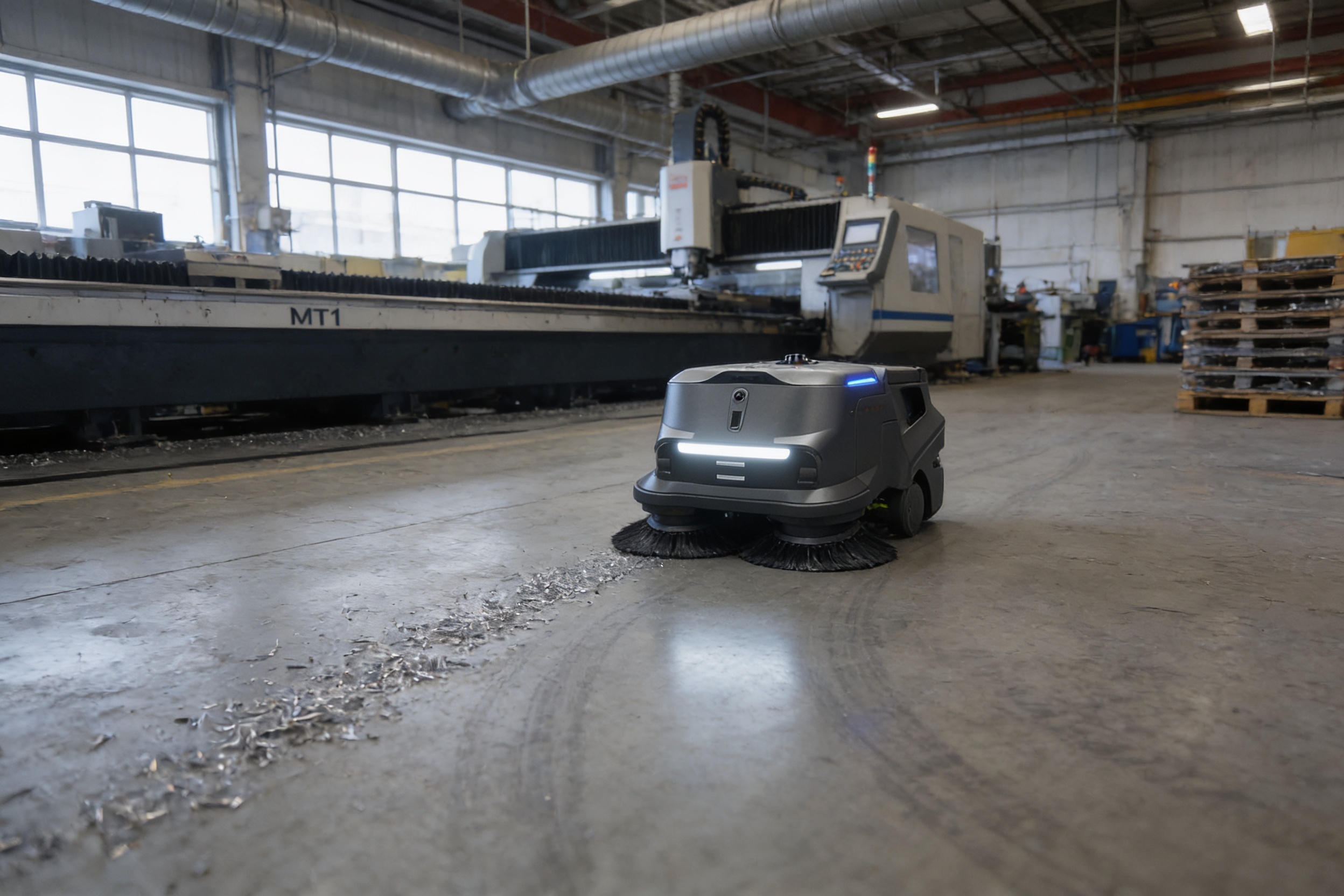
A floor cleaning robot takes the repeat passes on hard floors. Once a route is mapped, it sweeps or scrubs the same path on a set schedule, and the path through a store aisle, a dining room or a long corridor looks much the same from one night to the next. That fits a machine well, and it frees the night person for work that needs hands and judgment.
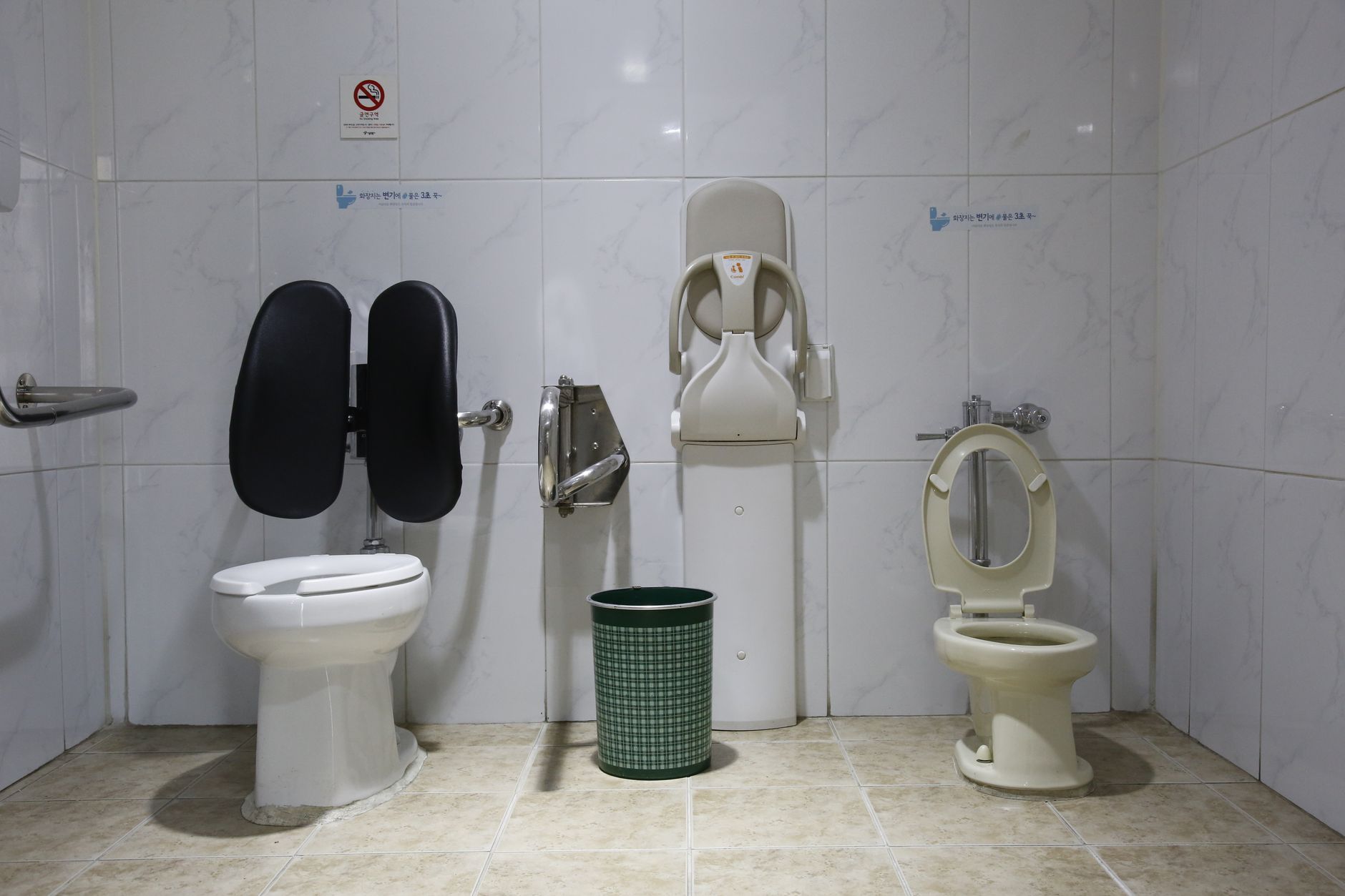
It cannot clean restrooms. Toilets, sinks, partitions, mirrors, showers and high-touch surfaces need hands, targeted chemicals and a person who can see what is left behind. It also cannot restock shelves, handle a spill that spreads past its route, check on a driver or decide whether a stain needs a manual pass. A fallen pallet, a loose cord or a stray chair can stop a run until someone clears it.
Some work sits in the middle. A robot can cover the hallway outside restroom doors, but a person still does the inside of the rooms. The zones below show where the robot usually earns its time, with restroom interiors and anything needing hands left with staff.
How many people clean truck stops, and what does the labor picture look like?
The Bureau of Labor Statistics counted 2,447,700 janitors and building cleaners in the United States in 2024. It projects 2 percent growth from 2024 to 2034, which it describes as slower than average. Its projections also show about 351,300 openings a year on average over that decade, including both growth and replacement needs, so most of that hiring replaces people who leave rather than filling new positions.
BLS notes that work schedules may include evenings, nights or weekends. An older edition of its text says cleaners often work evenings because offices are cleaned when they are empty, and that 24-hour sites such as hospitals use night shifts. Truck stops run the same kind of around-the-clock schedule, so the night slot is the one to plan for.
The government data gives no occupation-level turnover rate for this job, so overtime, sick days and turnover have to come from your own records or your operator's. The government wage data on this page gives the local wage for this job. Put that next to the hours you log, not next to a headline figure.
What does the injury record say about night cleaning work?

BLS data for 2019 counted 18,680 nonfatal injury and illness cases with days away from work for janitors and cleaners, an incidence rate of 157.4 per 10,000 full-time equivalent workers. That comes from an older snapshot covering 2016 to 2020. The figures do not show causes, so read them as a general risk level for the occupation rather than a cause analysis for truck stops.
A robot can reduce how often a person pushes a heavy machine across the floor, and it can take the scrubbing route off the crew for part of the night. It does not remove slips. Wet floors, cords, cart paths and the robot's own moving route all create hazards that staff must manage, and a moving machine near customers needs a clear route and signs.
Ask your safety lead to log near misses for a few weeks before the trial and during it. A log of your own floors, with your own traffic, will tell you more about the risk than a national rate.
How common are cleaning robots in facilities like this?
ISSA Today, in its September-October 2025 issue, reported that 43 percent of respondents in the CMM In-House/Facility Management Benchmarking Survey planned to add autonomous cleaning equipment. That is a plan, not a count of machines in service, so it signals direction rather than adoption.
An earlier 2019 survey by AACEM and ISSA, with nearly 23,000 recipients, found that 62 percent of building service contractors, 68 percent of in-house service providers and 69 percent of facility and property managers had not used autonomous cleaning equipment. The two surveys ask different questions, one about plans and one about past use, so compare them with care.
Neither set of figures breaks out truck stops, so there is no published adoption rate for this kind of site to lean on. What the numbers do show is that the question has moved from whether to try a robot to how to set one up, and that depends on layout and staffing.
How does a truck stop run with a robot plus fewer night staff?
The team does not drop to zero. The model we use keeps at least one trained person on every night shift, because restrooms, spills and customer needs still come up while the robot runs. The floor passes move to the machine, and the person's time moves to the work only a person can do.
Before go-live, we map the building, set the routes and agree which zones the robot skips, usually restroom interiors and any area with fixed displays. Staff learn to start a run, clear the route, pause for a spill and check the finish. We train the staff, stay on site for go-live support and then service the unit nationwide.
Plan for the night the unit is down. A down unit should not leave restrooms undone, so the night person still does the essential passes by hand. Ask about backup arrangements in the quote before you sign.
What can't a cleaning robot do at a truck stop?
It cannot clean restrooms, and no fixture, partition or high-touch surface should be left to the machine. It cannot help a driver, deal with a spill that spreads beyond its route or judge a stain that needs a manual pass. Those limits follow from what a floor machine does, so they will not go away with a better setup.
Layout sets the limit. Pallets, displays, loose cords, cart paths, wet patches and tight turns can stop a run or force a reroute. A cluttered floor may need staff to clear the route before each run, which can cut into the hours you expected to save. Measure the clutter before you count the savings.
It does not remove the injury risk on its own. A moving machine near people needs a clear route and signs, and staff still need to manage wet floors and cords. Treat the robot as a change in the work, not as a fix for a staffing gap you have not measured.
How do you get started with a cleaning robot lease at a truck stop?
Start with a free site assessment. We walk the building, measure the hard-floor area on the night route, note the clutter and the restroom boundary, and map the routes. The lease is quoted after that assessment, so the payment reflects your building rather than a generic estimate.
Ask for a pilot on one floor area before committing to the rest. A single unit on the main store floor shows how much of the night the route really covers and what staff still do by hand. Use the hours table on this page as a template and fill it with your own shift logs.
Before you sign, check the items below against your site. Each one changes the answer, so each one belongs in the site assessment and the quote, not in a general estimate.
- Hard-floor area on the night route, from the site assessment
- Share of the night spent on restroom and spill work, from your shift logs
- Clutter, cart paths and tight turns that can stop a run
- Who on each night shift can start, pause and check a run
- How a fault is reported and who covers a down unit
- Near-miss log kept before and during the pilot
Frequently asked questions
Want a cleaning robot at your truck stop?
Tell us about your site. We will recommend the robot, quote the lease, and keep it serviced.
Sources
- US Bureau of Labor Statistics, Occupational Employment and Wage Statistics (OEWS May 2024)
- Bureau of Labor Statistics, Occupational Outlook Handbook: Janitors and Building Cleaners
- NATSO, truck stop restroom cleaning guidance
- Bureau of Labor Statistics, injuries and illnesses snapshot for janitors and cleaners, 2016 to 2020
- Bureau of Labor Statistics archived Occupational Outlook Handbook text, janitors and building cleaners
- ISSA Today, September-October 2025
- ISSA, 2019 AACEM/ISSA autonomous cleaning equipment survey